Encase the mattress and pillows in zippered allergen-resistant covers, wash and dry bedding regularly, and control indoor humidity. Combine these steps with routine bedroom cleaning; no single treatment guarantees complete elimination.
What works against mattress dust mites
Dust mites are microscopic organisms that live in household dust. Their waste and body fragments can trigger symptoms in sensitized people. A mattress offers a sheltered environment, but bedding, pillows, upholstery and bedroom humidity also matter. A visible speck is not a reliable way to identify them, and cleaning a mattress cannot promise an allergen-free room.
Use a combination of a fitted, zippered allergen-resistant mattress cover, washable bedding and moisture control. This approach reduces exposure and makes repeated cleaning easier. If symptoms persist, ask a health professional whether allergy evaluation and an individualized plan are appropriate.
Encase the mattress and pillows
Choose a cover specifically described as allergen-proof or dust-mite resistant, sized for the depth of the mattress, with a zipper that closes completely. Encase pillows as well. A conventional fitted sheet or decorative mattress pad is not necessarily an allergen barrier. Put clean sheets over the encasement and keep the zipper closed.
Follow the cover manufacturer’s washing and drying directions. Inspect it periodically for tears and replace it if the barrier or zipper fails. An encasement limits contact with material inside; it does not instantly remove settled dust from the rest of the room or guarantee that every mite is killed.
Wash and dry bedding regularly
Wash sheets, pillowcases and washable blankets weekly, following the care label, and dry them completely before returning them to the bed. EPA recommends hot washing as one measure against dust mites. If a fabric cannot tolerate hot water, follow its label rather than damaging it; laundering still helps remove dust, but cooler washing should not be presented as a guaranteed way to kill all mites.
Wash removable covers and washable soft toys according to their labels. Keep a second set of bedding available so that a damp item is not put back on the bed. Be cautious with very hot water, particularly in homes with children or people at risk of burns.
Control humidity without soaking the bed
Measure bedroom relative humidity with a small hygrometer. EPA recommends keeping indoor humidity below 60%, ideally around 30% to 50%, when possible. Fix leaks, vent bathroom exhaust outdoors and use air conditioning or a dehumidifier when needed. Empty and maintain equipment according to its instructions. Conditions vary by climate, and a reading in one location does not describe every hidden surface.
Avoid wetting a mattress in an effort to kill mites. Deep moisture can be difficult to dry and may create a separate mold problem. Steam, sprays and wet extraction are not universal solutions: heat and moisture can damage construction or leave filling damp. Consult the mattress manufacturer or a qualified cleaner before using them.
Remove dust from the surrounding room
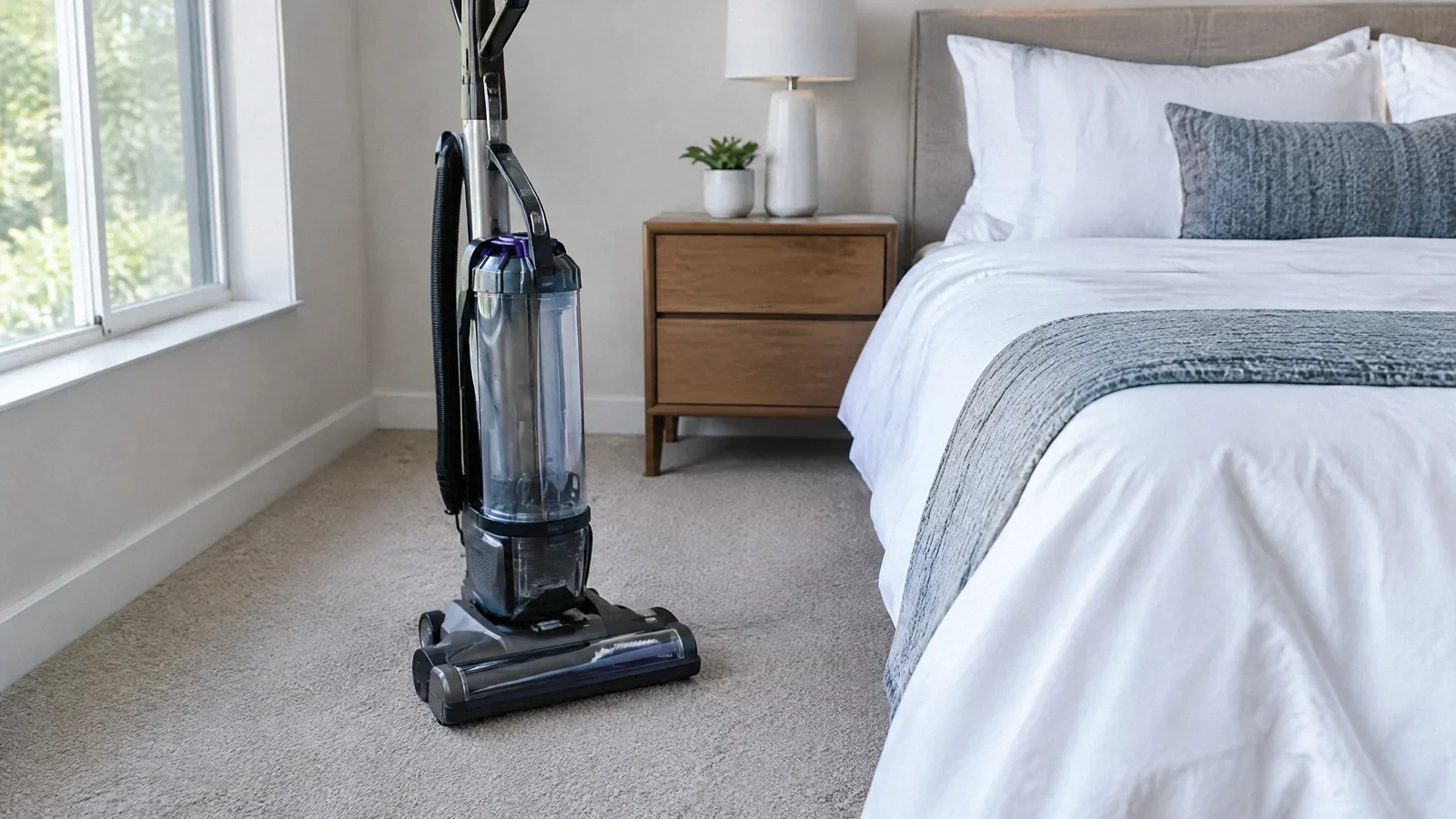
Vacuum bedroom floors and suitable upholstered surfaces regularly with a well-maintained vacuum, preferably one with a HEPA filter. EPA notes that vacuuming can stir up dust, so a person with asthma or allergies may want to leave during cleaning. Damp-dust hard surfaces with a lightly moistened cloth rather than spreading dry dust into the air.
Reduce clutter that collects dust and wash window coverings when their labels allow. If replacing flooring for other reasons, consider how easily the new surface can be cleaned. One cleaning session is less useful than a manageable routine that the household can maintain.
Follow the mattress care label if vacuuming its surface is permitted, and use a clean upholstery attachment. Vacuuming alone may not reach material deep inside the mattress. Finish by fitting a clean, fully dry encasement and laundering the bedding, rather than treating a pass with the vacuum as a complete solution.
When cleaning or replacement needs another decision
A dust mite concern alone does not automatically mean a mattress must be discarded. A sound, dry mattress can often be enclosed and maintained. Replace an item if it cannot be kept clean and dry, is structurally failing, or is otherwise unsuitable under the manufacturer’s guidance.
A mattress soaked by sewage, floodwater or persistent moisture is a different problem. Porous materials may be difficult or impossible to clean and dry adequately; get qualified advice rather than treating the issue as ordinary dust. If you see or smell mold, address the moisture source and assess the affected material rather than relying on a mite spray.
Avoid unproven shortcuts
Do not apply a pesticide or disinfectant to a sleeping surface unless the product is registered and explicitly labeled for that exact use, and follow every label direction. Essential oils, fragrance and ozone are not substitutes for controlling dust and moisture. Never mix cleaning chemicals.
There is no need to identify a particular mite species before taking these practical steps. Track whether humidity, cleaning and symptoms change over time, and discuss ongoing symptoms with a clinician rather than using a household observation as a diagnosis.
Your next-step checklist
- Fit zippered allergen-resistant covers on the mattress and pillows.
- Wash bedding weekly using its care instructions and dry it completely.
- Measure humidity and address leaks and persistent dampness.
- Clean surrounding surfaces regularly and inspect covers for damage.
- Ask a clinician about persistent allergy symptoms.
Related questions
Can a mattress cover kill all dust mites?
An encasement is a barrier that helps reduce contact with allergens in a mattress. It is not proof that every mite has been killed; use it alongside bedding care and humidity control.
Should I spray a mattress to eliminate dust mites?
Do not assume a spray is safe for a sleeping surface. Use a pesticide only if its label explicitly permits the exact application, and follow all directions. An encasement and regular laundering are practical starting measures.
Sources & context
Public guidance supports the principles in this article. The practical questions and examples are editorial interpretation, not a site assessment or a coverage decision. State-specific rules apply only where identified.
- Sources of Indoor Particulate Mattergovernment
- Strategies for Addressing Asthma in Homesgovernment
- Mold Cleanup in Your Homegovernment