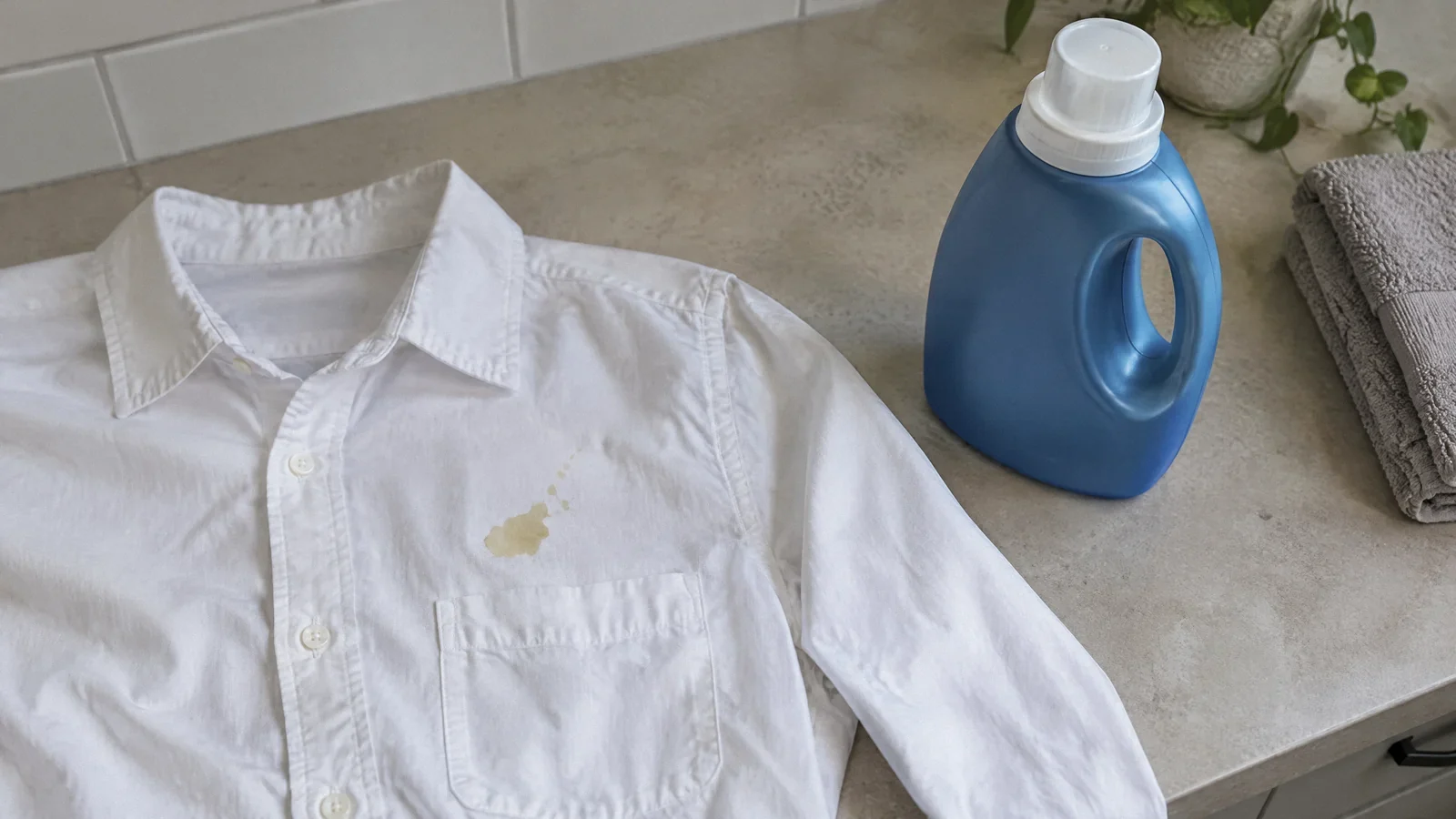
Blot excess grease, pretreat a washable garment with a suitable laundry stain remover or liquid detergent, then wash at the warmest temperature allowed by the care label. Check the stain before drying; repeat treatment if it remains.
Check the fabric and identify the stain
Cooking oil, butter, bicycle grease and cosmetic oils can leave a translucent or dark mark that is easier to see after the fabric dries. Treat a fresh spot promptly, but check the care label before applying water or a cleaning product. Silk, wool, leather, suede, structured garments and dry-clean-only items may need a specialist rather than home treatment.
For a valuable or delicate item, point out the stain and its likely source to a professional cleaner. Tell the cleaner about any product already applied. Avoid using gasoline, paint thinner or another flammable household solvent on clothing. A stain remover is useful only when its label permits the particular fabric and the instructions are followed.
Blot a fresh spill and pretreat
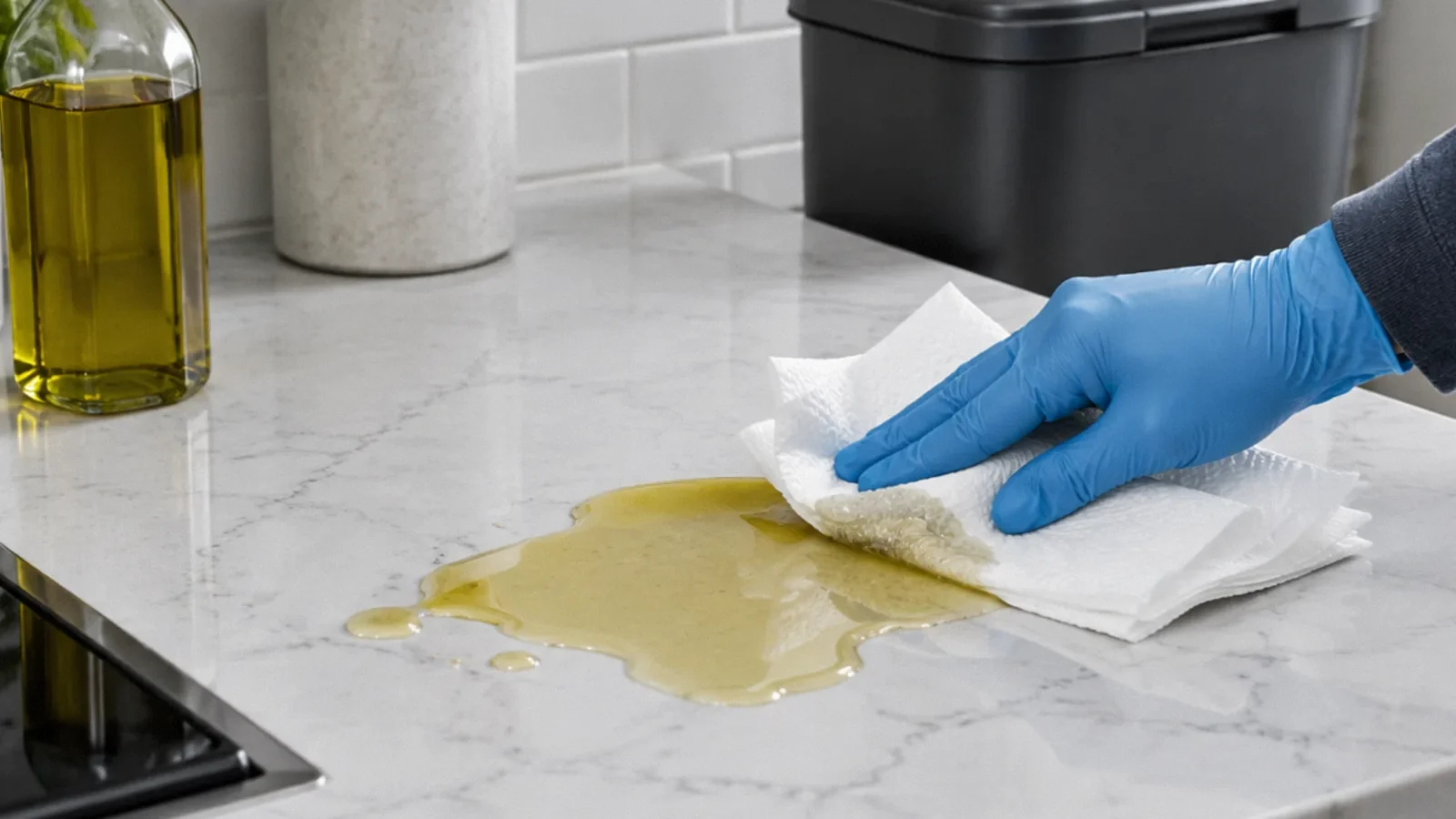
Lift off any solid food gently with a dull edge. Blot excess oil with a clean white cloth or paper towel; avoid rubbing it deeply into the fibers or spreading it to a larger area. Place a clean towel beneath a single layer of fabric while treating the spot so residue is less likely to transfer to the other side.
For a washable garment, apply a laundry prewash stain remover or a small amount of liquid laundry detergent to the mark, following the product label. Test first on an inconspicuous seam if colorfastness is uncertain. Gently work the product into the fabric with your fingers or a soft cloth rather than scrubbing aggressively. Leave it for the time directed by the product.
If the spill included colored sauce, remove the solids first and treat the combined stain according to the care and stain-remover instructions. A colored mark left after the grease is gone may be a separate dye or food stain; do not assume more grease treatment will remove it.
Wash and inspect before using heat
Launder the entire item with detergent on the warmest water setting safe for its care label. The American Cleaning Institute recommends appropriate pretreatment and the hottest water safe for the fabric for grease, but hotter is not automatically safe for every garment. Use the correct detergent amount and avoid overloading the machine so the fabric can move and rinse.
After washing, inspect the stained area in good light. If it is still visible, do not put the garment in a hot dryer or iron the mark. Heat can make an oily stain harder to remove. Air-dry if needed to see the result clearly, then repeat a suitable pretreatment and wash. A stain that has already been through a dryer may respond to further treatment, but removal is not guaranteed.
If detergent residue or a ring remains, check that the correct amount of product was used and wash again following the care label. Do not combine stain-removal chemicals in an effort to speed up the process.
Older or stubborn grease
An old grease mark has had more time to bind to fibers and may take several cycles. Apply a product labeled for grease and suitable for the textile, allow the labeled contact time and wash. ACI suggests using an appropriate concentrated heavy-duty cleaner on persistent bicycle grease before another wash; be gentle with a brush if the fabric can tolerate it.
Check whether the mark is actually grease. Some spots are faded dye, fabric-softener deposits or damage to the finish rather than removable soil. If the area changes color during the hidden test, stop. A professional cleaner can assess a garment that is valuable, fragile or still marked after repeated care-label-compliant attempts.
More product is not necessarily better. Excess detergent can leave residue and require extra rinsing. Never exceed a manufacturer’s dwell time or leave a treatment drying on a garment unless the product directions explicitly permit it.
Different materials and practical limits
Cotton and durable washable blends can often tolerate ordinary pretreatment and machine washing, but their care labels still control the temperature and cycle. Synthetics may hold oily residue; use a product labeled for the fiber and avoid high heat that can damage the garment. For printed designs, test the cleaner away from the print and avoid vigorous rubbing.
For wool, silk or an item labeled dry clean only, home washing can change texture, shape or color. Blot only if appropriate and take the item to a cleaner promptly. Do not promise the cleaner can restore every dye or finish. If the garment is workwear contaminated with unknown industrial chemicals, follow the employer’s handling instructions instead of washing it with household laundry.
Prevent transfer and repeat stains
Treat stains before putting clothes in a full load. Check pockets and sort laundry by care label and color, then use enough detergent for the load and soil level. Avoid pouring undiluted fabric softener directly onto clothing; some apparent oily marks come from softener deposits rather than food.
When cooking, an apron can protect frequently stained garments. Store stain remover according to its label and out of children’s reach. The key check is after washing and before heat drying: a few seconds of inspection can prevent a difficult stain from becoming harder to remove.
Your next-step checklist
- Check the garment and product labels.
- Blot excess grease and pretreat the spot.
- Wash using the warmest water safe for the fabric.
- Inspect before tumble drying or ironing.
- Seek professional care for delicate or persistent stains.
Related questions
Can an old grease stain be removed?
Sometimes. Repeat an appropriate pretreatment and wash, but the outcome depends on the fiber, stain and prior heat exposure.
Should I dry the garment before checking the stain?
Inspect it after washing and avoid heat drying while a mark remains. Heat can make the stain harder to remove.
Sources & context
Public guidance supports the principles in this article. The practical questions and examples are editorial interpretation, not a site assessment or a coverage decision. State-specific rules apply only where identified.
- Stain Removal Guideprimary
- Laundering Problems and Solutionsprimary
- Bicycle Grease Stainsprimary