Keep people away from a slippery spill, turn off heat only if safe and let hot oil cool. Absorb small amounts using a method suitable for the surface, then clean as its manufacturer directs. Do not pour grease down a drain, and never put water on a grease fire.
Check for fire, heat and slipping hazards
A pan of hot oil and a cooled spill are different problems. If grease is burning or the situation is unsafe, leave, close the door if possible and call 911. Never throw water onto a grease fire. Only attempt a small fire response if you are trained and have a clear escape route.
Keep children, pets and other people away from an oil spill. Grease can make hard floors extremely slippery. Turn off a nearby heat source only if you can do so without reaching across hot oil or flame, then wait until the oil and surface are cool enough to handle safely.
Contain a small cooking-oil spill
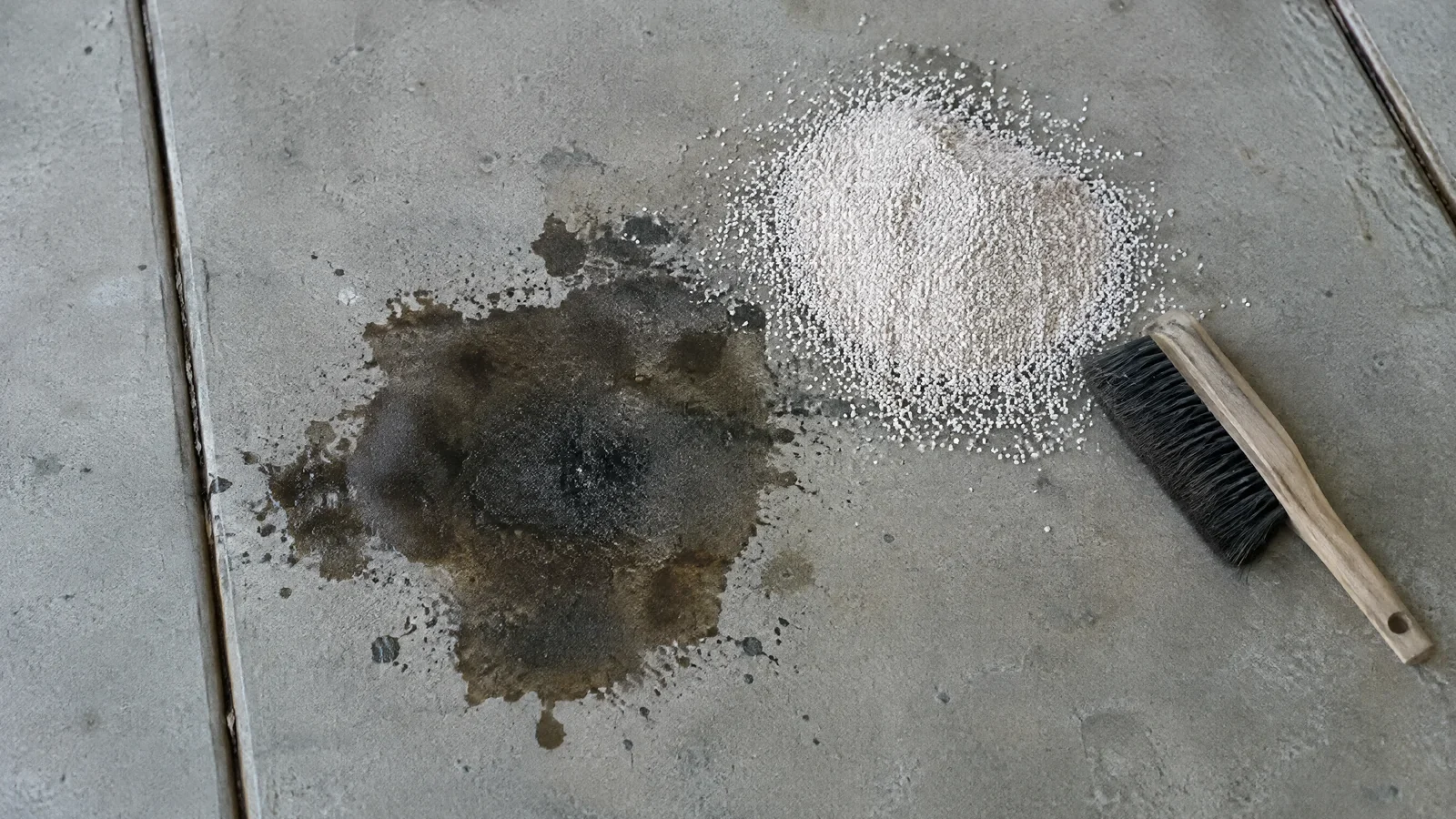
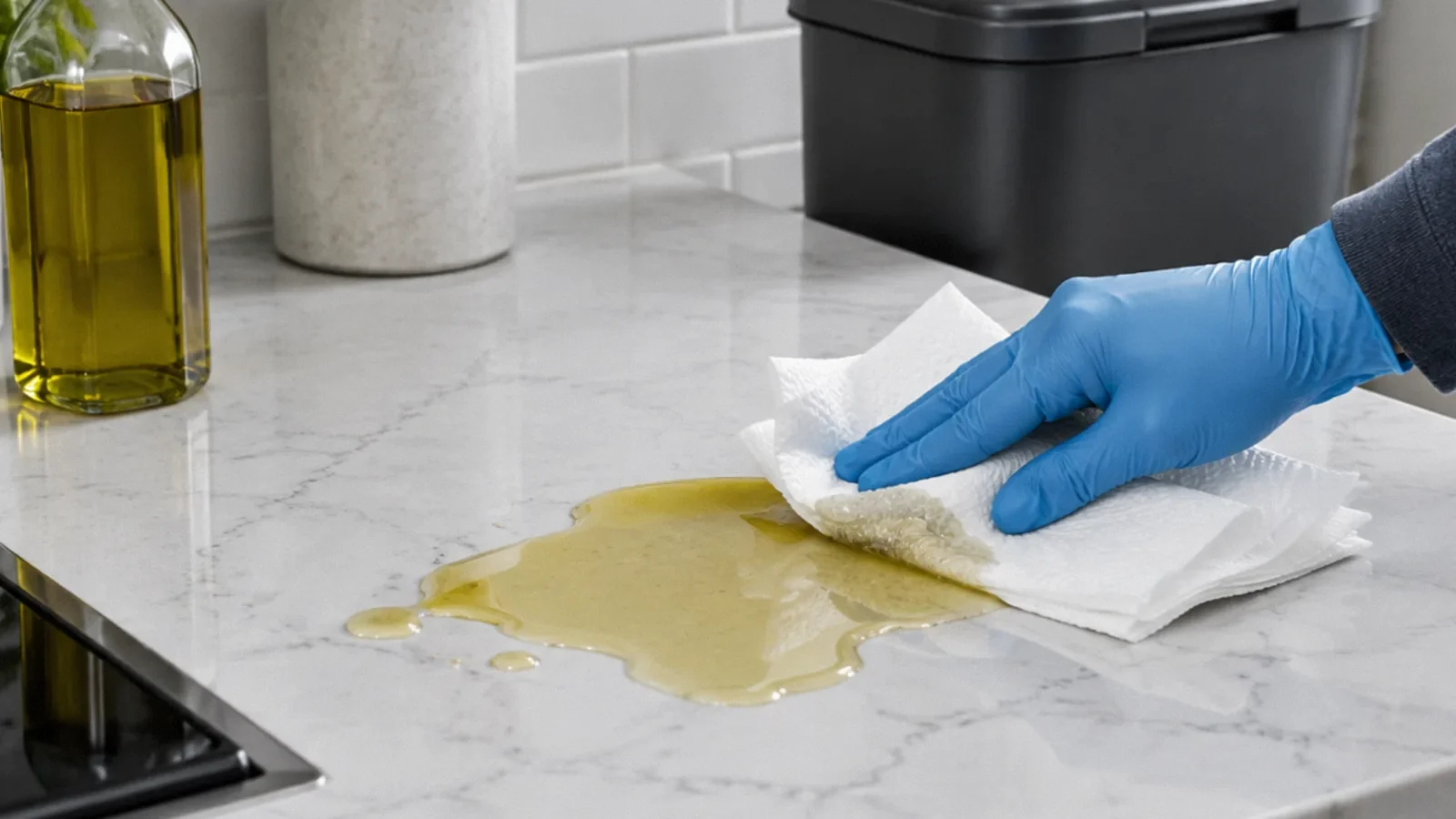
For a small cooled spill on a compatible hard surface, use disposable absorbent towels or another product approved for the material. Work from the outside toward the center to limit spreading. Pick up saturated material carefully and place it in a suitable container for disposal under local rules.
Do not push oil into floor joints, an electrical outlet or a drain. If the quantity is large, the spill is spreading, or you cannot identify the substance, keep away and seek appropriate assistance. Motor oil, fuel and industrial chemicals require different handling and disposal than cooking oil.
Clean the remaining film
Once excess oil is removed, follow the surface manufacturer’s instructions for a compatible cleaner. A small amount of suitable dish detergent may help on surfaces where the manufacturer permits it; rinse or wipe as directed, without flooding seams or nearby electrical equipment.
Dry the surface thoroughly and check that it is no longer slippery before allowing normal use. Never mix cleaners or add bleach to another chemical. An oil residue may require a repeated gentle treatment, but more concentrated product or scrubbing can damage a finish.
Stone, wood and delicate finishes
Porous stone, unfinished wood and some floor finishes can absorb oil. Use the manufacturer’s care guidance and test an approved product in a hidden area. Do not apply an unverified solvent, abrasive powder or large amount of water to an expensive or unfamiliar surface.
A stain that has penetrated the material may need a specialist. Tell the professional what spilled, how long it remained and what products were already applied. The appropriate remedy can differ for sealed stone, laminate, hardwood, grout and painted finishes.
Grease on clothing or carpet
Absorb excess cooled grease without rubbing it deeper. Stain removal varies by material; consult the dedicated guides for clothing or oil stains on different surfaces.
Keep oil out of the drain
EPA advises keeping cooking grease and oil out of sinks and toilets because they can contribute to blocked pipes and sewer backups. A garbage disposal does not prevent grease from entering plumbing. Scrape or wipe excess grease into a suitable container before washing cookware.
Check local rules for household cooking oil disposal or recycling; a business may have separate collection requirements. Do not transfer a hot liquid into an unsuitable container, and do not pour oil onto the ground or into a storm drain.
Restaurant and workplace spills
A commercial kitchen needs a facility-specific response that protects workers and diners from burns and slips. Follow workplace procedures, manufacturer directions and applicable local disposal rules. A grease interceptor has its own maintenance requirements and is not a substitute for containing a spill.
For a substantial spill, isolate the area and use trained staff or a suitable contractor. Record the location, material and disposal method where required. Do not represent a general home-cleaning tip as a complete commercial spill-response plan.
When to seek specialist help
A spill near exposed electrical equipment, a hot appliance or an unknown chemical can require help beyond ordinary cleaning. Do not touch wet electrical components. If vapors, fire or another immediate danger are present, leave and contact emergency services from a safe place.
For stubborn stains, ask a cleaner to identify the surface, method, likely limitations and cost before beginning. Some staining or finish damage can remain after cleaning. Explain previous products used so incompatible chemicals are not applied over them.
Removing accumulated kitchen grease
Built-up grease differs from a fresh puddle: allow hot surfaces to cool and check the finish and appliance instructions. On a compatible sealed surface, use a manufacturer-approved degreaser or mild detergent solution; test an inconspicuous area and follow the label. Soften and wipe in stages with a nonabrasive cloth instead of scraping a delicate finish.
Keep liquid away from electrical openings and avoid saturating unsealed wood, joints or stone. Do not mix cleaning chemicals. Collect greasy residue in the trash according to local instructions rather than rinsing it into a drain. If grease has reached inaccessible hood or duct components, use a qualified cleaning service.
Your next-step checklist
- Keep people away from hot or slippery oil.
- Let oil cool before handling.
- Absorb excess without spreading it.
- Use a cleaner compatible with the surface.
- Dispose of grease according to local rules.
Related questions
Can I pour cooking grease down the sink with hot water?
No. EPA advises keeping grease out of drains because it can contribute to blockages.
How do I clean a small oil spill on a counter?
After it has cooled, absorb excess oil and use a cleaner approved for the countertop, then dry the surface.
Can water put out a grease fire?
No. Water can make a grease fire more dangerous. Leave and call 911 if the fire is unsafe.
Is motor oil cleaned up like cooking oil?
No. Automotive oil and other chemicals need their own safe handling and local disposal guidance.
Sources & context
Public guidance supports the principles in this article. The practical questions and examples are editorial interpretation, not a site assessment or a coverage decision. State-specific rules apply only where identified.
- EPA: Grease and sewer blockagesfederal wastewater guidance
- EPA: Septic systems frequently asked questionsfederal wastewater guidance
- EPA: Safe cleaning and indoor airfederal cleaning guidance
- Public safety and technical guidanceofficial guidance
- Public safety and technical guidanceofficial guidance