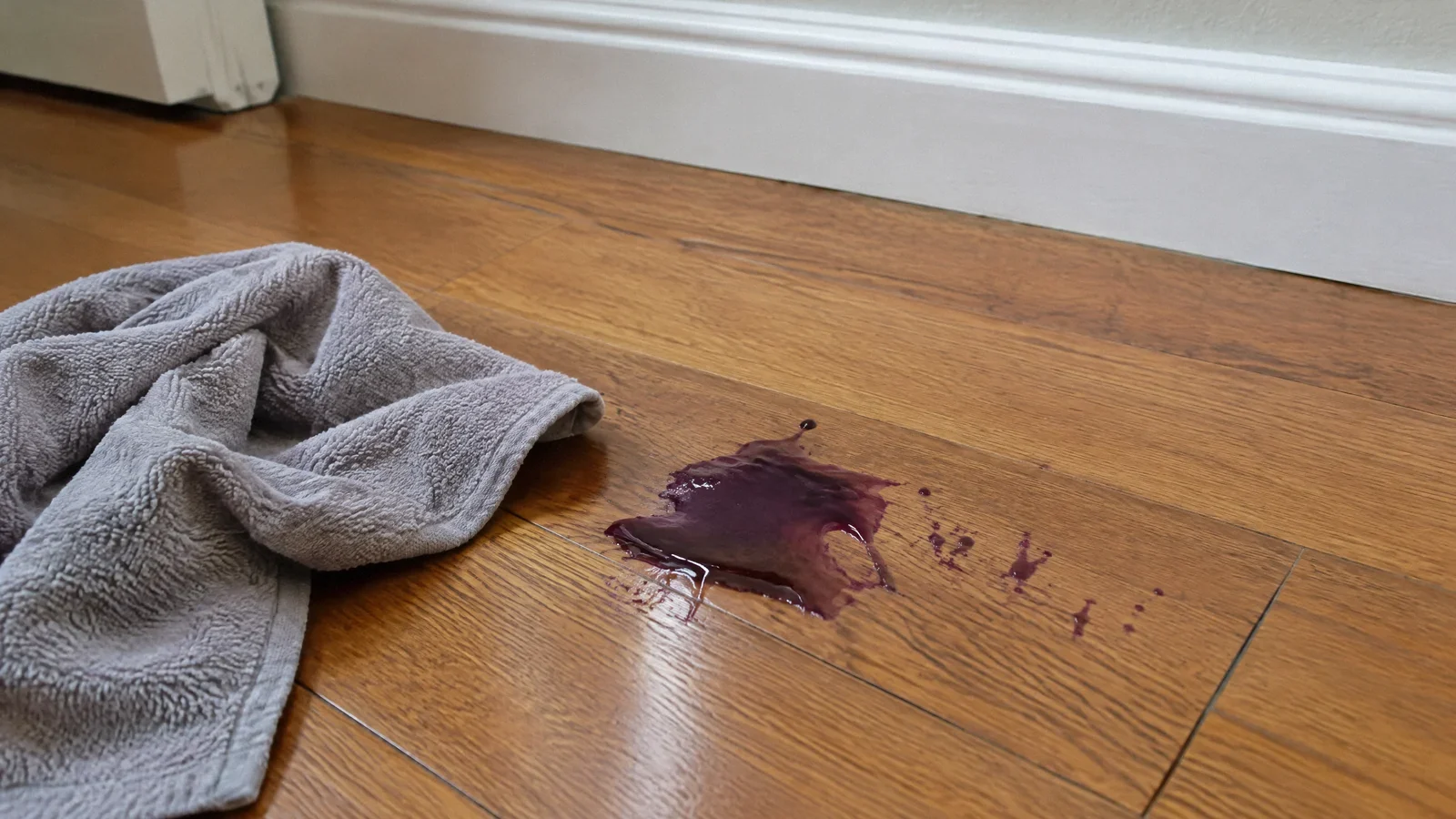
Blot fresh dye immediately with a dry soft cloth, then use only a cleaner approved for the wood finish after a hidden test. Avoid soaking or abrasive scrubbing. A stain in bare wood or a damaged finish may need professional repair.
Act quickly and protect the finish
Hair dye can stain a wood floor or furniture finish, and some dyes may penetrate worn coatings or bare wood. Blot a fresh spill promptly with a dry, soft white cloth, lifting rather than rubbing so the dye does not spread into seams. Replace the cloth as it picks up color. Do not pour water or cleaner over the spot.
The National Wood Flooring Association recommends cleaning spills immediately with a dry or slightly damp cloth and using a cleaner intended for the particular floor finish. A wet mop or steam mop can damage wood and finish. For a valuable piece of furniture or an uncertain finish, stop after blotting and ask a furniture conservator or flooring professional for advice.
Keep children and pets away while you clean, and follow the dye packaging’s safety instructions. Never combine household cleaners. A strong chemical that removes color from a cloth may also remove the floor’s finish or change the wood color.
Determine what surface you are treating
A sealed hardwood floor, an engineered wood floor and a waxed or unfinished wooden table do not necessarily tolerate the same cleaner. Find the flooring or furniture care instructions, or ask the installer or manufacturer what finish is present. A surface can look sealed while scratches, seams or worn areas expose the wood underneath.
Unfinished wood readily absorbs liquid. Avoid wet-cleaning it; conservation guidance recommends particular care with unfinished surfaces. Antique, painted, flaking or historically valuable furniture can have sensitive finishes, so a conservator should assess stains before liquid or solvent treatment. Original finishes may be difficult or impossible to restore once removed.
Test any permitted cleaner on a hidden area first. Apply it to the cloth rather than directly to the floor, use the amount specified, and allow the test to dry before checking for a cloudy patch, color transfer, dullness or a change in sheen. Stop if the finish changes.
Clean a fresh mark on a sealed floor
After blotting the dye, use a soft cloth lightly dampened with the floor manufacturer’s approved cleaner, following its directions. Gently blot or wipe a small area, changing to a clean part of the cloth as color transfers. If the product requires a rinse, use only the amount and method specified by its label. Dry the area immediately with a separate soft cloth.
Work from the edge of the spill inward. Avoid abrasive pads and vigorous scrubbing: removing or polishing through the finish can leave a permanent shiny or dull patch. Avoid flooding seams, because liquid can enter between boards and cause additional damage.
Check the spot in normal light after the floor has dried. If the color has improved but remains in the coating, ask the finish manufacturer or a flooring professional about the next step. If it has penetrated bare wood, surface wiping may not remove it. Do not continue applying stronger products simply because the first attempt did not work.
What to do with a dried or set-in dye stain
A dried mark may be dye in the finish, dye in the wood or a chemical change to the finish itself. These can look similar but respond differently. A professional can inspect the coating and discuss whether localized cleaning, repair or recoating is appropriate. On a patterned or stained floor, a patch may not match the surrounding boards exactly.
Avoid routine internet remedies involving bleach, peroxide, acetone, alcohol, abrasive paste or concentrated solvents unless the manufacturer of the exact finish explicitly approves them. These can discolor wood or damage coatings, and some finishes dissolve in solvents. Never mix bleach with ammonia or other cleaners.
A professional may recommend sanding and refinishing, but sanding removes material and may not be appropriate for thin engineered-wood wear layers or historic furniture. Ask about the repair boundary, color match and finish compatibility before authorizing work. A small test can reveal risk but cannot promise a perfect result across the entire stain.
Furniture, unfinished wood and practical limits
On a modern finished wooden table, use the furniture manufacturer’s care instructions and a clean soft cloth. Avoid letting liquids sit around joints or veneers. If the finish is damaged or the dye has entered a seam, a furniture repair specialist can evaluate it. Do not scrape with a metal blade or apply heat to force the dye out.
On bare wood, prompt dry blotting is the conservative first step. Further wet cleaning may spread the dye into the grain. A conservator or wood-finishing professional can assess whether the surface can be treated without leaving a larger pale area.
If dye has contacted a rug, grout or another material as well as wood, treat each according to its own care instructions. A product approved for a tile floor may be unsuitable for a wood finish. Keep products and wet cloths off the clean surrounding floor while working.
Prevent the next spill
Set up hair coloring away from vulnerable wood when possible. Use a waterproof protective covering with a secure edge, keep containers stable and have dry towels ready. Wipe any splash promptly before it can enter seams.
Keep the flooring manufacturer’s care instructions and the finish name with household records. Knowing the coating helps a professional select a compatible treatment if a stain occurs later. No household method guarantees full removal without changing the finish, particularly after a stain has dried.
Your next-step checklist
- Blot fresh dye without spreading it.
- Identify the wood finish and read its care instructions.
- Test a permitted cleaner in a hidden area.
- Avoid soaking seams, abrasion and unapproved solvents.
- Ask a professional about persistent or valuable-surface stains.
Related questions
Can I use bleach on hair dye on hardwood?
Do not use bleach unless the exact finish manufacturer approves it. It can change the wood or coating and is not a guaranteed dye remover.
Can dried dye be removed completely?
Sometimes, but dye may penetrate wood or change the finish. A professional can assess the stain and repair options.
Sources & context
Public guidance supports the principles in this article. The practical questions and examples are editorial interpretation, not a site assessment or a coverage decision. State-specific rules apply only where identified.
- Wood Floor Maintenanceprimary
- Wood Floor Cleaning Tipsprimary
- Care of Furniture Finishesprimary
- Care of Wooden Furnitureprimary