Blot a fresh ink mark without rubbing, check the fabric care label and test a compatible stain remover on a hidden area. Ink formulas and fabrics vary, so follow the product instructions and inspect the item before heated drying. Delicate or dry-clean-only items may need a professional cleaner.
Contain a fresh ink mark
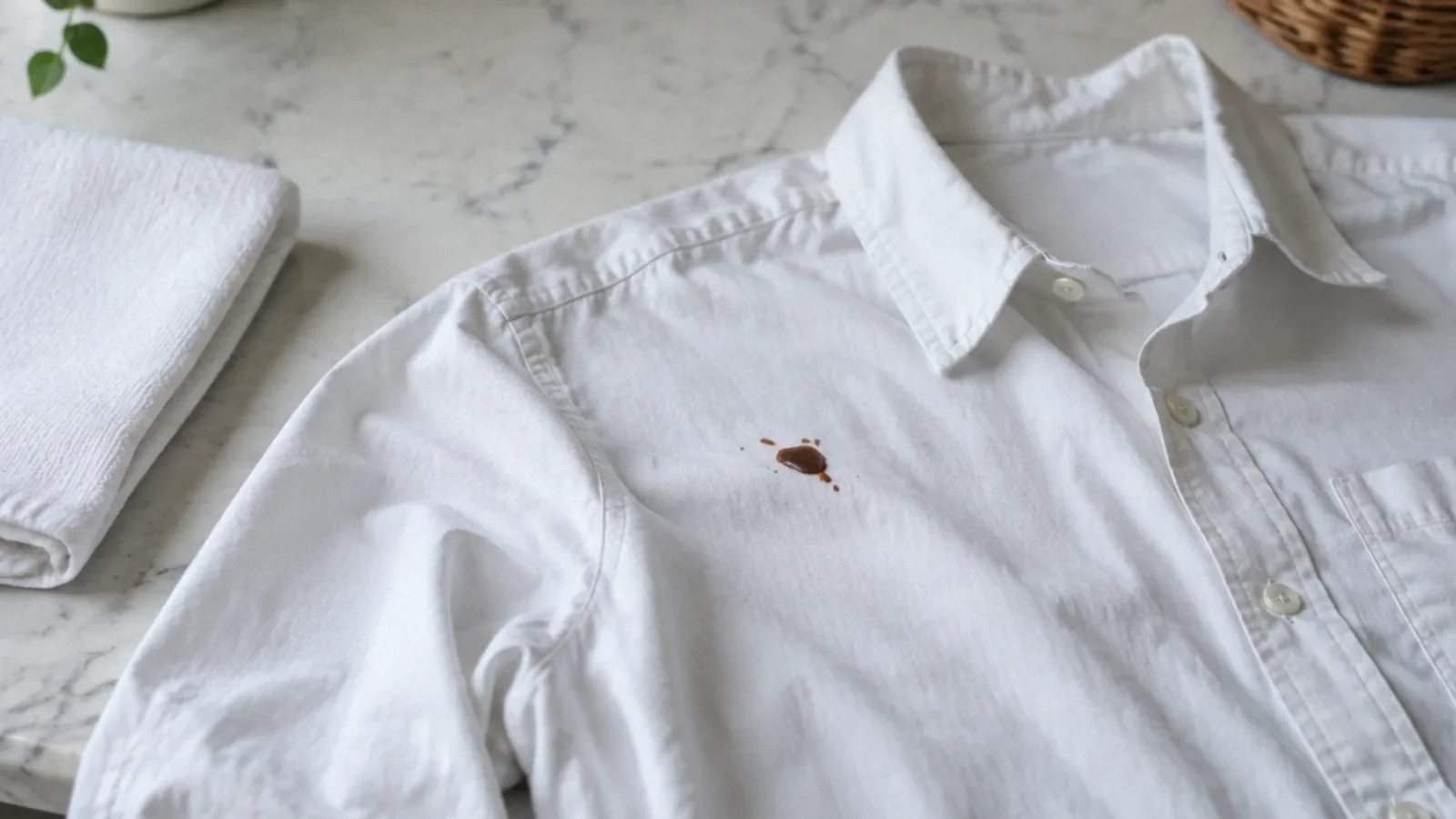
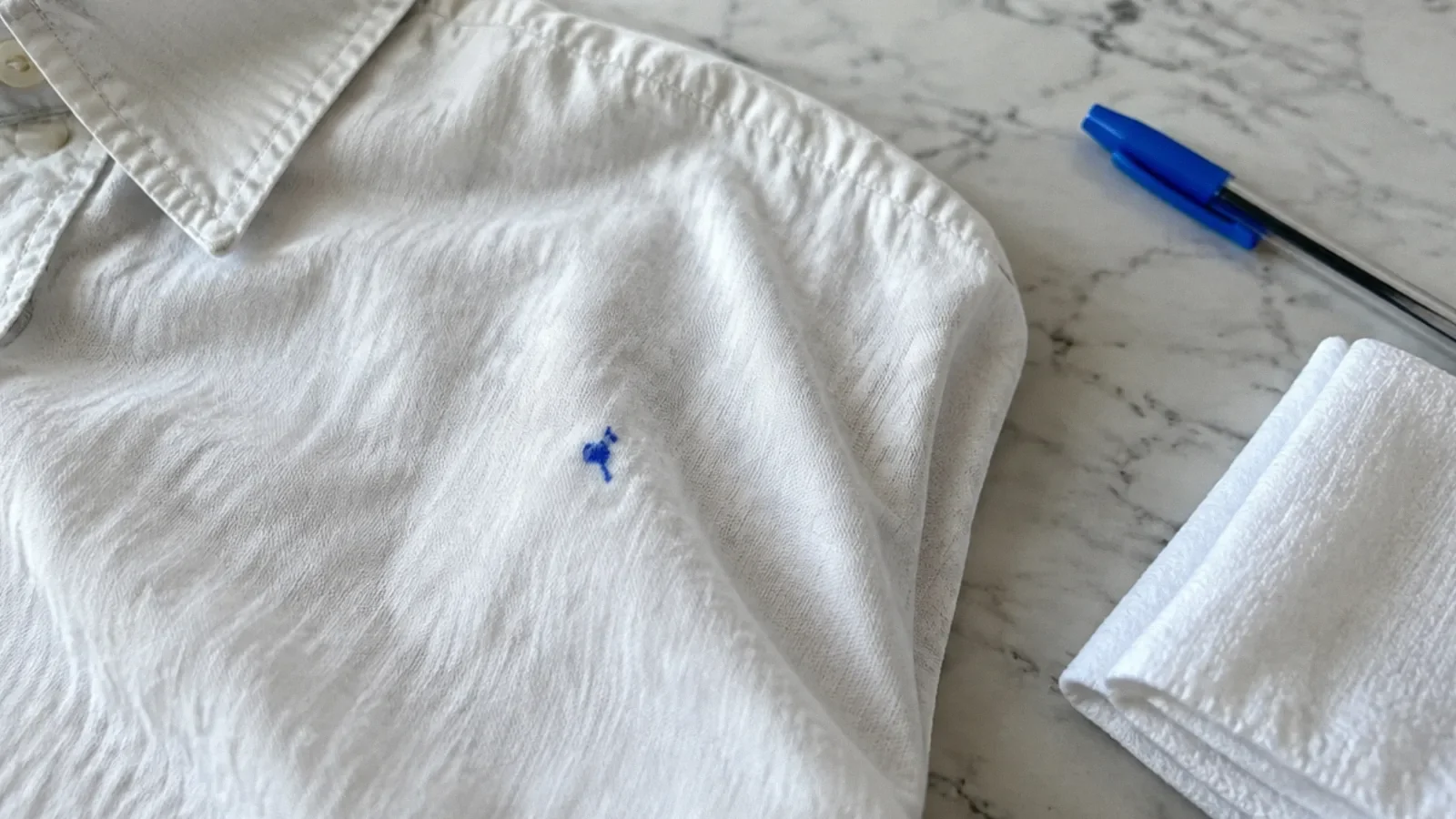
Place a clean white absorbent cloth or paper towel under the stained area if practical, so transferred ink does not reach another layer. Blot gently with another clean cloth and change to a clean area as ink transfers. Rubbing can spread the mark or damage the weave.
If a pen has leaked heavily, lift loose residue carefully and keep the item away from upholstery or other surfaces. Work from the outside of the stain toward the center. Do not soak an upholstered cushion or force ink deeper into a carpet backing.
Identify the ink and fabric
Ballpoint, felt-tip, gel and permanent inks have different formulations, and a method that works on one may not work on another. Check the care label for washing, temperature and professional-cleaning instructions. Silk, leather, suede, acetate and specialty finishes need particular caution.
Test any product on an inconspicuous area and allow the test area to dry before judging color or finish changes. If the item is dry-clean-only, valuable or fragile, stop after removing loose residue and tell a professional cleaner what type of ink and fabric are involved.
Choose a compatible pretreatment
University of Georgia Extension lists different approaches for ballpoint and other inks and emphasizes following the care label and testing. Choose a stain remover labeled for the fabric and ink where possible. Follow its instructions for application, contact time, rinsing and laundering.
Some commercial stain removers contain solvents that can be flammable or irritating. Use them only as labeled, with suitable ventilation and away from flames or heat. Do not mix products, apply an unknown solvent to a delicate item or assume that a household remedy is safe on every dye.
Blot and launder washable clothes
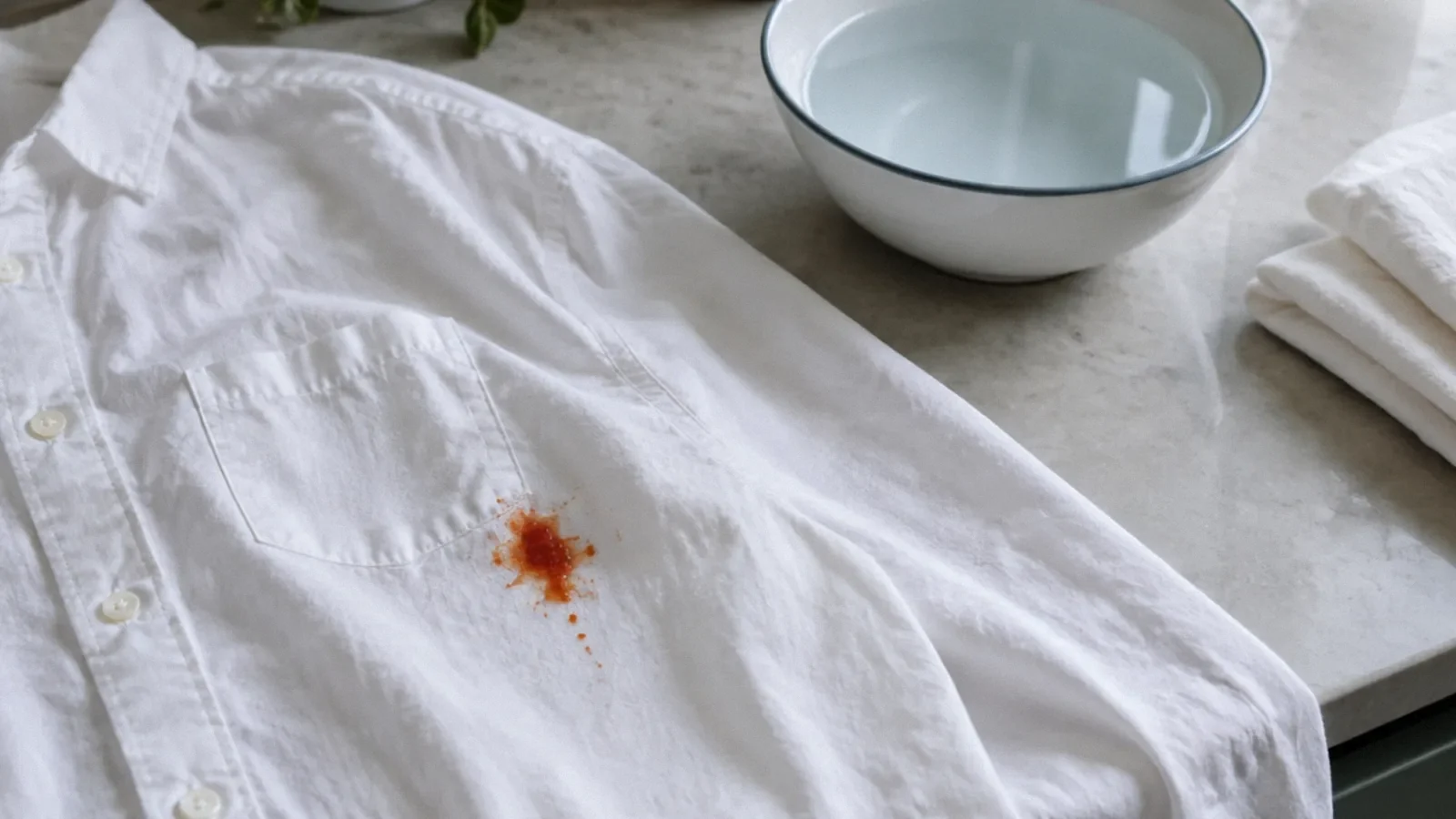
For washable fabric, work over an absorbent backing and blot rather than scrubbing. Replace the backing as it picks up ink to reduce transfer. After using a compatible pretreatment, rinse or launder according to the garment and product instructions.
Check the item in good light after washing. If ink remains, avoid a heated dryer until you have decided whether another label-compatible treatment or professional cleaning is appropriate. Air-dry for inspection when permitted by the care label. Some stains cannot be removed without damaging the fabric.
Old and set ink stains
A dried mark may take more than one treatment and may not come out completely. Do not compensate by scraping, using an incompatible chemical or leaving a product on longer than directed. Consider the value of the item and the risk of color loss before repeating a treatment.
If one ink component moves while another remains, use a fresh absorbent backing and follow the selected product’s directions. A professional cleaner can assess whether further treatment is worthwhile. Keep the pen or note its ink type if that information is available.
Ink on upholstery and carpet
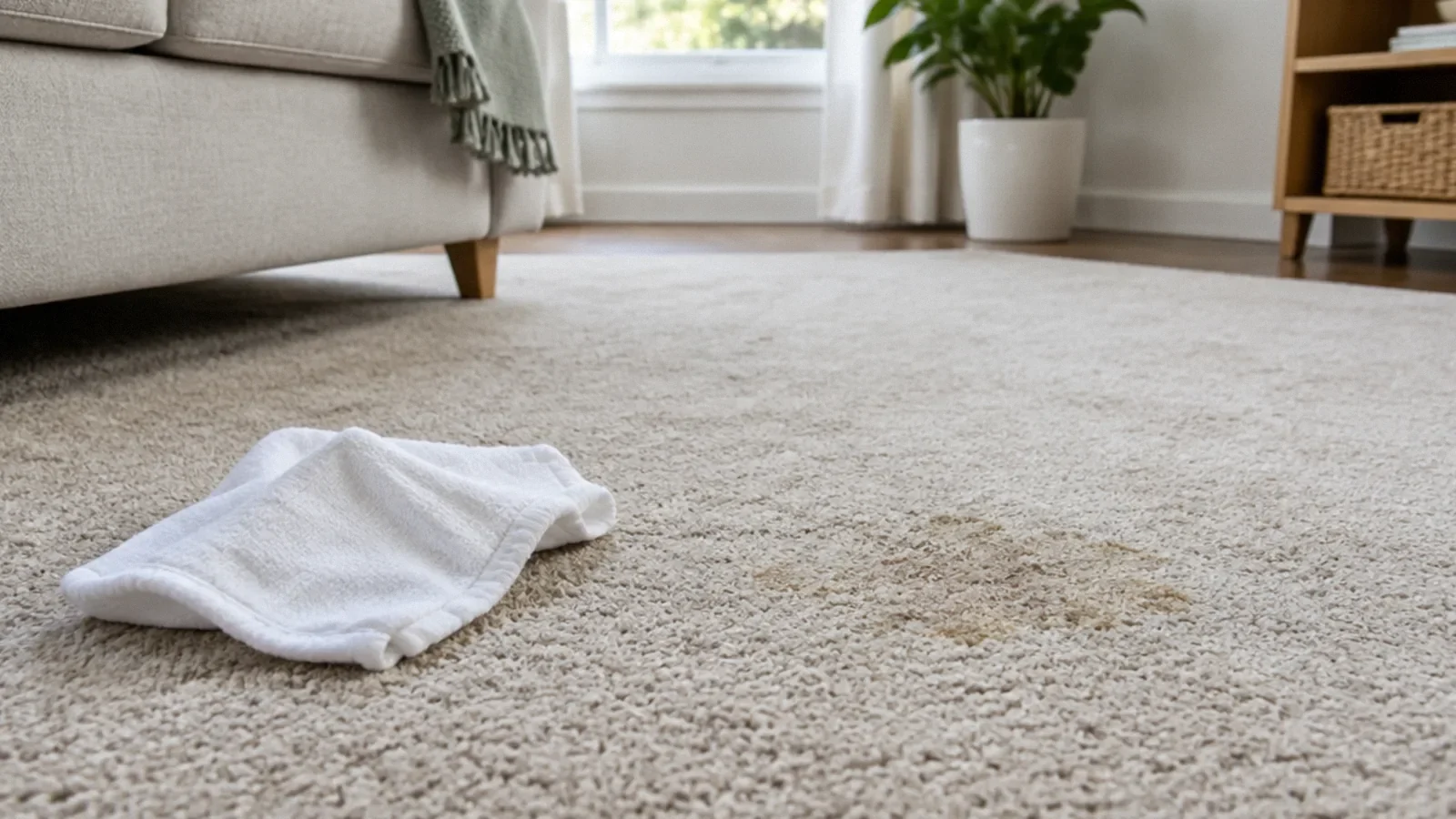
Upholstery and carpet can transfer dye, develop rings or hold moisture in the backing. Check the cleaning code and material care instructions, test a compatible product and use the least amount needed. Blot without rubbing and avoid soaking the cushion or pad.
A large spill, delicate fabric or ink that has reached the padding may require a specialist. Do not use a hot steam cleaner as a first response to an unknown ink mark. See the related carpet stain guide for general precautions and limitations.
Avoid unsafe mixtures and misleading shortcuts
Never mix bleach with ammonia, vinegar or other cleaners. Read the labels and rinse as directed before changing products. Keep solvents and cleaning supplies away from flames, children and pets, and store them in their original containers.
A product marketed for one type of stain may discolor another fabric. Stop immediately if dye transfers or the finish changes. A clean-looking surface is not worth damaging a valuable item; a conservative test and professional advice can limit that risk.
Prevent another leak
Cap pens, check pockets before washing and keep writing instruments away from upholstered surfaces when possible. Store a plain white blotting cloth where it can be reached quickly. Prompt gentle attention can reduce spreading, although it cannot guarantee complete removal.
Keep fabric care labels and product instructions available. Record what you used if you later take the item to a cleaner. That information helps the professional avoid incompatible treatments and choose a method suited to the item.
A practical upholstery ink response
For a fresh pen mark on a sofa or chair, lift any loose ink source, blot with a clean white cloth and change to a clean section as ink transfers. Find the upholstery code and the maker's instructions; a removable cover is not automatically washable. Test a cleaner labeled for the ink and the particular fabric in a hidden area and allow the test to dry before deciding whether to proceed.
Apply only as directed and blot from the edge toward the center without soaking the backing or cushion. Do not apply a water-based product to S-only fabric by assumption. Solvents can be flammable and damage foam, so follow product instructions and consider a professional for S-only, unknown or delicate upholstery. Stop if dye transfers, a ring appears or the ink spreads; a deep spill and permanent ink may not be fully removable.
Your next-step checklist
- Blot without rubbing and use an absorbent backing.
- Check fabric and product labels.
- Test the cleaner in a hidden area.
- Keep solvents away from heat and never mix cleaners.
- Inspect before using a heated dryer.
Related questions
Can ink stains come out of clothing?
Some can be reduced or removed, depending on the ink, fabric and how long it has set. Follow compatible product and garment instructions.
Should I rub a fresh ink stain?
No. Blot gently with a clean absorbent cloth and use a backing to limit transfer.
Can I use the same cleaner on a couch?
Not automatically. Check the upholstery care code, test a suitable product and avoid soaking the cushion.
Can I dry the garment before checking the mark?
Inspect first. If ink remains, avoid heated drying while considering a compatible further treatment or professional cleaning.
Sources & context
Public guidance supports the principles in this article. The practical questions and examples are editorial interpretation, not a site assessment or a coverage decision. State-specific rules apply only where identified.
- University of Georgia Extension: Ink stainsuniversity extension guidance
- Carpet and Rug Institute: Cleaning and maintenanceindustry care guidance
- Poison Control: Cleaning safelypoison center guidance