Lift excess sauce, check the fabric care label and treat a washable item with a compatible laundry stain remover according to its directions. Wash as directed and check the mark before using a hot dryer. Oil, dyes, fabric type and elapsed time affect the result; not every stain will come out.
Act without spreading the sauce
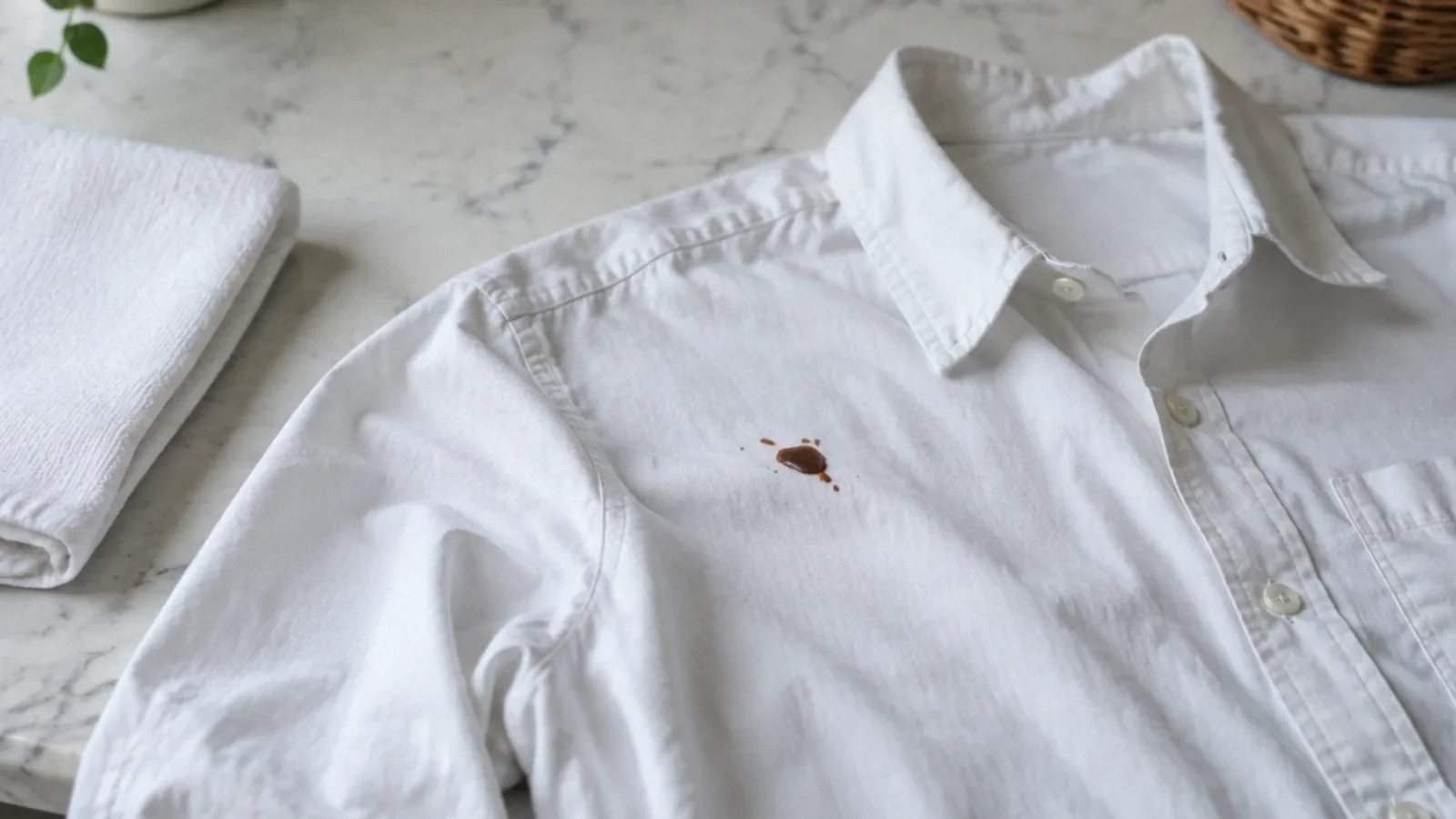
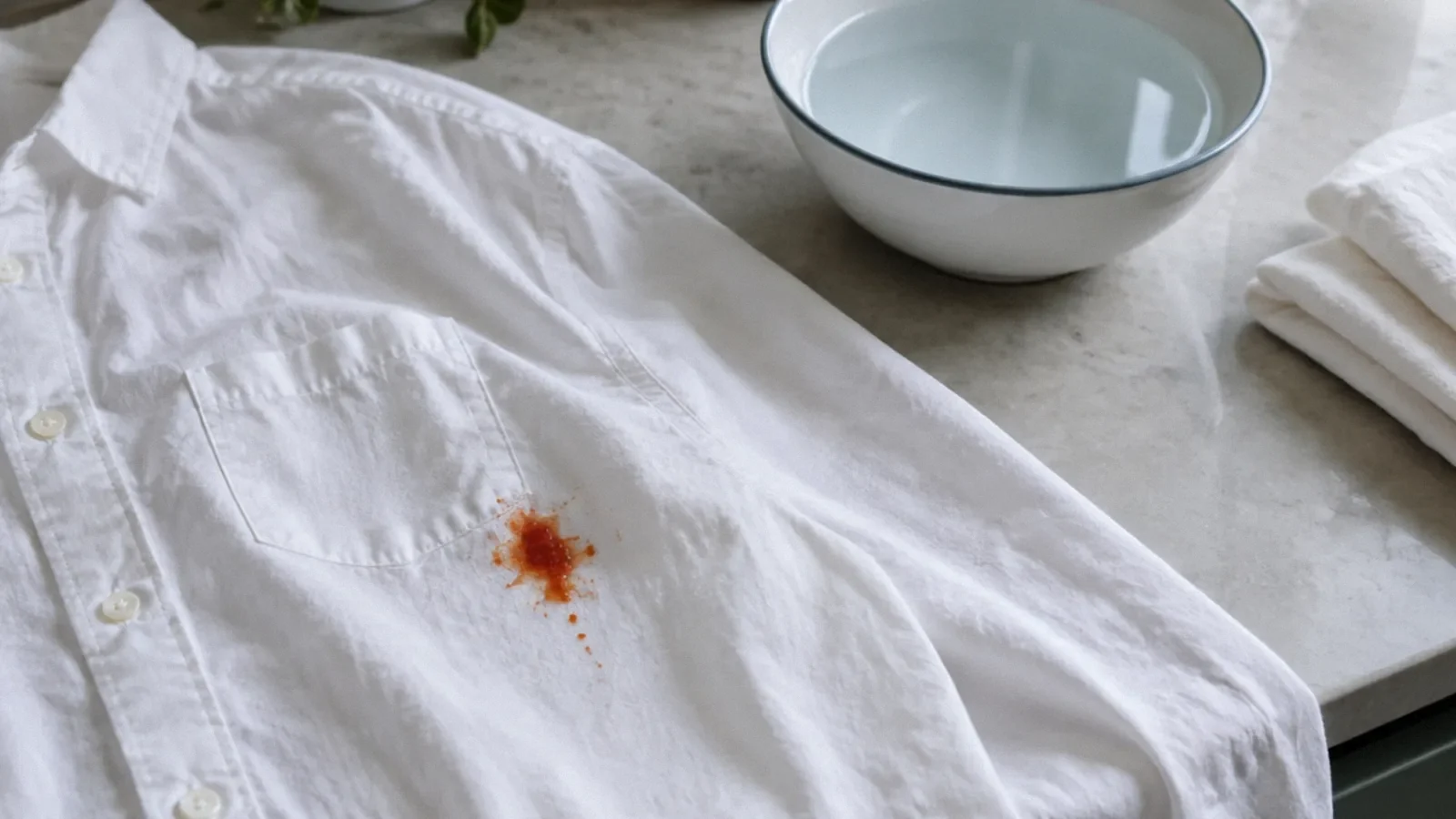
Tomato, ketchup and pasta sauce can leave colored residue; some sauces also contain oil or other ingredients. Gently lift any solids with a dull spoon or the edge of a clean card. Blot excess liquid with a clean white cloth rather than rubbing it across a wider area.
Work from the outside of the mark toward the center and use a clean part of the cloth as it absorbs residue. Do not scrape a delicate weave or press sauce deeper into an upholstered cushion. Photograph an expensive item before treatment if a professional may need to assess it.
Check the fabric care label
A washable cotton shirt, a silk blouse and a dry-clean-only jacket do not tolerate the same treatment. Read the garment care label and the stain remover label first. Test any permitted product in an inconspicuous area for color change or damage, and follow its directions.
If the label calls for professional cleaning, lift loose material without soaking or rubbing the item and tell the cleaner what spilled. Do not assume a home remedy is safe simply because it is described as natural. Dyes, finishes and trims may react differently from the main fabric.
Pretreat a washable item
For washable apparel, University of Georgia Extension suggests a commercial prewash stain remover followed by laundering with a heavy-duty liquid detergent. Use a product suitable for the fabric and follow its label for application and the time to leave it on. Do not use more product or longer contact time than directed.
Rinse or launder according to the product and garment instructions. A cool-water rinse may help remove loose residue where the fabric permits it. Oily sauces may need a compatible product designed for mixed food stains. The goal is to lift residue without damaging the material or its color.
Inspect before using heat
After washing, examine the stained area in good light before putting the item in a heated dryer or pressing it. If the mark remains, consider repeating a label-compatible treatment or consulting a cleaner. Heat can make some stains harder to remove, and a dryer cycle may hide whether the first treatment worked.
Air-drying for inspection is useful when the care label allows it. Avoid promising that sunlight, bleach or hot water will remove every tomato mark: some dyes fade and some fabrics or finishes are not compatible with those methods. Follow the specific item and product instructions.
Older stains and oily sauce
A dried stain can require more than one gentle treatment, but the longer it remains, the less predictable the result. Apply a compatible pretreatment according to its instructions rather than scraping aggressively. A professional cleaner may be a better choice for a set stain on a valuable garment.
Pasta sauce, pizza sauce and barbecue sauce can combine tomato pigments with fats, spices or dyes. If one component comes out and another remains, identify the residue before trying another product. Rinse according to the label and never mix cleaners; incompatible chemicals can release dangerous fumes.
Carpet and upholstered furniture
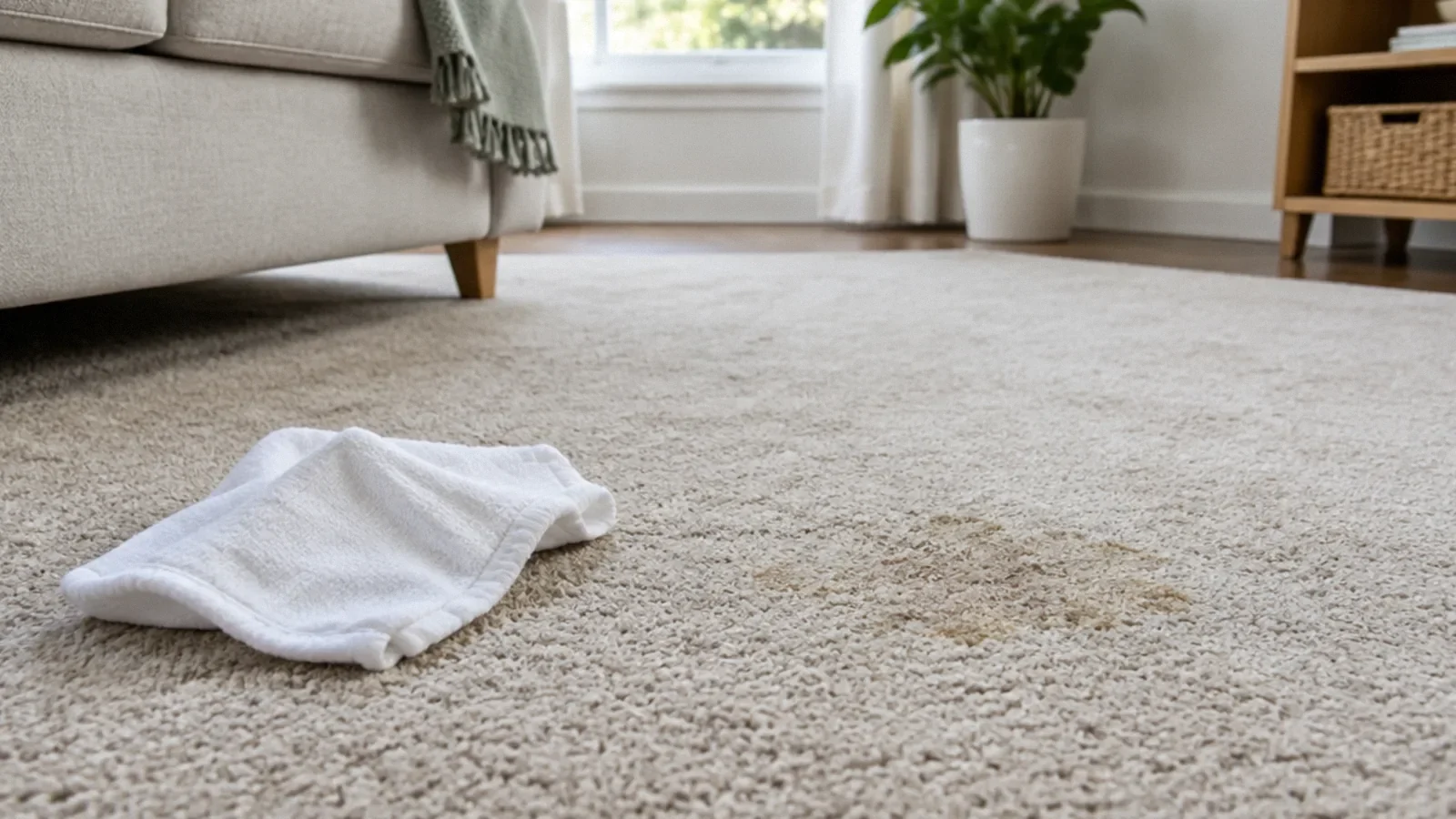
Carpet and upholstery need less water than a washable garment because moisture can reach backing or padding. Lift solids, blot and use only a cleaner approved for the specific material after testing it. Follow the upholstery cleaning code and product instructions, and stop if color transfers or a ring forms.
For a large spill or delicate fiber, a professional can assess whether the cushion or backing is affected. Do not saturate or scrub the area; a persistent damp cushion can create a separate moisture problem. See the related carpet stain guide for a broader approach to stains on floor coverings.
What to avoid
Do not combine bleach with ammonia, vinegar or other cleaning products. Poison Control advises reading cleaning-product labels, using adequate ventilation and keeping products away from children and pets. Use only fabric-safe products and rinse or launder as directed before changing methods.
Avoid aggressive brushes, undiluted household chemicals and improvised solvent mixtures. Commercial guidance may describe specialized solvents, but they can be flammable, toxic or unsuitable for home use. A simple compatible laundry product and a professional cleaner are often safer choices for an uncertain material.
Set expectations and prevent a repeat
Results depend on the fiber, dye, finish, sauce ingredients and how long the stain sat. Some tomato-based marks can be permanent. The realistic goal is to reduce the stain without weakening or discoloring the fabric, not to guarantee an invisible result.
Keep a plain white blotting cloth available and respond promptly to future spills. Save care instructions for specialty upholstery and rugs. If color loss or a large water ring develops, stop and consult a qualified cleaner before adding another treatment.
Your next-step checklist
- Lift solids without spreading the stain.
- Read the fabric and product labels.
- Pretreat and launder washable fabric as directed.
- Inspect before heated drying.
- Use minimal moisture on carpet and upholstery.
Related questions
Can tomato sauce stains come out of clothes?
Often they can be reduced with a compatible pretreatment and laundering, but success depends on the fabric, stain age and ingredients.
Should I use hot water on tomato sauce?
Follow the garment and product instructions. Check the stain before using a heated dryer; heat can make some marks harder to remove.
Can I use the same method on a couch?
Not necessarily. Follow the upholstery care code, test any cleaner and avoid soaking the padding.
Should I mix bleach and vinegar for a stain?
No. Do not mix bleach with vinegar, ammonia or other cleaners. Use products only as their labels direct.
Sources & context
Public guidance supports the principles in this article. The practical questions and examples are editorial interpretation, not a site assessment or a coverage decision. State-specific rules apply only where identified.
- University of Georgia Extension: Tomato and tomato-sauce stainsuniversity extension guidance
- Carpet and Rug Institute: Carpet cleaning and maintenanceindustry guidance
- Poison Control: Cleaning safelypoison center guidance