Fix the water source first. Visible mold in porous carpet or padding is often best addressed by removing and replacing the affected material; surface sprays cannot reliably reach growth underneath. Contaminated water, extensive damage, or hidden growth calls for professional help.
First decide whether the carpet can be saved
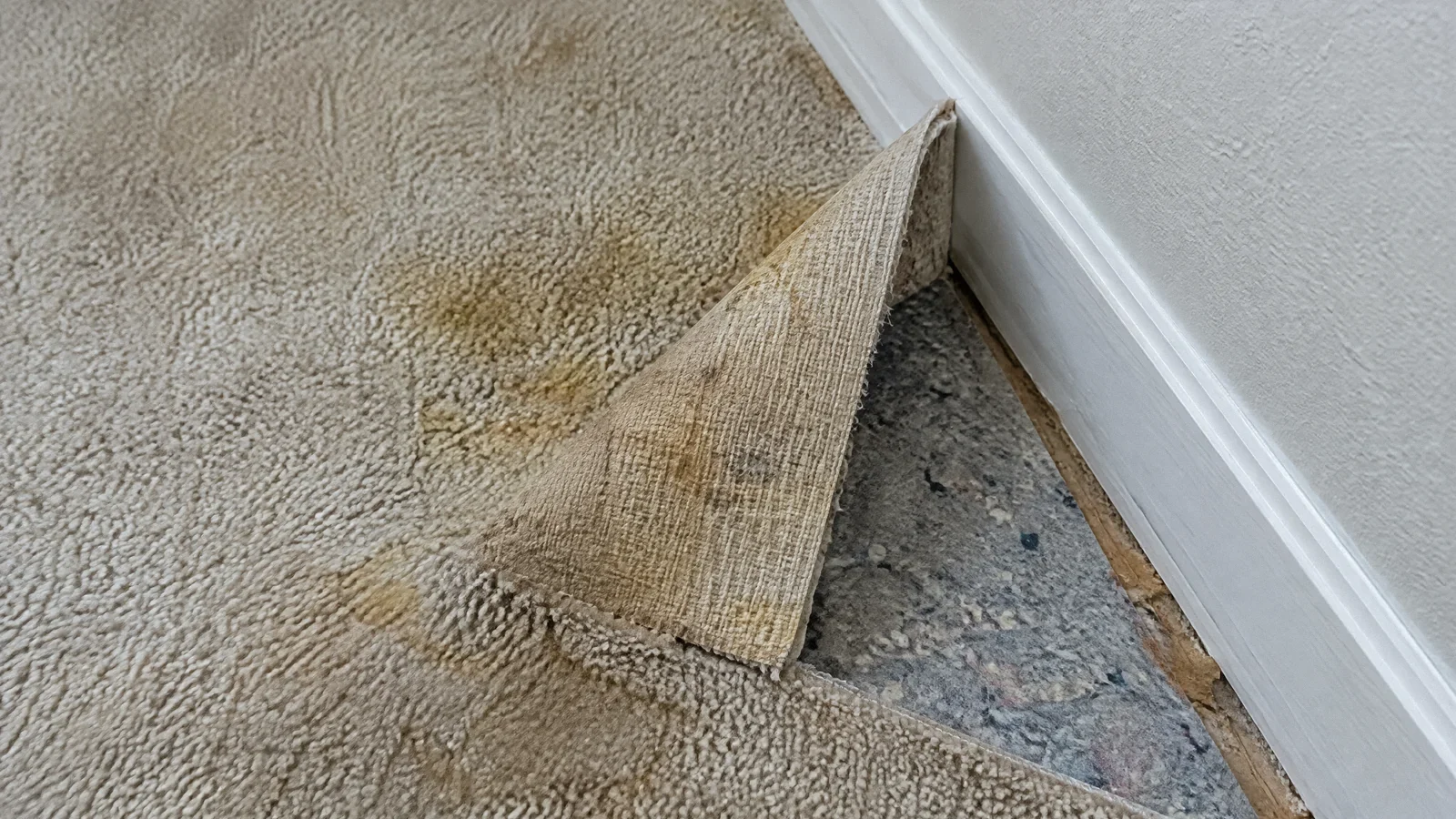
A musty smell or visible growth on carpet is a reason to investigate moisture, not a reason to spray fragrance over it. If carpet or its pad has visible mold, replacement is often the practical choice: growth can penetrate fibers, backing and padding where surface cleaning cannot reach it. Do not assume a pale mark is mildew or that a dark mark identifies a particular species.
Find and stop the source of water first. A leaking supply line, rain entering at a wall, condensation, or a flooded room each needs a different repair. If the source is unresolved, even a successful cleaning can be followed by another wetting. Keep people and pets away from damaged material while deciding what needs to be removed.
The distinction between a fresh clean-water spill and a contaminated flood is important. EPA advises calling a professional experienced in contaminated-water cleanup when sewage or contaminated water caused the damage. Do not try to disinfect sewage-soaked carpet for reuse.
Check the carpet, backing, pad and floor
A dry-looking surface does not establish that the pad or subfloor is dry. Look for recurring dampness at edges, stains spreading from a wall, curled seams and a smell strongest near a particular area. Do not pull up a large fitted carpet yourself if doing so would disturb suspected mold or damaged building materials. A qualified assessor can inspect inaccessible areas and measure moisture in the flooring and adjacent wall.
A small clean-water spill addressed promptly is different from carpet that remains wet for days. EPA recommends drying wet materials within 24 to 48 hours to reduce the chance of mold growth; this is a response target, not a guarantee that no mold exists. Carpet backing and pad also need to dry. When the pad is wet or growth is present, removal and replacement may be necessary even if the upper fibers seem acceptable.
Avoid walking on visibly damaged carpet and tracking debris through the home. Photograph the affected area before work if you need a record for a landlord or insurer. Ask the property owner before cutting or removing installed flooring.
When to get professional help
EPA suggests that many mold problems affecting less than about 10 square feet may be manageable by a homeowner, but the size of the visible patch is only one consideration. Hidden growth, extensive water damage, a sewage source or a recurring leak changes the decision. A small spot on the face of carpet can have a much larger affected area underneath.
People with asthma, allergies, other respiratory conditions or weakened immune systems should avoid exposure and consult a health professional about individual concerns. For significant contamination or uncertainty about hidden damage, arrange an experienced remediation assessment. Ask how the contractor will contain debris, identify the moisture source, handle the carpet and verify that underlying materials are dry.
If an air-handling system may be contaminated, do not run it until it has been assessed. Disturbing mold or directing air across it can distribute particles. Never place powered drying equipment on a wet floor or handle electrical equipment where water creates a shock hazard.
Remove affected material without masking the cause
For a confirmed moldy porous carpet or pad, the objective is to remove the contaminated material and correct moisture, not merely kill growth on the exposed surface. Bleach is not a substitute for removal, and mixing bleach with ammonia or other cleaners is dangerous. Follow local disposal requirements and the instructions of the remediation professional.
For a small job a homeowner chooses to handle, EPA recommends an N95 respirator, gloves and goggles without ventilation holes. Keep dust and debris contained, avoid unnecessary agitation and seal removed material in bags before carrying it through clean areas. If material is widespread, difficult to contain, or adjacent to suspect insulation or wallboard, stop and use a professional.
After removal, inspect the exposed floor and adjacent materials. Sound hard surfaces can generally be scrubbed with detergent and water and dried thoroughly; porous material that cannot be completely cleaned may need replacement. Do not cover a damp subfloor with a new pad. Follow the flooring and adhesive manufacturers’ requirements for acceptable moisture before reinstalling.
Confirm the problem is resolved before replacing carpet
The repair is not complete simply because the visible patch has disappeared. The water source should be corrected, affected materials removed or cleaned as appropriate, and the floor and neighboring materials dry. A persistent odor or new staining means further investigation is needed; it does not by itself identify a mold species or prove the location of hidden growth.
Use a written scope when hiring help: identify what will be removed, what surfaces will be cleaned, how the area will be contained and how drying will be checked. Retain photographs, receipts and moisture readings where available. If the leak returns after installation, address it immediately rather than relying on repeated deodorizing.
Prevent another wet carpet
Fix plumbing and exterior leaks promptly, maintain drainage away from the building and address recurring condensation. In a basement, choose floor finishes with the actual moisture conditions in mind rather than installing absorbent carpet over a chronically damp slab.
When a clean-water spill happens, extract water safely and arrange drying as soon as possible, including the backing and pad. If you cannot dry all layers promptly, ask a water-damage professional whether removal is needed. Ventilation and humidity control can help after the source is fixed, but they do not repair leaks or make contaminated floodwater safe.
Your next-step checklist
- Stop the leak and keep people away from visibly damaged material.
- Check the backing, pad and floor; do not rely on the carpet surface alone.
- Use professional help for sewage, widespread or hidden damage.
- Replace moldy porous material when it cannot be thoroughly cleaned.
- Dry and verify the subfloor before new carpet is installed.
Related questions
Can I spray bleach on moldy carpet?
Bleach does not remove mold-contaminated material from the carpet and pad. Porous material may need replacement. Never mix bleach with other cleaners.
Does a musty smell prove mold is present?
No. A persistent musty smell is a reason to investigate moisture and possible hidden growth, but smell alone does not identify the cause or species.
Sources & context
Public guidance supports the principles in this article. The practical questions and examples are editorial interpretation, not a site assessment or a coverage decision. State-specific rules apply only where identified.