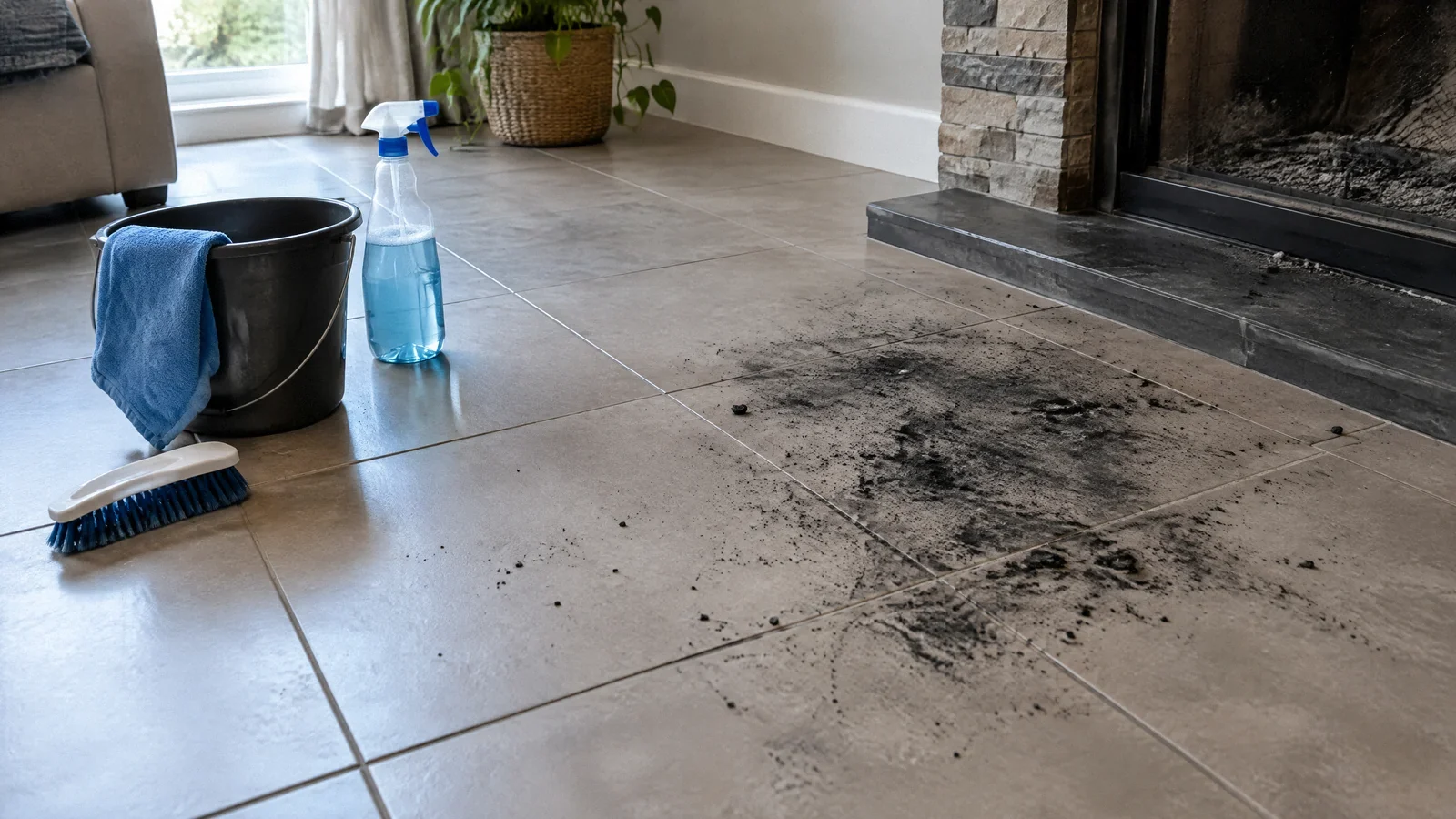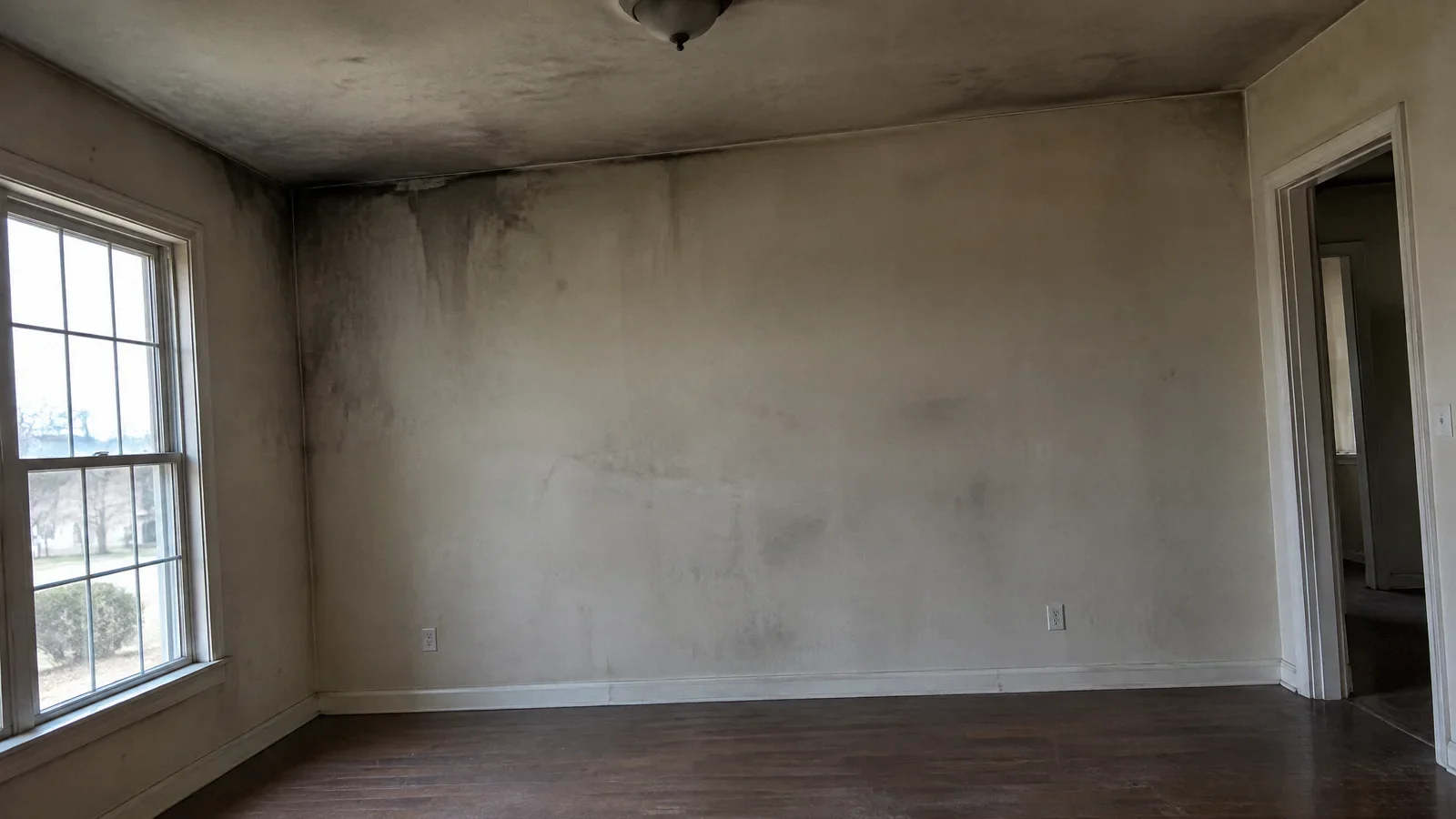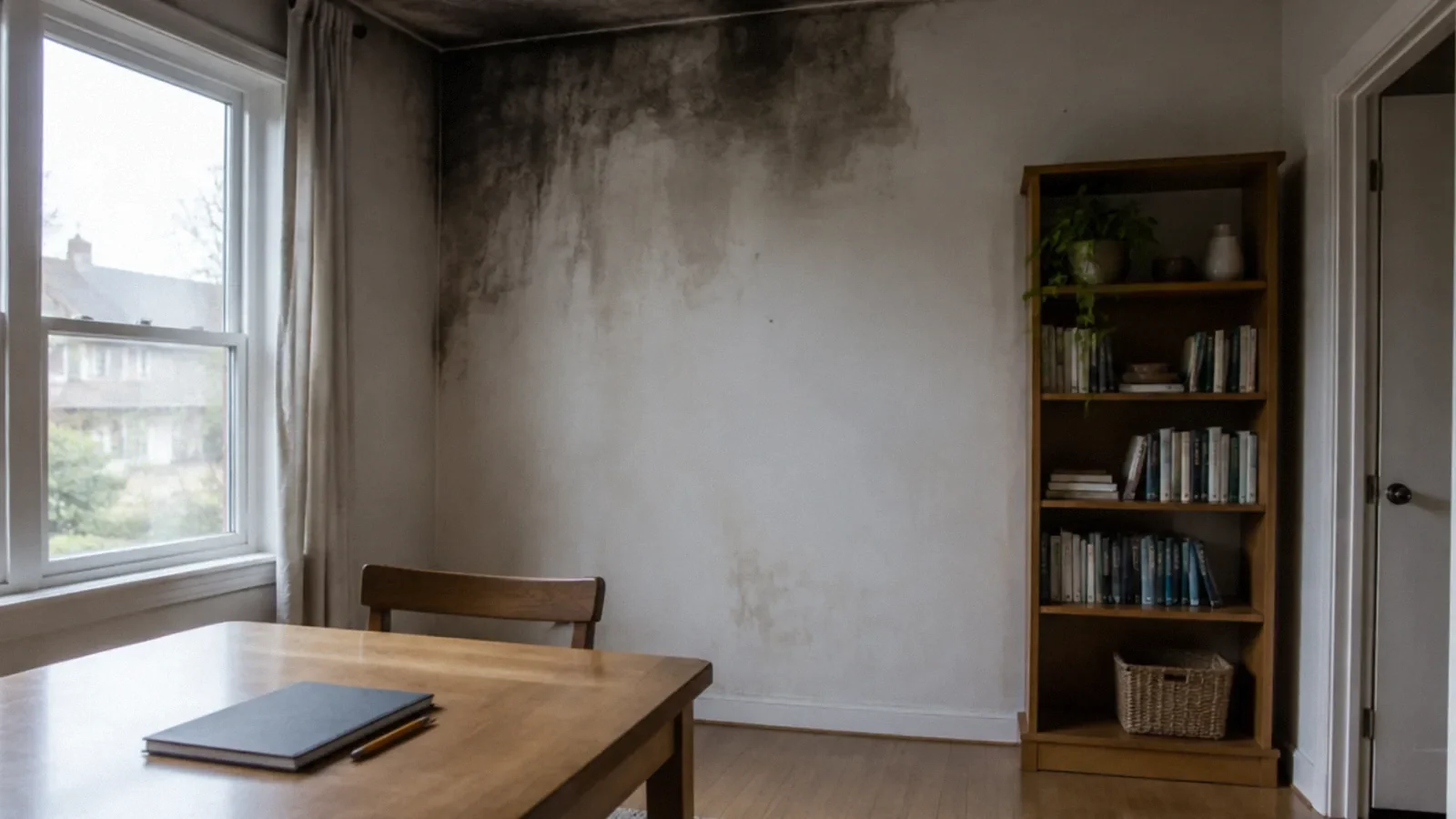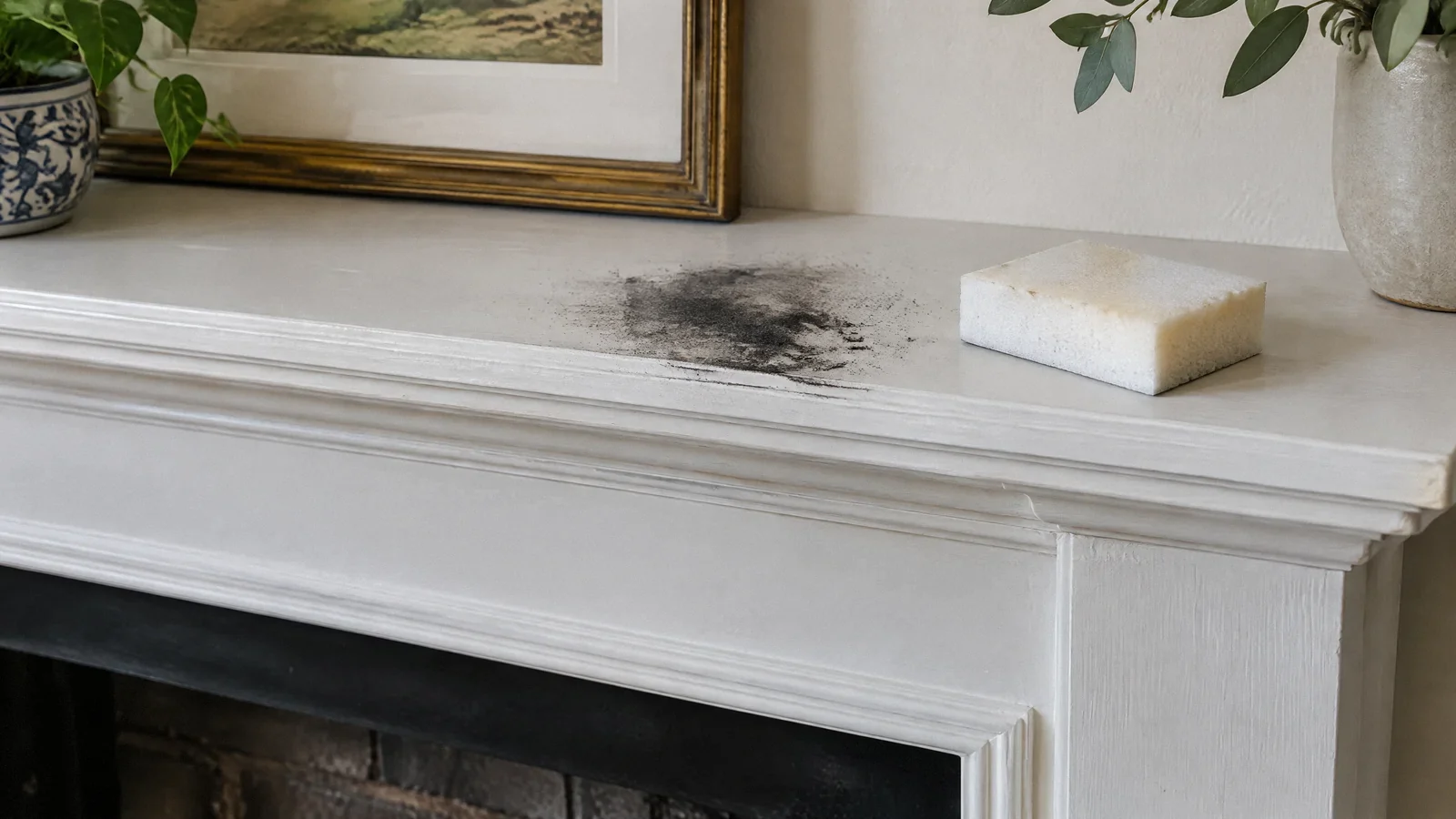
For a small deposit on a stable surface, identify the finish and test a gentle dry method first. Do not rub soot into the grain or soak wood. Extensive fire residue, fragile finishes and persistent odor need professional assessment.
Decide whether the soot is safe to handle
A small deposit from a candle on a sound wooden mantel differs from widespread residue after a house fire. If a fire is active or the building has not been cleared for reentry, leave and follow the fire department’s instructions. After a substantial fire, ask a fire-restoration professional to assess residue, water damage and hidden contamination before cleaning.
Soot is fine particulate material that can be pressed into porous wood or a damaged finish. Its character varies with what burned; residue from synthetic materials can be oily and difficult to remove. Avoid touching or rubbing an affected antique, decorative surface or unfinished wood until you know whether it can be cleaned without changing it.
Keep children and pets away from the affected area. If cleanup creates dust or irritates your eyes or breathing, stop and obtain professional advice. People with respiratory conditions or other health concerns should avoid exposure and consult a health professional for individual guidance.
Identify the wood and its coating
A modern sealed wood surface, painted trim and unfinished wood require different care. Check the manufacturer’s instructions if available. On an unknown or old finish, cleaning liquid or friction can remove coating, shift pigment or leave a dull patch. Photograph the area first, and test any approved method in an inconspicuous place before working on a visible section.
Flaking paint, gilding, painted decoration and antique finishes are particularly vulnerable. A furniture conservator can assess them before cleaning. Canadian Conservation Institute guidance notes that many painted historic surfaces are sensitive to water and solvents; it recommends professional treatment for liquid cleaning of such surfaces.
Unfinished wood is porous and can absorb liquid, carrying soot deeper into the grain. Do not soak it or use a wet mop. For a valuable or fragile piece, a conservator can choose a method appropriate to the wood and its history.
Remove loose residue gently
For a small deposit on a stable surface, start with the least intrusive method approved for that surface. A dry soot-cleaning sponge is one option for appropriate bare wood. Conservation guidance describes gently pressing or rolling the sponge to lift dirt; hard pressure can embed particles. Test a hidden area first, keep the sponge dry and use a clean portion as it becomes soiled.
Do not scrub back and forth or grind the residue into the grain. Avoid a regular household vacuum that exhausts fine dust back into the room; if professional collection is needed, ask about suitable filtration and containment. A professional can also decide whether loose residue should be removed without touching a fragile surface.
Stop if the sponge removes paint or finish, leaves a smear, or does not lift the deposit. Oily residue may require a different approach, and adding more pressure may make the stain harder to remove. Do not assume that all black material is ordinary candle soot.
Clean a sound painted or sealed surface
Once loose residue is addressed, follow the coating manufacturer’s cleaning instructions. For a modern washable painted surface, a soft cloth lightly dampened with a mild solution approved for that coating may be appropriate after a hidden test. Wring it well, wipe gently and dry promptly. Do not allow water to pool at joints or penetrate exposed wood.
Flat paint can change sheen if rubbed, while a damaged or historic coating may be sensitive even to water. If color transfers to the cloth, the coating softens or the area becomes cloudy, stop. Strong degreasers, bleach, solvents and abrasive pads can damage a finish; do not use them merely because a dark mark remains. Never mix cleaning chemicals.
A residual shadow may be discoloration in the finish or wood, not loose soot. A furniture or paint professional can assess whether refinishing is appropriate. Cleaning until the surrounding finish is removed can make the repair more conspicuous.
When soot and odor persist
A small mark that remains after careful cleaning may require specialist treatment. For widespread smoke odor, inspect nearby porous furnishings, cavities and ventilation equipment with a restoration professional. Cleaning one wooden surface will not necessarily remove odor from other affected materials. Do not run a system suspected of contamination until it is assessed.
Ask the contractor what burned, which materials will be cleaned or removed, how particles will be contained and what limitations apply to the finish. Document the condition and consult the insurer if a claim is involved. Avoid promising a perfect color match or a completely odor-free result before the affected materials are assessed.
If water was used to extinguish a fire, address wet materials promptly as well. EPA recommends drying wet building materials within 24 to 48 hours where possible to limit mold growth. A fire-restoration company can coordinate safe drying and moisture checks.
Prevent recurring deposits
Use candles on stable, heat-resistant holders away from wood and follow the candle manufacturer’s instructions. If a fireplace or appliance repeatedly deposits soot, stop using it and arrange inspection by an appropriate qualified professional. Cleaning the mantel without correcting the combustion problem will not prevent another deposit.
For routine dusting after the source has been resolved, follow the finish’s care instructions. Keep the cleaning method gentle and avoid frequent polishing products that may leave their own buildup.
Your next-step checklist
- Confirm the fire is out and the building is safe to enter.
- Identify the wood and finish before treating it.
- Test a gentle dry method and avoid grinding soot into the surface.
- Stop if the finish changes or residue smears.
- Use specialist help for extensive fire damage or valuable finishes.
Related questions
Can I wash soot off painted wood?
A sound modern washable coating may allow gentle damp cleaning after loose residue is removed and a hidden test succeeds. Historic or fragile paint needs specialist care.
Why did soot smear?
Fine or oily particles may have been pressed into the surface. Stop rubbing and ask a professional about the coating and residue.
Sources & context
Public guidance supports the principles in this article. The practical questions and examples are editorial interpretation, not a site assessment or a coverage decision. State-specific rules apply only where identified.
- Care and Cleaning of Unfinished Woodprimary
- Fire Damage to Objectsprimary
- Care of Furniture Finishesprimary
- Wildfires and Indoor Airprimary