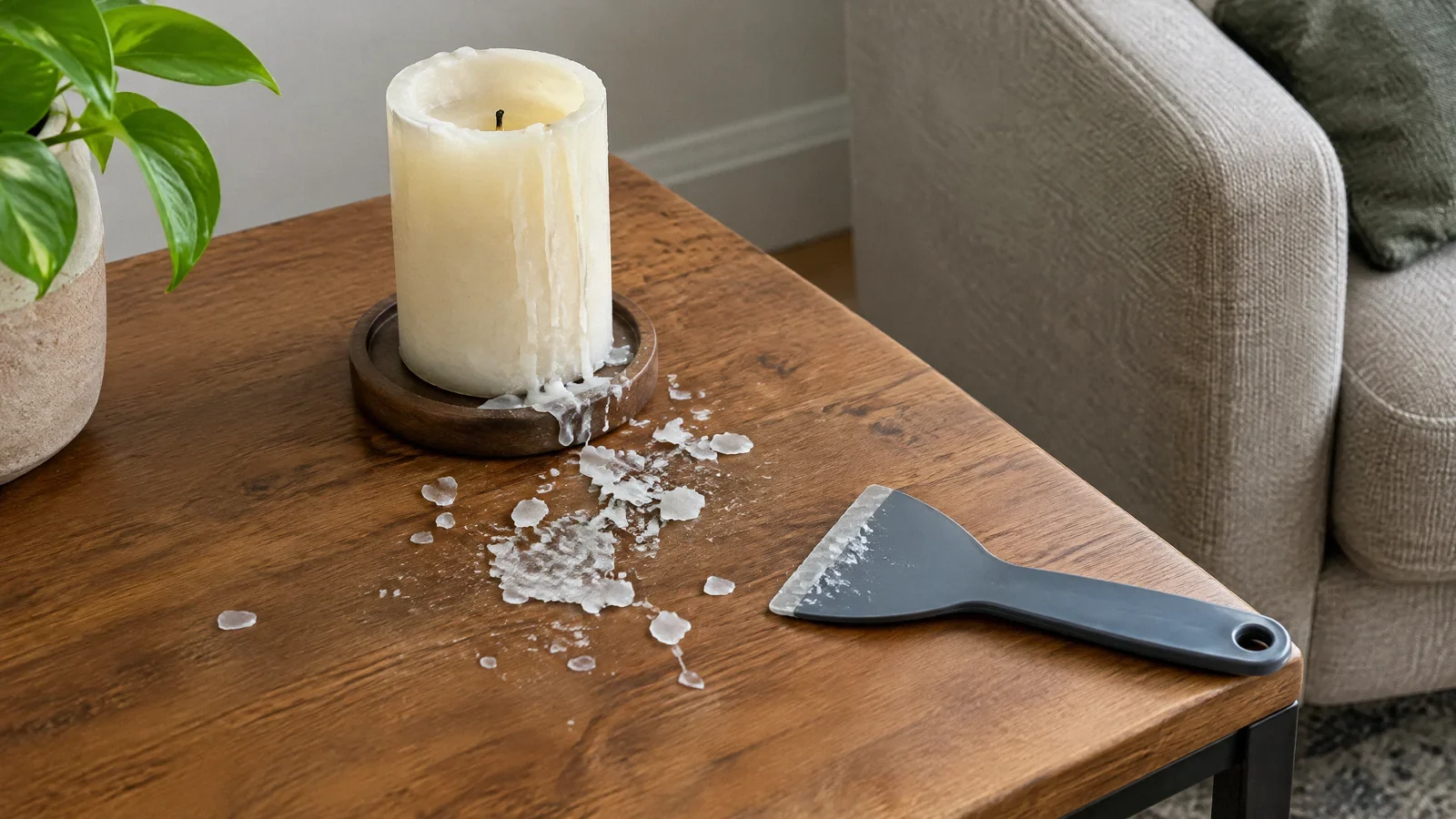
Let candle wax harden, then gently lift it with a non-scratching tool if the surface allows. Treat polish buildup according to the furniture finish and manufacturer’s instructions. Stop if the coating changes or the piece is delicate.
Identify the wax and the furniture surface
A lump of spilled candle wax and a cloudy layer of old furniture polish are different problems. Candle wax often sits above the surface; accumulated polish may be a thin, uneven film over a larger area. Before cleaning, identify whether the furniture is finished wood, painted wood, upholstery, leather or another material and check the manufacturer’s care instructions.
Hot candle wax can affect a wood finish, and colored wax may leave a dye mark after the solid material is gone. Antique furniture, fragile paint, veneer and unknown finishes deserve particular care. If the item is valuable or the coating is flaking, consult a furniture conservator before attempting removal. A solvent or scraper can remove original finish as well as the unwanted wax.
Allow hot wax to cool before touching it. Do not rub liquid wax over a larger area or pour cleaner onto it. Protect the surrounding surface and work slowly; the goal is to lift the deposit while leaving the underlying finish intact.
Remove a candle-wax deposit from finished wood
For a small deposit on sound, finished wood, the American Cleaning Institute describes hardening soft wax with ice enclosed in plastic. Keep moisture off the wood, apply the wrapped cold pack briefly and remove it before condensation can sit on the finish. Do not use this approach on a finish or material that the manufacturer says is sensitive to cold or moisture.
Once the wax is firm, gently lift the edge with a plastic card or a tool approved for the surface. Keep the tool nearly flat and stop before scraping the finish. Work from the outside of the deposit; do not use a metal knife or force wax out of a joint. Pick up loosened pieces with a soft cloth.
Check the surface after the bulk is removed. If a thin residue remains, consult the furniture maker’s approved cleaner and test it in a hidden area. Apply a small amount to a cloth as directed and dry promptly. If color transfers, the surface clouds or the wax is embedded in a damaged coating, stop and seek professional help.
Upholstery and removable fabric
Let the wax harden and gently lift loose surface pieces without pulling fibers. Check the upholstery cleaning code and the manufacturer’s care instructions. A removable, washable cover may have different instructions from a fixed cushion; do not assume the cover can be washed simply because it has a zipper.
The American Cleaning Institute describes a warm-iron-and-paper method for washable clothing. That guidance should not automatically be applied to an upholstered chair: heat can damage synthetic fibers, upholstery foam or dye, and wax can spread deeper into a cushion. For fixed upholstery, use the manufacturer’s instructions or a qualified upholstery cleaner.
If a washable cover’s label permits the relevant treatment, follow the fabric and cleaning-product directions and test for colorfastness. Colored candle wax can leave a separate dye stain even after the wax is removed. Tell the cleaner the type of wax and any product already used.
Leather, unfinished wood and delicate furniture
Leather and suede finishes vary. Avoid soaking them or using a household solvent; gently lift only loose hardened wax if the maker permits it, then ask a leather-care specialist about remaining residue. A stiff tool or heat can permanently change the surface.
Unfinished wood absorbs liquids, oils and dyes. Do not wet-clean it to dissolve wax. A conservator or wood-finishing specialist can assess whether a deposit can be reduced without spreading it into the grain. Historic furniture may also have a sensitive original finish that contributes to its value.
On painted furniture, check for loose or powdery paint. Stop if flakes lift with the wax. Conservation guidance recommends professional assessment before using liquids or solvents on sensitive painted surfaces. A hidden test reduces risk but does not guarantee that every part of an aged finish will respond alike.
Remove polish buildup as a separate task
Cloudiness from repeated polish applications may be buildup, but it can also be moisture damage, a worn finish or an incompatible product. Do not assume every dull area is wax. Check the furniture maker’s care instructions and identify the product used if possible. Test a recommended cleaner on an inconspicuous area and allow it to dry before evaluating the sheen.
Use a soft cloth and the manufacturer’s specified amount. Avoid abrasive pads, steel wool and stronger solvents on an unknown finish. Repeated polishing may add another layer rather than remove the old one. If the film remains or the finish changes, a furniture professional can determine whether cleaning or repair is appropriate.
Do not strip or sand a valuable piece just to remove a haze. Removing an original finish is irreversible and can change both appearance and value. Ask the specialist to explain the proposed treatment and likely color match first.
Finish and prevent another spill
After cleaning, inspect the surface in normal light. A remaining colored spot, dull patch or ring may indicate dye or finish damage rather than wax residue. A repair professional can discuss options; applying more polish may temporarily mask the change without correcting it.
Use a stable candle holder with a protective base, keep candles away from the edges of furniture and follow the candle’s instructions. Avoid placing a hot vessel directly on a sensitive finish. For routine care, use only products suitable for the furniture and avoid unnecessary layers of polish.
Your next-step checklist
- Identify the wax and furniture material.
- Let candle wax harden and protect the finish.
- Lift gently with an appropriate non-scratching tool.
- Test any approved cleaner out of sight.
- Consult a specialist for valuable, fragile or stained furniture.
Related questions
Can I use a hot iron on an upholstered sofa?
Do not assume a clothing treatment is safe for upholstery. Heat can damage fibers, foam or dye; follow the manufacturer’s instructions or consult a specialist.
Is cloudy polish buildup the same as spilled candle wax?
No. Buildup is often a thin film and may require a finish-specific cleaner, while a candle deposit can often be lifted after hardening.
Sources & context
Public guidance supports the principles in this article. The practical questions and examples are editorial interpretation, not a site assessment or a coverage decision. State-specific rules apply only where identified.
- Candle Wax and Wood Furnitureprimary
- Stain Removal Guideprimary
- Care of Furniture Finishesprimary
- Care of Wooden Furnitureprimary