Protect belongings and avoid electrical or ceiling hazards, then arrange a qualified roofer to locate the actual entry point. Repair depends on the failed roof covering, flashing, penetration or membrane; dry damaged interior materials after the leak is controlled.
Protect the interior while arranging repair
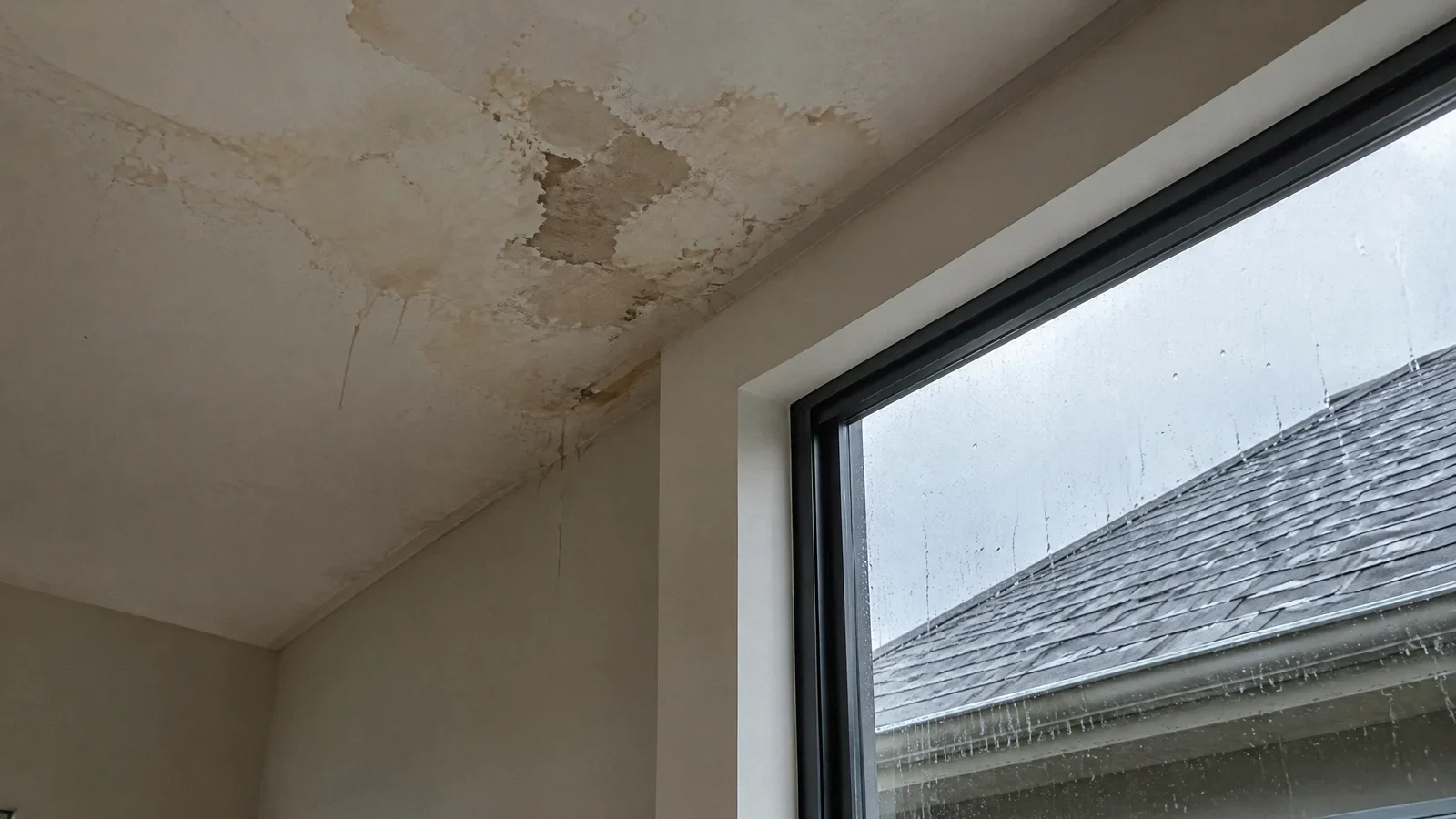
A roof leak needs two parallel responses: limit further water damage inside and have the roof entry point located and repaired. Move belongings away from the wet area, place a container where it can safely collect drips, and document the damage. Do not stand under a sagging ceiling; keep others away and seek urgent professional assessment.
If water is near a light fixture, outlet or electrical panel, stay clear and contact a qualified electrician or utility for safe isolation. Do not touch wet electrical equipment or put a powered drying device on a wet floor. During a storm, do not climb onto the roof or attempt to attach a tarp yourself. A roofer can arrange temporary protection when conditions allow.
Photograph stains, drips and any damage visible from a safe position. Note when water appears, whether rain is wind-driven and which rooms are affected. These observations help the contractor investigate, but the ceiling stain alone does not pinpoint the roof opening: water can travel along framing before it drips.
Find the likely entry point
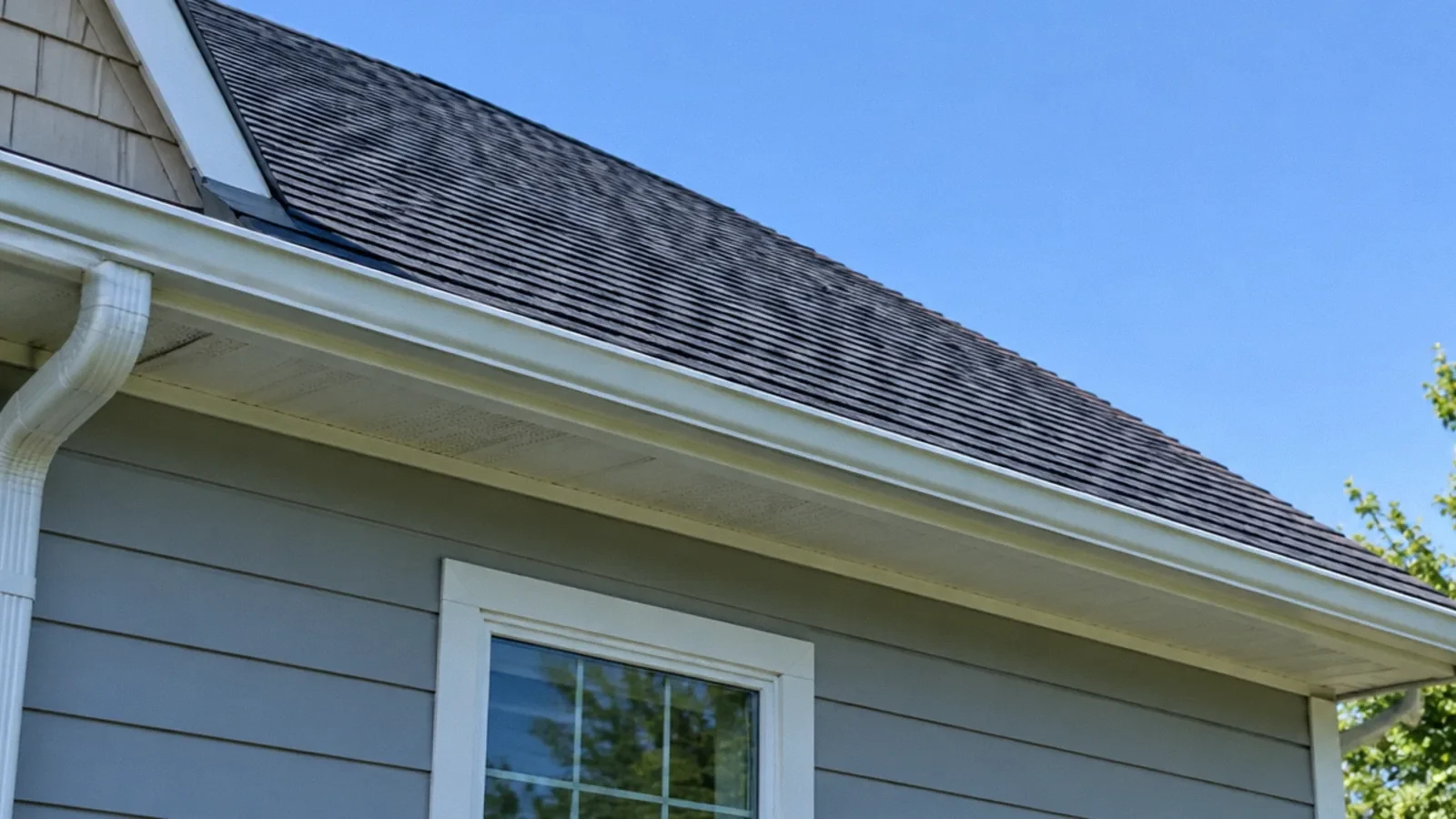
From the ground, look for displaced or missing roof covering, debris, damaged gutters and obvious changes near chimneys, skylights or vents. Do not climb a ladder in rain or inspect a roof from an unstable position. Share ground-level photographs with the roofer. A leak appearing only during rain may involve the roof or flashing, but condensation, plumbing and exterior wall leaks can produce similar interior stains.
A roofer may examine the attic where safe, trace water marks upslope and inspect roof penetrations and intersections. Wet insulation can conceal damage. An attic may contain exposed wiring, weak surfaces and limited footing; leave the inspection to someone equipped to work there. If the source remains uncertain, ask how the contractor will distinguish roof entry from a plumbing or condensation issue before opening finished surfaces.
A controlled water test may help isolate a difficult leak, but it should be planned by the contractor so that it does not worsen damage. Ask for photographs of the suspected failure and an explanation of why the proposed repair addresses it.
Choose a repair for the failed component
For an isolated damaged asphalt shingle, a contractor may replace the affected piece and inspect the surrounding underlayment and fasteners. A repair involving a chimney, wall intersection, pipe or skylight may instead require correcting flashing, the shaped material that directs water away from joints. Smearing sealant across the visible stain or shingle surface is not a substitute for identifying a failed assembly.
On a low-slope roof, the membrane, seams, drains and penetrations need a method compatible with that roof system. Tile, metal and other coverings have their own installation requirements. Ask the contractor to identify the covering, explain the repair materials and follow manufacturer instructions. A patch may be reasonable for a localized defect; widespread deterioration or repeated failures can call for a broader repair or replacement assessment.
If decking or framing is softened, the contractor should assess the extent and explain what will be replaced before closing the roof. OSHA notes that roof repair requires planning for falls and evaluation of structural integrity. Do not treat a tarp or an unverified sealant patch as a permanent repair.
Temporary protection and water damage
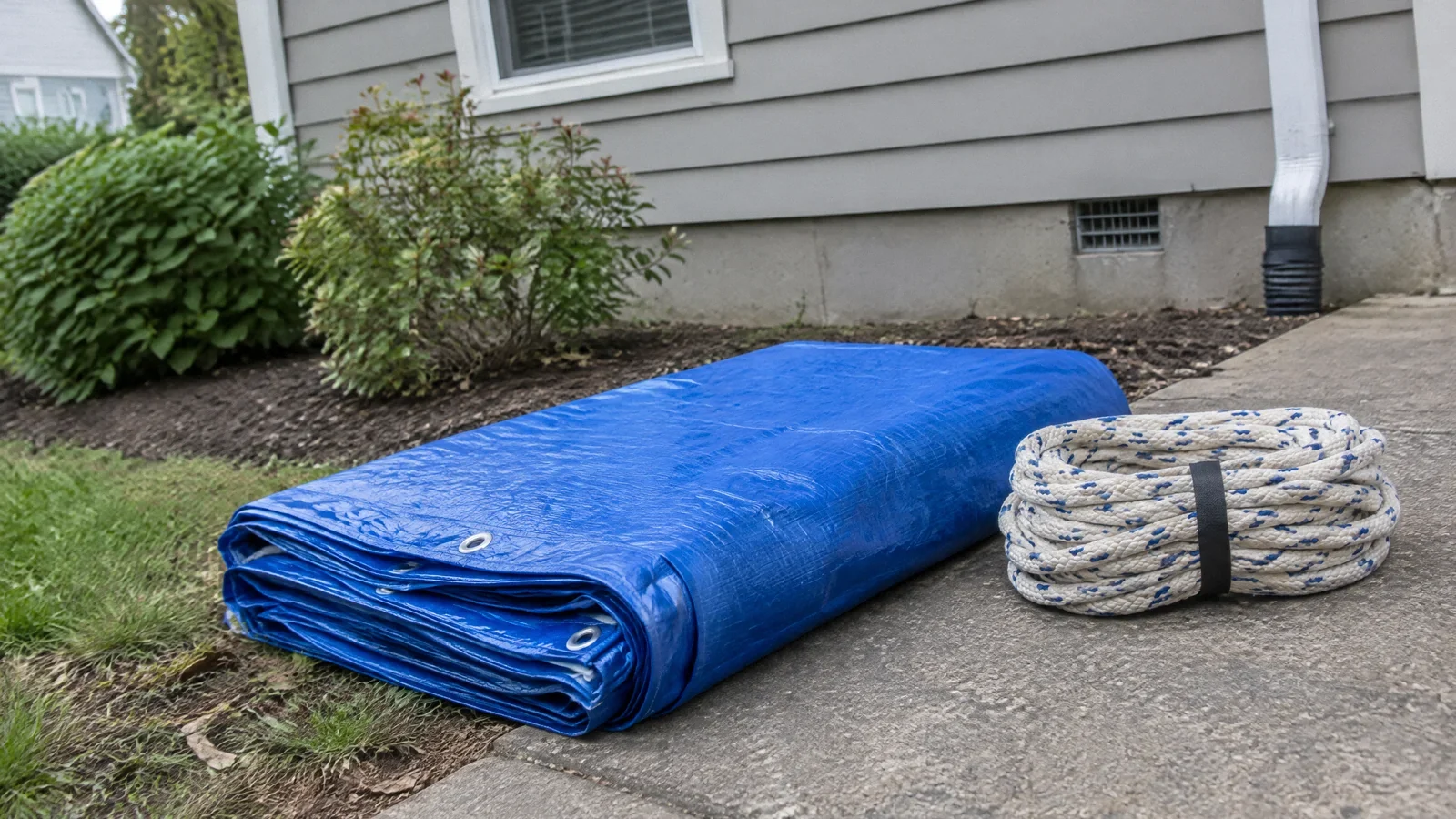
A professionally installed temporary cover can reduce additional rain entry while a permanent repair is scheduled, but it is not guaranteed to stop every leak and may fail in wind. Ask how it is secured, what weather limits apply and when the contractor will return. If conditions are unsafe, wait for the roofing professional rather than going onto a wet roof.
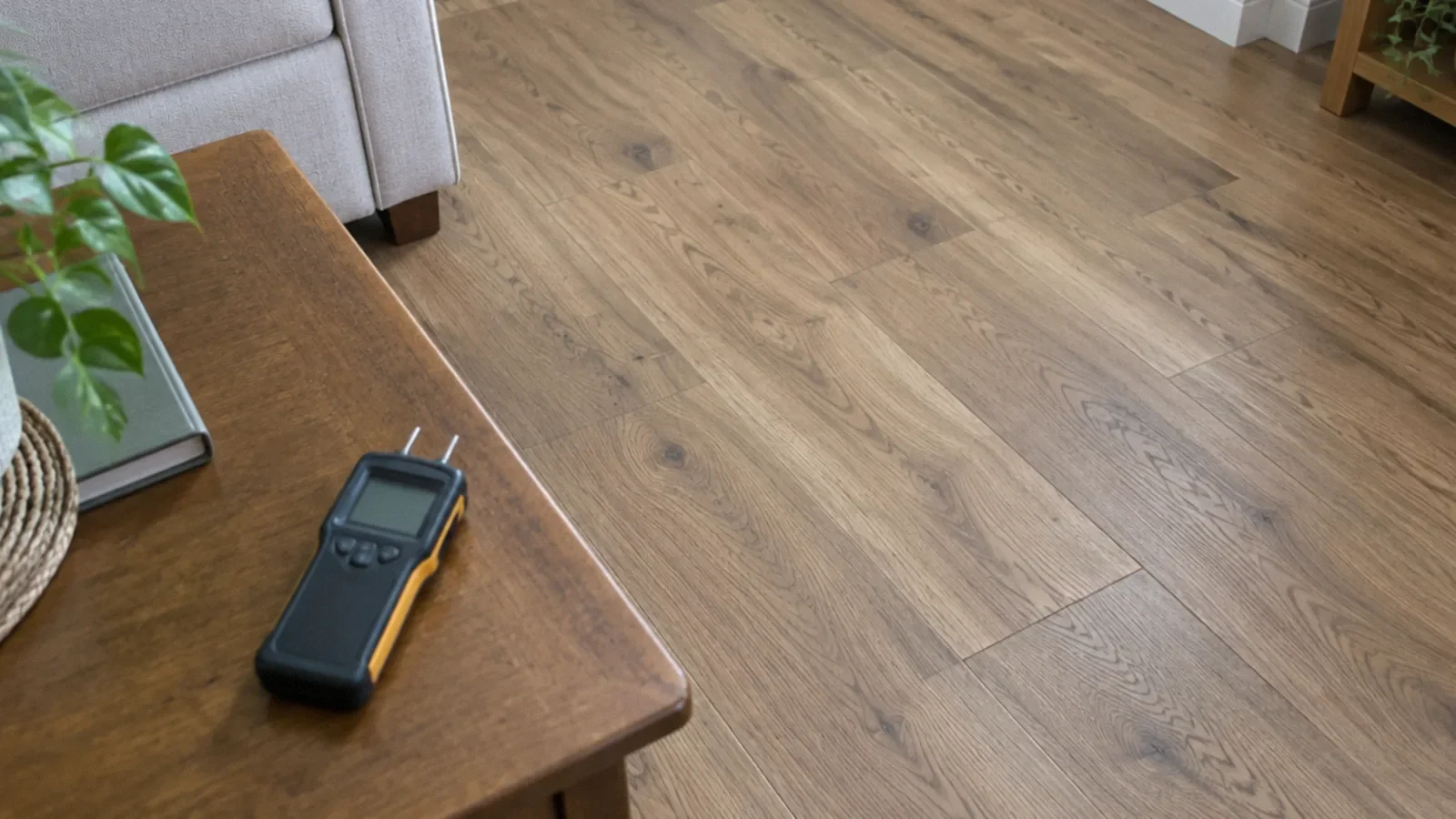
Address wet interior materials promptly once the source is controlled. EPA recommends drying wet areas within 24 to 48 hours where possible to reduce the chance of mold growth. Insulation, ceiling tile and other porous materials that remain wet or become moldy may need removal. A restoration professional can check concealed cavities and advise on drying and replacement.
Agree on scope and verify the result
Request a written scope that identifies the suspected entry point, roof material, repair method, flashing or underlayment work, any deck replacement allowance and cleanup. Ask who will perform the work, what conditions could change the price, and what warranty applies. Confirm relevant local licensing and insurance where required rather than assuming that a business name establishes qualifications.
After the repair, keep the interior finish accessible until the area has dried and the leak has been checked. The contractor may use a suitable test or observe the next rain; one dry day does not prove performance in every wind direction. If staining grows or dripping returns, record the conditions and contact the contractor promptly.
Only repair and repaint the ceiling after the water source is fixed and the damaged material is dry and sound. Painting over an active leak hides evidence and leaves the underlying damage unresolved.
Your next-step checklist
- Move belongings and avoid sagging ceilings or wet electrical equipment.
- Record the conditions and photograph damage from a safe location.
- Ask a roofer to locate the entry point and explain the repair.
- Dry or replace affected interior materials.
- Verify the repair before closing and repainting the ceiling.
Related questions
Can I repair a leaking roof in the rain?
Do not climb onto a wet roof. Arrange a qualified roofer to assess safe temporary protection and perform the repair when conditions permit.
Does the ceiling stain show exactly where the roof leaks?
Not necessarily. Water can travel along framing or other surfaces before it reaches the ceiling.
Sources & context
Public guidance supports the principles in this article. The practical questions and examples are editorial interpretation, not a site assessment or a coverage decision. State-specific rules apply only where identified.