Choose a sealer specifically approved for the slab and its use, then follow that manufacturer’s preparation, moisture testing, ventilation and application instructions. A coating is not a fix for an active leak, persistent slab moisture or a radon problem.
Decide what the floor needs
A concrete sealer can help a suitable floor resist some staining or make routine cleaning easier. Products differ: some penetrate the surface, while others form a visible film. The choice depends on the manufacturer’s intended use, the appearance you want and the wear the room will receive.
An occupied basement, a utility room and a decorative living-room slab may have different requirements. Ask whether the product is approved for interior use, the existing finish and the expected traffic. A shiny surface is not automatically the best choice where slip resistance matters.
Find and correct moisture problems first
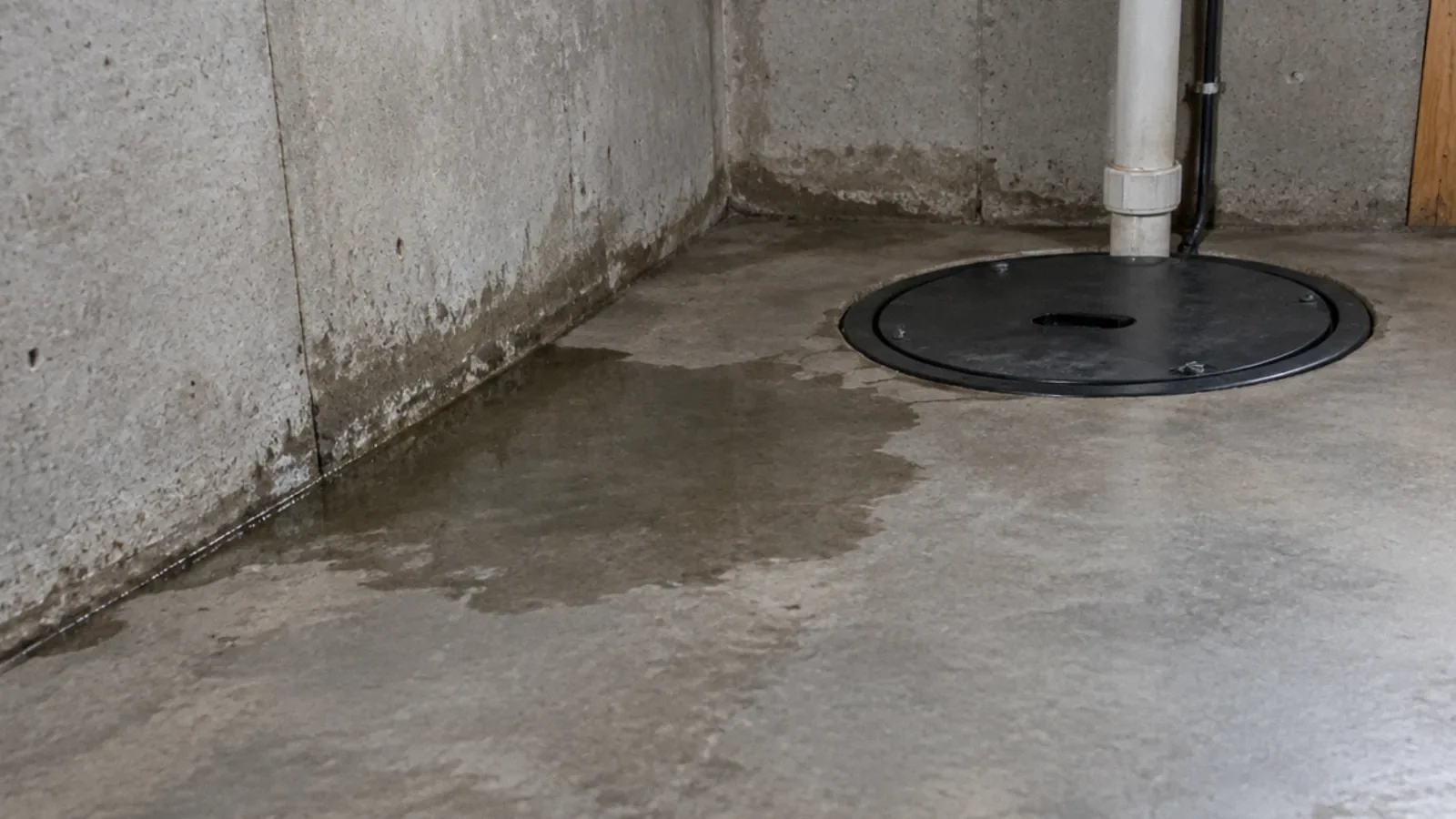
Water entering at a wall joint, recurring dampness, standing water or white mineral deposits deserves investigation before coating. Correct drainage, plumbing leaks or other identified sources first. A new topcoat may fail or hide evidence without stopping water from entering the building.
Moisture can also move through a slab even when the surface feels dry. The product manufacturer specifies how to test the concrete and which results are acceptable for its system. Do not substitute a generic dry-time estimate or a single moisture limit taken from a different product.
Check the existing surface
Determine whether the slab is bare, previously sealed, painted, stained or covered with adhesive. A new product may not adhere to an incompatible coating. The product maker or an experienced concrete contractor can advise whether an existing finish must be removed and what preparation method is appropriate.
In older buildings, assume that old paint, flooring or adhesive could contain hazardous materials until assessed; do not grind, sand or disturb suspect material. An appropriate specialist can determine safe testing and removal. Also repair the cause of damaged or moving concrete rather than concealing it.
Select a compatible indoor sealer
Compare intended substrate, moisture tolerance, appearance, slip resistance, maintenance and recoat instructions. Some penetrating sealers alter appearance less than film-forming products, while a topical coating can create a more visible surface. Claims and limitations vary by product, so read the current technical data and safety documents.
For a basement or below-grade slab, confirm that the product is specifically suitable for those conditions. A sealer does not turn a slab into a waterproof foundation system and cannot guarantee that hydrostatic water pressure will be controlled. Ask the maker about compatibility with future flooring.
Prepare and test a small area
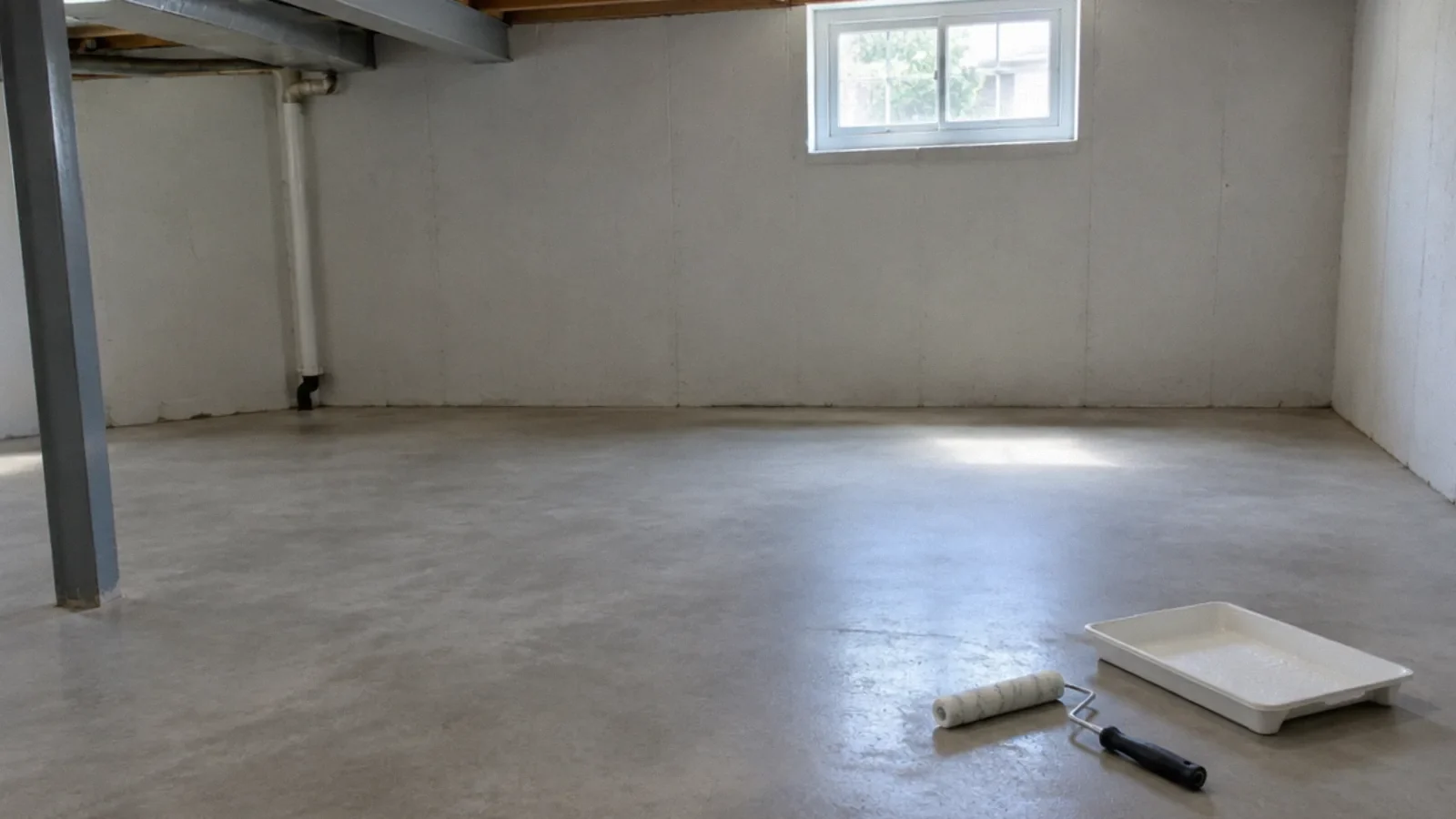
Clean and prepare the floor using the selected manufacturer’s method. Remove dirt and loose material, protect nearby finishes and allow the slab and room to reach the specified conditions. Fresh concrete has its own curing requirements; follow the sealer instructions and concrete contractor’s guidance.
Test the system in a discreet small area to check appearance and adhesion where the manufacturer recommends it. Do not invent an acid-washing or grinding step: preparation depends on the existing slab and product, and both can introduce hazards or damage if used incorrectly.
Plan for ventilation and safe application
Read the label and safety data sheet before opening the container. Use the specified protective equipment, ventilation and application tool; keep children and pets away from the work area and honor restrictions on ignition sources. Some products are not suitable for enclosed occupied areas.
Apply only within the stated temperature, humidity, coverage and recoat window. More product is not necessarily better; an overly thick coat can cause problems. A manufacturer’s instructions, rather than a universal number of coats, determine the application and return-to-service schedule.
Understand radon and basement air quality
A coating is not a substitute for testing a home for radon or for a properly designed mitigation system when one is needed. EPA recommends testing the lowest lived-in level. Avoid disturbing an existing moisture barrier or radon mitigation component when preparing the slab.
A musty odor, water staining or visible suspected mold also needs investigation. Address the moisture source and follow appropriate cleanup guidance rather than sealing contaminated material beneath a new finish. Extensive damage may need qualified assessment.
Maintain the finish
Follow the sealer maker’s cleaning and maintenance instructions. Protect furniture contact points, clean spills promptly and avoid aggressive cleaners that the product prohibits. If a coating clouds, peels or changes texture, identify the cause before adding another coat.
Resealing frequency is product- and use-dependent. Keep the product name, batch information, installation date and instructions so a future contractor can choose a compatible repair. If the floor becomes slippery when wet, ask the manufacturer about a compatible solution.
Floor sealer is not a waterproofing system
This guide addresses concrete floors. An exterior wall, foundation joint or below-grade assembly requires a system designed for its construction, drainage and water exposure; a floor sealer should not be treated as an interchangeable wall waterproofing repair.
Resolve active seepage first and assess drainage and slab moisture. The American Concrete Institute notes that a sealer may resist liquid water without stopping vapor, and a barrier can fail when moisture accumulates beneath it. Select any coating with the manufacturer and an appropriate professional for the measured conditions and intended floor finish.
Your next-step checklist
- Identify the floor and any existing coating.
- Resolve leaks and test moisture as the product specifies.
- Choose an interior product appropriate for the slab.
- Follow protective, ventilation and curing instructions.
Related questions
Can I seal a damp basement floor?
Resolve the moisture source and perform the selected product’s required testing first. A surface coating is not a cure for active water entry.
How long should concrete dry before sealing?
The time and test criteria depend on slab conditions and the selected system. Follow the manufacturer’s curing and moisture requirements.
Does concrete sealer eliminate radon?
Do not rely on floor coating as a radon solution. Test and consult a qualified mitigation professional if indicated.
Can I seal over an old coating?
Only if the product is compatible and the surface is prepared as specified. An installer can assess an unknown existing finish.
Sources & context
Public guidance supports the principles in this article. The practical questions and examples are editorial interpretation, not a site assessment or a coverage decision. State-specific rules apply only where identified.
- EPA: Remodeling and indoor air qualityfederal guidance
- EPA: Radon in the homefederal guidance
- Primary guidance: www.concrete.orgprimary guidance
- Primary guidance: www.concrete.orgprimary guidance