Start by identifying where moisture comes from and reducing water at the wall. A below-grade wall may need an exterior membrane and drainage system, while interior drainage can manage water where exterior excavation is impractical. A coating alone cannot fix every leak, structural crack, or drainage problem.
Identify the water problem first
Concrete is porous, but a damp wall can have several causes. Rainwater pooling near the foundation may enter through cracks or joints. Groundwater can place pressure on a below-grade wall. Indoor humid air can condense on a cold surface, even when the wall is not leaking. Plumbing leaks and water entering at a window well may look similar. Record where and when moisture appears, including whether it follows rain or occurs during humid weather.
Look for water trails, dampness at the wall-floor joint, damaged finishes, and recurring puddles without disturbing suspect materials. A musty smell or staining can indicate a moisture problem but does not establish its source. If a wall is bowed, a crack is widening, masonry is displaced, or the floor has shifted, seek a qualified structural assessment before choosing a coating or excavation.
Move surface water away
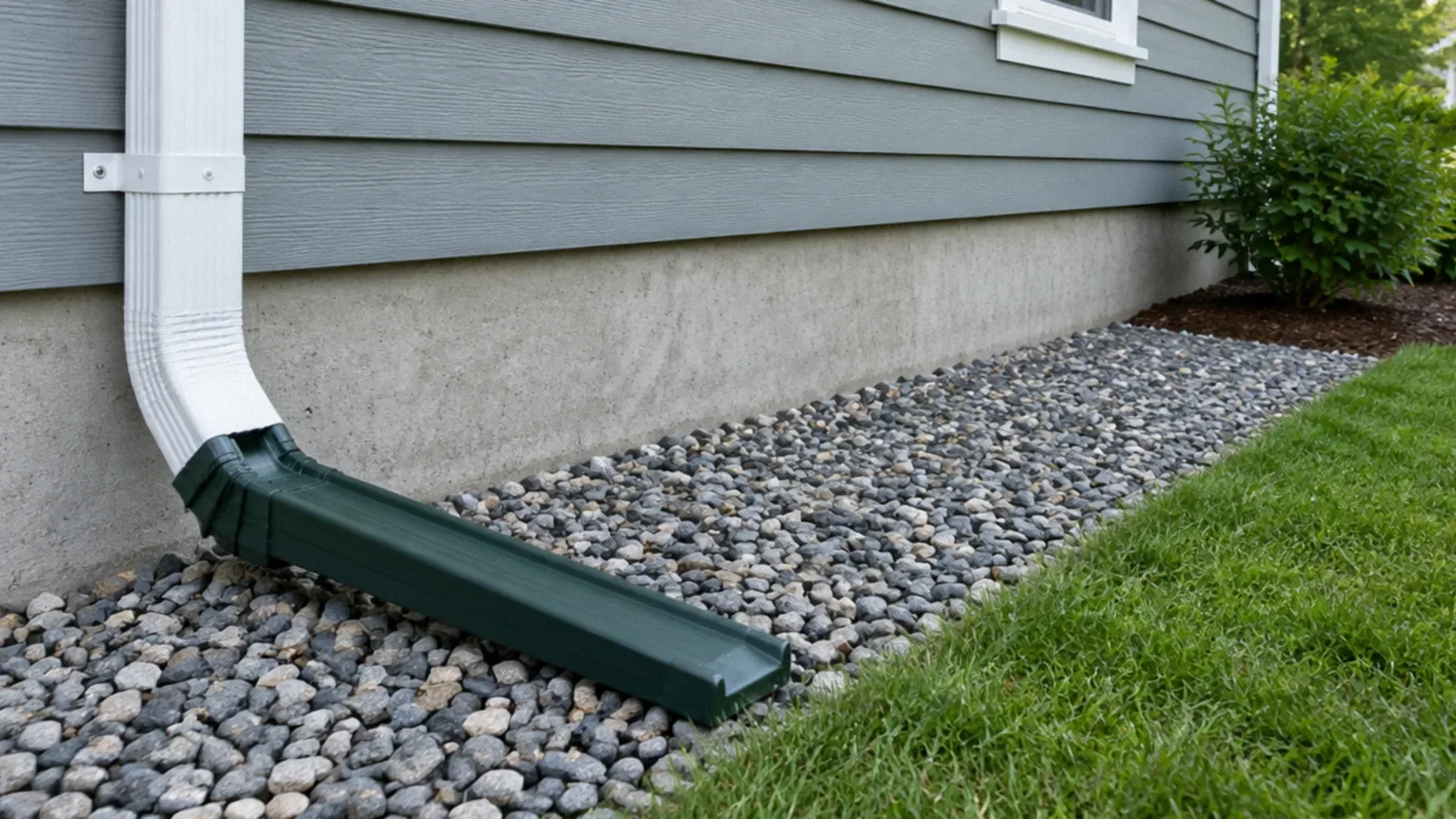
Start outside when conditions are safe. Clean gutters and repair leaks, then check that downspouts discharge away from the foundation at a location that will not create a problem for a neighboring property. Observe the yard during rain from a safe place. Low spots, settled soil, and paved surfaces pitched toward the house can concentrate water at the wall.
Grading that slopes away from the foundation helps direct runoff away from below-grade walls. Where space is constrained, a designed swale or drain may be needed. Do not raise soil against siding, block weep openings, or redirect runoff onto a neighbor. Local drainage rules and site conditions matter. Surface improvements can reduce the load on a wall but may not address a high water table or a defective footing drain.
Understand exterior waterproofing and drainage
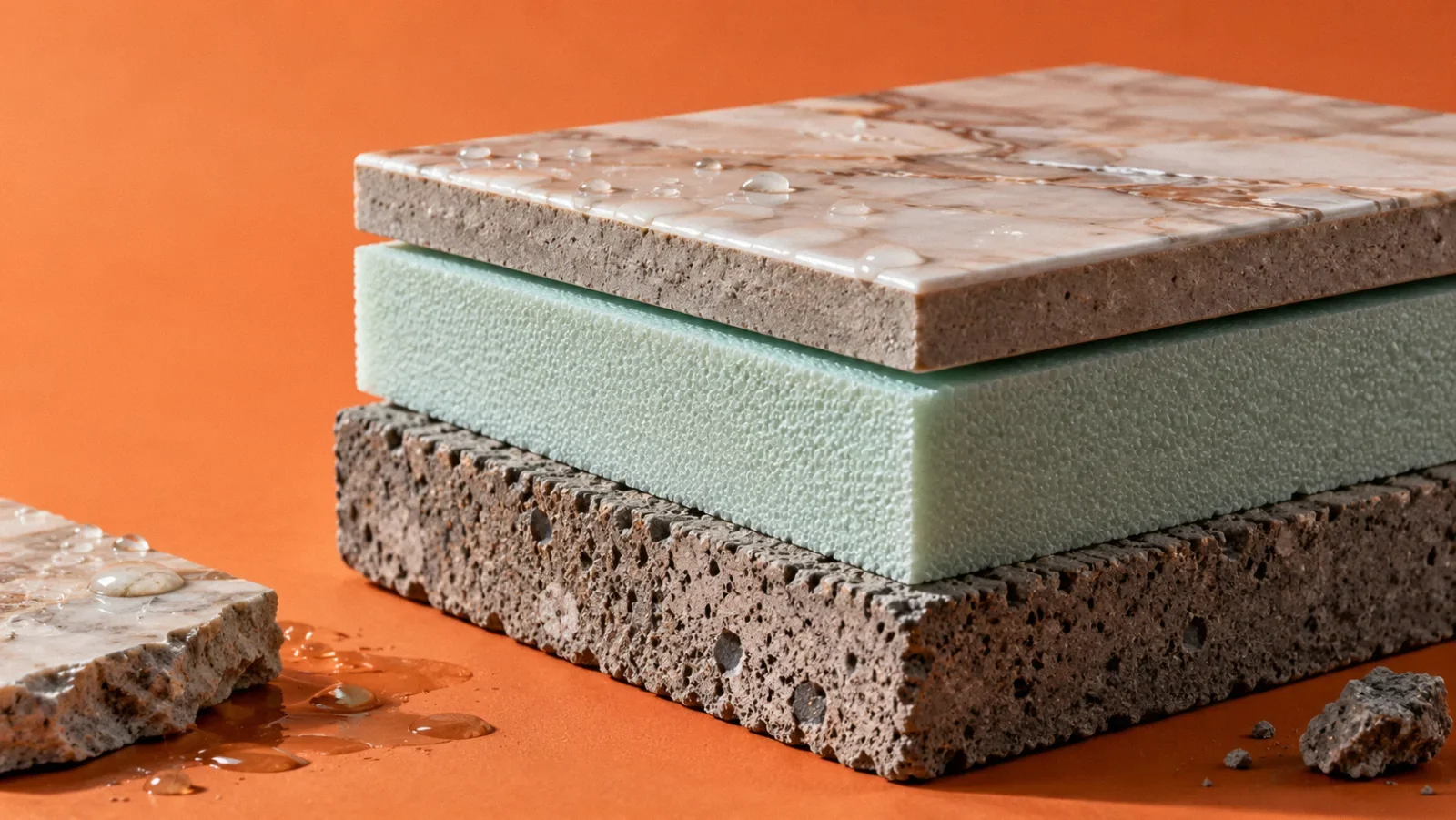
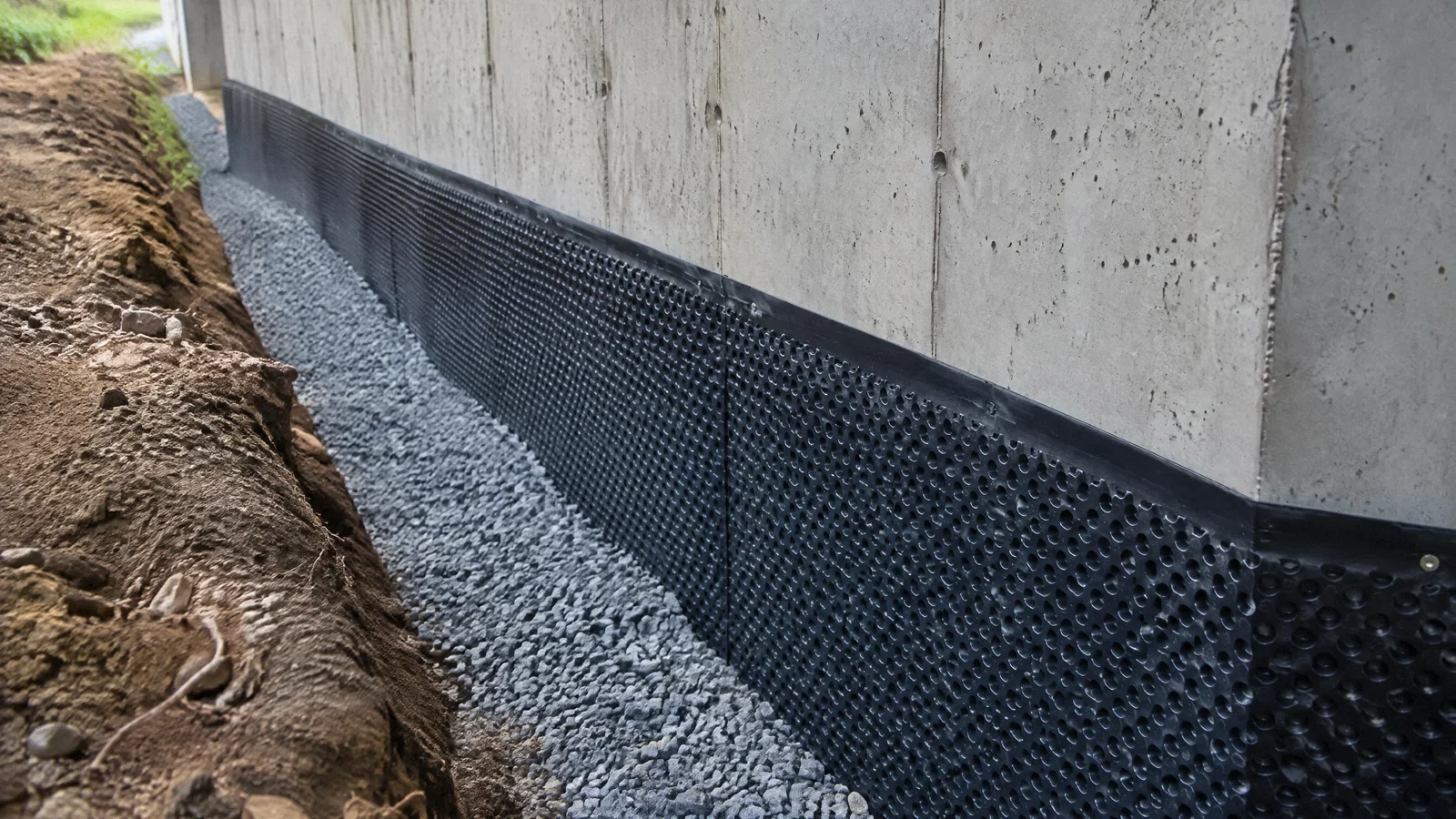
For a persistent below-grade leak, the most comprehensive repair may involve access to the outside face of the wall. A contractor can evaluate the concrete, repair suitable defects, apply a system selected for the exposure, and connect drainage components to an appropriate outlet. A typical assembly may include a compatible wall membrane, drainage plane, free-draining backfill, and a footing drain. The details depend on the building, soil, water conditions, product instructions, and local rules.
Damp-proofing and waterproofing are not interchangeable terms. A damp-proof coating can help resist moisture in appropriate conditions, while a waterproofing assembly is intended for more demanding water exposure when properly designed and installed. Neither should be chosen by a label alone. Ask the contractor what water conditions the proposed system addresses and how seams, penetrations, the footing, and the discharge point will be handled.
Excavating beside a foundation can damage utilities, destabilize soil, or create a collapse hazard. This is professional work, not a trench for a homeowner to enter. The contractor should locate utilities, obtain required permits, protect the excavation, and explain how landscaping, paving, and access will be restored.
When interior drainage may be appropriate
Excavating the exterior may be impractical because of an attached structure, access, cost, or site conditions. An interior perimeter drain and sump can collect and remove water that reaches the inside perimeter. That approach manages water at the interior; it does not make the outside of the wall dry or eliminate the need to manage roof and surface runoff. The system needs a suitable discharge location, maintenance access, and a plan for pump failure or power loss.
An interior coating may be useful for a limited condition when the surface and product are compatible, but paint applied over a wet, deteriorated, or contaminated wall can conceal the problem and fail. A coating is not a structural repair. Ask about preparation, allowable moisture conditions, treatment of active leaks and cracks, and whether the product is suitable for pressure from the wet side of the wall.
Address condensation and wet finishes
If the wall is cool and moisture appears mainly during humid conditions, indoor condensation may contribute. Measure indoor relative humidity and observe cold surfaces; EPA recommends keeping humidity below 60% where possible, ideally between 30% and 50%. Air conditioning, a dehumidifier, and correcting moisture sources can help, subject to the building’s conditions. Avoid enclosing a wet wall behind new finishes before the source is understood and corrected.
Remove or assess wet finishes according to their condition and contamination. Mold on hard surfaces can often be cleaned with detergent and water and dried completely, while porous materials may need disposal. Extensive damage, sewage, hidden growth, or health concerns call for qualified help. Do not paint over mold or assume a surface that feels dry proves the wall assembly is dry.
Compare proposals and verify the result
Request written proposals that identify the source being addressed, the area of wall, crack repair method, membrane and drainage components, outlet, permits, and restoration. Ask whether a sump and backup are included and what maintenance is expected. A warranty should state its duration, exclusions, transfer terms, and who is responsible if water returns. A small isolated crack and a saturated foundation are not necessarily the same project.
Keep photographs and work records. After repair, monitor during subsequent rain and check gutters, the discharge point, and any pump. A dry period is encouraging but not proof against every future storm or groundwater condition. If moisture returns, document its location and timing and ask the contractor to investigate rather than repeatedly covering the symptom.
Your next-step checklist
- Record moisture location and timing.
- Repair roof drainage and review grading.
- Have structural movement or persistent seepage assessed.
- Compare exterior and interior systems based on the actual water source.
- Keep the wall accessible until drying and repairs are verified.
Related questions
Will waterproof paint stop all basement leaks?
No. A coating may suit limited conditions but cannot replace a needed drainage system or structural repair. Its suitability depends on the wall and water pressure.
Does a dry interior finish prove the concrete wall is dry?
No. Moisture may remain behind finishes. Assess the assembly and correct the moisture source before refinishing.
Is interior drainage the same as exterior waterproofing?
No. Interior drainage manages water reaching the interior perimeter; an exterior system addresses water at the outside of the wall. Either may be appropriate depending on the site.
Sources & context
Public guidance supports the principles in this article. The practical questions and examples are editorial interpretation, not a site assessment or a coverage decision. State-specific rules apply only where identified.