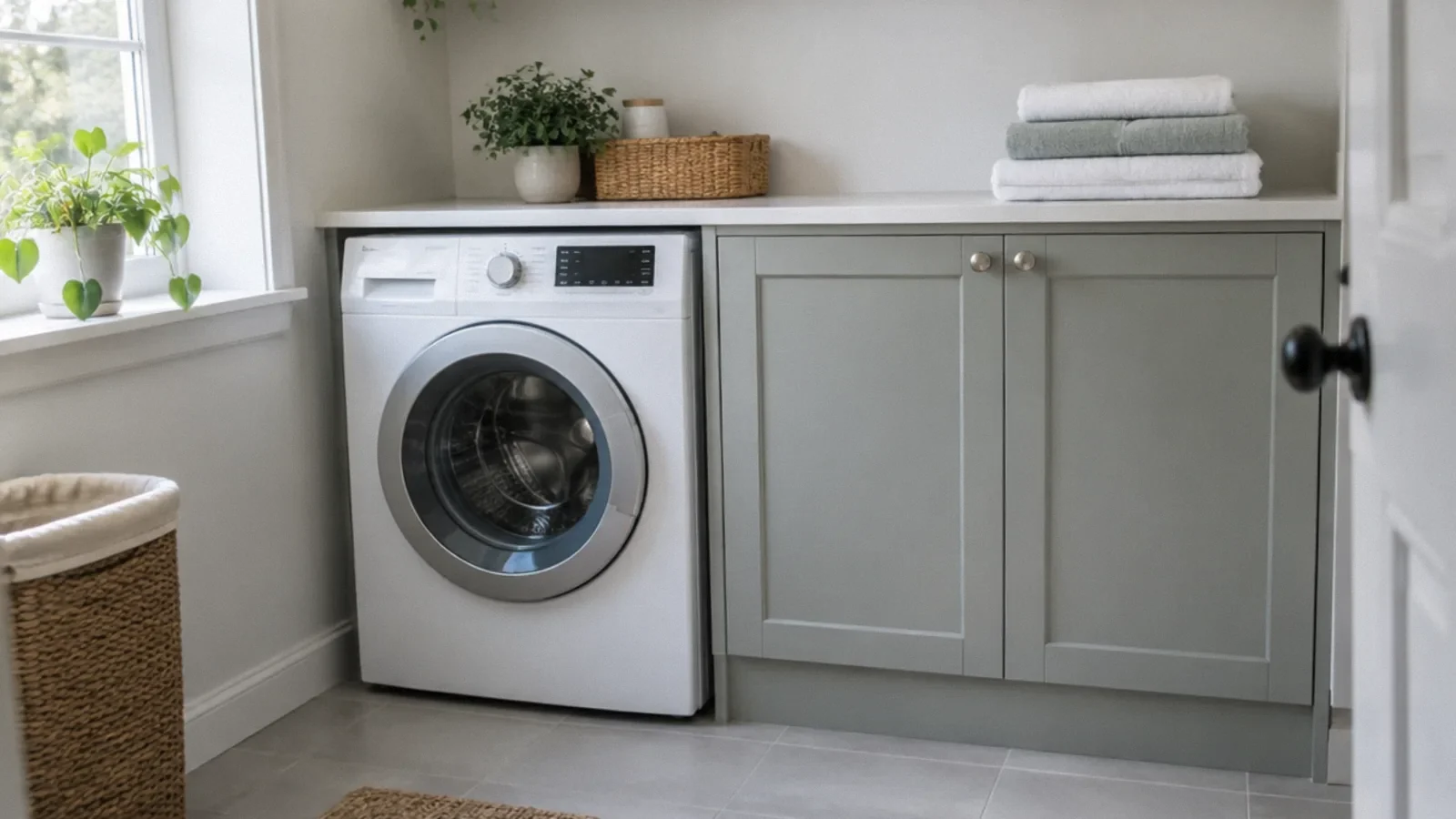
A laundry room commonly needs suitable water supply connections, shutoff valves and an approved drain arrangement for the washer. The design depends on the appliance, building and local requirements. Altering water, drainage, electrical or vent systems may require permits and qualified trades.
Identify the existing connections
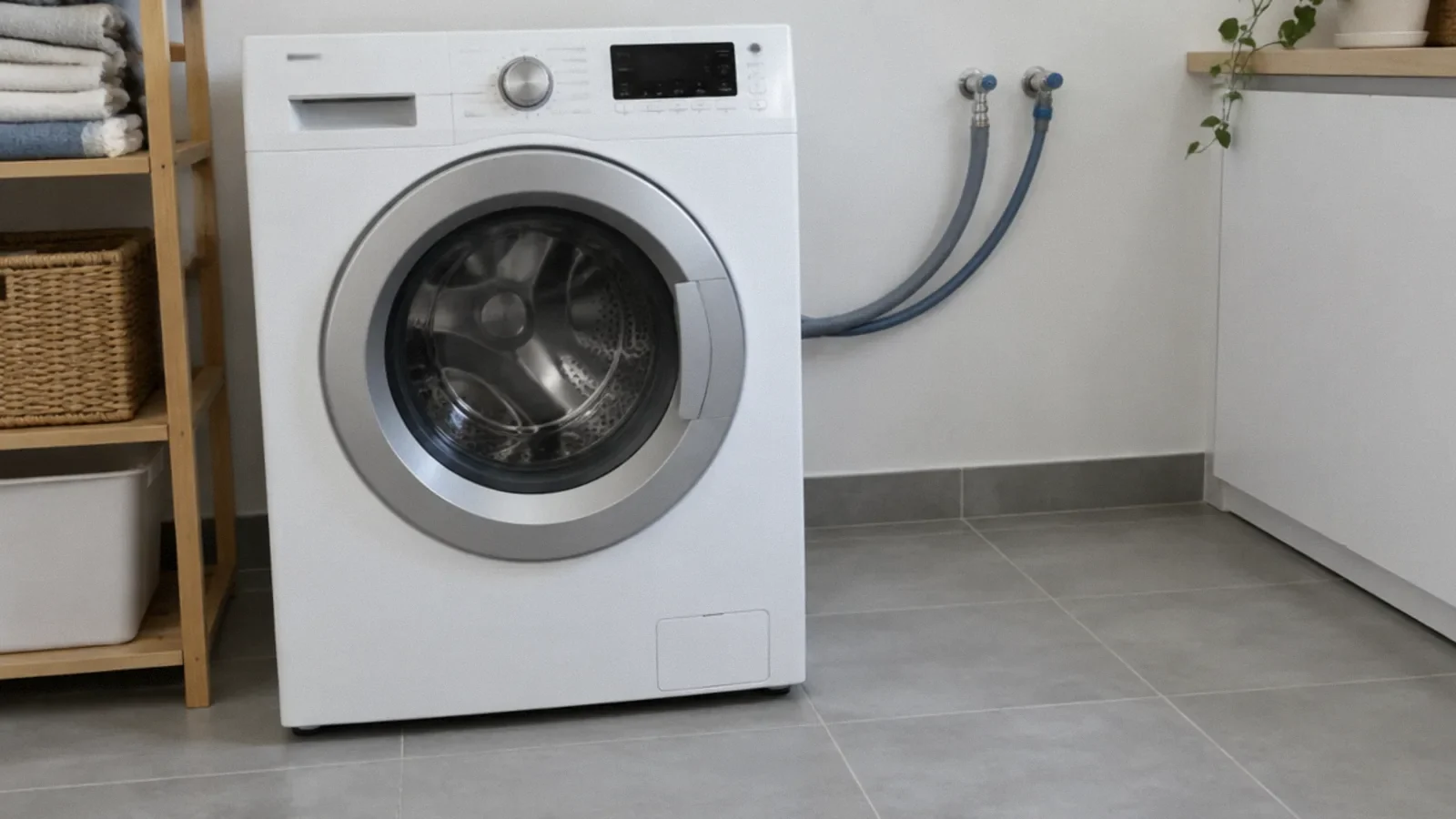
A washing machine typically connects to water supply hoses and discharges wastewater through a drain hose into an approved plumbing arrangement. Some laundry rooms also have a utility sink. The exact configuration and connection points depend on the appliance and building.
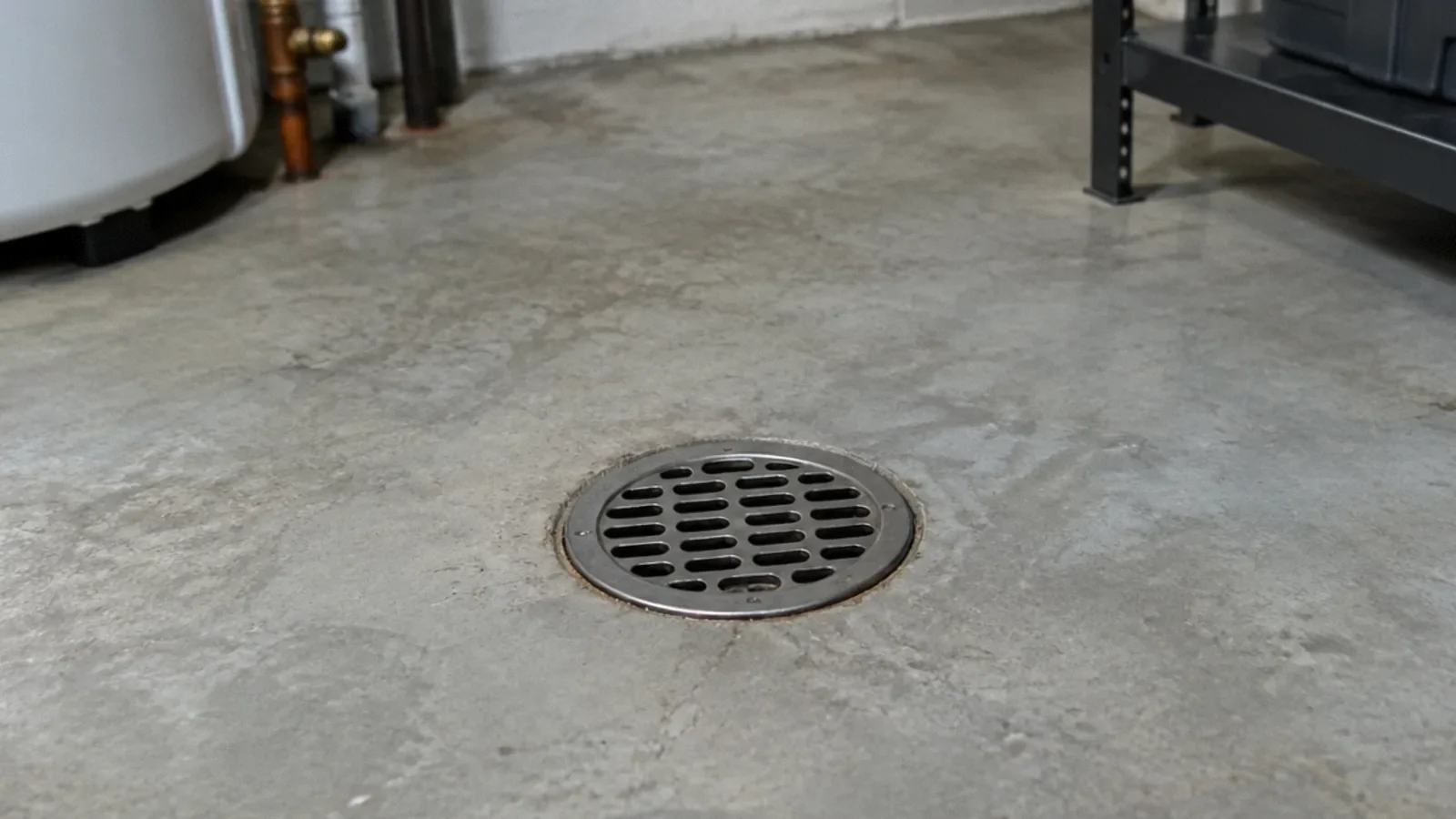
Before planning changes, note the accessible shutoff valves, drain location and available manufacturer instructions. Do not assume an existing connection meets current requirements or that a visible opening is intended for washer discharge.
Water supply and shutoff valves
Supply valves allow water to be isolated for service when they are accessible and functioning. Hoses and connections should be appropriate for the appliance and installed according to the manufacturer. A dripping valve, damaged hose or corrosion warrants assessment.
Do not force a stuck valve or move a washer through standing water. If the floor or plug is wet, keep away from electrical equipment and obtain qualified help. A plumber can identify the source and explain whether a component needs repair or replacement.
Drain hose and standpipe
Many installations use a standpipe, a vertical drain pipe receiving the washer hose. The connection must suit the appliance and local plumbing requirements. A trap and vent form part of an appropriately designed drainage system; their arrangement should be evaluated for the specific building.
An incorrectly placed or restricted hose, a blocked drain or an appliance fault can cause overflow or incomplete draining. Follow the washer instructions and ask a qualified plumber to diagnose recurring problems. Do not seal or extend a connection based only on a generic diagram.
Plumbing changes and permits
Moving a washer, adding a sink or changing concealed supply, drain or vent piping can trigger permit and inspection requirements. For example, Portland lists moving plumbing pipes and installing plumbing fixtures among work needing a residential plumbing permit. Requirements vary by jurisdiction.
Ask the local building department and the contractor which permits apply to the proposed work. A simple appliance replacement without system alterations may be treated differently; do not assume an exemption without checking the actual project and jurisdiction.
Protect against leaks and water damage
Keep supply connections accessible and inspect visible hoses for damage under the manufacturer’s guidance. A drain pan or leak alarm may be appropriate in some situations, but it cannot replace a sound connection or guarantee that every leak will be contained.
If water escapes, stop the machine and isolate the source only when safe. Avoid wet outlets and standing water near electricity. Assess surrounding flooring, walls and subfloor after the source is controlled, because moisture can remain below the surface.
Laundry-to-landscape graywater
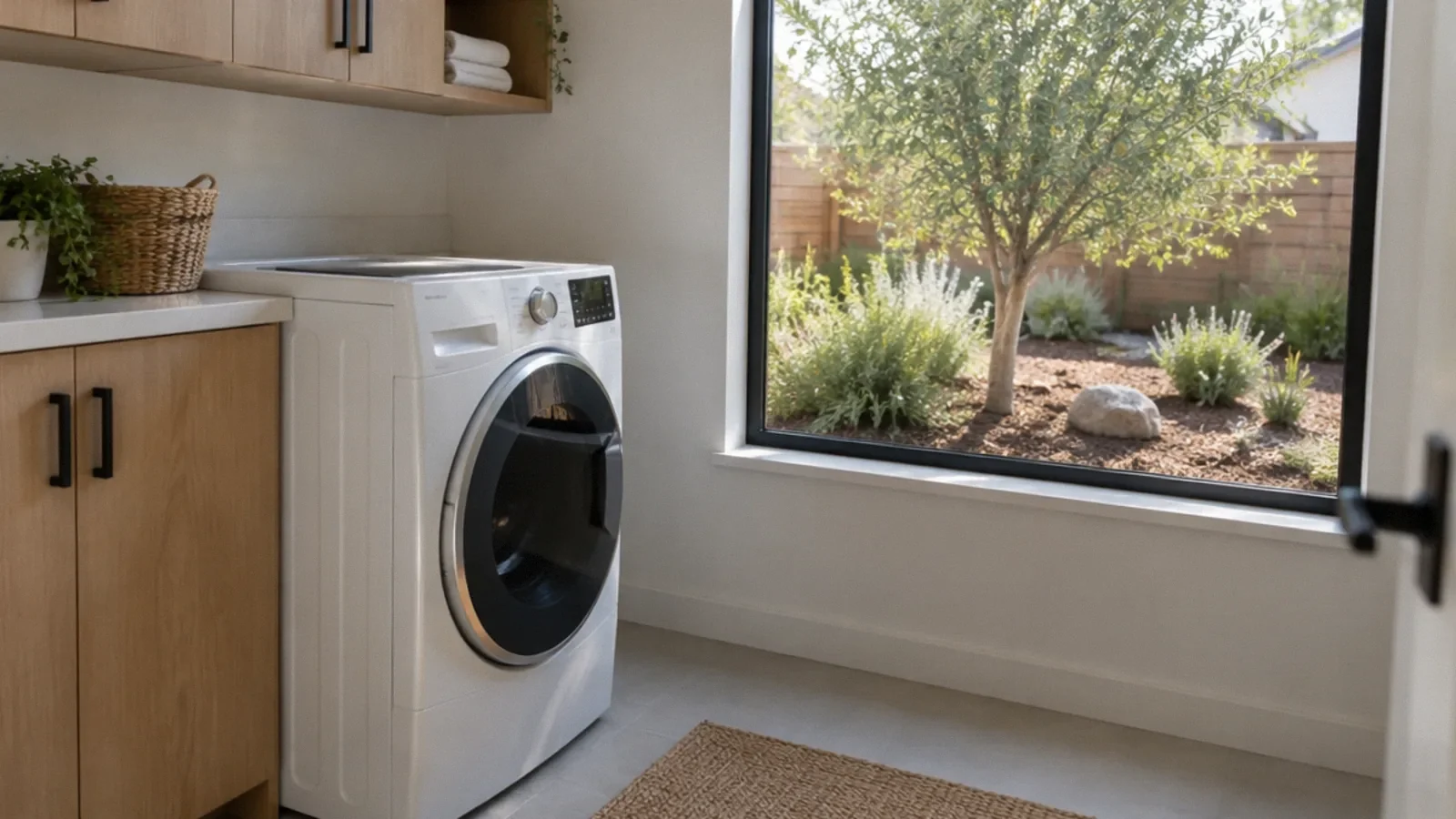
A separate graywater system may direct eligible washer discharge to a landscape when designed and installed under applicable rules. It is not the same as an ordinary sanitary drain, and its permitted use, products and maintenance depend on the system and jurisdiction.
Contra Costa County describes a limited permit exemption for a clothes washer graywater system that meets specified conditions, including no impact on other building systems. Its guidance also states that design and code requirements still apply. Confirm the specific design and current local requirements before work.
Ask for a clear project scope
Request a written proposal identifying supply and drain work, fixture or hose connections, any electrical or gas work, permits, wall repair and testing. Ask who performs each trade and verify California contractor licensing when required.
After installation or repair, request the relevant inspection records and manufacturer instructions. Observe the first cycles as directed and report leaks promptly. Keep the shutoff locations and service information accessible for future maintenance.
Your next-step checklist
- Identify supply shutoffs and the existing drain.
- Check the appliance manufacturer’s connection instructions.
- Confirm local permits before altering systems.
- Use qualified trades for plumbing, electrical and gas work.
- Check for leaks after service and keep records.
Related questions
What plumbing does a washer need?
The appliance needs suitable water supply and an approved wastewater connection, configured for the model and local requirements.
Does moving a washing machine require a permit?
It can if plumbing, electrical, gas or vent systems are altered. Confirm the specific project with the local building department.
Is a washer standpipe the same as a graywater system?
No. A standpipe is a drain connection; a graywater system is a separate arrangement subject to its own requirements.
What if the laundry drain overflows?
Stop the washer, avoid contaminated water and wet electrical equipment, and arrange qualified diagnosis of the appliance and drain.
Sources & context
Public guidance supports the principles in this article. The practical questions and examples are editorial interpretation, not a site assessment or a coverage decision. State-specific rules apply only where identified.
- City of Portland: Residential plumbing permitsmunicipal guidance
- Contra Costa County: Residential gray water clothes washer systemcounty guidance
- California CSLB: Contractor license lookupCalifornia consumer resource