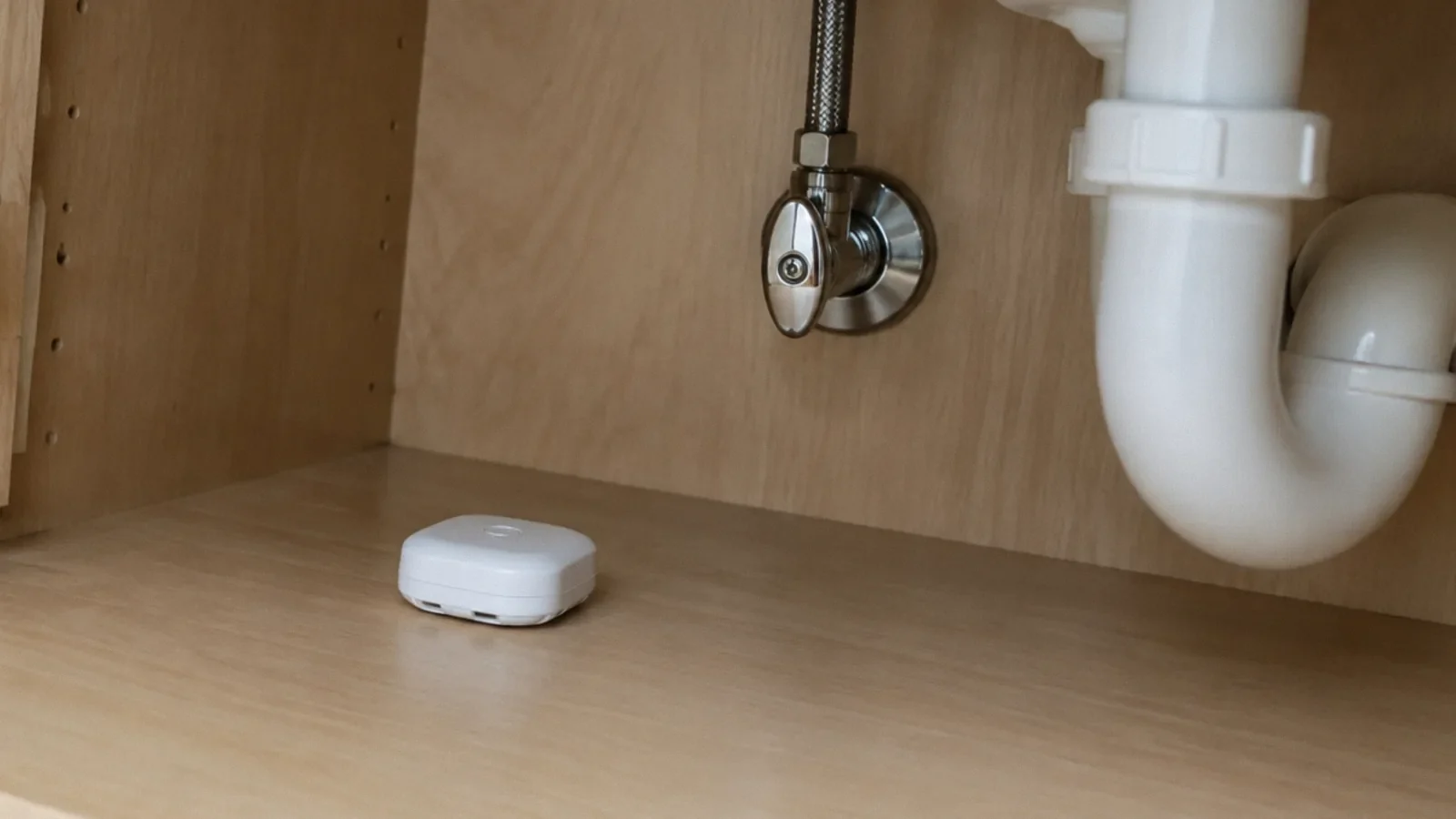
Point sensors detect water where they are placed; flow monitors look for patterns in the connected supply; automatic valves can stop that supply when configured to act. Combine technologies around actual leak paths and test the complete alert-to-response chain.
Start with the leak you want to detect
A sensor under a sink addresses water reaching that location. A whole-house flow monitor observes the connected supply and may identify unusual use. Neither automatically detects roof water behind a wall, groundwater under a slab, or every small intermittent leak. EPA's WaterSense guidance distinguishes moisture detection from flow monitoring and describes their different capabilities.
List the property's likely loss locations: water heater, laundry, dishwasher, refrigerator connection, accessible supply plumbing, and any known trouble spots. Then identify where water would travel and whether someone is normally present. This turns device selection into a protection plan rather than a purchase based only on the number of sensors in a package.
Distinguish notification from intervention
A local alarm alerts anyone close enough to hear it. A remote notification may reach an absent owner. An automatic shutoff can reduce continuing supply flow without waiting for that person, but only if the system is configured and functioning as intended. Ask exactly which event triggers which action and whether manual approval is required.
A shutoff valve does not remove water already released, stop an external flood, or necessarily address a drain backup. The response plan still needs source investigation and assessment of affected materials. Avoid describing any device as whole-home flood prevention without identifying these limits. A useful system shortens detection and response for the sources it can actually control.
Choose placement around the water path
Place point sensors according to their instructions where an early leak is likely to reach the sensing surface. Consider whether a pan, cabinet lip, flooring slope, or hidden partition could divert water away. A sensor beside an appliance may remain dry while water runs beneath it into another room. More devices do not help if every one sits outside the relevant path.
Keep devices accessible for testing and maintenance without moving unsafe or heavy equipment. Remote probes or sensing cables may suit some locations, depending on the system. Do not alter appliance drainage or electrical arrangements just to fit a sensor. Where access is difficult, involve the appropriate installer in designing a practical location.
Evaluate the valve installation and dependencies
An in-line device changes plumbing and typically requires qualified installation. Ask about compatibility, shutoff location, pressure and flow requirements, manual operation, and any systems that must not be interrupted without evaluation. Homes with specialized plumbing arrangements need a site-specific review rather than copying another owner's setup.
Identify dependencies on household power, batteries, internet, cloud services, hubs, or subscriptions. Ask whether detection and shutoff can occur locally during an internet outage and what happens after power returns. A system may have excellent notifications under normal conditions while losing the very function the owner expects during an outage. Obtain that behavior from the actual documentation and test plan.
Test the complete chain
EPA's 2026 guide recommends following maintenance instructions, keeping sensors clean and correctly placed, checking batteries, and maintaining connectivity. Extend the test beyond seeing a light blink. Confirm that a simulated event using the approved procedure creates the expected alert, reaches the right people, and operates the valve if that is the intended design.
After a router change, password change, renovation, or device movement, review the configuration again. Test manual restoration of service under the instructions so occupants understand what to do after a legitimate shutoff. Keep the system from becoming a nuisance that someone disables permanently because normal water use repeatedly triggers alarms; adjust through the documented process and investigate genuine irregularities.
Plan ownership over the life of the system
Assign someone to maintain batteries, software settings, contact lists, and periodic checks. A rental, vacation property, or older occupant's home may need a clear service arrangement rather than assuming the owner will notice a disconnected sensor. Keep an equipment list and a brief response sheet where authorized occupants can find it.
When an alert occurs, preserve the event information and assess the actual leak. Do not simply reset the valve and forget the wet cabinet. Detection is the start of the water-damage response, not its completion. A well-designed system combines appropriate coverage, reliable action, and a person who knows how to arrange the necessary repair.
Your next-step checklist
- Map likely water sources and the paths water would take before selecting devices.
- Decide whether each location needs a local alarm, remote alert, automatic shutoff, or a combination.
- Verify valve suitability and installation requirements with qualified help.
- Check power, internet, hub, and service dependencies in the actual documentation.
- Test alert delivery and valve response together after setup and relevant changes.
- Assign ongoing maintenance and a response owner.
Related questions
Can a flow monitor find a roof leak?
Not by monitoring the household supply. Roof water does not pass through that monitored pipe. A separate detection approach is needed for that pathway.
Does an app notification mean the valve closed?
Not necessarily. Confirm the configured action and actual valve status. Some systems only alert unless additional settings or equipment are present.
Are sensors maintenance-free?
No. Batteries, cleanliness, placement, connectivity, and configuration need attention under the equipment instructions. Test the complete response periodically.
How do water leak detectors work?
Point sensors detect water at their location; flow monitors look for unusual use in connected supply piping. Some systems can also trigger a configured shutoff.
Sources & context
Public guidance supports the principles in this article. The practical questions and examples are editorial interpretation, not a site assessment or a coverage decision. State-specific rules apply only where identified.
- EPA WaterSense: Leak detection and flow monitoringofficial
- EPA: Leak detection and flow monitoring guide, February 2026official
Community questions behind this topic
These discussions helped identify reader concerns. They are anecdotal, not technical or legal authority.