The water service line connects a public water main to the plumbing inside a building. It usually passes a meter and a shutoff, but their locations and the boundary between utility and owner responsibility vary. A plumber and the water utility can help identify a suspected leak and the correct repair responsibility.
From the public main to your fixtures
A public water main is the larger distribution pipe operated by the water system. A service line branches from it to supply a particular property. Inside, the service connects to the building distribution pipes that carry water to fixtures and appliances. People often call the service line the main water pipe, but a plumber may use main to mean the utility’s distribution pipe. Describe the location as well as the name when reporting trouble.
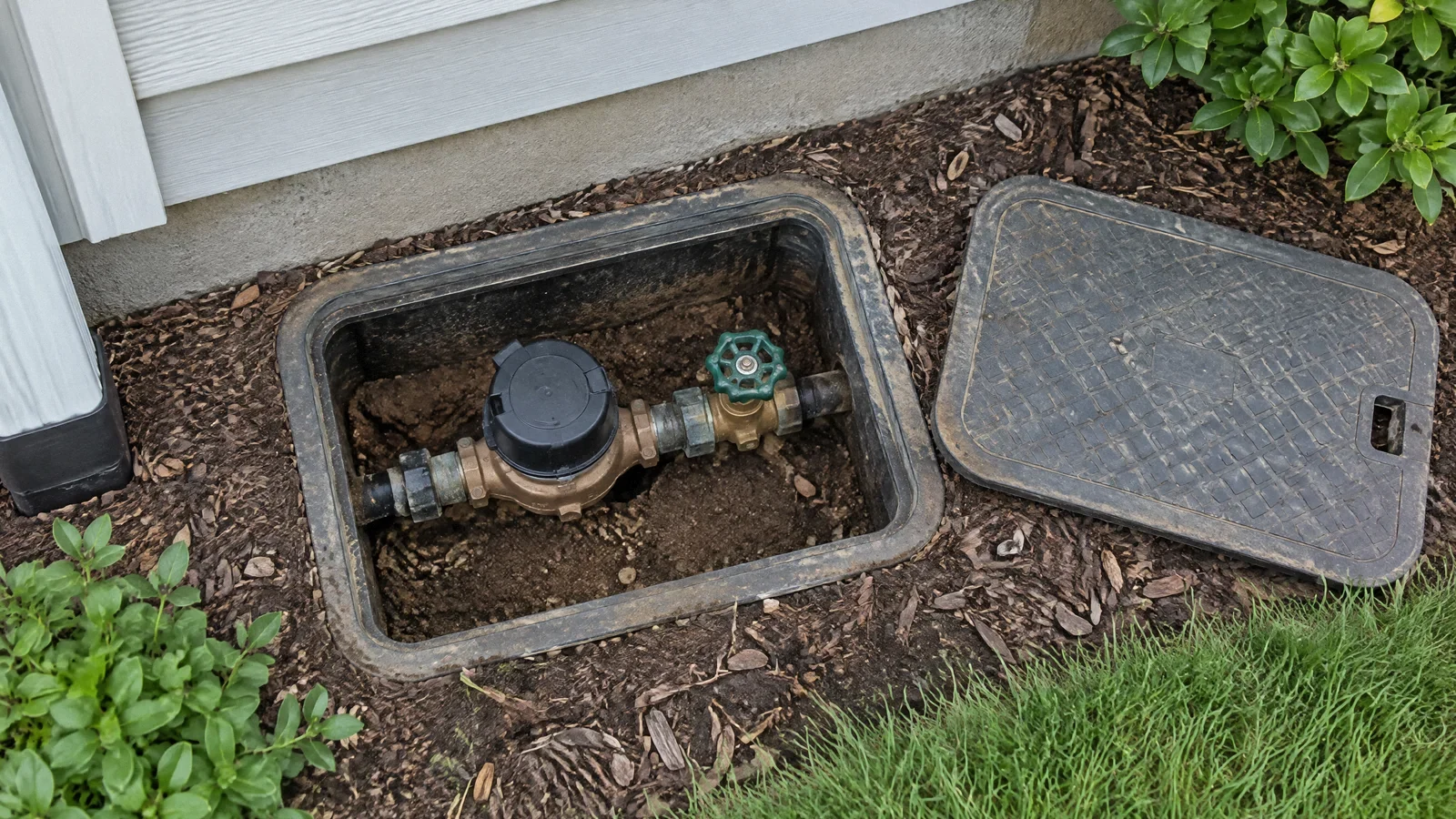
A meter measures use where the utility has installed it. Depending on the community and building, it may be in a ground box, a basement, or another accessible location. There may be a utility-controlled curb stop and an owner-accessible main shutoff. The meter, curb stop, property line, and ownership boundary do not necessarily coincide. A private well has a different supply arrangement; ask the well contractor about its pressure tank, pump controls, and shutoff.
Find the shutoff before a leak
Trace the incoming pipe at the point where it enters the basement, crawlspace, garage, or utility room if safely accessible. The building’s main shutoff is commonly near that entry or the meter, but its exact position varies. Label it for household members and keep the path clear. Ask a plumber to identify and service a stuck or unidentified valve rather than forcing it. A valve that will not close fully may need repair.
If water is escaping indoors and you can reach the correct valve safely, close it. Do not walk through water to reach electrical equipment or attempt to operate a valve in a hazardous area. If the leak is outside, severe, or upstream of your shutoff, call the water utility’s emergency number. The utility can advise on its equipment and arrange shutoff when needed. Do not assume a street valve or meter box is yours to operate.
Recognize a possible service line leak
Unexplained wet ground, a persistently soggy strip in dry weather, settlement, unusually high bills, or a change in pressure can warrant investigation. None proves a service line failure: irrigation, drainage, a toilet leak, neighboring water, and normal seasonal conditions can produce similar signs. Record when the symptom began, photograph visible conditions, and note whether nearby construction or a utility notice occurred.
If safe, stop all fixtures and water-using appliances and observe the meter according to utility instructions. Continued movement can suggest water use or a leak, but an automatic irrigation system, appliance, or other branch can complicate the observation. Do not open a sealed utility enclosure or rely on one reading as a location test. A plumber can isolate sections and use appropriate leak-location methods. Report sudden pressure loss or water emerging near a street promptly to the utility.
Who pays and how repairs are scoped
Contact the water utility first to identify the property’s service arrangement and responsibility boundary. Ask whether its crew will inspect the meter, which side of the boundary it maintains, whether a permit or inspection is required, and whether planned street work affects the repair. Policies differ by system and address; the presence of a meter alone does not establish ownership.
Request a written plumber’s scope that identifies the suspected section, proposed location method, repair versus full replacement, pipe material, permit and inspection responsibility, surface restoration, and what happens if the actual route differs. Clarify whether paving, landscaping, disposal, and temporary water service are included. An estimate based on an assumed route may change after investigation. Ask about the warranty and obtain the conditions in writing. Before excavation, the contractor should arrange required utility locating and permits.
Pipe material and drinking water
Service lines may contain copper, plastic, galvanized steel, lead, or a combination following past repairs. A visible pipe inside the house does not establish the material of the entire buried line. The utility’s service-line inventory may contain information, but records can be incomplete. Ask the utility or a qualified plumber to identify both portions and explain any uncertainty.
Lead can enter drinking water from service lines and other plumbing components. If the line may contain lead, contact the utility for its current guidance, testing options, and replacement information. CDC recommends using cold tap water for drinking and cooking; boiling does not remove lead. A filter certified for lead reduction must be used and maintained as directed. Water testing and material identification answer different questions: a single sample does not identify every pipe material or guarantee future water quality.
After repair
Ask the contractor and utility how to return the line to service, flush it, and address any local drinking-water notice. Follow their instructions, especially after work on a lead or unknown line. Check accessible joints and the repair area for fresh moisture, and retain the permit, invoice, photographs, and details of the installed pipe. A repaired supply pipe does not dry water trapped in flooring or wall cavities; arrange a separate assessment if materials were soaked.
If water damage has affected the home, photograph conditions before disposal where safe and contact your insurer promptly. Coverage depends on the policy, cause, and exclusions. Ask the carrier what documentation it needs and whether emergency mitigation can proceed before an inspection; do not delay an urgent response while waiting for a claim decision.
Your next-step checklist
- Identify the accessible building shutoff and emergency utility contact.
- Record symptoms, meter readings, and affected locations without entering unsafe areas.
- Confirm the ownership boundary before approving repair.
- Get a written scope including excavation, permits, and restoration.
- Ask about service-line material and follow the utility’s post-repair guidance.
Related questions
Is the water main the same as the sewer line?
No. The water service brings pressurized supply water into the property; the sewer or drain line carries wastewater away. Different agencies and contractors may handle them.
Does an unusually high bill prove the buried service line is leaking?
No. Toilets, irrigation, appliances, meter-reading changes, and other plumbing can contribute. Investigate usage and have a professional isolate the source.
Can I determine the entire service line material by looking inside?
Not reliably. A buried portion can differ from the visible pipe. Ask the water system about its inventory and a qualified professional about identification.
Sources & context
Public guidance supports the principles in this article. The practical questions and examples are editorial interpretation, not a site assessment or a coverage decision. State-specific rules apply only where identified.