If there is an active fire, keep the microwave door closed and unplug it only if safe; leave and call 911 if there is danger. After an actual fire, have the appliance checked before reuse. For an ordinary food odor without damage, allow it to cool and clean accessible surfaces according to the manufacturer’s instructions.
Respond to an active fire first
If food or another item is burning inside a microwave, keep the door closed and unplug the appliance only if you can reach the plug safely. USFA advises having a microwave checked before using it again after a fire. If flames spread, smoke is heavy or you are unsure, leave, close doors behind you when possible and call 911 from outside.
Do not open the door to inspect an active fire or carry a burning appliance outdoors. A smell-removal procedure is appropriate only after the hazard is over and the appliance has been assessed where necessary. Never disable a smoke alarm because of cooking smoke.
Determine where the smell came from
An odor from an overcooked meal can remain on food residue in the cavity. A burning electrical or chemical smell that does not come from food is a different concern. GE advises stopping the appliance and seeking service for a burning smell that is not from food, especially an electrical or chemical odor.
Do not keep running the microwave to see whether the smell disappears if you suspect an electrical problem, damaged cord, smoke from the appliance or a fire. Turn it off and disconnect power only if safe; contact the manufacturer or a qualified service technician.
Let the appliance cool and disconnect power
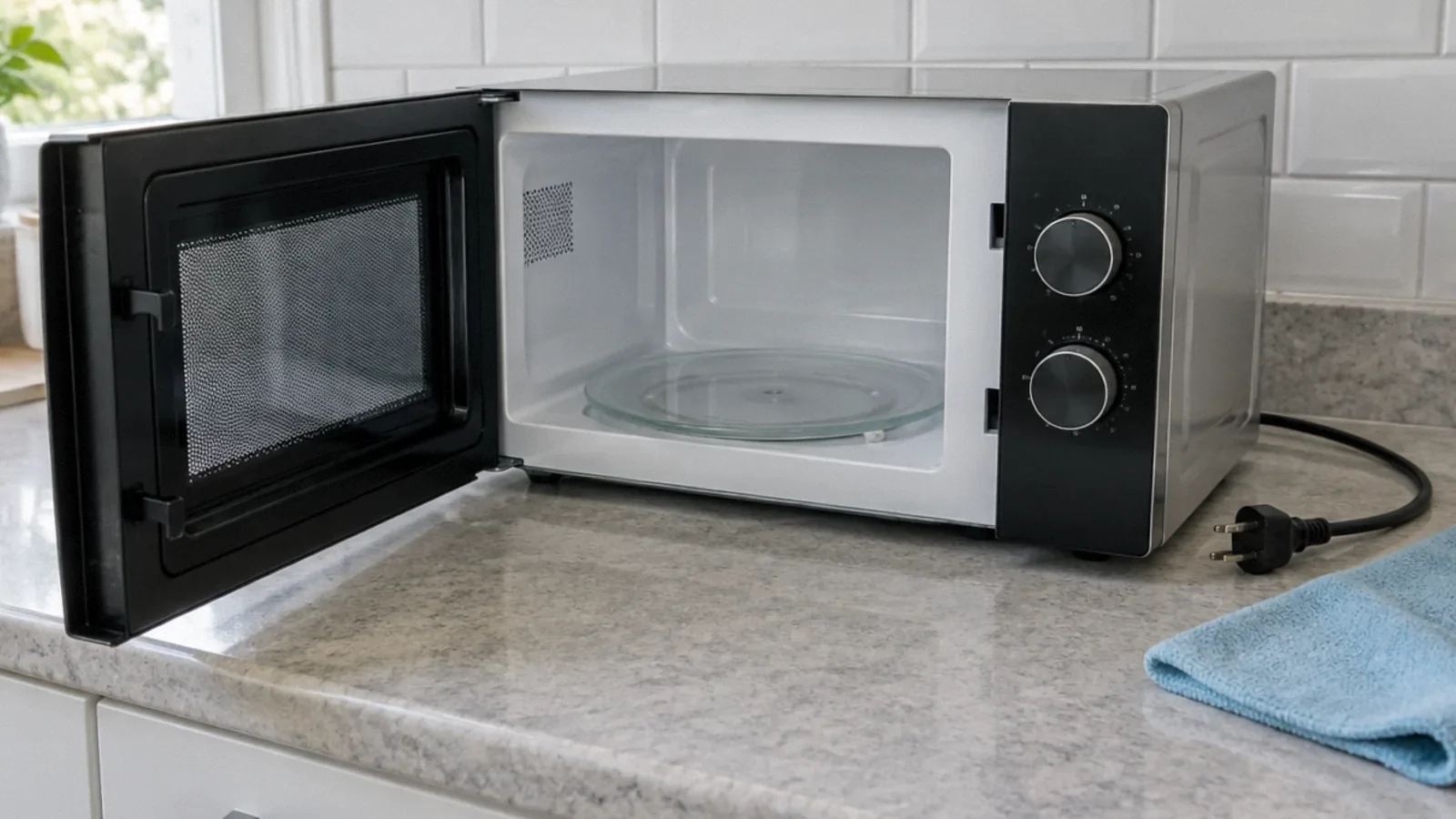
Before routine cleaning, switch the controls off, allow the microwave to cool and unplug it if the plug is accessible and safe to handle. Whirlpool advises making sure the appliance is cool before cleaning. Do not touch a wet plug or use the appliance near damaged electrical equipment.
Consult the manual for the model, including its instructions for the turntable, supports, interior coating and ventilation openings. Do not remove the exterior cabinet: a microwave can contain hazardous electrical components even when unplugged. Service of internal parts belongs to a qualified technician.
Clean ordinary food residue
Once the appliance is cool and safely disconnected, wipe accessible interior surfaces with a soft cloth and a cleaner permitted by its manual. GE suggests a non-abrasive detergent or baking soda for its microwave cavity. Follow the product and appliance instructions, rinse as directed and dry the surfaces.
Remove the turntable only if the manufacturer permits it and clean it separately according to the manual. Avoid soaking vents or controls, scraping the interior coating or using a metal scouring pad. Reinstall the dry turntable and support correctly before any later use.
Air out the cavity
For a strong food odor without a fire or equipment damage, GE suggests leaving the door open for two to three hours while the microwave is not in use. Follow your own model’s instructions and keep the open door out of a walkway.
Whirlpool describes lemon juice or vinegar as possible odor treatments for certain countertop models. These are manufacturer-specific suggestions, not substitutes for removing residue or inspecting damage. Do not mix vinegar with bleach or another cleaner, and avoid heating liquids unnecessarily because hot liquid and steam can cause burns.
Look at filters and nearby surfaces
An over-the-range microwave may have grease or charcoal filters as part of its ventilation arrangement. Filter location, cleaning and replacement vary by model. Follow the manufacturer’s instructions and do not operate the appliance with a required filter or component incorrectly installed.
Odor can also remain on accessible nearby surfaces after smoke or cooking residue. Clean only when safe and according to the material’s care instructions. If there was a significant fire, soot and heat can extend beyond the microwave; a qualified professional may need to assess the surrounding cabinet and electrical equipment.
When the smell returns
If the burning odor returns during use, stop the appliance. A damaged interior coating, sparks, a loose door, a damaged cord or an odor that is not clearly from food calls for service. Do not spray fragrance inside or attempt to mask a continuing electrical smell.
Tell the technician whether there was an actual fire, what was heated, what you observed and any cleaning products used. If the appliance is rented or installed in a shared building, notify the owner or manager. Replace or repair the unit only after an appropriate evaluation.
Prevent repeat odors
Clean spills promptly after the appliance has cooled, follow the maker’s cooking and container instructions, and supervise food that can overheat. Use the recommended turntable and avoid containers or materials the manufacturer prohibits. Follow the equipment’s instructions for ventilation and maintenance.
Keep the appliance and surrounding area free of combustible clutter. If another fire occurs, prioritize leaving and calling for help over saving the appliance. A clean smell does not establish that fire-damaged internal components are safe.
Ordinary food odors
The same accessible-surface cleaning approach applies to ordinary lingering food odors as well as burnt-food residue, provided there was no fire, sparking or evidence of appliance damage. After cooling and disconnecting as directed, remove food particles and wash the turntable and interior surfaces using the manufacturer’s approved method, then dry and air the cavity.
Avoid abrasive pads and spraying cleaner into vents or electrical openings. If a normal food smell persists, inspect removable parts and surrounding surfaces as the manual permits. A continuing burning or electrical odor is a different situation: stop use and arrange service.
Your next-step checklist
- Keep the door closed during an active microwave fire.
- Unplug only if safe and leave if danger persists.
- Have the appliance checked before reuse after a fire.
- Clean cooled accessible surfaces using the model instructions.
- Stop and seek service for an electrical or recurring burning odor.
Related questions
How do I remove a burnt-food smell from a microwave?
When there was no fire or equipment damage, allow the appliance to cool, clean accessible residue with a manufacturer-approved non-abrasive method and air it out as directed.
Can I use a microwave after a fire?
USFA advises having it checked before reuse. Do not assume the absence of odor means the appliance is safe.
What if the microwave smells like burning plastic?
Stop using it and seek qualified service, especially if the smell is electrical or not clearly from food.
Can I mix vinegar and bleach to remove the smell?
No. Never mix bleach with vinegar or other cleaning chemicals.
Sources & context
Public guidance supports the principles in this article. The practical questions and examples are editorial interpretation, not a site assessment or a coverage decision. State-specific rules apply only where identified.
- GE Appliances: Microwave odorsmanufacturer guidance
- Whirlpool: Removing microwave odorsmanufacturer guidance
- U.S. Fire Administration: Community outreach guidefederal fire safety guidance
- Primary guidance: www.usfa.fema.govprimary guidance