Stop using the affected fountain and give your cat fresh water in a clean bowl. Unplug the fountain safely, then clean its components according to the manufacturer’s instructions. A dark or slimy film is not automatically mold; contact a veterinarian if your pet is ill or you are concerned about exposure.
Remove the fountain from use
If you see growth, residue or an unusual film in a pet fountain, give the animal a separate clean bowl of fresh water. Do not withhold water while cleaning the fountain. Keep the cat away from the appliance and cleaning products until all parts are ready for use.
A film can contain different kinds of material, including accumulated debris or microorganisms. Color and appearance alone do not identify mold or establish a diagnosis. The practical first step is to clean the device and address any component that cannot be cleaned as its manufacturer directs.
Disconnect the appliance safely
Unplug the fountain before handling water or removable components, following the manufacturer’s instructions. Keep hands dry when handling a plug, and do not touch a damaged cord or wet electrical connection. If the plug or outlet is wet, keep away and seek qualified help.
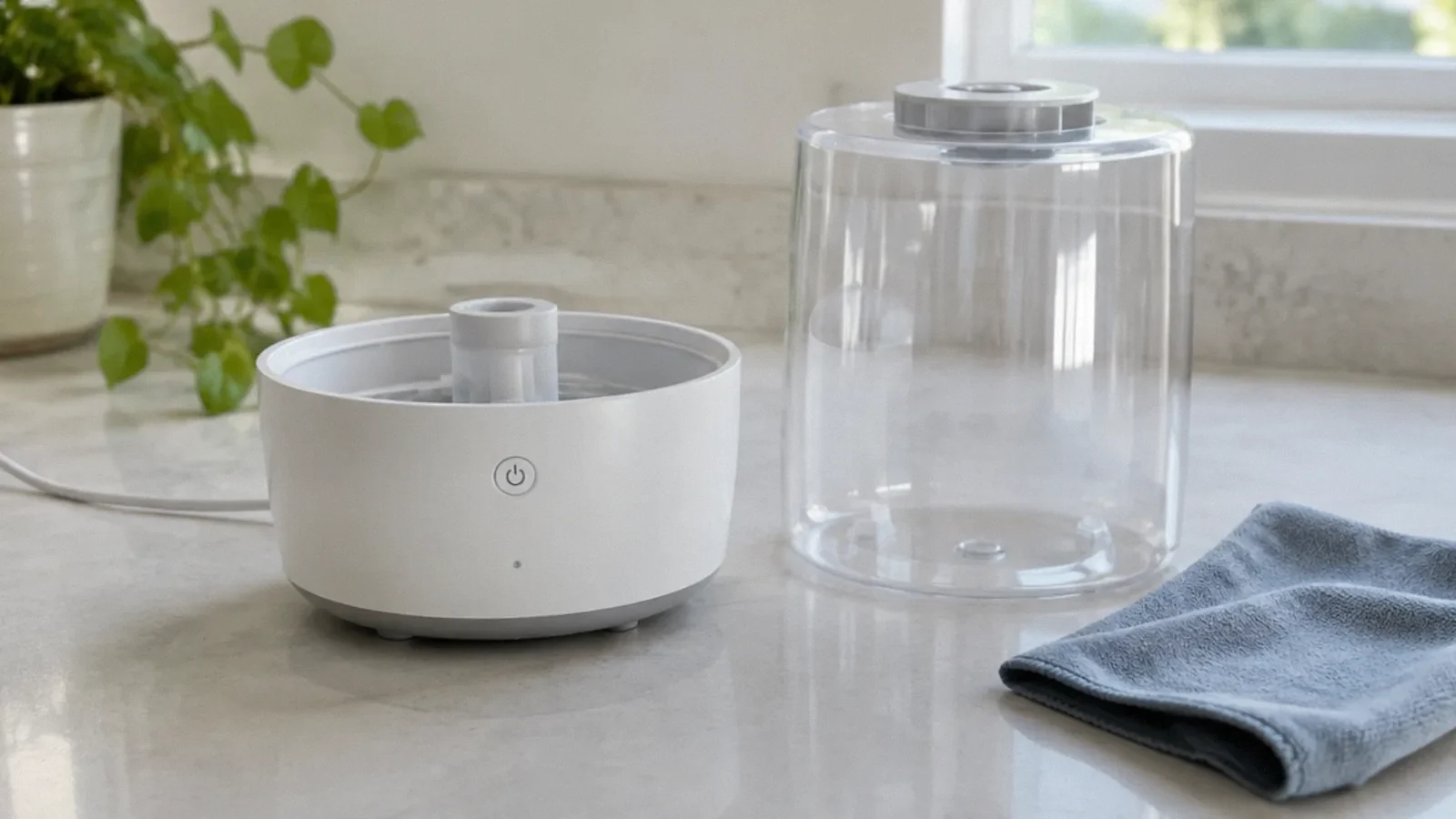
Separate only the parts the manufacturer says are removable. A pump, electrical adapter and decorative cover may have different cleaning requirements. Never immerse an electrical component unless the specific product instructions say it is designed for that treatment.
Wash the bowl and accessible parts
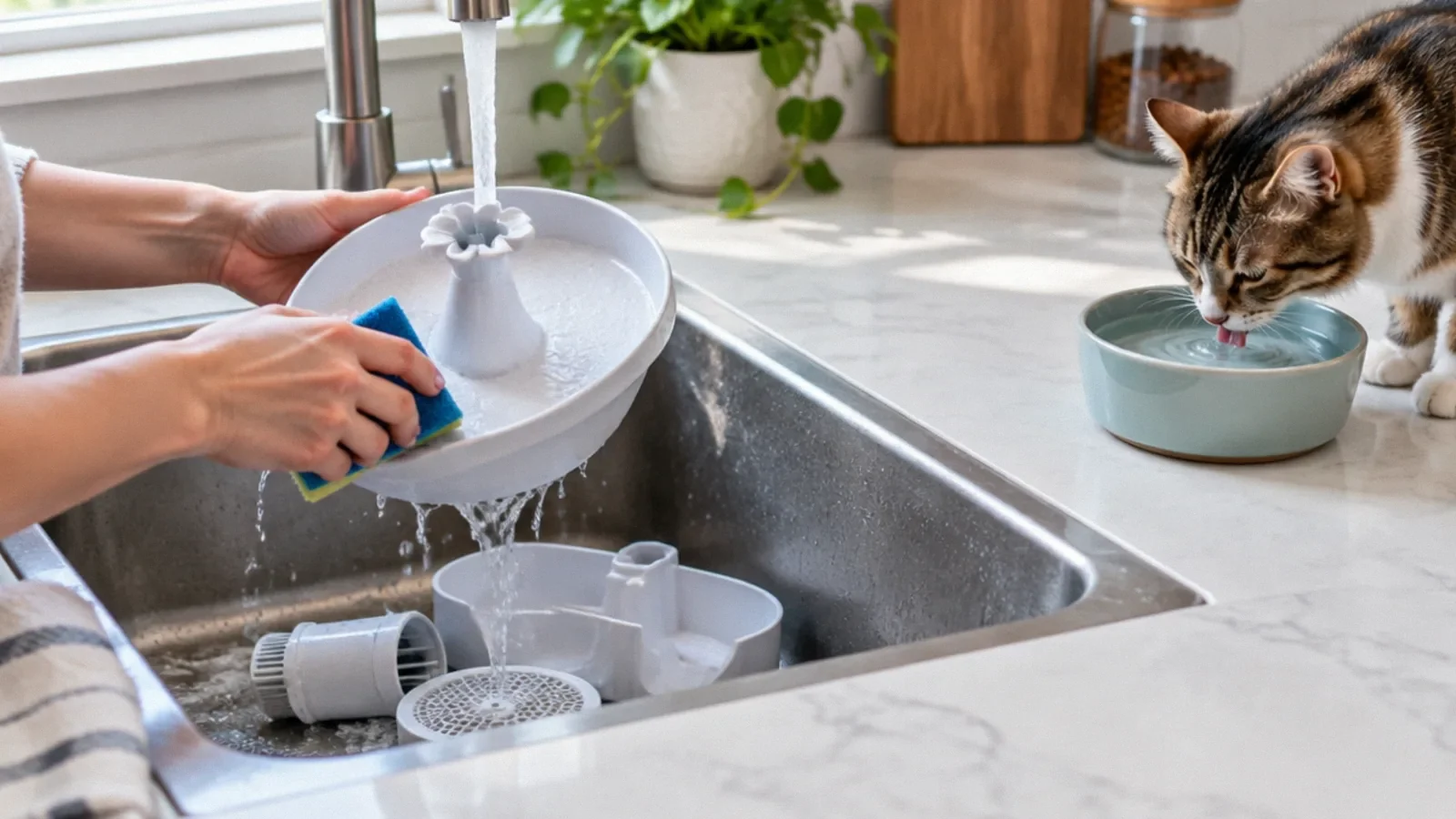
CDC recommends cleaning pet water bowls daily and following the cleaning instructions provided with pet items. For a fountain, follow the model’s directions for its bowl, lid, channels and other accessible surfaces. Wash removable food-safe parts with an appropriate method and rinse thoroughly as directed.
Use a dedicated brush or sponge that can reach grooves without damaging the material. Cleaning removes dirt and debris; it is not the same as sterilizing every surface. Do not use an abrasive or solvent on a material that the manufacturer says it may damage.
Cleaning products and pets
CDC notes that ordinary cleaning is sufficient for many pet items; additional disinfection may be appropriate in specific circumstances, such as illness or a vulnerable household member. Follow the product label and your veterinarian’s advice when disinfection is indicated.
Keep pets away from cleaning products, rinse as directed and allow components to dry as appropriate before refilling. Never mix bleach with other cleaners or use a product on a pet drinking surface unless its instructions permit that use. Do not add disinfectant to drinking water as a routine treatment.
When to call the veterinarian
If your cat has vomiting, diarrhea, lethargy, reduced drinking or another concerning symptom, contact a veterinarian for individualized advice. A visible film does not prove the cause of an illness, and an online article cannot determine whether a particular exposure caused harm.
If the cat may have consumed a cleaning chemical or another potentially poisonous substance, contact your veterinarian or an appropriate animal poison service promptly. Keep the product label available if it can be obtained safely, and do not give a home remedy unless directed by a professional.
Prevent residue from returning
Provide fresh water and clean the bowl daily in line with CDC guidance. Follow the fountain manufacturer’s schedule for pump cleaning and filter changes; clean sooner if a surface is visibly dirty or develops an odor. The required frequency can depend on the device and household conditions.
Place the fountain where it is easy to inspect, clean and disconnect safely. Avoid letting food debris accumulate in the water. Wash your hands after handling pet supplies and keep brushes or towels used for the fountain separate from food-preparation items as appropriate.
When to replace the fountain
A scratched bowl, damaged cord, failing pump or inaccessible residue may make replacement more practical than repeated cleaning. Ask the manufacturer whether individual components are available and choose a model whose parts can be cleaned according to clear instructions.
Before returning any fountain to service, reassemble it exactly as directed, add fresh water and ensure the electrical connection is dry and safe. Continue offering a clean bowl if the device is being repaired. No cleaning schedule can guarantee that all microorganisms are absent.
Your next-step checklist
- Provide fresh water in a clean separate bowl.
- Unplug the fountain safely before cleaning.
- Follow the manufacturer’s instructions for each component.
- Replace filters and damaged parts as directed.
- Call a veterinarian about illness or chemical exposure.
Related questions
Is the black film in a cat fountain definitely mold?
No. A film can have several causes; appearance alone cannot identify it.
How often should a cat water bowl be cleaned?
CDC recommends cleaning pet water bowls daily. Follow the fountain maker’s additional instructions for pumps and filters.
Can I leave cleaning chemicals in the fountain water?
No. Follow product and appliance instructions, keep pets away during cleaning and rinse as directed before refilling.
What if my cat seems ill after using a dirty fountain?
Contact a veterinarian. Symptoms have many causes and need an individual assessment.
Sources & context
Public guidance supports the principles in this article. The practical questions and examples are editorial interpretation, not a site assessment or a coverage decision. State-specific rules apply only where identified.
- CDC: Cleaning and disinfecting pet suppliesfederal pet health guidance
- CDC: Pet food safetyfederal pet health guidance
- CDC: Giardia and petsfederal pet health guidance