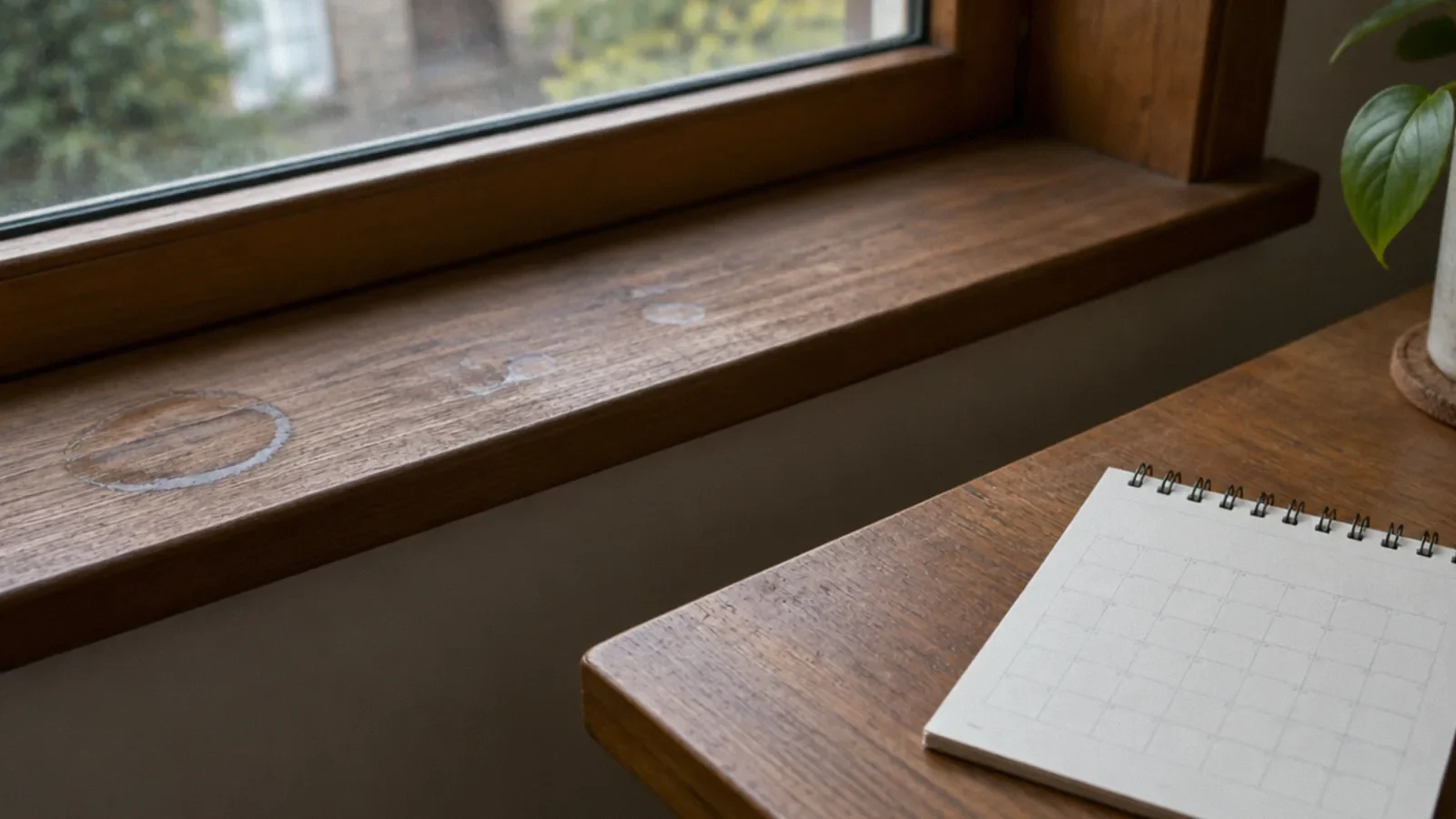
Mold can damage the surfaces and materials on which it grows, especially when moisture persists. Stop the water source, assess the extent and affected materials, and clean or remove contamination before rebuilding. A stain alone does not establish structural failure or identify a mold species.
How moisture and mold affect a building
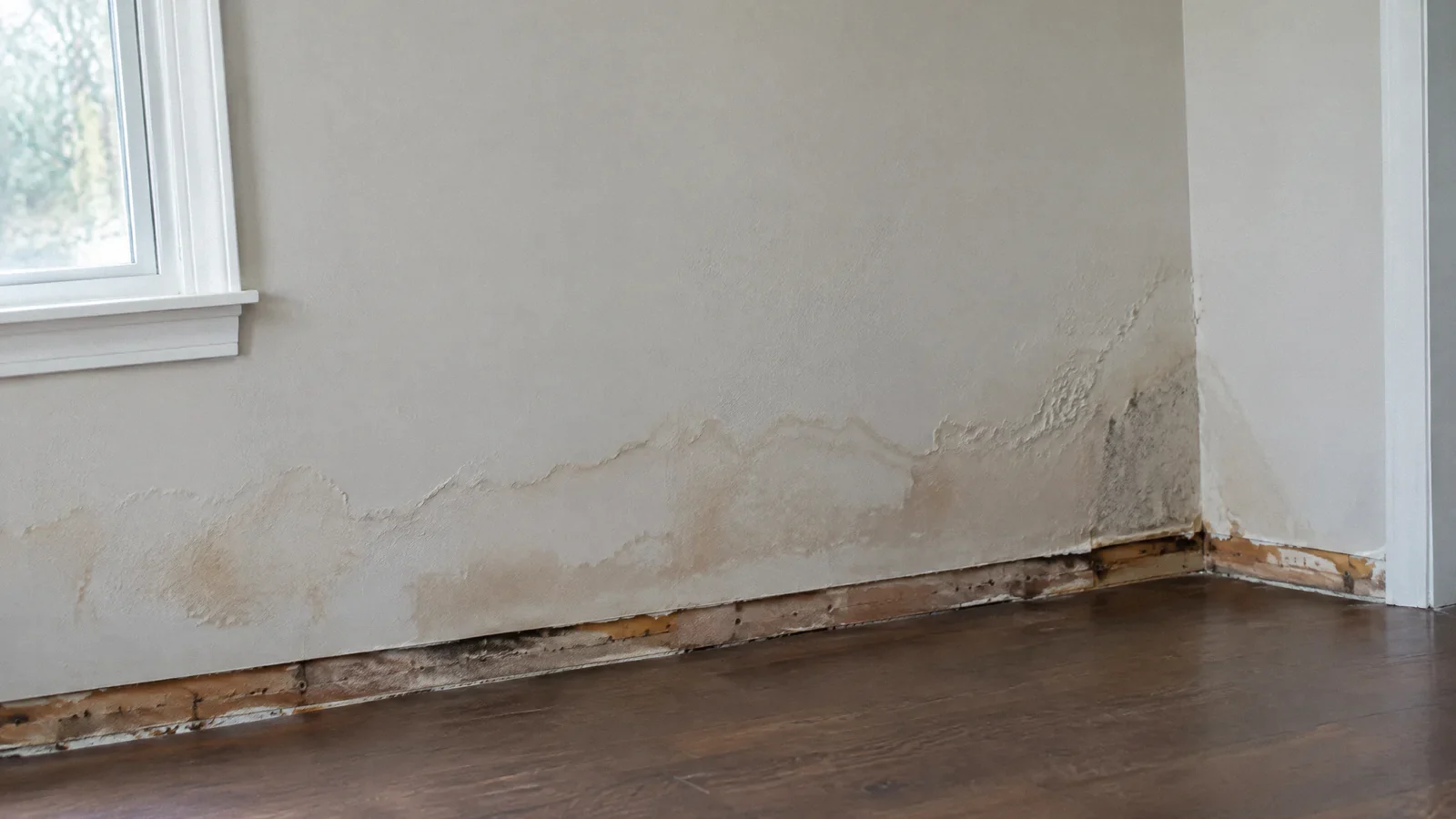
Mold grows where moisture and suitable material are available. EPA notes that mold damages what it grows on and that longer growth can cause more damage. Wetting itself can also swell, stain, corrode, or weaken materials. These effects overlap: a discolored wall may reflect a past leak, current dampness, mold, or more than one condition. The first task is to identify and correct the source rather than judging the entire problem by the visible color.
Watch for recurring staining, peeling paint, musty odor, damp finishes, warped trim, and visible growth. These are reasons to investigate, not proof of a particular species or a medical diagnosis. Moisture may extend behind an apparently small patch. If the ceiling sags, framing is visibly displaced, or a wall is bowed, stay clear of the affected area and seek a qualified structural assessment.
Find and stop the water source
Consider roof and window leaks, plumbing, surface water at the foundation, condensation on cold surfaces, and poorly controlled indoor humidity. Note whether the problem follows rain, a fixture’s use, or humid weather. Repairing the underlying source is essential; cleaning without correcting it leaves conditions for recurrence. Dry wet areas promptly when safe, but do not assume that a dry-looking surface means a concealed cavity is dry.
If water came from sewage or another contaminated source, EPA advises hiring a professional experienced with that type of cleanup. If electrical equipment is wet or a ceiling appears unstable, keep away and obtain qualified assistance. Renters should report the problem and document communications with the property manager.
Compare hard and porous materials
A sound, nonporous hard surface may be cleaned with detergent and water and dried completely. Porous materials such as ceiling tiles, carpet, and some wall finishes can retain contamination in spaces that are difficult to clean. Depending on condition and extent, removal and replacement may be needed. Do not paint or caulk over growth; doing so hides the condition rather than removing it.
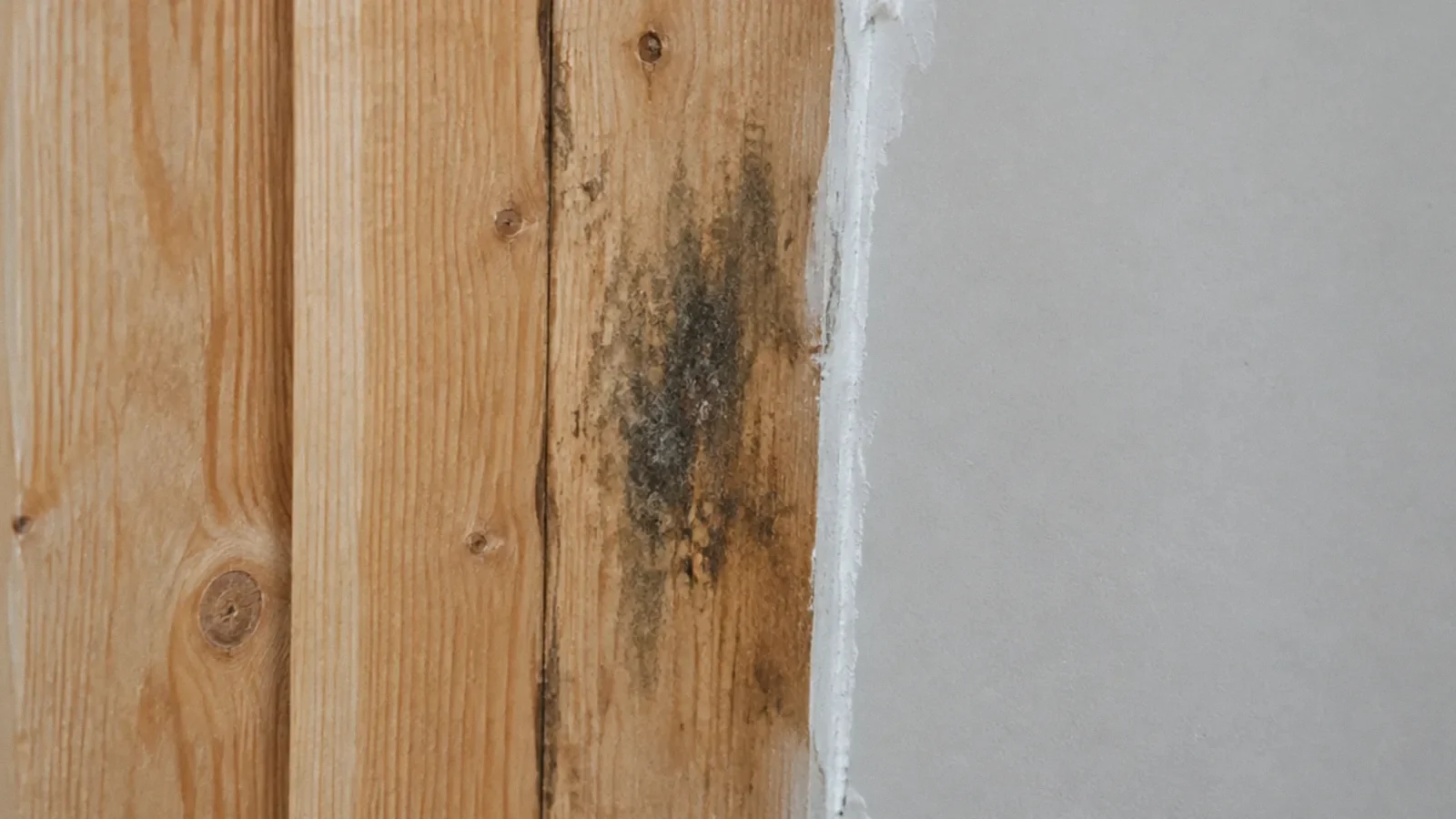
Wood requires a material-specific assessment. Surface growth on sound accessible wood is different from wood that is softened, deteriorated, or part of a concealed assembly. A qualified professional should evaluate suspected structural damage and decide whether members can be cleaned and retained or need repair. Do not infer that a dark surface is structurally unsound solely from its appearance.
Decide who should perform cleanup
EPA says that in many cases an occupant can handle an area smaller than approximately 10 square feet when following its guidance. The area, material, accessibility, and source of water all matter. Extensive damage, recurring growth, hidden cavities, or a suspected contaminated HVAC system can justify an experienced remediation professional even when the visible area seems small. Do not run the HVAC system if contamination is known or suspected.
CDC recommends at least a NIOSH-approved N95 respirator, gloves, and eye protection for mold cleanup. People with allergies, asthma, chronic lung disease, or immune suppression should not participate. Consult a health professional about individual concerns. For a small appropriate cleanup, avoid generating unnecessary dust and follow the product instructions; never mix cleaning chemicals.
Plan removal, drying, and repair
A professional scope should identify the affected materials and inspection limits, the moisture repair, containment, removal and cleaning methods, waste handling, drying, and final restoration. Discuss access and whether adjacent areas need protection. The scope should explain how hidden damage and changes in price will be handled if opening the assembly reveals more than expected.
Before closing a wall or installing flooring, verify that the source has been corrected, affected materials have been cleaned or removed, and the assembly is ready for the replacement products. Ask for moisture observations and photos of concealed work. A newly painted surface is not evidence that hidden material is dry. Retain invoices and the location of any remaining inaccessible areas.
Documentation and follow-up
Photograph visible damage and keep a timeline of leaks, repairs, and communications when safe. Contact the insurer promptly if you intend to make a claim; coverage depends on the policy and the cause, and may distinguish emergency mitigation from reconstruction. Ask what documentation the carrier needs without delaying urgent steps to stop further damage.
EPA describes successful remediation as correcting the water problem and leaving no visible mold or moldy odors. Observe the area after the relevant rain or fixture use and respond to renewed dampness. Testing is not routinely required for visible growth; if proposed, ask what decision it will inform and how its results will be interpreted.
Your next-step checklist
- Record visible conditions and stop the moisture source.
- Assess the extent, material, and possible hidden damage.
- Keep away from unstable or electrically hazardous areas.
- Clean or remove affected materials before replacing finishes.
- Keep records and monitor for recurring moisture.
Related questions
Does black discoloration prove a dangerous species?
No. Color does not identify a mold species or establish the health risk. Address visible growth and moisture regardless of color.
Can I paint over mold damage?
No. Clean or remove the affected material and fix the moisture source before painting or reconstruction.
Does mold always mean structural wood must be replaced?
No. The decision depends on the condition and role of the wood, the extent of contamination, and whether it can be cleaned. Have suspected structural damage assessed.
Sources & context
Public guidance supports the principles in this article. The practical questions and examples are editorial interpretation, not a site assessment or a coverage decision. State-specific rules apply only where identified.
- A Brief Guide to Mold, Moisture and Your Homegovernment
- Mold Cleanup Guidelinesgovernment
- Mold, Testing, and Remediationgovernment