Move unaffected belongings away from the damp area, identify the water source, and assess the size and materials before cleaning. Small growth on an accessible hard surface may be cleaned and dried; porous materials or hidden damage may require removal or professional assessment. Color alone cannot identify a mold species or its health risk.
Signs and likely moisture sources
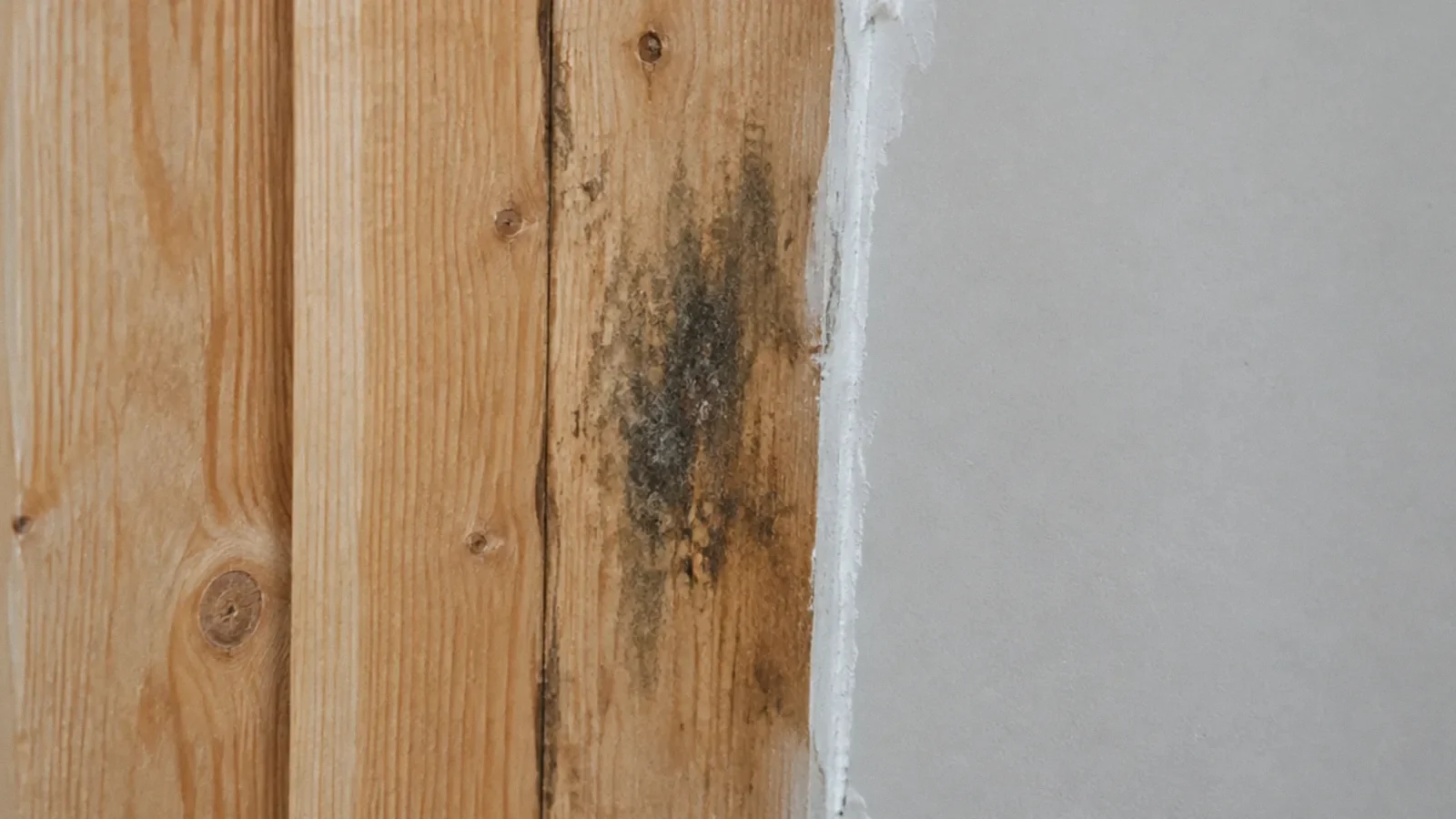
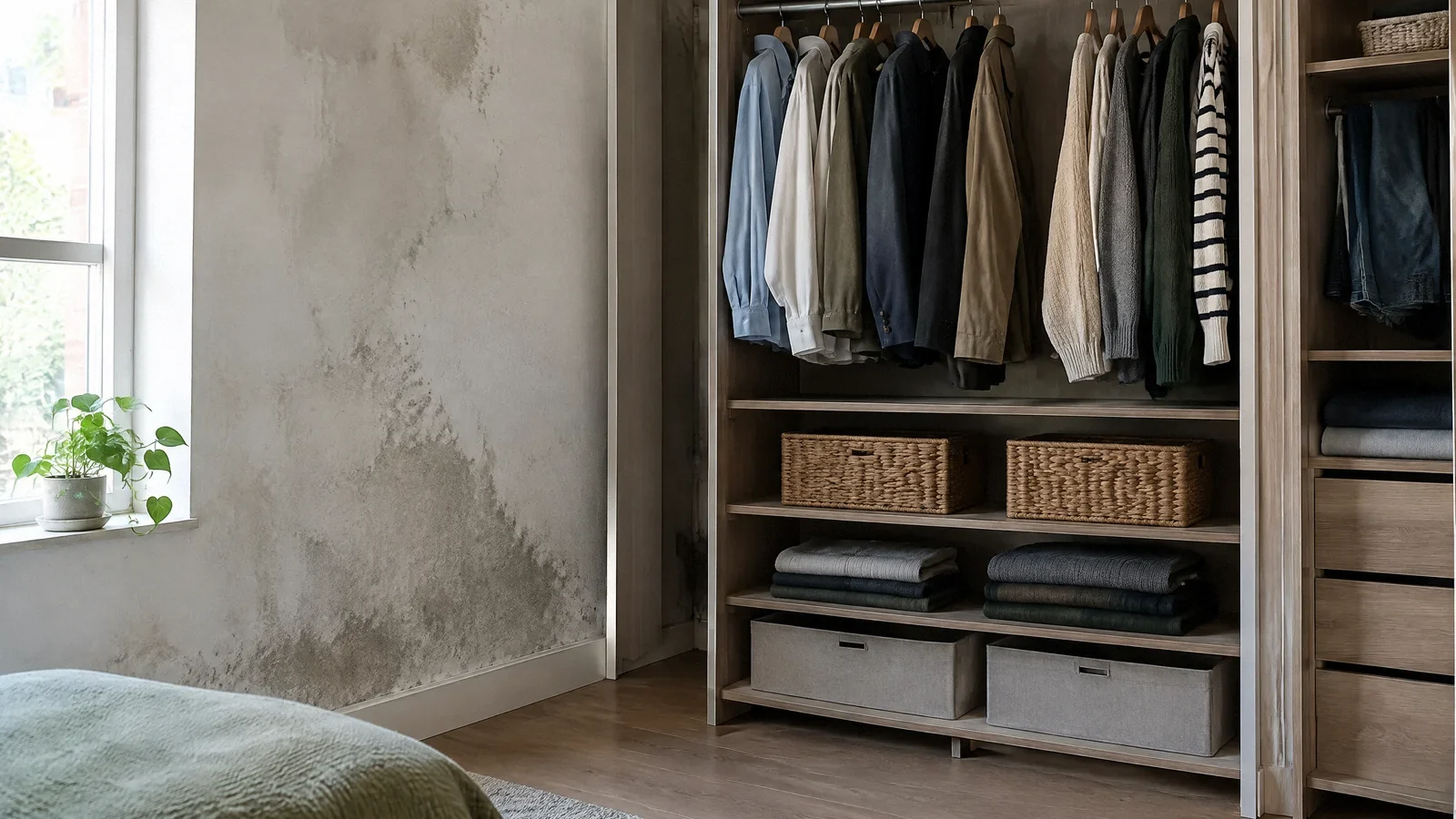
A musty odor, visible spots, damp fabric, staining, or peeling paint can indicate a closet moisture problem. “Mildew” is a common everyday term for some mold growth; both call for attention to moisture and cleanup. Green, dark, or white coloration does not identify a species or tell you whether the area is safe. Investigate the conditions instead of choosing a response by color.
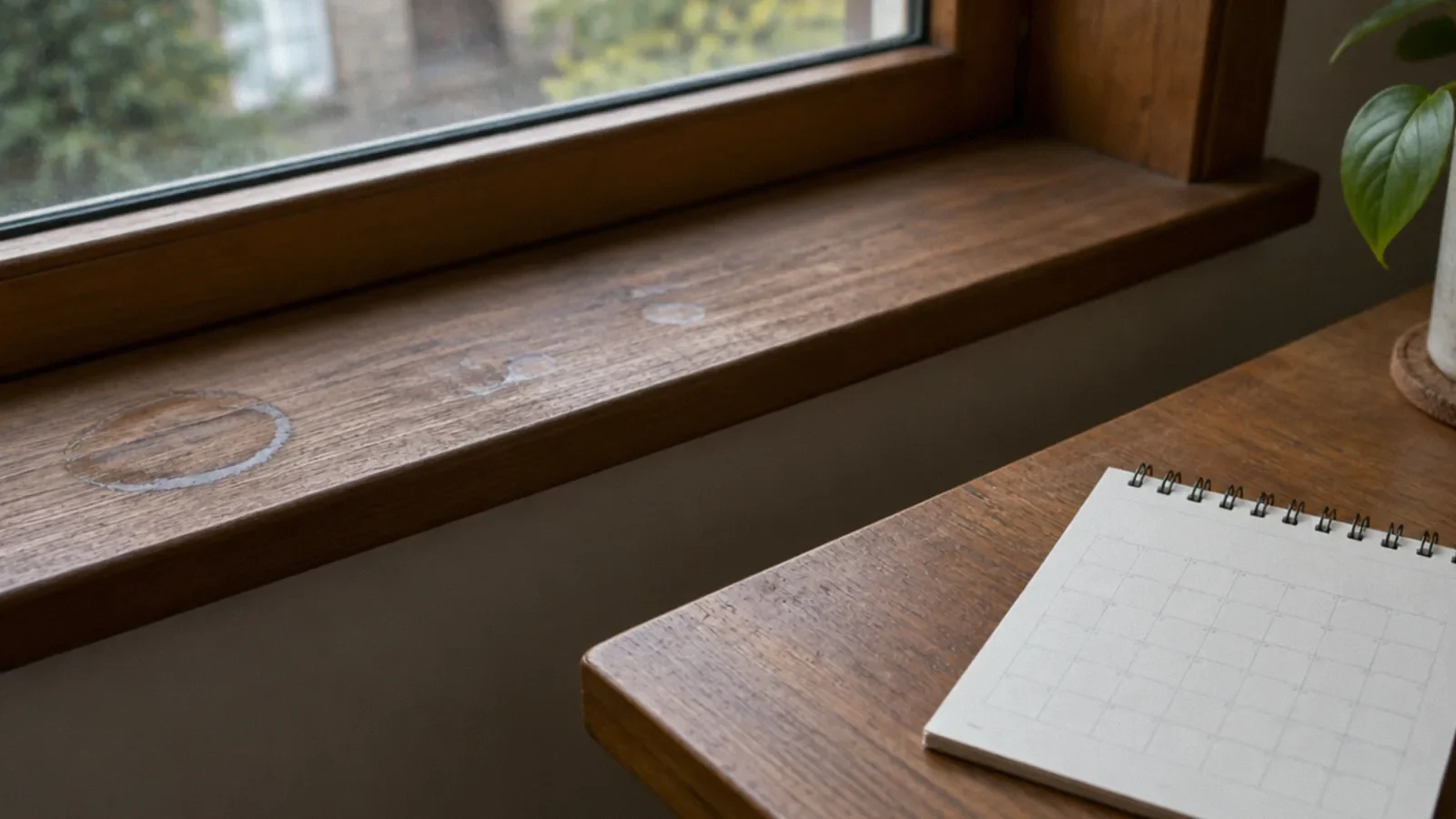
Closets are often crowded and may have cool exterior walls with limited air circulation. Humid indoor air can condense on cold surfaces, particularly behind tightly packed belongings. Other causes include roof or window leaks, plumbing in an adjacent wall, a wet floor, or damp clothing placed in storage. Note whether the problem follows rain, fixture use, or humid weather, and inspect accessible surfaces without tearing into a suspect wall.
Separate belongings and stop the moisture
If conditions are safe, move clean items away from the affected area without shaking dusty materials through the home. Separate damp or visibly affected belongings for assessment. A wet closet should not be refilled until the source is fixed and the surfaces and contents are dry. If the ceiling sags, water is near electrical equipment, or sewage is involved, stay clear and obtain qualified help.
Repair the leak or address condensation before replacing finishes. EPA recommends keeping indoor relative humidity below 60% when possible, ideally between 30% and 50%. A small humidity meter can help track conditions. Reduce indoor moisture sources and use air conditioning or a dehumidifier as appropriate. Leaving space between stored items and a cold wall can improve circulation, but airflow alone cannot repair a leak.
Clean an appropriate small area
EPA says that in many cases a moldy area under approximately 10 square feet can be handled by the occupant using its guidance. This is not a promise that every small area is safe: hidden growth, contaminated water, health conditions, or inaccessible material can change the decision. CDC recommends at least a NIOSH-approved N95 respirator, gloves, and eye protection. People with asthma, allergies, immune suppression, or chronic lung disease should not participate in cleanup.
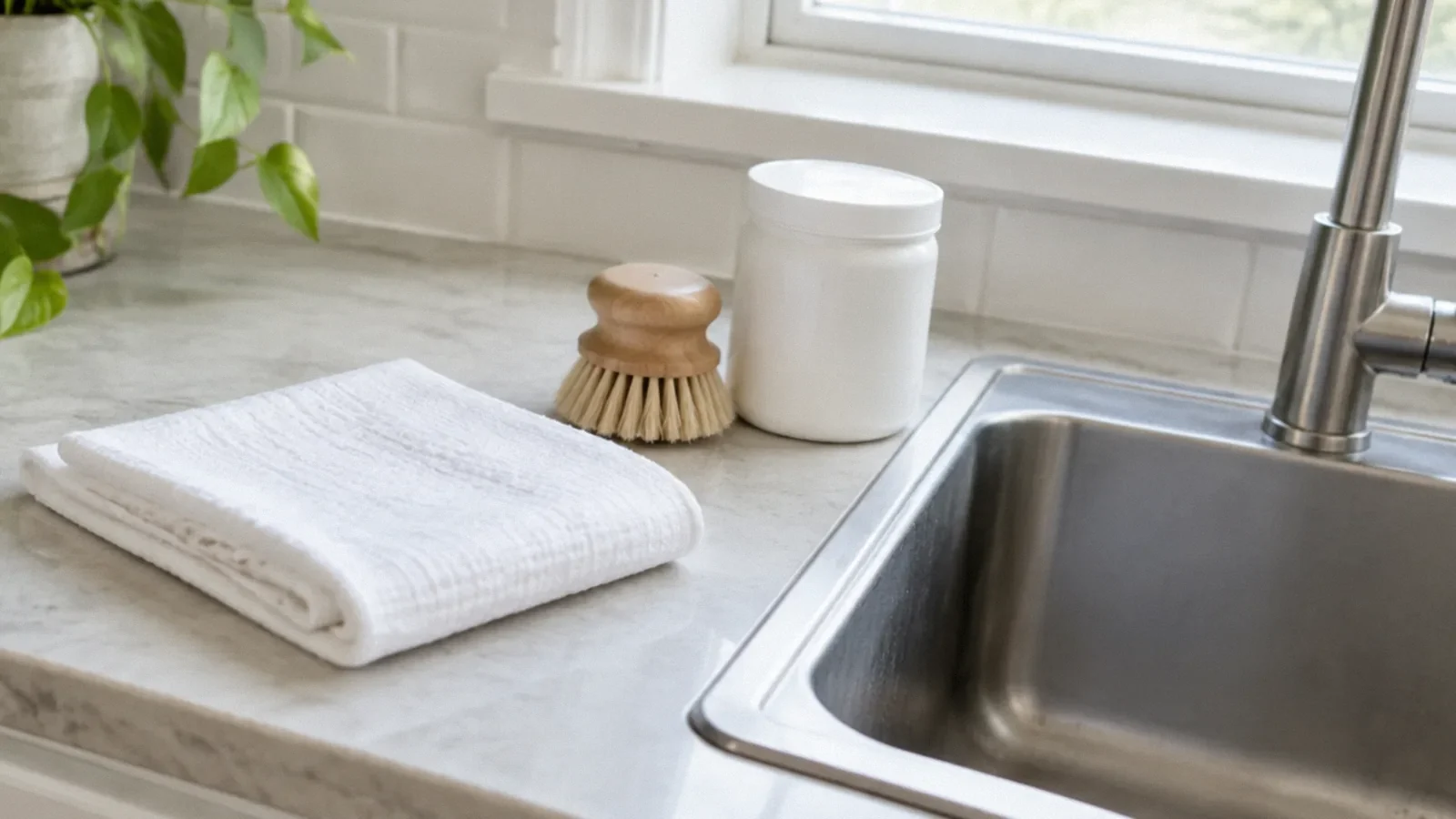
For a suitable small area on a sound hard surface, scrub mold with detergent and water, then dry completely. Follow product directions and never mix cleaning chemicals. Do not paint over growth or rely on fragrance to cover an odor. Porous materials such as moldy ceiling tiles, carpet, or deteriorated wallboard may be difficult to clean completely and may need removal. If the problem extends behind a wall or returns after cleaning, seek an experienced professional.
Clothing, shoes, boxes, and shelves
Assess items individually. Launder washable clothing according to its care label and dry it completely before storage. A valuable or delicate item may need a specialist familiar with the material. If an item remains musty, visibly affected, or cannot be cleaned and dried, discuss disposal or specialized treatment rather than sealing it back in the closet. Do not assume a single washing method is safe for all fabrics.
Cardboard and other absorbent storage materials that are wet or moldy may be difficult to clean; replace affected boxes where appropriate. Clean and dry suitable hard shelves, paying attention to their undersides and wall contact points. Swollen particleboard or deteriorated finishes may require replacement. Keep clean belongings in a dry location while the closet is assessed, and avoid packing damp shoes or laundry into it.
When to bring in help
Use an experienced remediation contractor for extensive damage, substantial hidden growth, recurring moisture, or contaminated water. EPA recommends professional help experienced with sewage or other contaminated-water damage, and its more detailed guidance applies to larger problems. If the heating or cooling system is suspected of contamination, do not run it until it has been assessed.
A professional should explain which areas are accessible, what may be concealed, how adjacent rooms will be protected, and whether cleaning, removal, source repair, and reconstruction are included. Ask how the scope will change if opening a wall reveals more damage. If you rent, notify the owner or manager promptly and keep photographs and written communication.
Prevent a return
After cleanup and repair, leave surfaces dry and avoid overfilling the closet. Maintain a gap where feasible at cool exterior walls and periodically check the back corners, floor, and shelf undersides. Keep wet coats and shoes elsewhere until dry. Monitor humidity and resolve condensation promptly rather than adding a scent or painting over the area.
Look again after the weather or activity that originally caused the moisture. A clean appearance on the first day is useful but does not prove that an intermittent roof leak or plumbing fault has been fixed. Report renewed staining or dampness and keep a record of the repair.
Your next-step checklist
- Identify the moisture source and record visible conditions.
- Separate damp belongings without spreading dust.
- Assess size, health concerns, and affected materials.
- Clean suitable hard surfaces and dry completely.
- Keep clothing dry and monitor humidity and exterior-wall corners.
Related questions
Is green mold in a closet a particular species?
No. Color alone cannot identify the species or establish its health effects. Address the moisture and visible growth regardless of color.
Can closet mildew be painted over?
No. Clean or remove affected materials and correct moisture before painting or replacing finishes.
Should I throw away all clothing in a moldy closet?
Not automatically. Assess each item, follow care instructions for washable items, and seek specialist advice for valuable or difficult-to-clean belongings.
Sources & context
Public guidance supports the principles in this article. The practical questions and examples are editorial interpretation, not a site assessment or a coverage decision. State-specific rules apply only where identified.
- A Brief Guide to Mold, Moisture and Your Homegovernment
- Mold Cleanup Guidelinesgovernment
- Mold, Testing, and Remediationgovernment