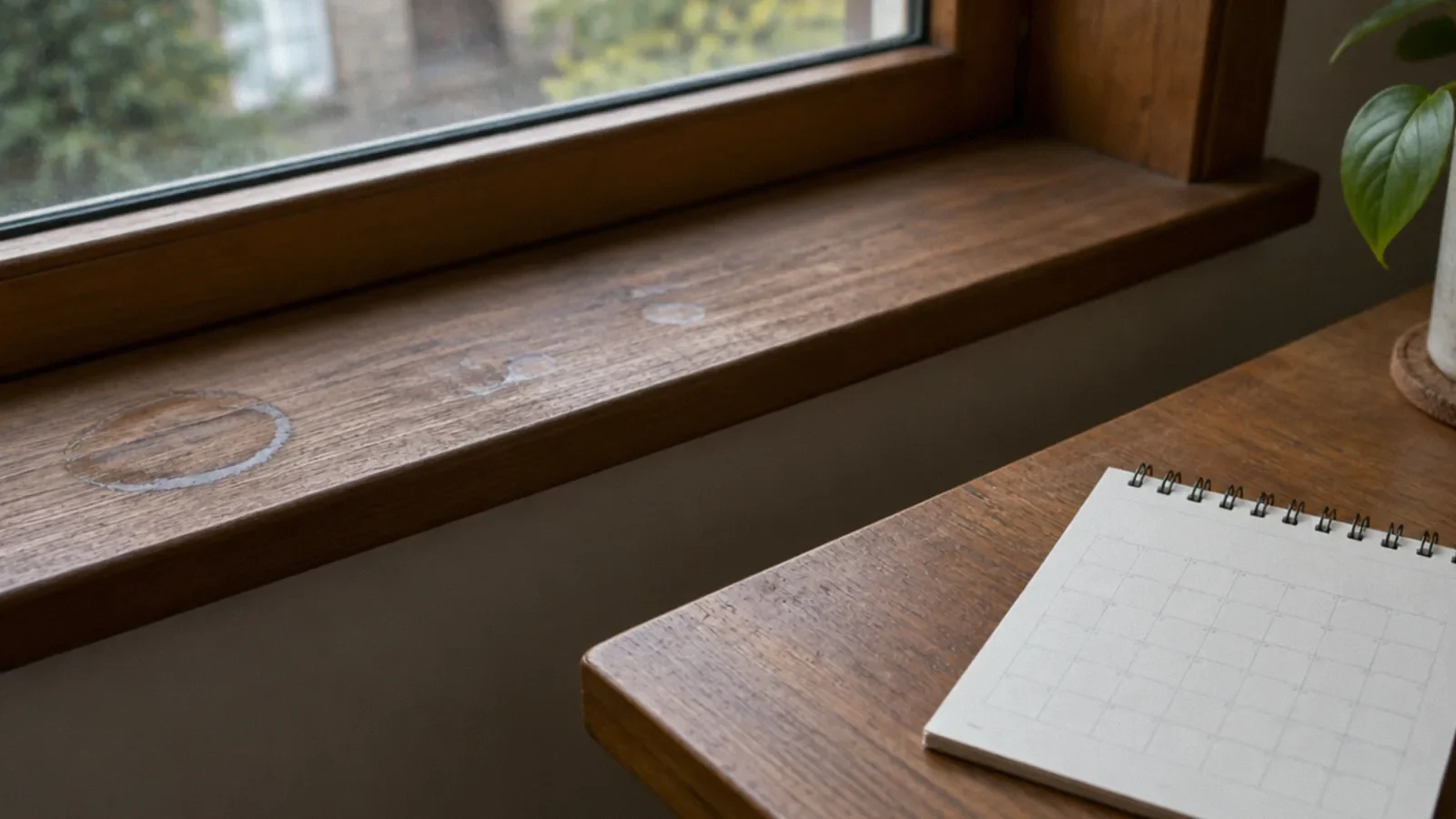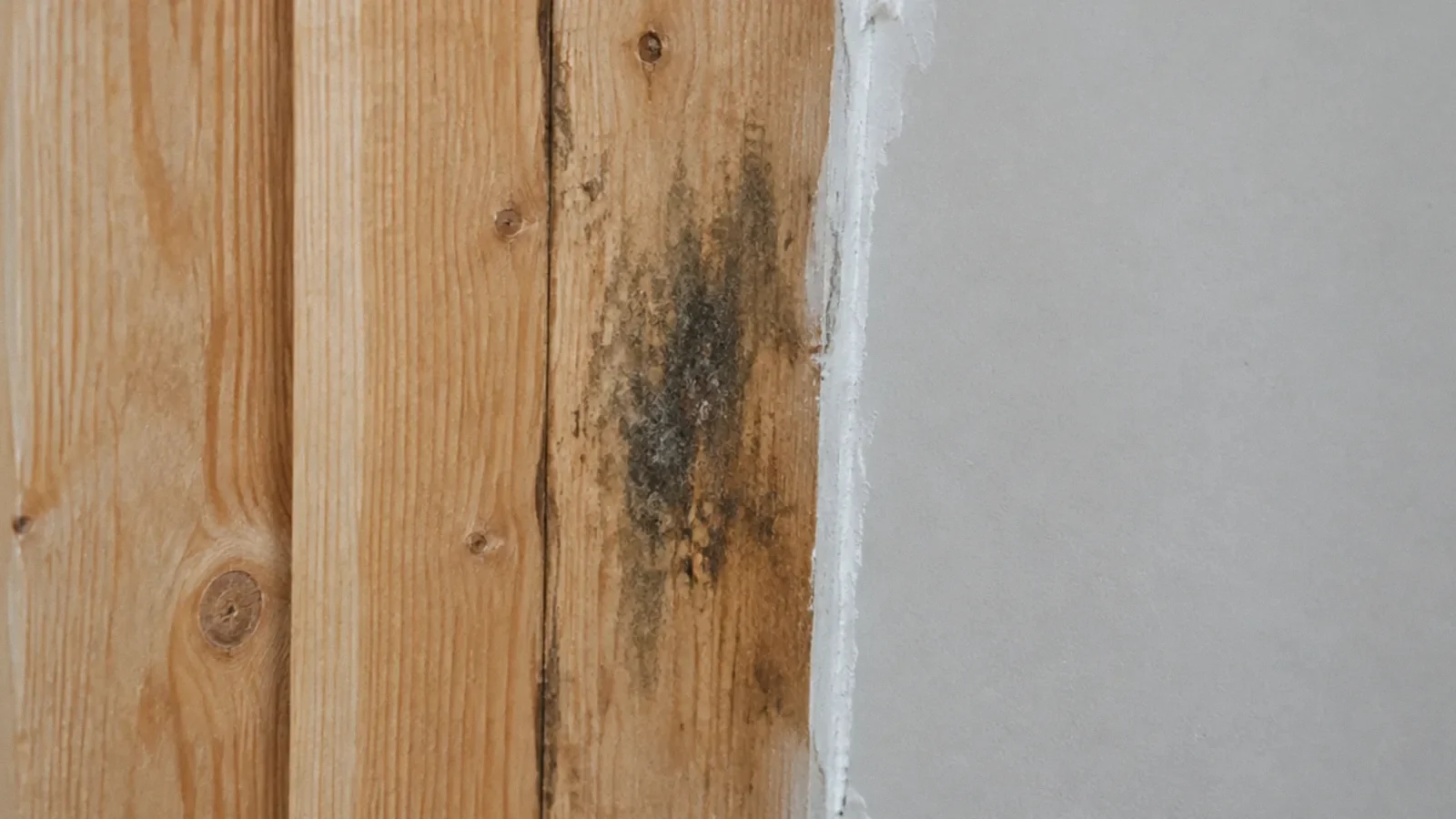
Find and correct the moisture source first, then assess the affected surfaces and the extent of growth. A small patch on a sound hard surface may be cleaned and dried in suitable circumstances; wet porous materials, hidden growth, contaminated water, or a damaged ceiling may require professional help. Dark color alone does not identify a species.
Find the source, not just the spots
Garage moisture can come from roof leaks, rain entering around doors or walls, plumbing, runoff against the foundation, or condensation on cool surfaces. Wet vehicles and stored items can add moisture. An attached garage may also share walls or a ceiling with living space, so moisture and damaged materials may extend beyond what is visible. Note where staining appears and whether it follows rain or humid weather.
Dark spots or a musty smell justify investigation but do not identify a mold species. “Black mold” describes an appearance, not a reliable diagnosis of the organism or its health effects. Treat visible indoor growth and the water source seriously regardless of color. If a ceiling is sagging, a wall is displaced, or water is near electrical equipment, keep away and arrange a qualified assessment.
Garage walls: match the repair to the material
A concrete or masonry wall can show surface dampness from condensation or water entering through cracks and joints. Inspect gutters, downspout discharge, exterior grading, and visible entry points from a safe location. A coating applied before the source is understood can conceal a continuing leak. Persistent seepage or structural movement calls for a building professional; a drainage or foundation repair may be needed.
Drywall, insulation, cardboard, and particleboard are more absorbent than a sound painted hard surface. Wet or moldy porous materials can be difficult to clean completely and may require removal. A small spot on the face of wallboard may conceal wet material behind it. Do not cut into a wall if the extent, utilities, or contamination is uncertain; have an experienced contractor assess it.
Garage ceilings and overhead leaks
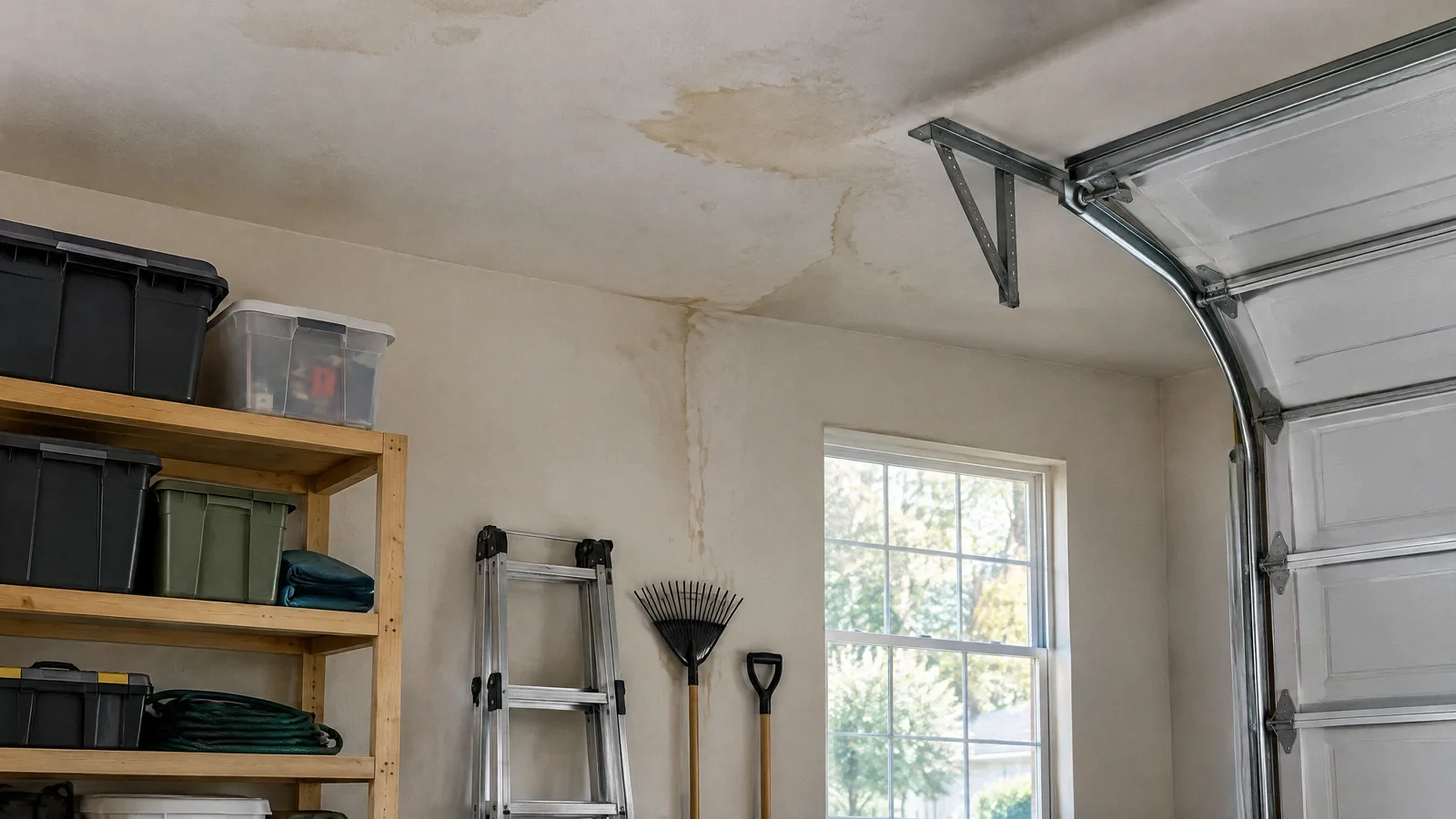
Ceiling staining can result from a roof leak, plumbing above, or condensation. The location of a stain may not be directly below the entry point because water can travel along framing. Check the roof and gutters through qualified professionals where needed. Do not climb onto a wet roof or stand beneath a sagging ceiling. If the garage is below living space, report the symptoms to the person assessing the rooms above as well.
Wet ceiling board and insulation may retain moisture even when their surface appears dry. A contractor can determine the extent, protect the area, remove unsalvageable material, dry the assembly, and coordinate the roof or plumbing repair before replacement. Repainting a stain without resolving the leak can hide a recurring problem.
Cleaning a small suitable area
EPA says an occupant can handle a moldy area under approximately 10 square feet in many cases when following its guidance. Size is not the only consideration: hidden damage, sewage, health concerns, and difficult access make professional help more appropriate. CDC recommends at least a NIOSH-approved N95 respirator, gloves, and eye protection for cleanup. People with asthma, mold allergies, immune suppression, or chronic lung disease should not participate.
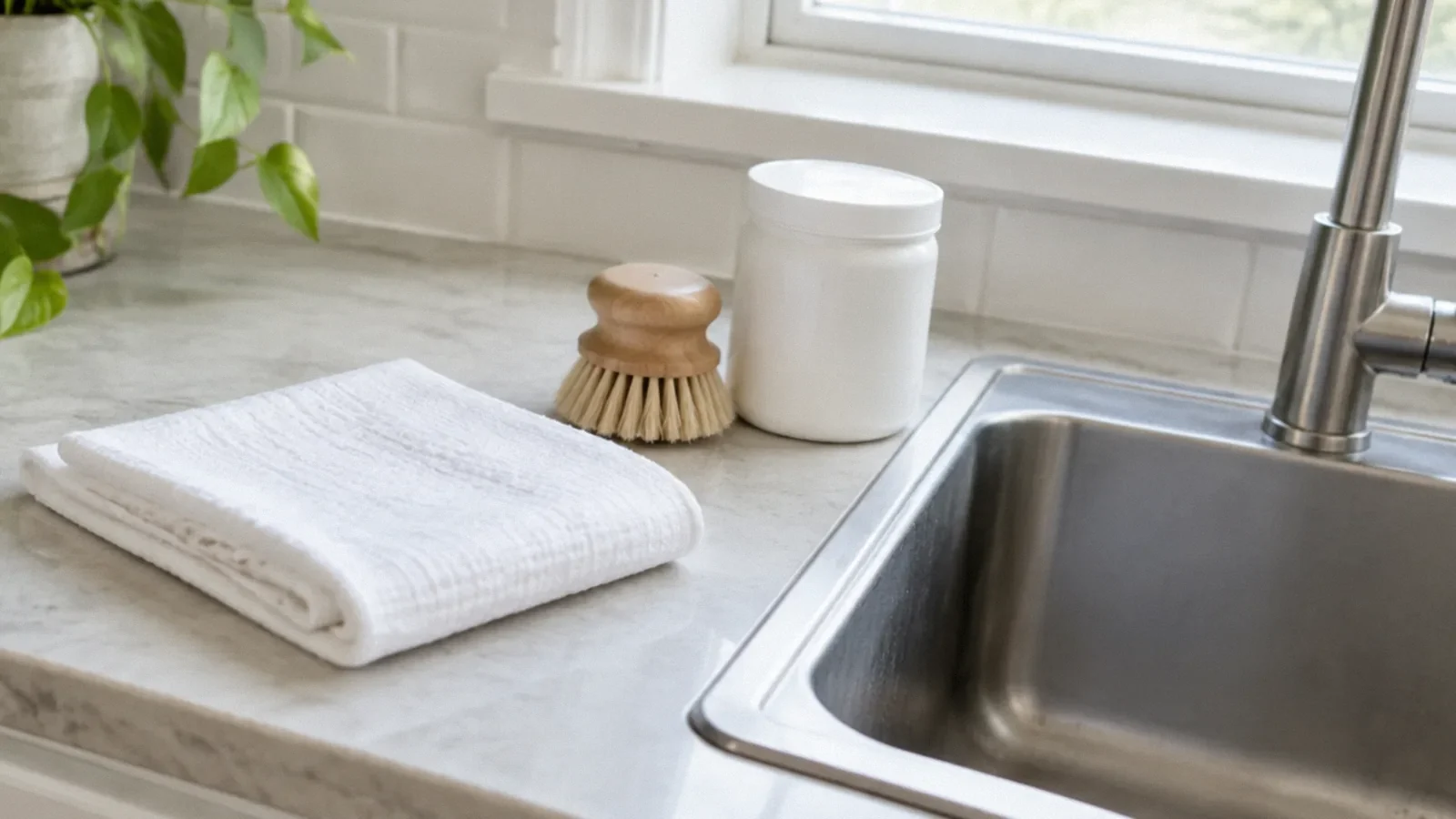
For an appropriate small patch on a sound hard surface, scrub with detergent and water and dry completely. Follow product instructions and never mix chemicals. Do not paint over mold. Avoid disturbing large amounts of dusty material or blowing contaminated dust into an attached home. If the heating or cooling system may be contaminated, EPA advises not running it until assessed.
Stored belongings and garage-specific hazards
Move unaffected belongings away from the damp area if safe, and separate wet or visibly affected materials. Cardboard boxes, fabrics, and other porous items may be difficult to clean and may need replacement. Wash suitable items according to their care instructions and dry thoroughly before returning them. Check shelf undersides and the backs of objects stored against exterior walls.
Garages can also contain fuels, solvents, pesticides, tools, and batteries. Do not mix chemical products or treat unknown spills as ordinary water damage. Keep children and pets away from the affected area. If flooding involved sewage or other contaminated water, EPA recommends a professional experienced with that type of cleanup.
Prevent the conditions that allow growth
Repair the leak, keep gutters functional, and direct runoff away from the foundation to a safe outlet. Address door seals and drainage where rain enters. Reduce indoor humidity when practical, dry wet items before long-term storage, and leave room for air circulation around stored goods. EPA recommends indoor relative humidity below 60% when possible, ideally 30% to 50%; use a meter to understand the actual conditions.
Opening a garage door may help drying when outdoor conditions permit, but humid outdoor air can also add moisture. Ventilation is not a substitute for repairing a leak. After cleanup, inspect the ceiling, wall base, and stored items after the weather that previously caused trouble. Recurrent dampness means the source or drying plan needs another look.
Your next-step checklist
- Trace moisture from roof, walls, floor, doors, and condensation.
- Keep clear of sagging ceilings and wet electrical equipment.
- Separate affected items and assess porous materials.
- Clean suitable small hard surfaces or obtain professional help.
- Repair the source and monitor humidity and recurring dampness.
Related questions
Does black mold in a garage identify a dangerous species?
No. Color does not identify the species or determine the health risk. Correct the moisture source and address visible growth.
Can I paint over mold on a garage wall?
No. Clean or remove the affected material and fix the moisture source before refinishing.
Why does mold keep returning on the ceiling?
A continuing roof or plumbing leak, condensation, or insufficient drying may remain. An assessment should locate the moisture before the ceiling is closed or repainted.
Sources & context
Public guidance supports the principles in this article. The practical questions and examples are editorial interpretation, not a site assessment or a coverage decision. State-specific rules apply only where identified.
- A Brief Guide to Mold, Moisture and Your Homegovernment
- Mold Cleanup Guidelinesgovernment
- Mold, Testing, and Remediationgovernment