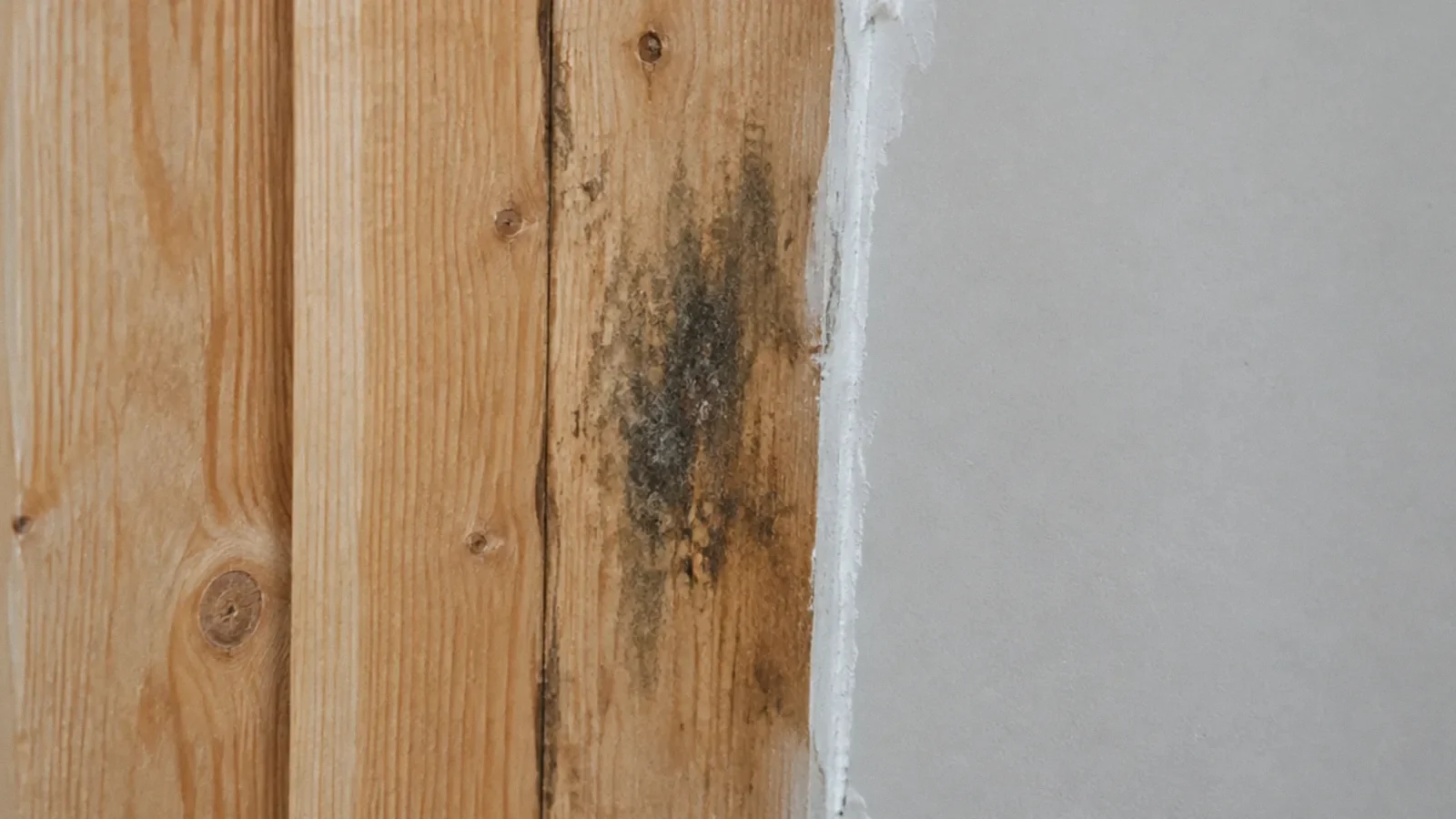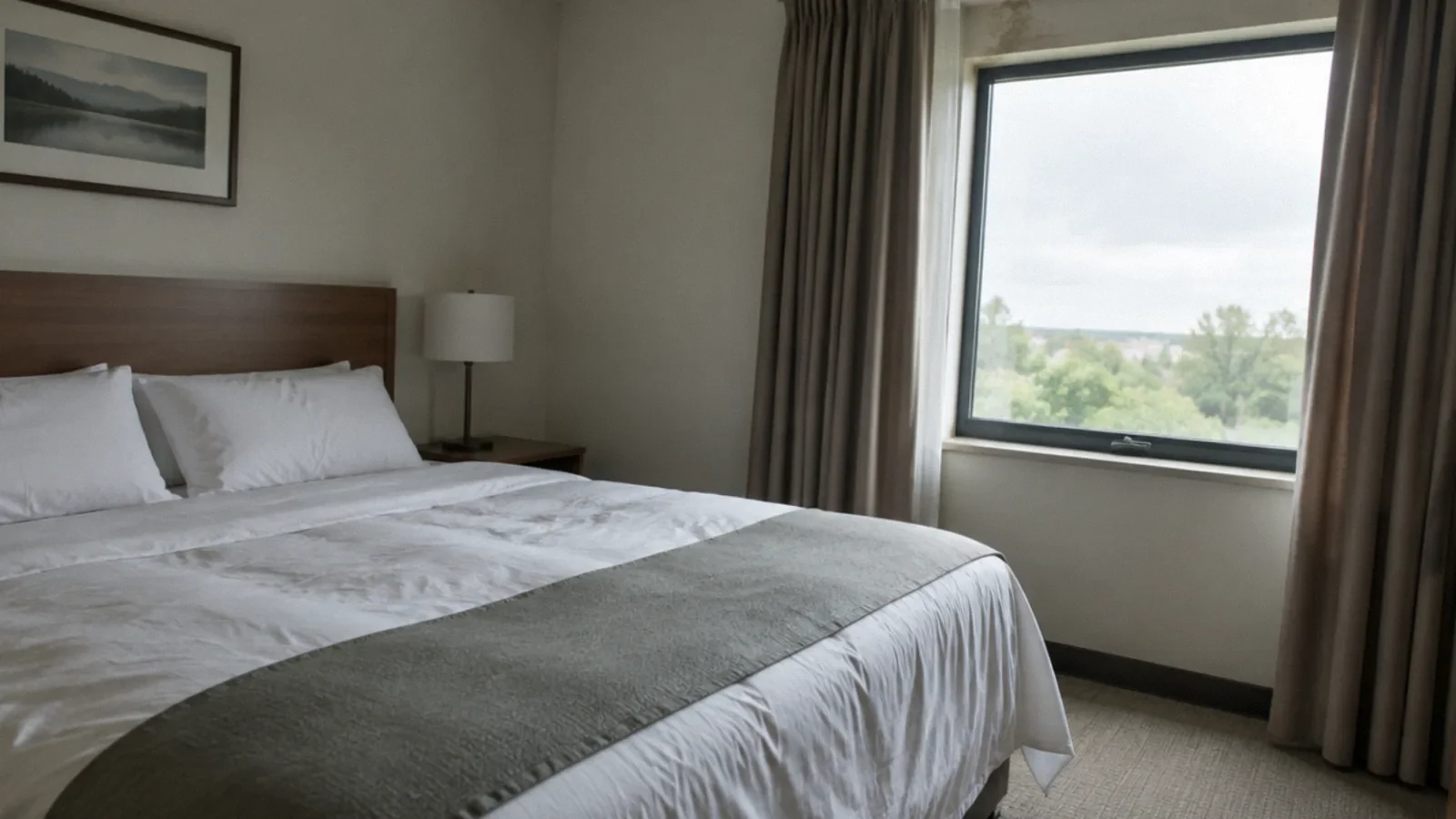
If you see suspected mold or smell persistent dampness in a hotel room, avoid disturbing it and tell hotel management promptly. Request another suitable room or discuss other options. A dark color does not identify the organism or establish its health risk; seek medical care for concerning symptoms.
Move away from the affected area
Do not touch, scrub or spray the suspected growth. If a room has extensive dampness, visible growth or an odor that makes you uncomfortable, step out and speak with hotel staff from another area. Keep luggage and personal belongings away from the affected surface.
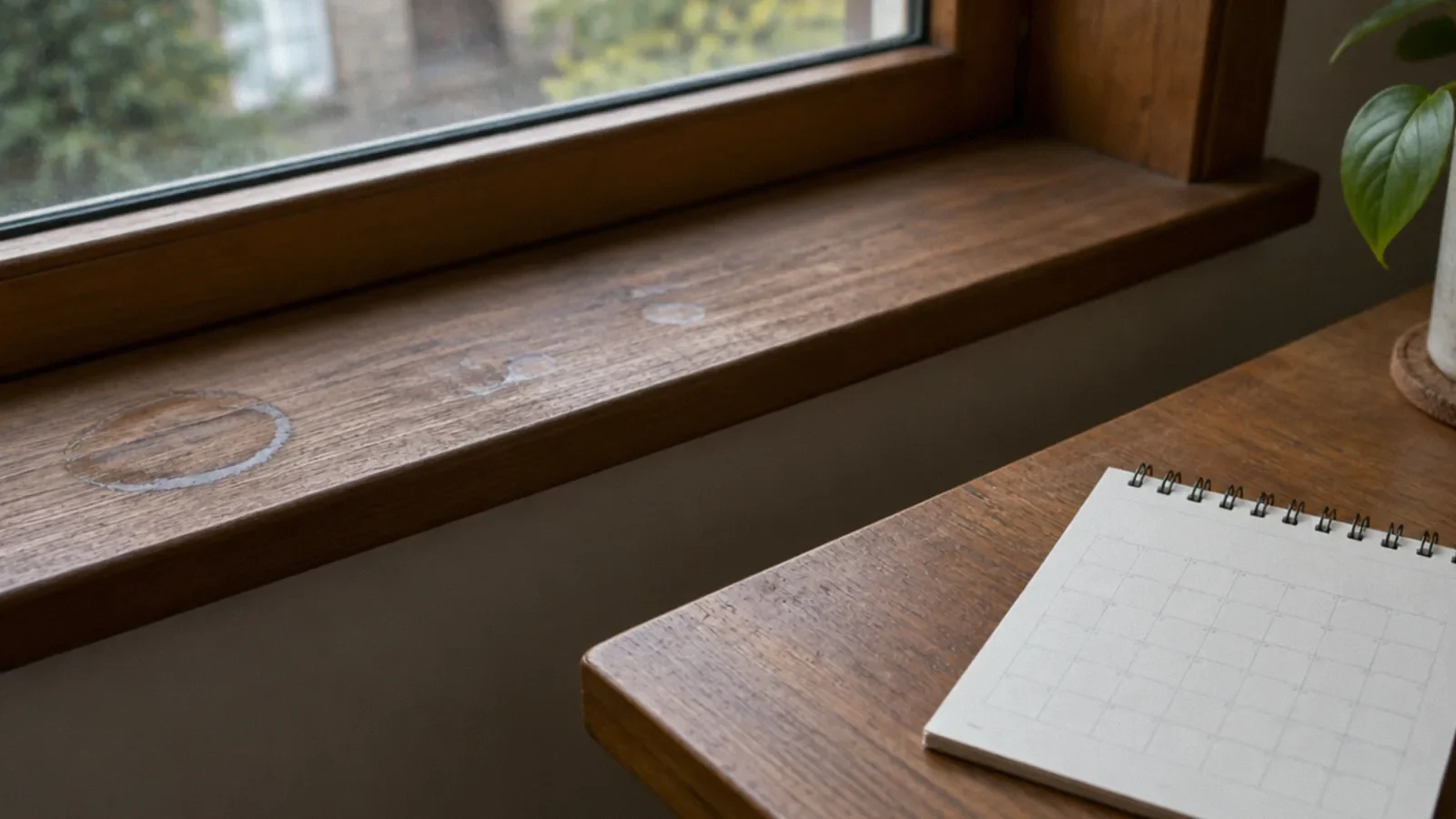
A leak, wet carpet or staining may indicate a moisture problem, but a photograph cannot determine the material behind a wall or identify a species. Do not enter a wet area near electrical equipment or a damaged ceiling.
Notify the hotel promptly
Tell the front desk where you noticed the problem, whether there is visible water or an odor, and whether the room has a leak. Ask for the manager if the front desk cannot resolve the issue. Request a different room away from the affected area if one is available.
Avoid assuming that a room next door is unaffected; ask staff what they know about the source and inspection. Record the time, person contacted and response. If booked through a third party, keep the booking information and contact that provider as well.
Document without disturbing the room
Take clear photographs of visible conditions from a safe location and retain messages, reservation details and relevant receipts. Do not open walls, collect samples or move heavy furniture to investigate. A hotel or qualified assessor is responsible for evaluating the building.
A photograph can document what you saw but cannot prove that the material is a particular type of mold or establish when it appeared. Describe it accurately as suspected growth or staining until it has been assessed.
Consider health needs
People with asthma, allergies or immune suppression may be more sensitive to damp or moldy environments. CDC advises people with certain respiratory conditions or immune suppression to avoid buildings with visible or smelled mold or indoor leaks after severe weather. Individual medical advice should come from a healthcare professional.
If you have trouble breathing or another urgent symptom, seek emergency care. Follow your existing treatment plan and contact your clinician for individualized advice. Do not stop prescribed medication or rely on a photograph or an online description as a diagnosis.
Ask about your booking options
Request a suitable alternative room, a change to the reservation or another resolution from management. Terms depend on the booking, hotel policies, applicable law and circumstances; a refund is not automatic. Keep written confirmation of any agreement.
If the hotel cannot address the issue, contact the booking platform or payment provider using its established dispute process. Keep communications factual, and avoid stating that a particular organism caused an illness without professional evidence.
What about belongings?
Keep belongings out of visible moisture. If clothing or luggage became wet or contaminated, ask an appropriate cleaning professional about the material and follow the item manufacturer’s care instructions. Avoid packing damp items in a sealed bag for a long period.
Do not bring material you suspect is heavily contaminated into another room without guidance. The hotel and any insurer can explain their claims process if belongings were damaged; preserve relevant documentation.
For hotel operators
A persistent odor or visible growth calls for prompt moisture investigation and an appropriate response, not merely a room fragrance or painting over the area. Limit access where needed and use qualified personnel to assess affected materials and building systems.
Correct the water source, clean or remove affected materials as appropriate and document completion. Employee protection and facility procedures depend on the work and applicable rules. A guest’s photo should be treated as a report requiring investigation, not a species identification.
Your next-step checklist
- Avoid touching or disturbing the affected area.
- Notify the front desk and request a suitable room.
- Photograph visible conditions from a safe location.
- Keep reservation details and written communications.
- Seek medical care for concerning symptoms.
Related questions
Is black-looking mold in a hotel always toxic?
Color alone cannot identify mold or predict its health effects. Report the condition and avoid disturbing it.
Should I ask for another room?
You can ask hotel management for a suitable alternative and discuss available booking options.
Am I automatically entitled to a refund?
Not necessarily. The outcome depends on the reservation terms, applicable law and circumstances.
Can a photo identify the mold species?
No. A photograph can document appearance but does not reliably identify the organism.
Sources & context
Public guidance supports the principles in this article. The practical questions and examples are editorial interpretation, not a site assessment or a coverage decision. State-specific rules apply only where identified.
- CDC: Mold testing and remediationfederal health guidance
- CDC: Mold and respiratory conditions after severe weatherfederal clinical guidance
- CDC Yellow Book: Travelers with severe allergiesfederal travel guidance