Unplug or otherwise make the appliance safe as directed by its manufacturer before cleaning accessible parts. Follow the model-specific instructions for the gasket, dispenser and cleaning cycle, and never mix bleach with vinegar, ammonia or another cleaner. Persistent growth inside inaccessible components, a leak or extensive contamination may need appliance service.
Why a washer can smell musty
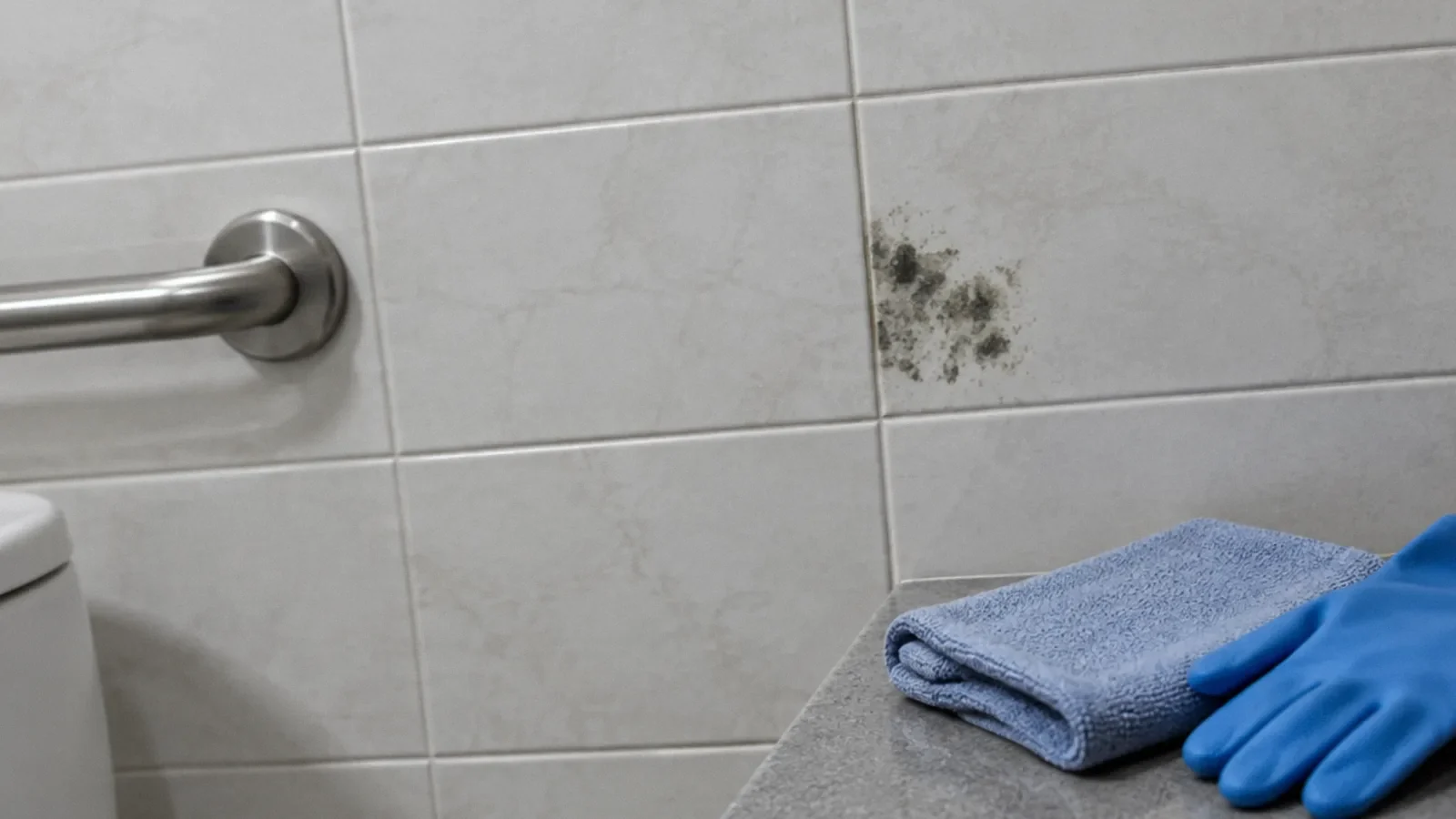
A washing machine repeatedly contains water, detergent residue and fabric debris. Moisture trapped around a front-loader’s rubber door seal or detergent drawer can support buildup. A dark mark or musty smell is a reason to clean and inspect, but appearance alone does not identify an organism.
Check the appliance’s model-specific manual before opening or removing anything. Record where the residue appears and whether the machine leaks or fails to drain. A recurring problem can involve maintenance, a damaged seal or a drainage fault that cleaning alone will not repair.
Prepare the area safely
Remove laundry and keep children and pets away. Follow the manufacturer’s directions for disconnecting power or otherwise making the machine safe before cleaning accessible parts. Do not reach behind the appliance or touch electrical connections when the floor or wiring is wet.
Wear gloves appropriate for the cleaner and ventilate as directed. People with asthma, chronic lung conditions, weakened immune systems or mold sensitivity should avoid exposure and seek appropriate help. If there is extensive growth or a flood-related problem, ask an experienced professional.
Inspect and clean the door gasket
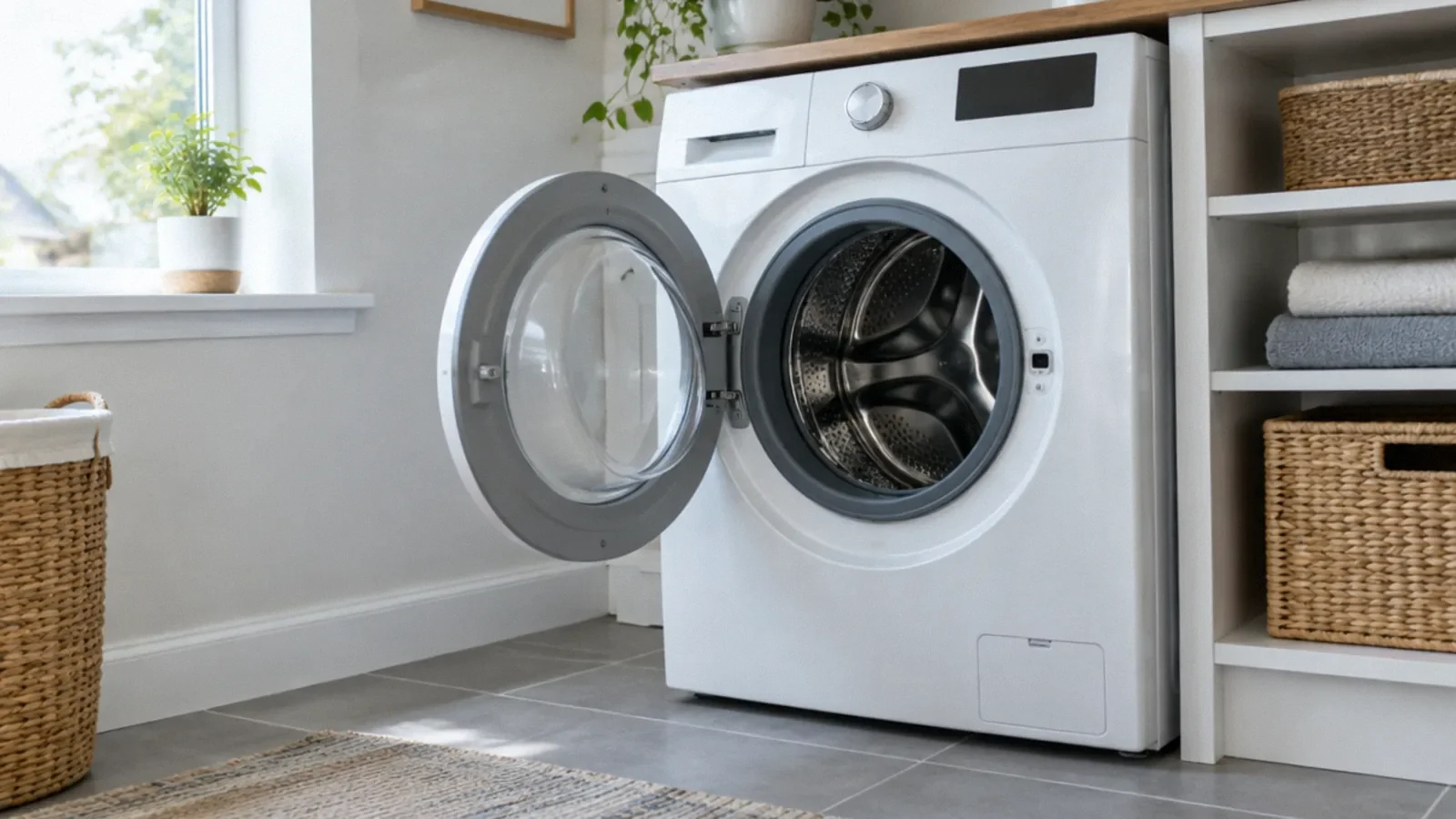
The gasket is the flexible seal around a front-load door. Whirlpool recommends wiping its gasket and keeping it dry as part of routine maintenance. Follow your own model’s instructions for gently cleaning accessible folds; do not pull hard, puncture the seal or use a sharp tool.
A torn or persistently stained gasket may need service or replacement. Avoid spraying liquid into controls or other electrical parts. Cleaning the visible seal does not prove that hidden components are clean or that the source of moisture has been corrected.
Clean the dispenser and drum
If the manual permits removing a detergent drawer, clean and dry it according to the appliance instructions, then reinstall it correctly. Follow the recommended cleaner and dosage for the drum or dedicated washer-cleaning cycle. Different machines have different procedures; use the instructions for your model.
Do not run an empty cleaning cycle with an improvised combination of products. If a cycle or dispenser is not operating correctly, stop and contact the manufacturer or an appliance technician. A cycle cannot fix a damaged drain or a leak under the machine.
Whirlpool says baking soda can be used for deodorizing in general, but instructs owners to check the manual first. That is not a universal dosage or a mold-removal procedure: use it only if your exact model permits it, in the amount and location specified by its maker. Do not combine it with other cleaners.
Never mix cleaning chemicals
CDC warns never to mix bleach with ammonia or any other cleaner. This includes vinegar and products that contain acids or other chemicals. Use one manufacturer-approved product at a time, follow its label and do not combine residues from different treatments.
More concentrated cleaner is not automatically better. Some appliance makers warn that undiluted bleach can damage a gasket. Use the specified product, placement and amount, and keep the area ventilated. Do not use a chemical merely because it is recommended for a different model.
Dry and ventilate between loads
Whirlpool recommends wiping the gasket after use and leaving a front-loader door ajar to allow airflow. Follow your machine’s instructions and household safety needs: an open appliance can pose risks to young children or pets, so use any child-safe ventilation feature provided.
Remove wet laundry promptly and clean residue at the frequency recommended by the manufacturer. Use the correct detergent type and amount; excess detergent may contribute to buildup. A dry visible seal is helpful but does not replace addressing an actual leak.
When the smell or growth returns
A recurring odor may come from residue in inaccessible parts, a drain issue, a damaged seal or water that remains after a cycle. Ask an appliance technician to inspect the machine if normal manufacturer-directed maintenance does not resolve it. Do not dismantle electrical or plumbing components without the necessary skills.
If water has leaked into a wall, floor or cabinet, the building materials may need separate assessment and drying. A washing-machine cleaning cycle is not a substitute for fixing a supply leak or drying the area beneath the appliance.
Prevention and follow-up
Keep a simple maintenance record with the date, product and cycle used. Check the gasket and drawer periodically for residue, follow the manual and report leaks promptly. Do not assume that a pleasant scent proves that the machine or surrounding wall is dry.
If you rent, notify the property manager about leaks, damaged seals or recurring growth. A qualified technician can explain whether cleaning, a part replacement or a repair is needed and provide a written scope. For health symptoms, consult a healthcare professional.
Your next-step checklist
- Follow the washer’s model-specific cleaning instructions.
- Keep electricity and cleaning liquids safely separated.
- Never mix bleach with vinegar, ammonia or other cleaners.
- Dry accessible parts and use safe ventilation between loads.
- Arrange service for leaks or recurring buildup.
Related questions
Can mold grow in a washing machine?
Damp residue around seals, drawers or other parts can support growth. A dark mark alone does not identify the organism.
Can I mix vinegar and bleach in a washer?
No. Never mix bleach with vinegar, ammonia or another cleaner.
Should I leave the washer door open?
Some manufacturers recommend leaving it ajar to dry. Follow the model instructions and account for child and pet safety.
What if the musty smell keeps coming back?
Have an appliance technician check accessible and hidden components, drainage and leaks.
How do I clean a front-load washer?
Follow the model’s cleaning cycle and gasket and detergent-drawer instructions. Remove residue safely, dry accessible parts and avoid mixing cleaning products.
Can I use baking soda to clean a washing machine?
Follow the washer manufacturer’s cleaning instructions and product compatibility guidance. Do not mix cleaning products, and do not assume a deodorizer will remove hidden growth or repair a moisture problem.
Can I hire a professional to clean a washing machine?
Ask whether the provider services your exact model, which components are included, whether disassembly is needed, and what inspection, cleaning and parts cost. Request a written scope and ask what maintenance to perform afterward. An appliance technician should address a damaged seal, drainage fault or leak.
Sources & context
Public guidance supports the principles in this article. The practical questions and examples are editorial interpretation, not a site assessment or a coverage decision. State-specific rules apply only where identified.
- Whirlpool: Cleaning a front-load washer gasketmanufacturer guidance
- CDC: Mold cleanuppublic health guidance
- LG: Washer tub cleaningmanufacturer guidance
- Whirlpool: How to clean a washing machinemanufacturer maintenance guidance