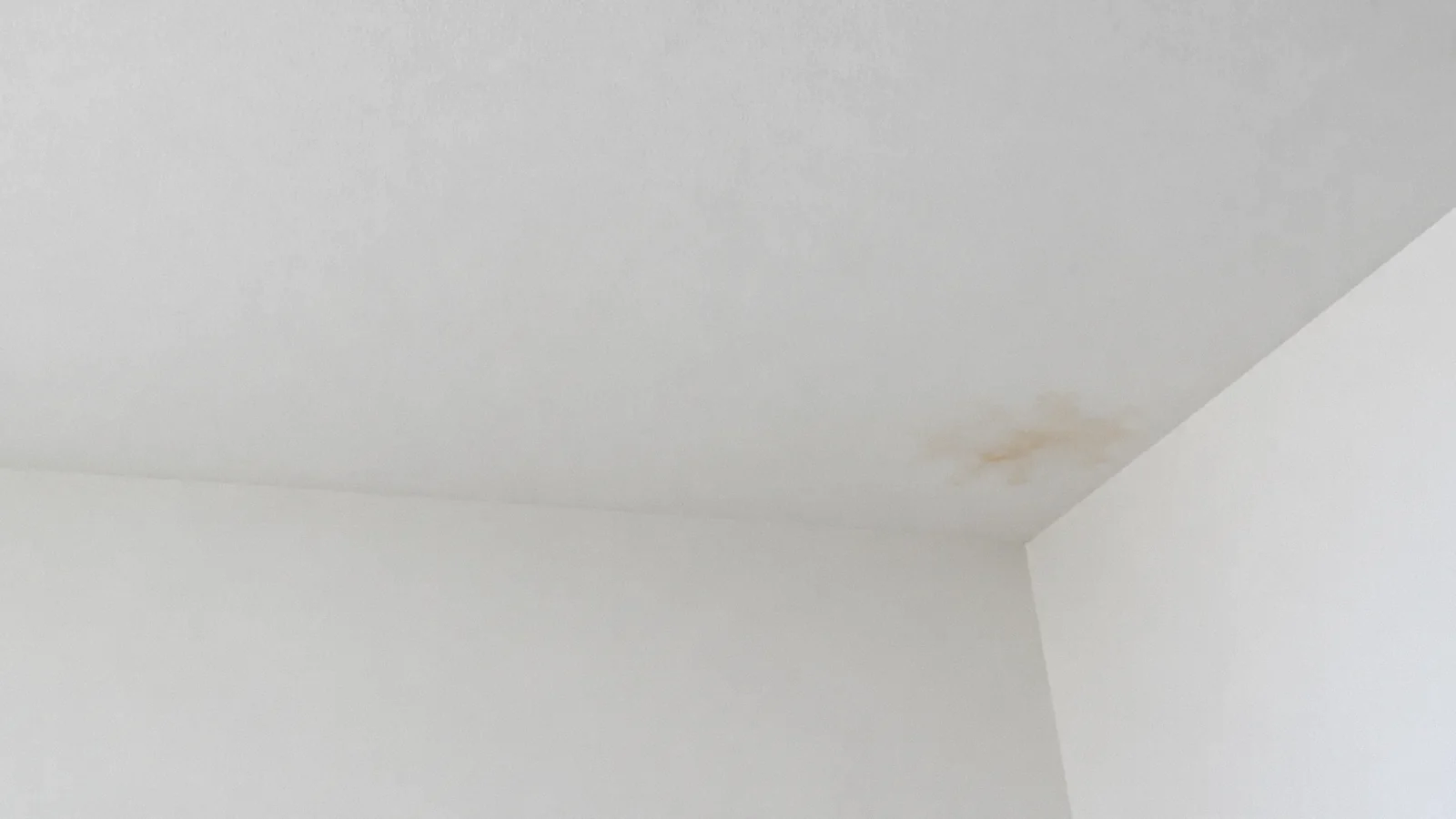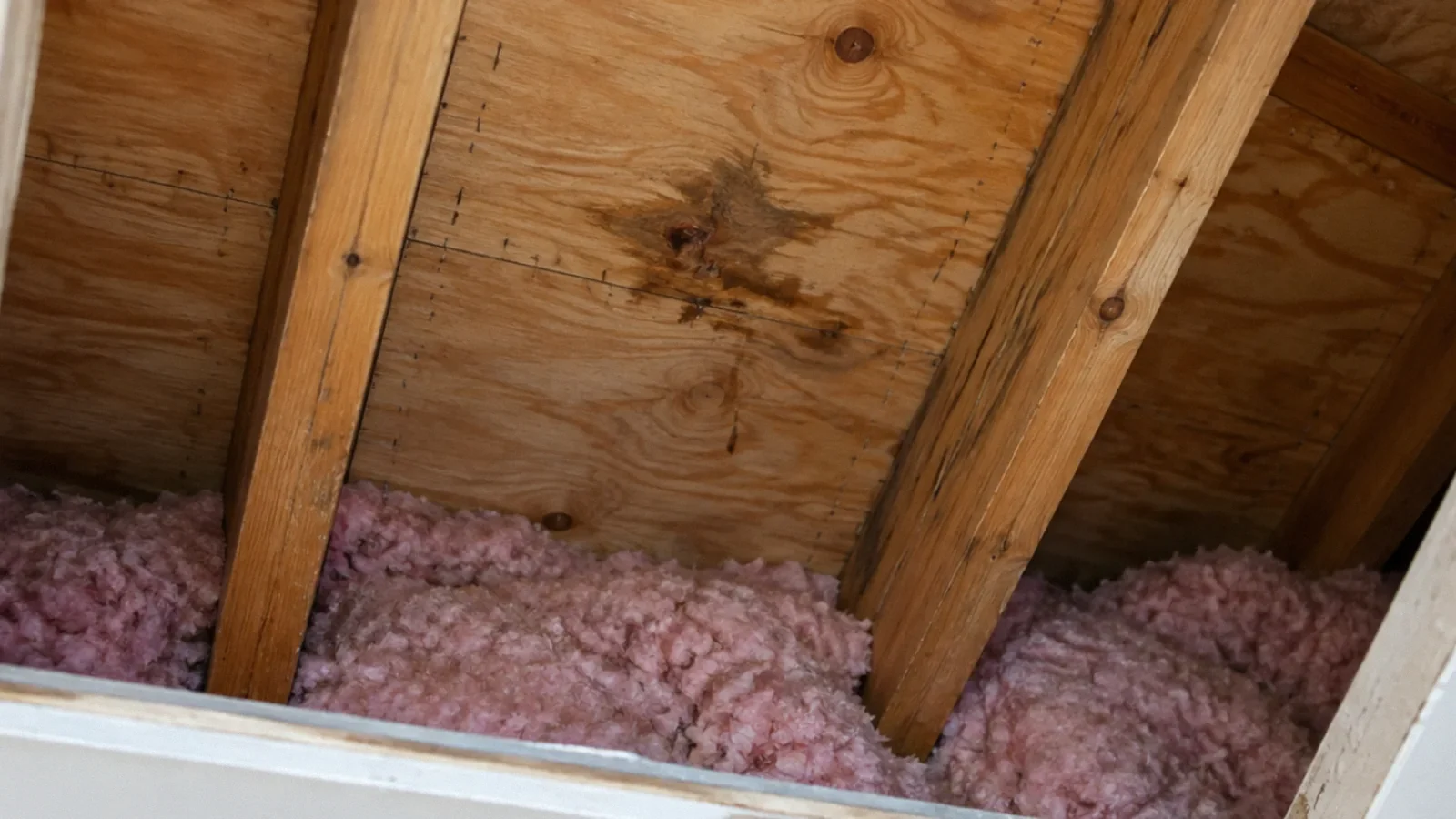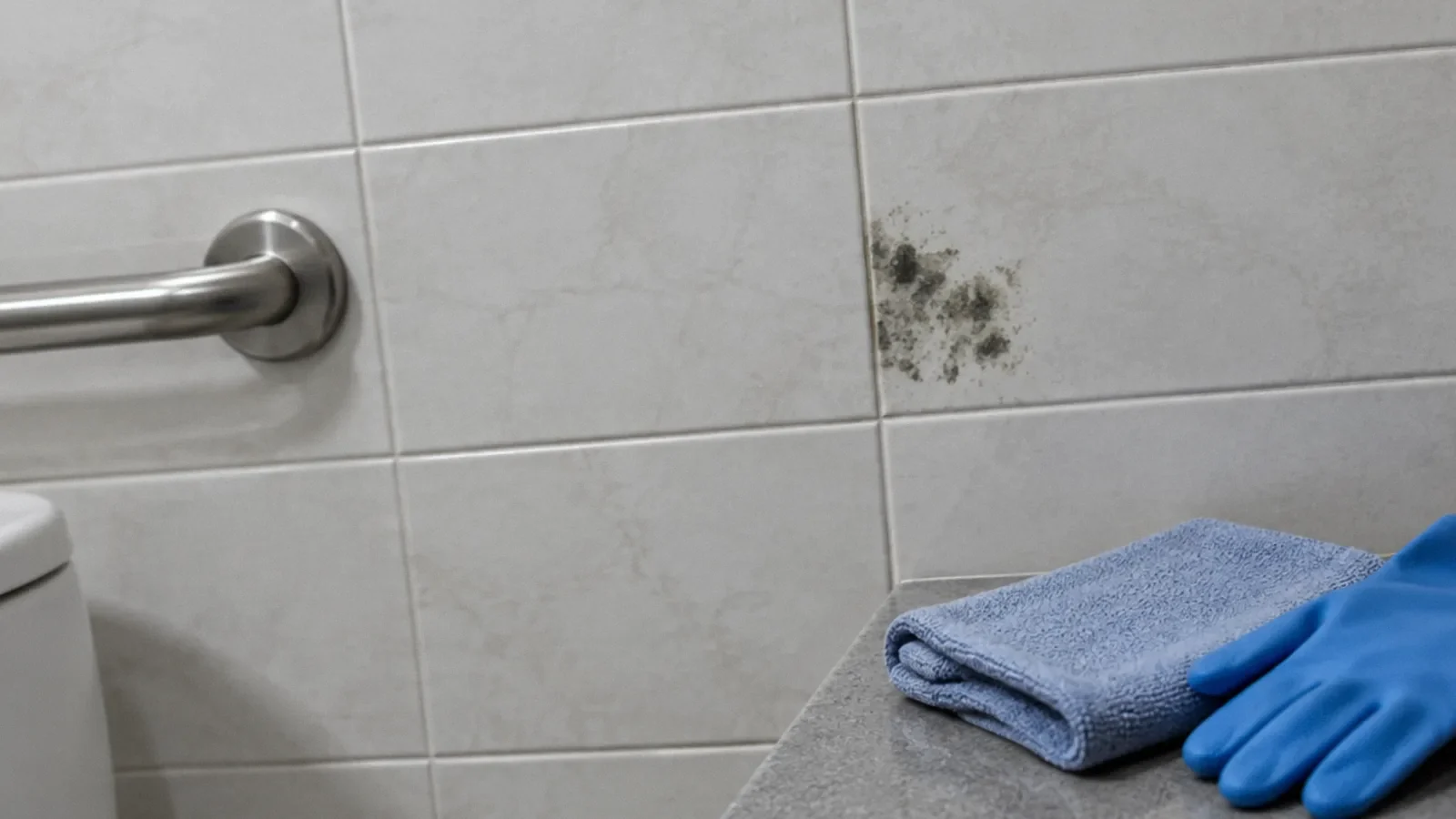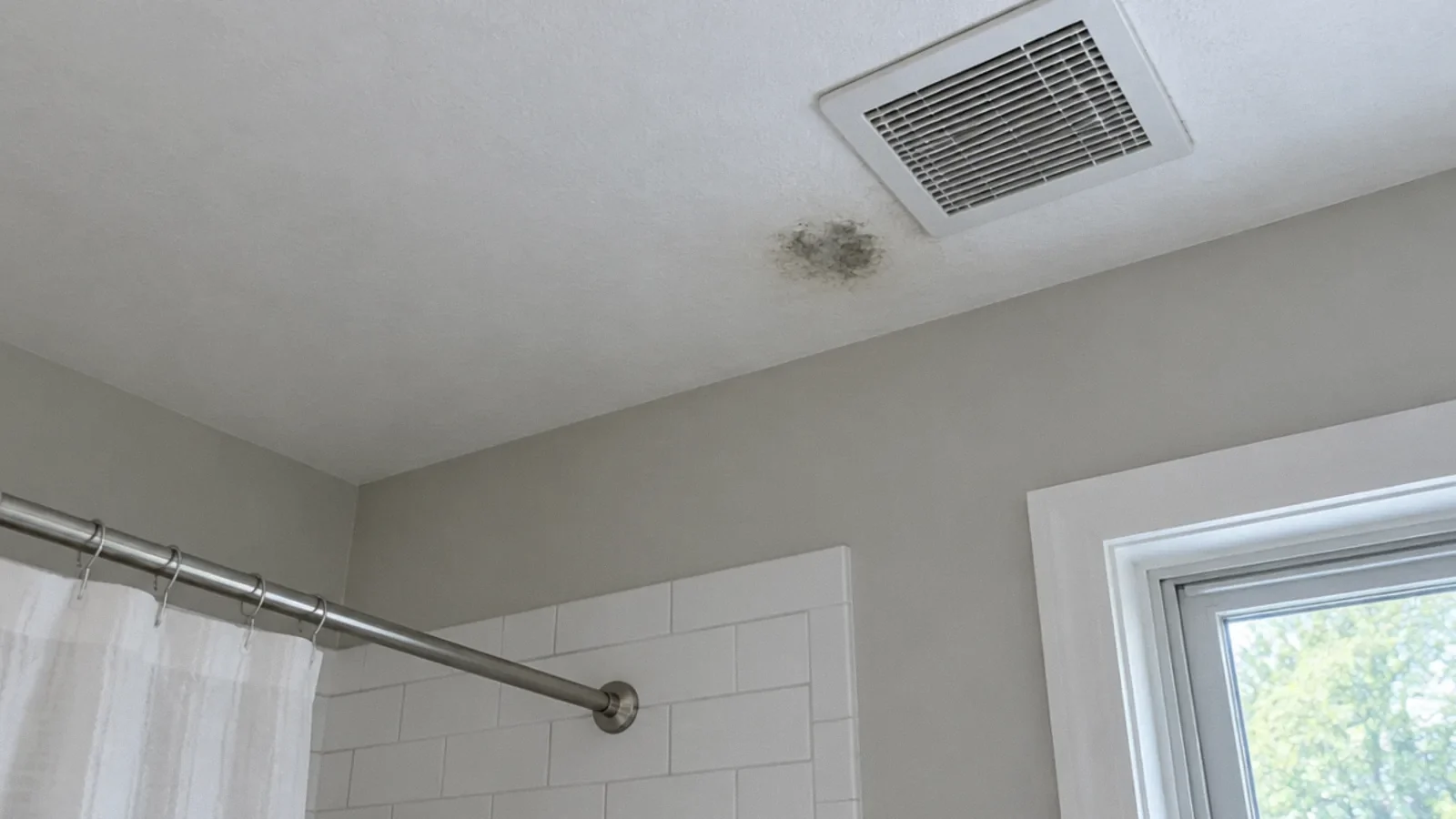
Ceiling mold needs both cleanup and correction of the moisture source. Bathroom humidity, a plumbing leak or a roof leak can create different problems. Avoid a sagging ceiling and water near electrical fixtures; a qualified professional should assess hidden damage or unsafe access. Color alone does not identify the mold.
Start with safety
A ceiling that bulges, sags, cracks or drips may be unstable. Keep people away from the area and do not puncture it or stand underneath to investigate. Water near a light, fan or other electrical equipment is a shock hazard; do not operate wet devices. Arrange qualified help.
If the area is extensive, concealed or affected by sewage or floodwater, a professional assessment is especially important. People with allergies, asthma, chronic lung disease or weakened immune systems should not participate in mold cleanup, according to the CDC. Children should not participate in disaster cleanup.
Why mold can grow on a bathroom ceiling
Warm, moist air from showers can condense on cooler surfaces, particularly when moisture is not removed effectively. A plumbing leak above the ceiling, water entering around a roof penetration or an exhaust duct problem can produce similar-looking marks. The pattern alone may not establish the source.
The EPA recommends effective bathroom ventilation that exhausts to the outdoors rather than into an attic. A fan that makes noise is not proof that it moves enough air or discharges correctly. Have a qualified person inspect the system when operation or routing is uncertain.
Look for the moisture pathway
Record when the patch appears, whether it changes after showers or rain, and whether there are stains, bubbling paint or an odor elsewhere. A bathroom below another plumbing fixture may have a different cause from a room under a roof. Water can travel before it becomes visible.
Do not climb onto a wet roof or open an uncertain ceiling cavity to follow a stain. Ask an appropriate professional to inspect the source and any concealed materials. Fixing the leak or humidity problem is necessary to prevent a recurrence.
What color can and cannot tell you
Black, white, green, orange or brown marks cannot be reliably identified by color alone. Some discoloration may be staining or another material. The appearance does not establish a species, a health diagnosis or whether the area behind the ceiling is dry.
EPA notes that sampling is unnecessary in most cases when visible mold is present. If a professional recommends a test, ask what question it answers and how the result will change the work. Do not disturb a suspect area just to obtain a sample.
Cleaning suitable surfaces
EPA guidance says mold on suitable hard surfaces can be cleaned with detergent and water and the surface dried completely. Whether a ceiling can be safely reached and whether its finish is suitable for cleaning must be assessed first. Avoid working overhead where water, debris or a ladder could create additional hazards.
CDC recommends at least a NIOSH-approved N95 respirator, gloves and suitable goggles for mold cleanup. Do not mix bleach with ammonia or other cleaners. A spray that kills organisms is not a substitute for removing growth and correcting the moisture source.
Drywall, ceiling tiles and concealed damage
Porous materials such as ceiling tiles and drywall may be difficult or impossible to clean fully when mold grows within them. Their condition, water source and extent of damage determine whether removal is needed. Cutting into an uncertain ceiling can release dust and expose wiring or plumbing.
A qualified contractor can identify the affected materials, protection measures and disposal plan. Older buildings may also contain hazardous materials that require specialist assessment before disturbance. Do not paint or caulk over moldy material to hide it.
When to bring in a professional
Seek experienced help for a large or recurring area, a leak with significant water damage, suspected contaminated water, concealed growth or unsafe access. The EPA recommends attention to the size and cause of a problem and advises consulting a health professional about health concerns before cleanup.
Request a written scope that identifies source repair, affected materials, dust control, drying and how the outcome will be checked. Ask which areas could not be seen. Before-and-after photos help document visible work but cannot alone prove that a concealed cavity is dry.
Preventing the next patch
Repair leaks, maintain the bathroom exhaust and address recurring condensation. Use ventilation appropriate to the room and local conditions, and dry accessible wet surfaces when safe. Do not exhaust moist bathroom air into an attic or another concealed space.
Monitor the area after the moisture problem is corrected. If the mark returns or new staining appears, ask for a further investigation instead of repeatedly repainting. Keep the inspection and repair records so the next professional can see what was already done.
Mold-like spots on a bedroom ceiling
A bedroom ceiling can become damp from a roof leak, plumbing above, condensation at a cold surface or another source. Look for the timing and location of water or staining without climbing into an unsafe attic or disturbing loose material. A dark patch alone does not establish the species.
Correct the moisture source and assess the ceiling material and any concealed damage before repainting. Keep clear of a sagging ceiling or wet electrical fixture and use qualified help for substantial or uncertain damage. The right repair depends on what is actually wet.
Dark spots, ordinary dirt and light fixtures
Black dots or a dark halo can be dust, condensation-related staining, smoke deposits or microbial growth; appearance cannot establish a toxic species or prove hidden mold. Note whether marks recur, spread, follow a cold surface, appear around a leak or coincide with wet seams. A persistent damp patch warrants investigation of concealed moisture.
For ordinary dry dust on a stable, dry ceiling, follow the coating manufacturer’s care instructions. If growth is suspected, use the mold safety and moisture steps in this guide instead. Wet bathroom joints, leaks and surfaces that do not dry warrant attention even before the material is identified.
Growth or water inside a ceiling light is an electrical concern. Do not dismantle or clean a wet fixture or touch a wet switch. Keep people away and arrange qualified electrical and moisture assessment; isolate power only if the breaker is safely accessible.
Your next-step checklist
- Stay away from sagging ceilings and wet electrical fixtures.
- Investigate the source of moisture.
- Use appropriate protection and avoid disturbing concealed materials.
- Clean suitable hard surfaces or arrange professional help.
- Dry the assembly and monitor for recurrence.
Related questions
Why is mold growing on my bathroom ceiling?
Condensation, inadequate moisture removal or a leak can contribute. The source must be investigated rather than assumed from the mark alone.
Is black ceiling mold always a particular species?
No. Color cannot reliably identify the organism or establish the health risk.
Can I paint over ceiling mold?
EPA advises cleaning and drying affected surfaces before painting. A coating does not correct an ongoing leak or concealed damage.
Should moldy ceiling tiles be cleaned or replaced?
Porous tiles can be difficult to clean completely and may need replacement. The decision depends on the material, extent and source of water.
How should I clean a bathroom ceiling?
Follow the ceiling finish and product instructions, use stable safe access, and avoid mixing cleaners. If there is a leak, a sagging area, wet electrical equipment or suspected extensive mold, arrange assessment instead of scrubbing.
What if mold-like growth is around a ceiling light?
Moisture near a light fixture can create an electrical hazard. Do not touch the fixture, wet switch or surrounding material. Keep people away, isolate power only if the switch or breaker can be reached safely, and arrange qualified electrical and moisture assessment.
Sources & context
Public guidance supports the principles in this article. The practical questions and examples are editorial interpretation, not a site assessment or a coverage decision. State-specific rules apply only where identified.
- U.S. EPA: Mold cleanup in your homefederal guidance
- U.S. EPA: Bathroom ventilation and moisturefederal guidance
- CDC: Mold cleanup guidelinesfederal health guidance
- U.S. EPA: A brief guide to mold, moisture and your homeprimary guidance
- CDC: Mold and healthprimary guidance