Assess the affected materials, stop the moisture source, and decide whether thorough cleaning and drying are possible. Seek professional help for extensive or contaminated damage.
Start with the source and the extent
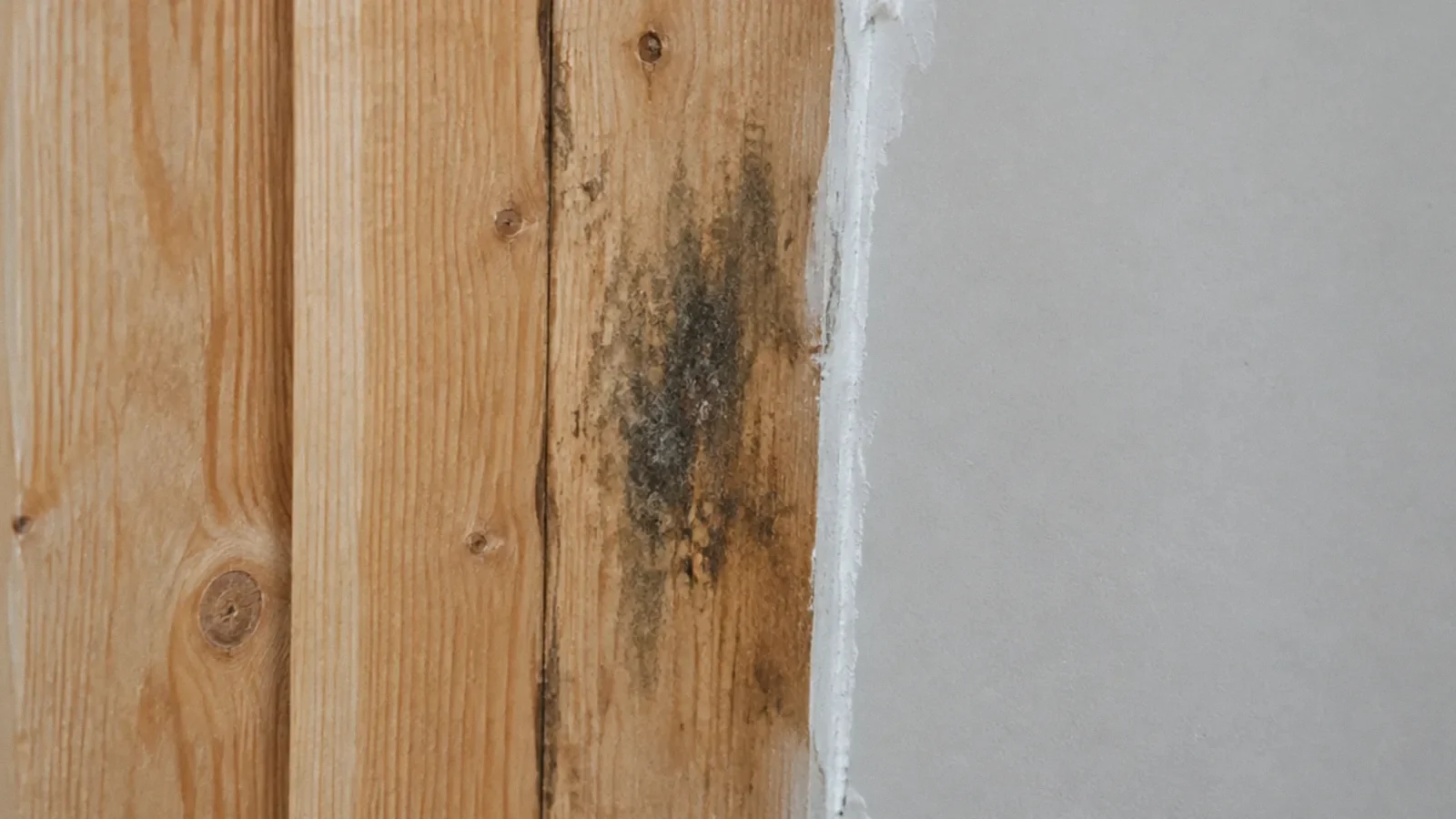
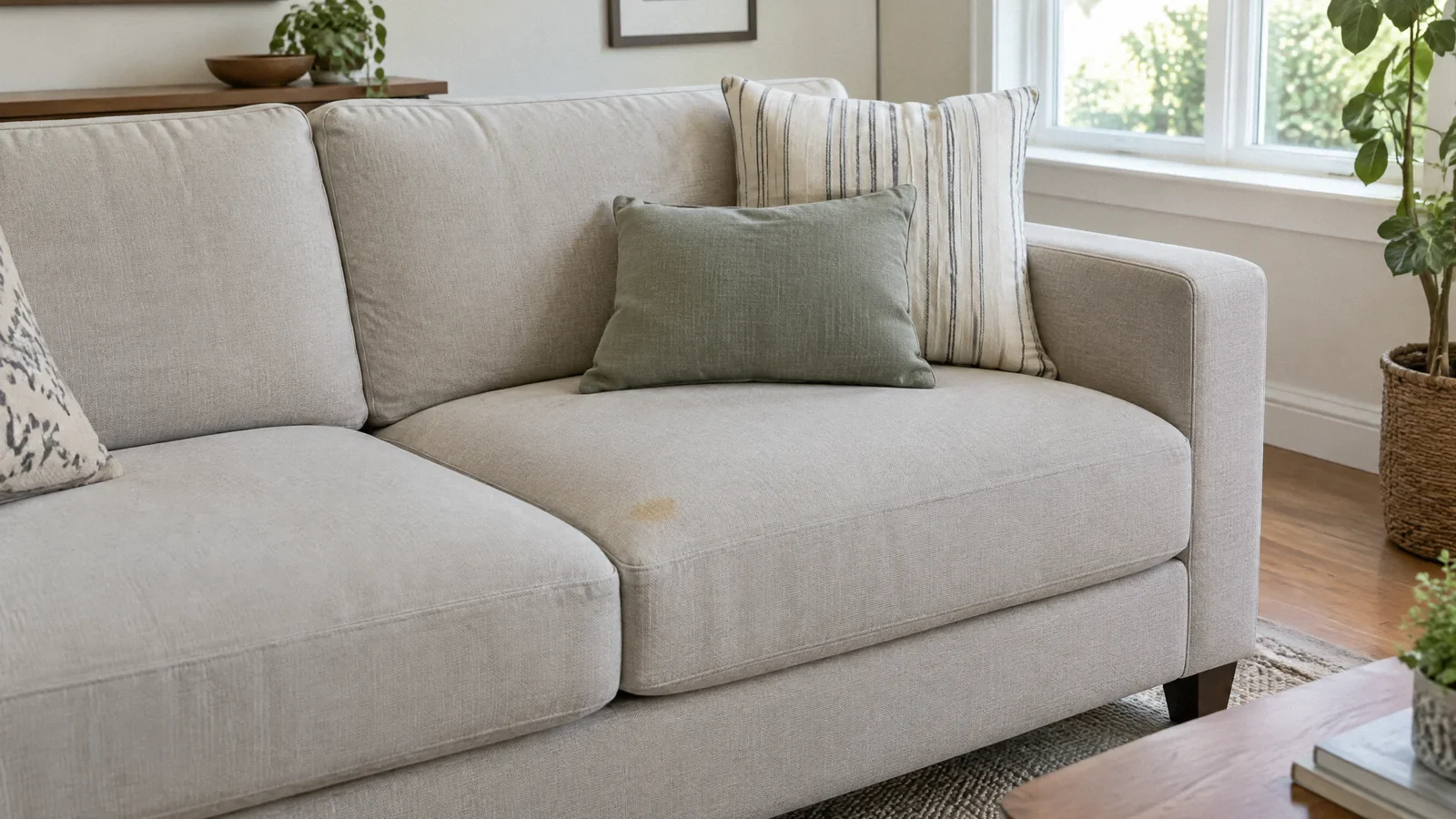
A couch can develop visible growth after a spill, a leak, a flood or prolonged storage in a damp room. Look at the location and history: a spot on a removable cover is different from dampness that has reached foam, the underside or the frame. White or dark discoloration alone cannot identify mold. A musty smell and recurring dampness warrant investigation even if the visible mark looks small.
Keep children and pets away from affected furnishings. Do not beat cushions, dry-brush the fabric or direct a fan at visible growth; disturbing it can spread particles. People with mold allergies, asthma, chronic lung disease or weakened immunity should not do the cleanup. If sewage or floodwater contaminated the sofa, seek professional advice rather than treating it as an ordinary spill.
Decide whether the couch can be saved
Upholstery, batting and cushion foam are porous. Growth can extend beyond the surface, and washing a cover does not necessarily clean the filling beneath it. EPA notes that moldy absorbent materials may need to be discarded because complete removal can be difficult. A saturated cushion that remained wet, retains odor after drying or has growth inside it is a poor candidate for a simple surface wipe.
Consider the extent, construction, replacement cost and whether professional cleaning can reach every affected layer. A valuable or antique piece may justify assessment by an upholstery conservator or restoration professional. Ask for a written plan explaining what will be removed, cleaned, dried and replaced, and what limitations remain. Do not accept a promise that deodorizing alone proves the interior is clean.
Handle removable covers and hard components separately
Read the upholstery care label and manufacturer’s instructions before treating fabric. If a cover is removable and the manufacturer permits laundering, handle it gently to minimize dispersal and use the recommended process. Examine the cushion beneath it; a clean cover cannot compensate for contaminated foam. Do not assume that dry cleaning, steam or sunlight will reliably remediate inaccessible filling.
Small affected hard, nonporous components may be cleaned with detergent and water when compatible with the finish, then dried thoroughly. Protect adjacent fabric from excess moisture. Do not saturate wood joints, use an untested chemical on a finish, or mix cleaning products. Never mix bleach with ammonia or other cleaners.
Dry the room and address the cause
Repair leaks and remove wet materials from the surrounding area before returning a cleaned couch. Measure room humidity and use ventilation or dehumidification suited to the local conditions. EPA recommends indoor relative humidity below 60%, ideally 30% to 50% where practical. A reading in the room does not prove that the center of a cushion is dry.
Keep the couch away from a persistently cold or damp wall and allow space for air movement. After a water event, examine the floor and wall separately; cleaning furniture will not resolve moisture beneath a floor covering. If dampness or odor returns, reassess both the furnishing and the building rather than repeatedly applying fragrance.
Protect yourself and plan disposal
For a suitable small cleanup CDC recommends at least an N95 respirator, gloves and goggles without open vent holes. Do not undertake a cleanup that exceeds your ability or exposes sensitive occupants. A professional should assess extensive growth, hidden damage, sewage exposure or repeated contamination.
If disposal is the sensible choice, contain loose debris while moving the item and follow local collection rules. Photograph damage before disposal when an insurer, landlord or restoration contractor needs documentation. A claim depends on the policy and cause; photographs do not guarantee payment. Check whether the replacement furniture can be placed in a dry room before bringing it home.
Questions to ask an upholstery specialist
Ask whether the assessment includes the underside, cushion cores, seams and frame rather than only the visible upholstery. Explain how the couch became wet, how long it remained damp and whether the water was clean. The answer can change the proposed scope. A photograph and a list of affected components are useful, but neither proves that hidden filling is clean.
Request an itemized explanation of cleaning, drying, replacement of filling and any limits on the work. A specialist may advise that a sentimental piece be rebuilt with new cushioning while a less valuable couch be discarded. Ask what happens if hidden growth is discovered after the cover is opened and how debris will be contained.
Before accepting the piece back, check for continuing dampness or a musty odor and ask what evidence supports the drying decision. Retain the care and repair instructions. If the room itself is still damp, keep the restored item elsewhere until the building issue is resolved.
Microfiber upholstery requires care
Microfiber is a fabric, not a guarantee that water or a particular solvent is safe for the couch. Read the manufacturer’s care code and product instructions before cleaning. A water-sensitive fabric can stain or change texture if saturated; solvent-based products can present ventilation and fire hazards. Do not improvise a mixture. Even if the microfiber cover can be cleaned, inspect the underlying foam and seams because contamination may extend beyond the visible patch.
Your next-step checklist
- Keep sensitive people away from cleanup.
- Find and correct the moisture source.
- Assess porous materials before cleaning or replacement.
- Return only clean, dry items to a dry room.
Related questions
Does the color identify the mold?
No. Color alone does not identify a species or determine health risk.
Will a spray solve the moisture problem?
No. The source of moisture must be corrected and affected materials cleaned or replaced.
Sources & context
Public guidance supports the principles in this article. The practical questions and examples are editorial interpretation, not a site assessment or a coverage decision. State-specific rules apply only where identified.
- Mold Cleanup in Your Homeprimary
- Mold Cleanup Guidelinesprimary
- Mold Damageprimary
- A Brief Guide to Mold, Moisture and Your Homeprimary