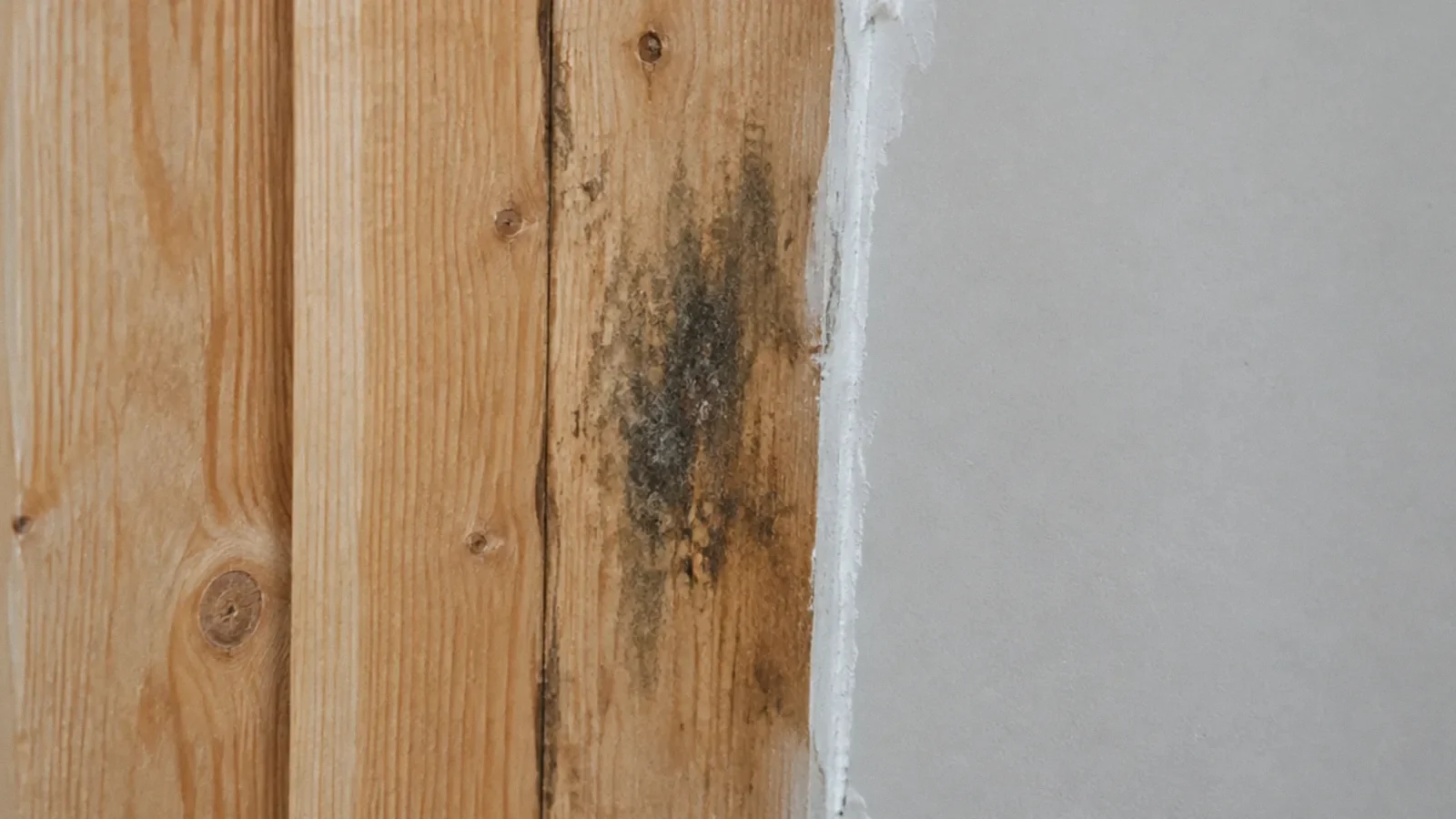
Assess the affected materials, stop the moisture source, and decide whether thorough cleaning and drying are possible. Seek professional help for extensive or contaminated damage.
Why a surface mark needs a closer look
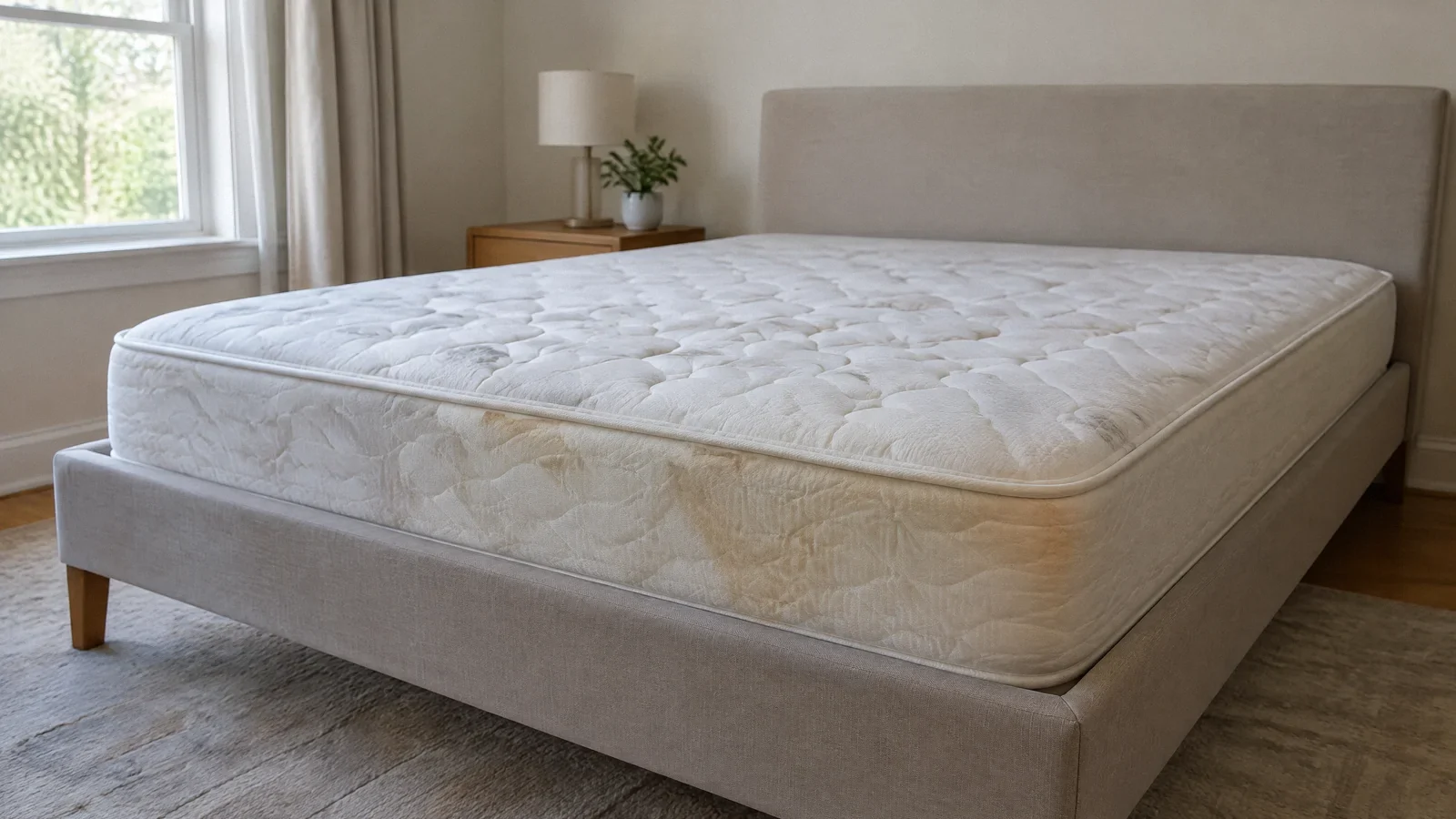
A mattress is made of absorbent layers that can hold moisture after a leak, spill, flood or prolonged condensation. A visible spot on the cover may not show how far moisture has traveled. White or black color cannot identify a mold species, and some discoloration can have another cause. A persistent musty smell, repeated dampness or growth on the underside is reason to investigate the mattress and bed area.
Keep sensitive occupants away from suspected mold. People with allergies, asthma, chronic lung disease or weakened immunity should not clean it. Do not beat, dry-brush or vacuum the mattress with an ordinary household vacuum, which can disturb particles without resolving contamination in deeper layers.
Can the mattress be cleaned?
The key question is whether contamination and moisture can be removed from every affected layer, not whether the outer fabric can be made to look clean. EPA notes that absorbent or porous materials may need to be discarded when moldy because complete removal can be difficult. A visibly moldy mattress, a persistent odor, or growth in foam or padding makes reliable home cleaning especially uncertain.
A removable washable cover is separate from the mattress core. Follow its care label, but do not return it to a contaminated or damp mattress. Sunlight, steam, fragrance, a spray or a mattress protector is not proof that interior growth has been removed. If the item is unusually valuable, ask a qualified restoration professional about practical limitations and the cost of assessment before committing to treatment.
Consider the water source and sleeping conditions
A mattress exposed to sewage or floodwater needs a different response from a minor clean-water spill. Avoid handling sewage-contaminated materials as routine household laundry; consult appropriate restoration and local disposal guidance. If the bed area also has wet wiring, a damaged ceiling or an unstable floor, stay clear and arrange professional assessment.
Inspect the accessible bed frame, slats, nearby wall and floor for moisture. Condensation can develop where a mattress rests directly on a cold floor or where airflow is restricted, but a leak must be ruled out. Repair the cause and dry the room before placing a replacement bed in the same location.
Remove and replace a contaminated mattress
If the mattress cannot be thoroughly cleaned and dried, replacement is often the practical choice. Keep the movement of contaminated debris to a minimum and follow local collection instructions. Do not leave it in a shared hallway or donate an item with suspected mold. Photograph the damage first if a landlord or insurer needs a record; coverage depends on the policy and circumstances.
Before bringing in a replacement, clean and dry suitable hard bed-frame surfaces using a compatible method, and replace damaged porous components as needed. Follow the bed and mattress manufacturer’s ventilation and support instructions. A protective cover can help with future spills but cannot correct a damp floor or hidden leak.
Reduce moisture and monitor for recurrence
Use suitable bedroom ventilation or dehumidification and address condensation and leaks. EPA recommends indoor relative humidity below 60%, ideally 30% to 50% where practical. A room hygrometer can show trends, though it cannot verify dryness inside a mattress or wall. Check underneath the bed periodically, particularly after water damage or when it is located near a cold exterior wall.
For a suitable small cleanup of nearby hard surfaces, CDC recommends at least an N95 respirator, gloves and goggles without open vent holes. Obtain qualified help for extensive growth, recurrent odors, hidden wet materials or contaminated water. Seek medical advice for symptoms rather than trying to diagnose exposure from the color of a mark.
A practical decision after a leak
If a ceiling leak wets one end of a mattress, first make the room safe and stop the water from a safe location. A sagging ceiling or water near electrical equipment requires professional assistance. Record when the leak was found and how much of the bed and floor became wet. If the mattress remained damp or develops a musty odor or visible growth, replacing it may be the more reliable decision.
If only a removable cover was affected by a small clean-water spill and the core stayed dry, follow the manufacturer’s instructions for the cover and inspect the core before reassembly. Do not assume the core stayed dry just because the top feels dry. Uncertainty about interior moisture is a reason to seek assessment rather than cover the mattress and continue using it.
After repair, inspect the bed frame and floor before setting up the replacement. Maintain clearance and support specified by the manufacturer, and check for recurrence after the same weather or household activity that caused the original problem.
Your next-step checklist
- Keep sensitive people away from cleanup.
- Find and correct the moisture source.
- Assess porous materials before cleaning or replacement.
- Return only clean, dry items to a dry room.
Related questions
Does the color identify the mold?
No. Color alone does not identify a species or determine health risk.
Will a spray solve the moisture problem?
No. The source of moisture must be corrected and affected materials cleaned or replaced.
Sources & context
Public guidance supports the principles in this article. The practical questions and examples are editorial interpretation, not a site assessment or a coverage decision. State-specific rules apply only where identified.
- Mold Cleanup in Your Homeprimary
- Mold Cleanup Guidelinesprimary
- Mold Damageprimary
- A Brief Guide to Mold, Moisture and Your Homeprimary