First identify where water appears: the hose connection, handle, top cap, spout or wall. Turn the faucet off and close a safely accessible supply shutoff if necessary. A leak inside the wall, a damaged frost-proof hydrant or an uncertain repair calls for a plumber.
Find the exact location
Dry the exterior and observe the faucet without placing yourself near electrical hazards. A leak at the hose coupling differs from water at the handle, a cap on top of the faucet, the spout or the wall. The location and whether it leaks only when open help a professional narrow the cause.
If water is entering the building, stop using the faucet and close its dedicated supply valve if it is clearly identified and safely accessible. If you cannot isolate the leak, use the main shutoff only when you can reach and operate it safely. Seek help promptly for active water damage.
Hose connection leaks
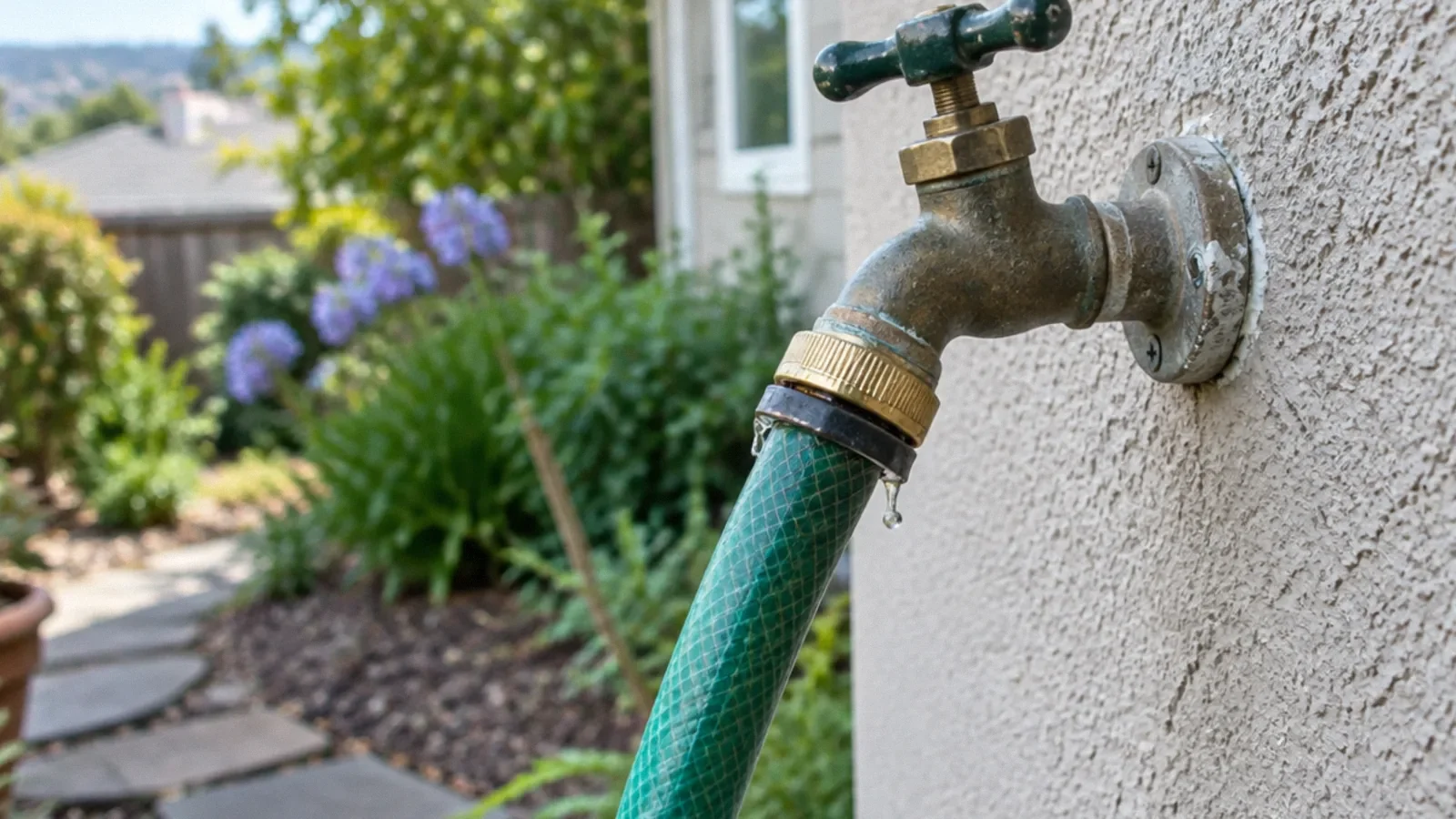
If water sprays from the hose coupling while the faucet is on, close the faucet and inspect the hose connection and its rubber washer. EPA notes that a worn hose washer can cause leaks. Replace it with a compatible washer if appropriate and reconnect without cross-threading.
A damaged hose, fitting or faucet thread may need replacement. Do not overtighten a connection or remove a backflow prevention device merely to stop a leak. If the source remains unclear, have a plumber inspect the assembly.
Water around the handle
A leak behind the handle when the valve is open can involve stem packing or another model-specific component. Woodford’s troubleshooting guidance identifies a packing leak for certain wall hydrants, but the repair for a different faucet may not be the same.
Identify the manufacturer and model before ordering parts or attempting adjustments. Close the correct water supply before disassembly, follow the applicable manual and do not force a corroded fitting. If a valve cannot be isolated or a fitting turns in the wall, stop and call a plumber.
Drips from the spout after shutoff
A conventional faucet that continues to drip after closing may have a worn seal, damaged seat or another fault. A frost-resistant wall hydrant can drain retained water briefly after shutoff. PRIER says its C-244 model can drip for up to 60 seconds as it drains; that model-specific example is not a universal diagnostic test.
If dripping persists, identify the exact product and consult its maintenance instructions. Avoid excessive force on the handle. A professional can assess whether the valve seat, washer, stem or a different part needs service.
Leak from a top cap or vacuum breaker
Some outdoor faucets include a vacuum breaker or other backflow protection. Water escaping from a top cap may indicate a damaged or worn component. PRIER describes a leaking vacuum breaker on its C-244 model as a possible result of freezing or a damaged seal.
The appropriate assembly and repair kit depend on the model and local requirements. Do not plug openings, remove the protection permanently or substitute a part that defeats backflow protection. A plumber can determine the correct repair and check the installation.
Water inside the wall
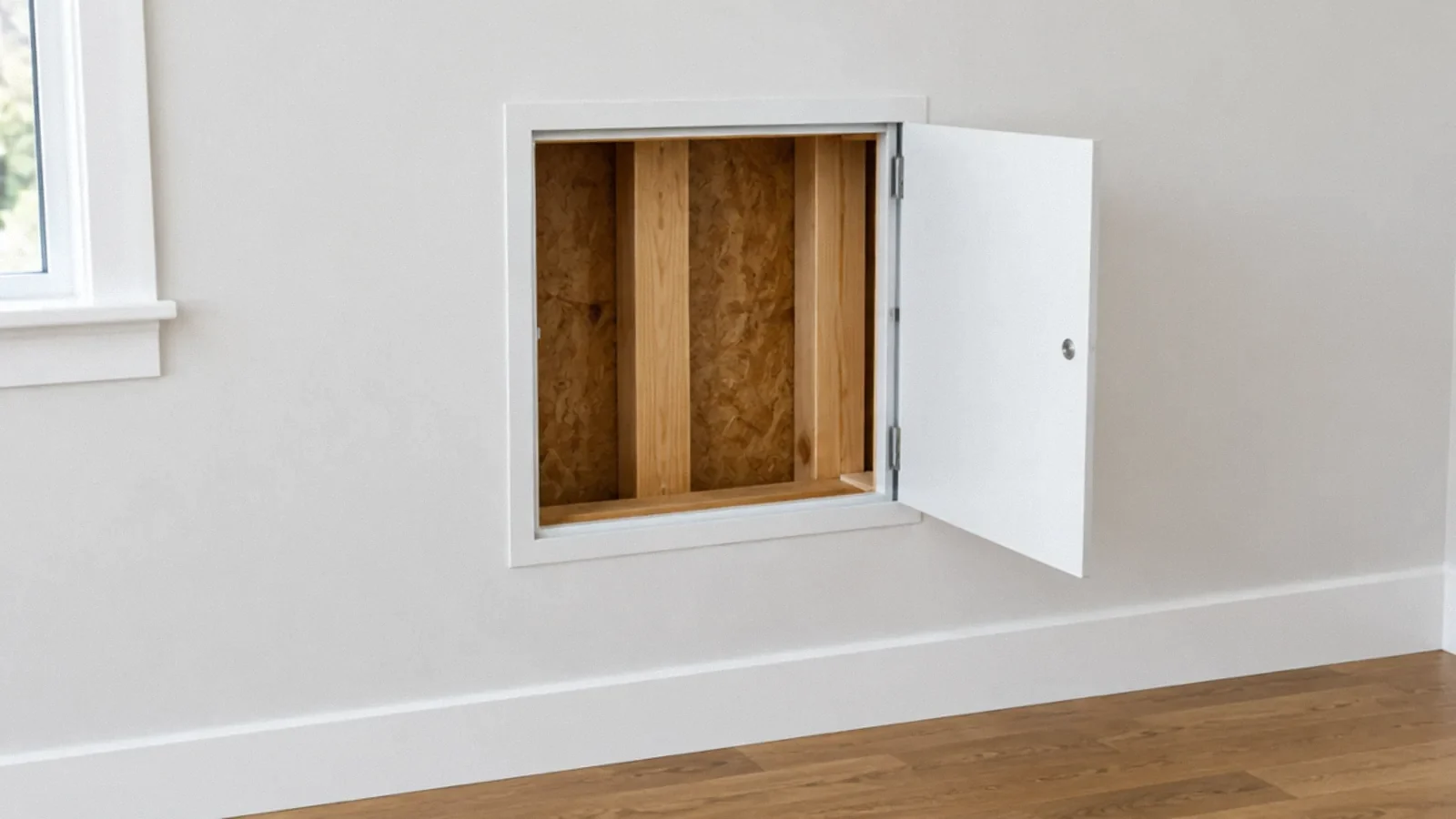
A frost-resistant faucet shuts water off farther inside the building. If its tube was damaged by freezing, a leak may become apparent only while the faucet is open. Wet drywall, staining, water at the wall penetration or an unexplained indoor leak after hose use needs prompt attention.
Stop using the faucet and isolate its water supply if safe. Do not open a wall near wiring or reach through a wet electrical area. A plumber can inspect the hydrant and connected pipe; wet building materials may need separate drying or restoration assessment.
Before cold weather
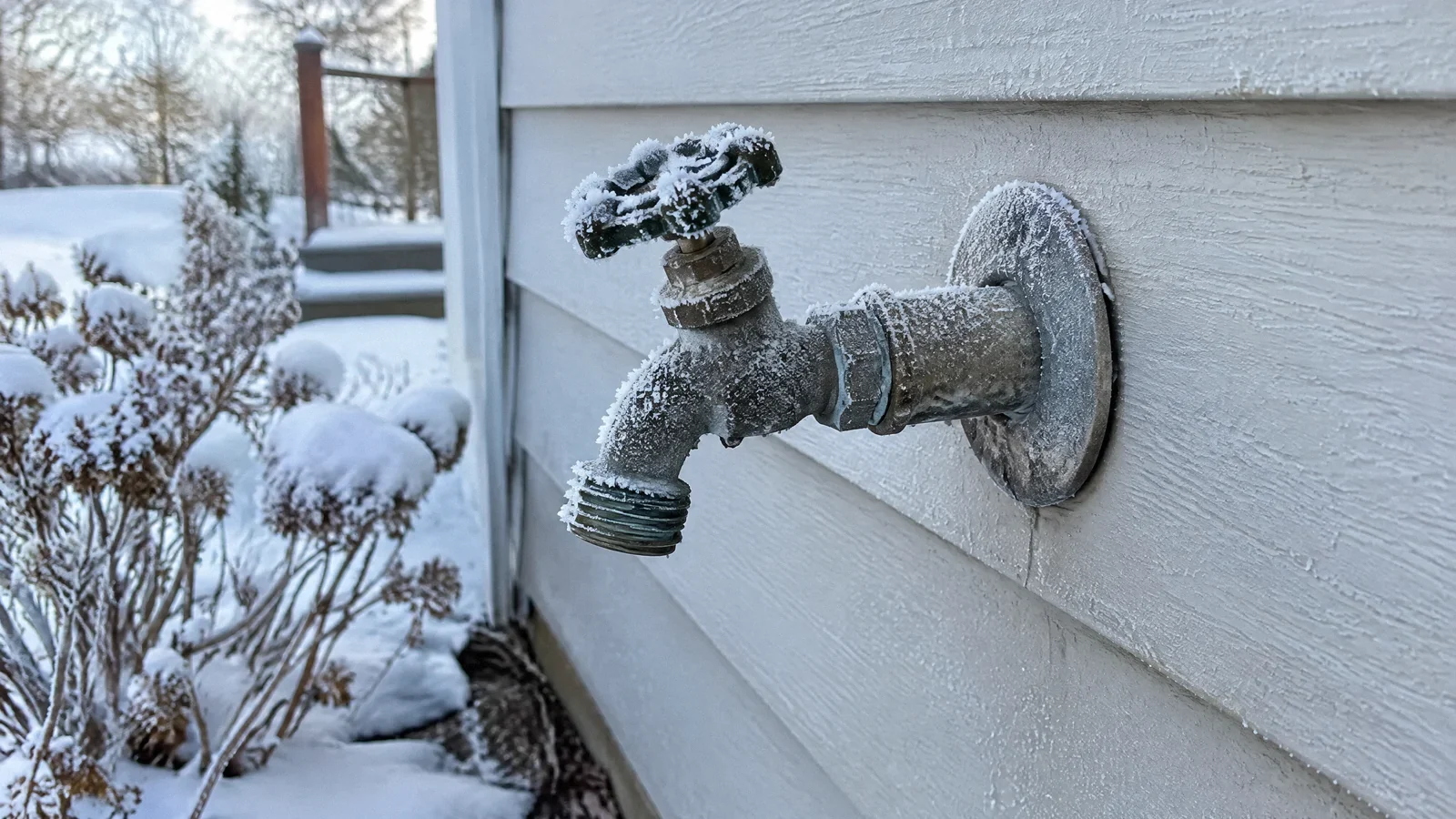
Follow the faucet manufacturer’s winter instructions. For the PRIER P-114 series, the instructions say to remove the hose during freezing temperatures so the hydrant can drain. Other products and local conditions may require different steps.
Do not assume an insulated cover repairs a leak or guarantees freeze protection. If a faucet is frozen or will not turn, do not force the handle or use an open flame. Close the appropriate supply if safe and get model-specific professional guidance.
After repair
Once a qualified person has repaired the faucet and restored water, check the accessible connection for leaks with the hose and fixture used as intended. Some installation instructions require a controlled back-pressure check and an inspection inside the building; follow the specific manufacturer’s procedure.
Keep the model information and repair record. If water reached a wall, floor or electrical component, seek an assessment of hidden moisture rather than assuming the repair dried the structure. A faucet that leaks again needs further diagnosis.
Example repair: Woodford Model 17 handle packing
First identify the exact faucet model; designs differ. Woodford’s Model 17 troubleshooting instructions say a handle packing leak may stop when the packing nut behind the handle is tightened until snug. Use only the manufacturer’s directions for that model, avoid excessive force, and test briefly while watching both outside and the accessible interior. Stop if the nut is seized, the leak continues or water appears in the wall.
If packing replacement is needed, Woodford instructs shutting off the supply to the hydrant before removing the packing nut and using its model-specific repair kit. If the shutoff is inaccessible, the faucet is corroded, the model is uncertain or a concealed pipe may be damaged, call a plumber. Do not remove or defeat the vacuum breaker; obtain the correct replacement and follow its instructions.
Your next-step checklist
- Locate the leak before choosing a repair.
- Close an accessible supply valve if water is escaping.
- Inspect the hose washer and fitting for damage.
- Keep backflow protection in place.
- Investigate water entering the wall.
Related questions
Why does my outdoor faucet leak only when turned on?
The source could be the hose connection, handle packing, vacuum breaker or a damaged hydrant tube. Its exact location and model matter.
Why does a frost-resistant faucet drip after I close it?
Some models drain retained water briefly after shutoff. Continued dripping can indicate a fault; consult the manufacturer for that model.
Can a leaking outdoor faucet damage an interior wall?
Yes. A damaged hydrant tube or connection can release water into the wall, sometimes only when the faucet is open.
Can I remove the leaking vacuum breaker?
Do not permanently remove or bypass backflow protection. Ask a plumber for the proper model-specific repair.
What if an outdoor faucet will not turn on after freezing?
Do not force a frozen or stuck valve. A frozen pipe can crack and leak as it thaws; protect nearby property and ask a qualified plumber to assess it. Avoid open flames and unsafe heat sources.
Sources & context
Public guidance supports the principles in this article. The practical questions and examples are editorial interpretation, not a site assessment or a coverage decision. State-specific rules apply only where identified.
- PRIER C-244: Product and troubleshootingmanufacturer guidance
- Woodford: Wall hydrant troubleshootingmanufacturer guidance
- PRIER P-114 installation and maintenancemanufacturer instructions
- U.S. EPA: Fix a Leak family fact sheetfederal guidance
- Woodford Model 17 troubleshootingprimary guidance