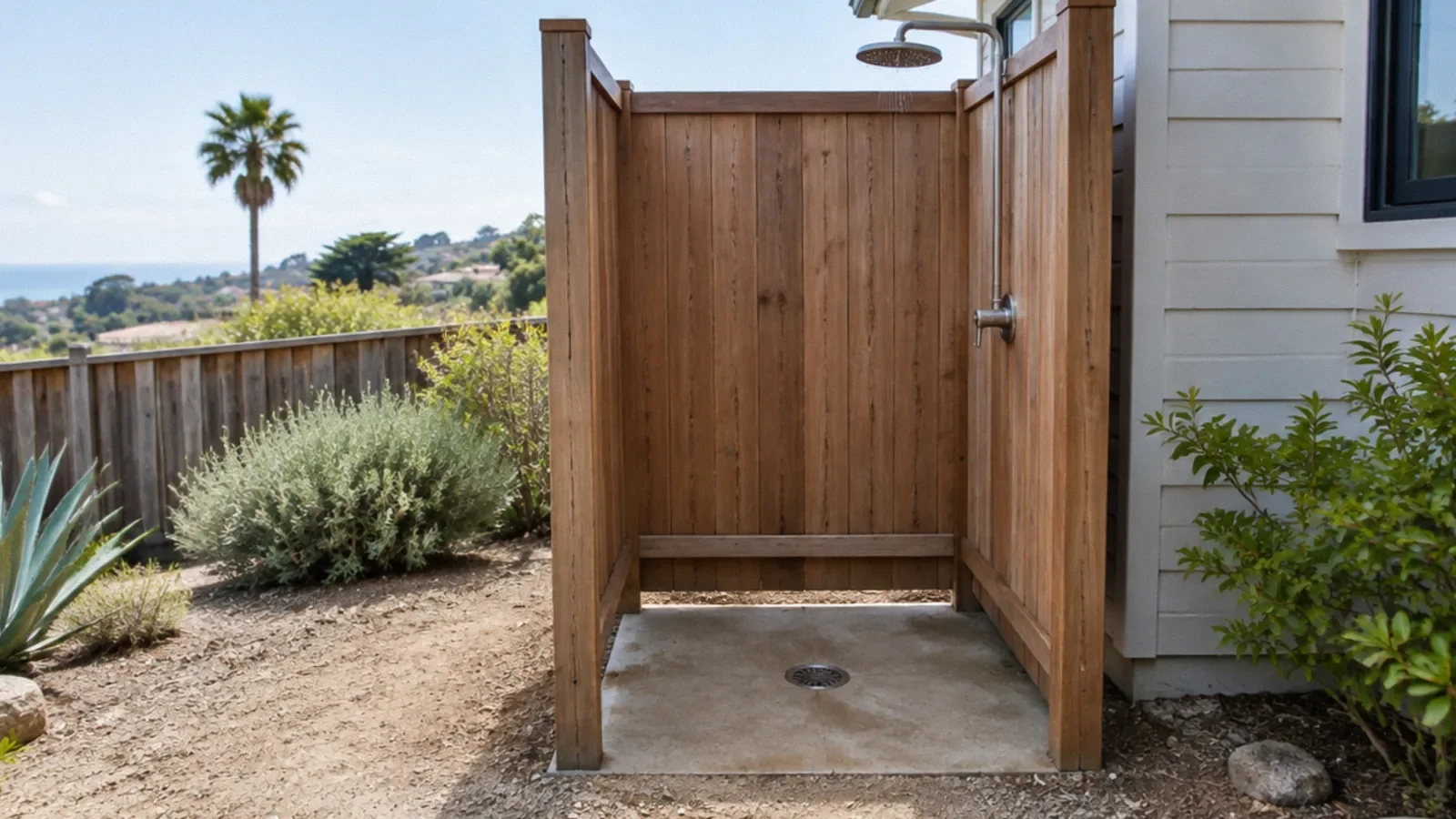
An outdoor shower needs a drainage plan appropriate to the site and local rules. Depending on the project and approvals, water may go to a sanitary sewer or an authorized graywater system. Do not assume that draining onto the ground, into a storm drain or into a dry well is permitted.
Read the drainage diagram
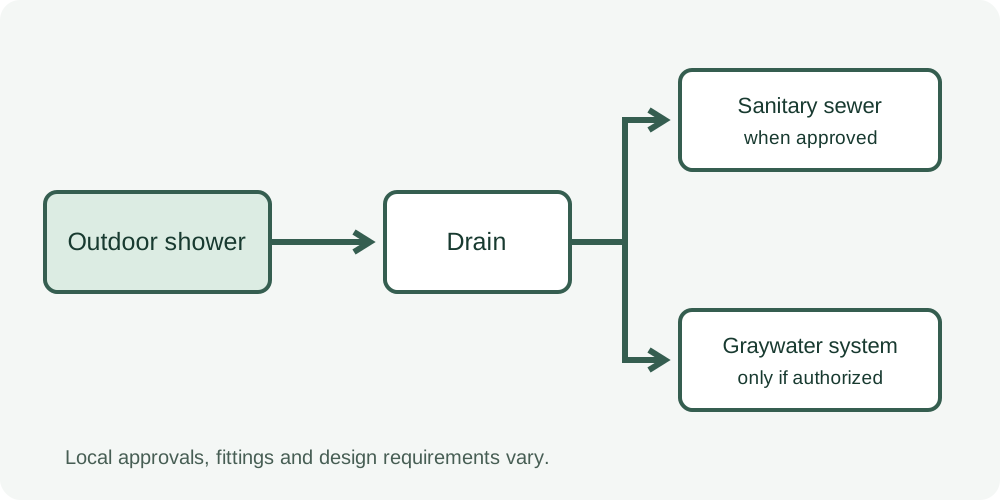
The diagram illustrates a shower, a drain and possible approved destinations. It does not show every trap, vent, pipe size, cleanout or connection. The actual design depends on the property, the fixture, the water source and the destination authorized by the local jurisdiction.
A licensed plumbing professional and local building department can identify what plans, permits and inspections the project requires. Do not use the diagram as a construction drawing or assume that a system approved in another city will be approved at your address.
Where can shower water go?
A sanitary sewer connection may be an option where permitted and properly designed. In some circumstances a graywater system may be authorized for an appropriate use. EPA’s California water-reuse summary describes shower water as a potential graywater source while explaining that applicable state and local requirements still matter.
Graywater is not a synonym for unrestricted discharge. Treatment, distribution, setbacks and other requirements depend on the specific system and jurisdiction. Ask the local authority whether a proposed system is allowed and what design and maintenance requirements apply.
Storm drains and the ground
Do not assume that a storm drain is an appropriate destination for shower wastewater. Stormwater systems commonly discharge to waterways, and soaps or other contaminants can affect water quality. Local wastewater and stormwater authorities can explain the rules for the specific property.
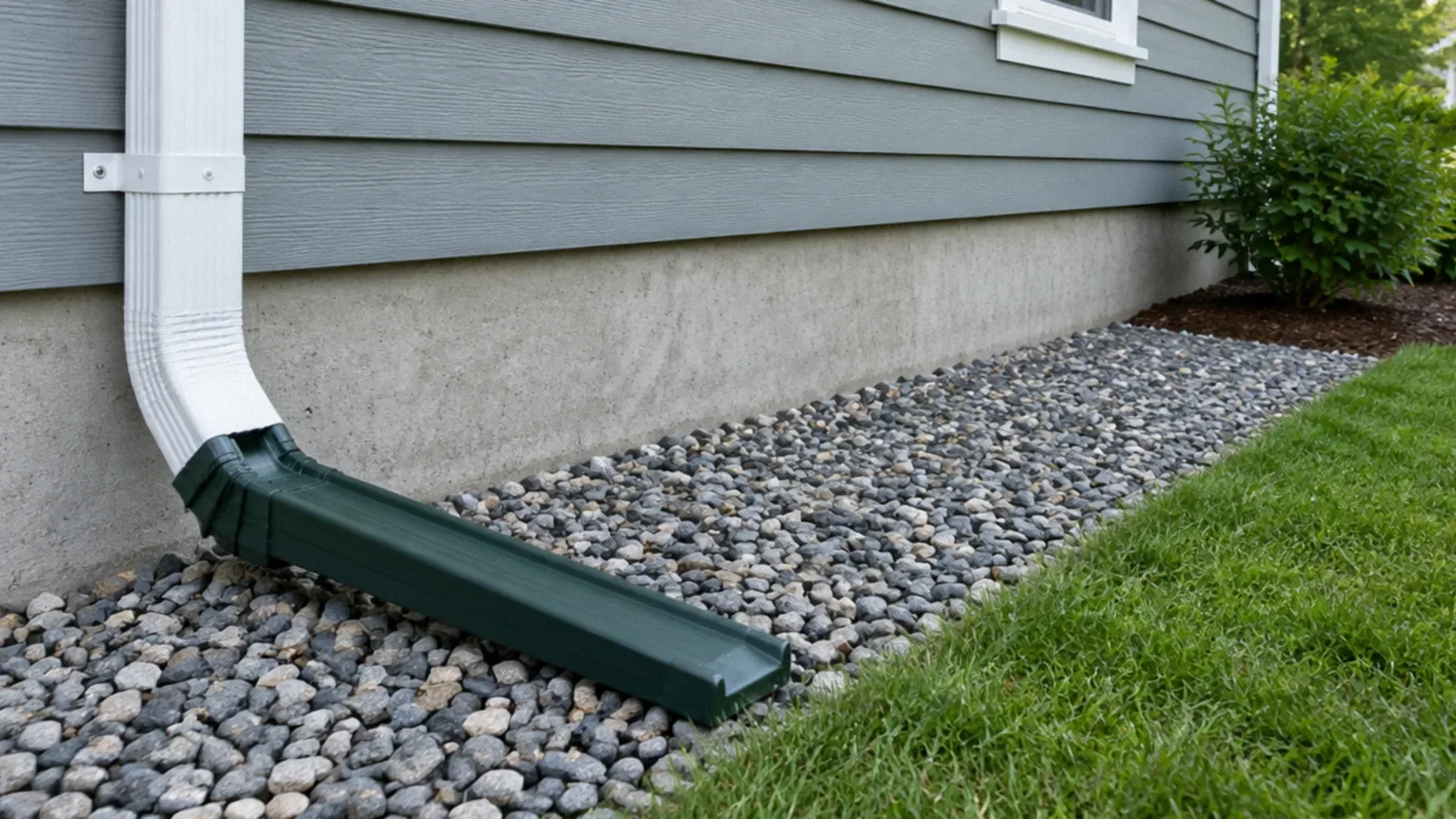
A gravel bed or dry well may look simple, but soil, groundwater, building foundations, neighbors and local restrictions affect whether it is suitable. Obtain approval before directing wastewater to the ground. A surface that drains quickly during one test does not establish year-round performance or legal compliance.
Protect the house and surrounding site
Plan the shower location so water does not damage siding, foundations, decks or neighboring property. Review the slope and route of runoff during wet weather. A professional should assess utilities and subsurface conditions before any excavation.
Materials exposed to repeated wetting need appropriate detailing and maintenance. Provide safe footing and avoid leaving standing water near electrical equipment. If water is already entering the building, address the active source before proceeding with a cosmetic enclosure.
Plumbing, traps and connections
A complete drainage system can require a trap, venting, cleanouts and approved connections, depending on the design and local code. Product instructions and jurisdiction requirements govern the details. A flat picture cannot establish pipe sizes, slope or a correct connection for every project.
Do not cut into an existing sewer, bypass a trap or connect to an unidentified pipe based solely on an internet diagram. Have a qualified plumber assess the system and specify the proposed route. Backflow protection and water supply requirements also need separate review.
Permits and California considerations
Portland lists installing plumbing fixtures such as showers and adding plumbing pipes among work requiring a residential plumbing permit. This is an example, not a rule for other jurisdictions. A narrow exception for some laundry-to-landscape systems should not be assumed to cover an outdoor shower.
Contact the building department for the project address before work begins. Ask about fixture, drainage, electrical and enclosure permits; whether plans are required; and inspections before covering underground work. EPA notes that local public health requirements can affect graywater use.
Compare proposals
Ask a contractor to show the water supply, drain route, destination, connection to existing systems and any proposed graywater treatment or distribution. The proposal should identify excavation, restoration of hardscape, permits and the person responsible for inspections.
Request a written process for changes if buried utilities or unsuitable soil are found. A quote for the shower enclosure alone is not comparable to a quote that includes approved drainage and plumbing. Avoid a fixed price claim before the site and destination are assessed.
Maintenance after installation
Keep the drain accessible and follow the installer’s maintenance instructions. Watch for slow drainage, odors, pooling or water reaching the building. Stop using the shower and arrange an assessment if wastewater backs up or a connection leaks.
Maintain an approved graywater system as required by its design and local conditions. Product selection can affect a reuse system, but a product described as natural does not automatically make unrestricted discharge acceptable. Keep the approved plan and inspection records for future service.
Your next-step checklist
- Identify the permitted drainage destination.
- Protect the foundation and neighboring property.
- Check local plumbing and graywater requirements.
- Use a qualified professional for the actual design.
- Keep drains accessible and maintain the system.
Related questions
Can an outdoor shower drain straight into the yard?
Do not assume so. Local rules, soil, wastewater use and an approved design determine whether any ground discharge is permitted.
Does every outdoor shower use the same drain diagram?
No. Pipes, traps, vents and destination vary by site.
Is shower water graywater in California?
EPA describes shower wastewater as a potential graywater source, subject to the applicable definitions and rules.
Does a laundry graywater permit exception automatically cover a shower?
No. Check the specific project with the local building department.
Sources & context
Public guidance supports the principles in this article. The practical questions and examples are editorial interpretation, not a site assessment or a coverage decision. State-specific rules apply only where identified.
- City of Portland: Residential plumbing permitsmunicipal plumbing guidance
- EPA: California water reuse summaryfederal state-law summary
- EPA: Protecting waterwaysfederal stormwater guidance