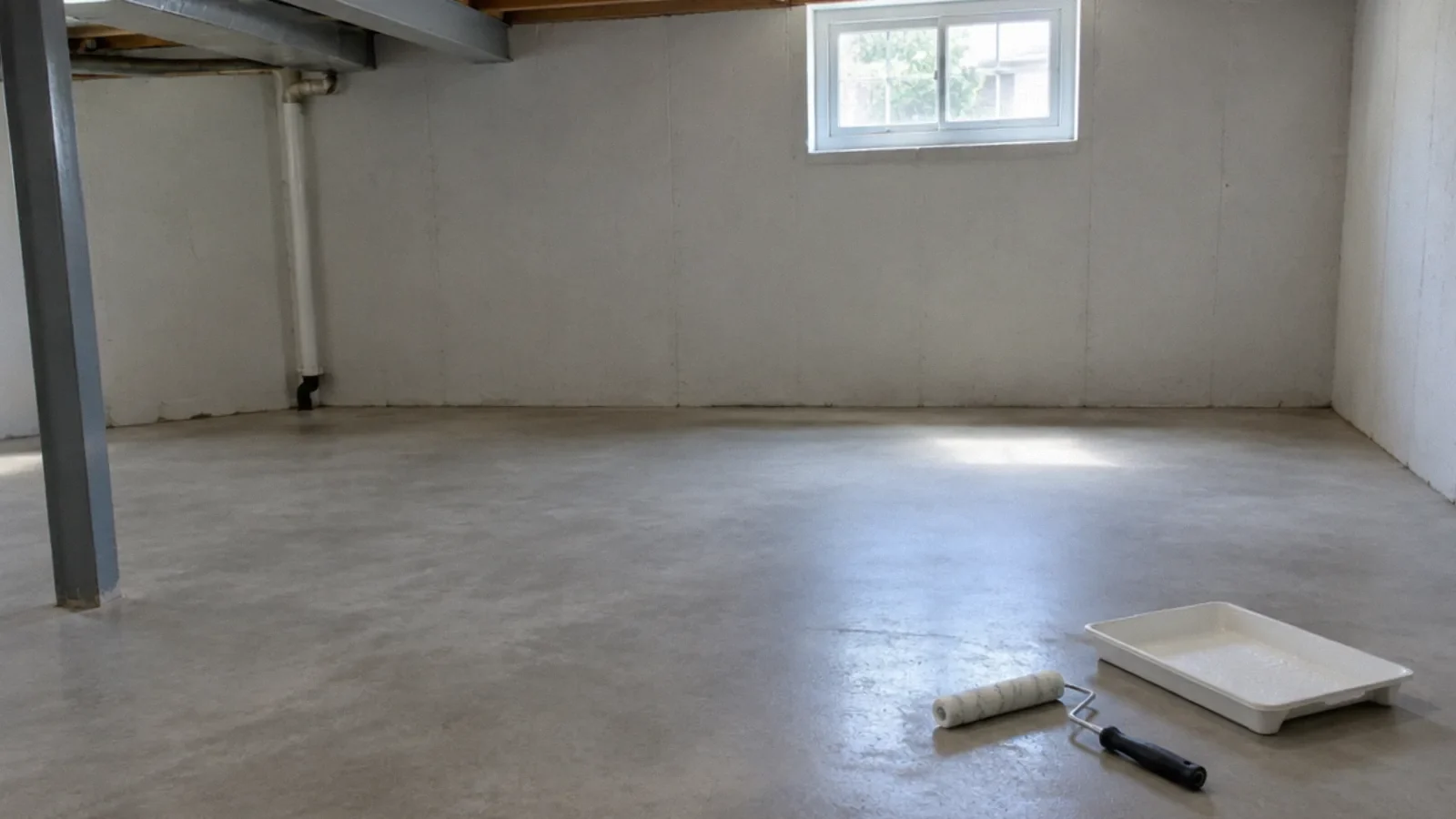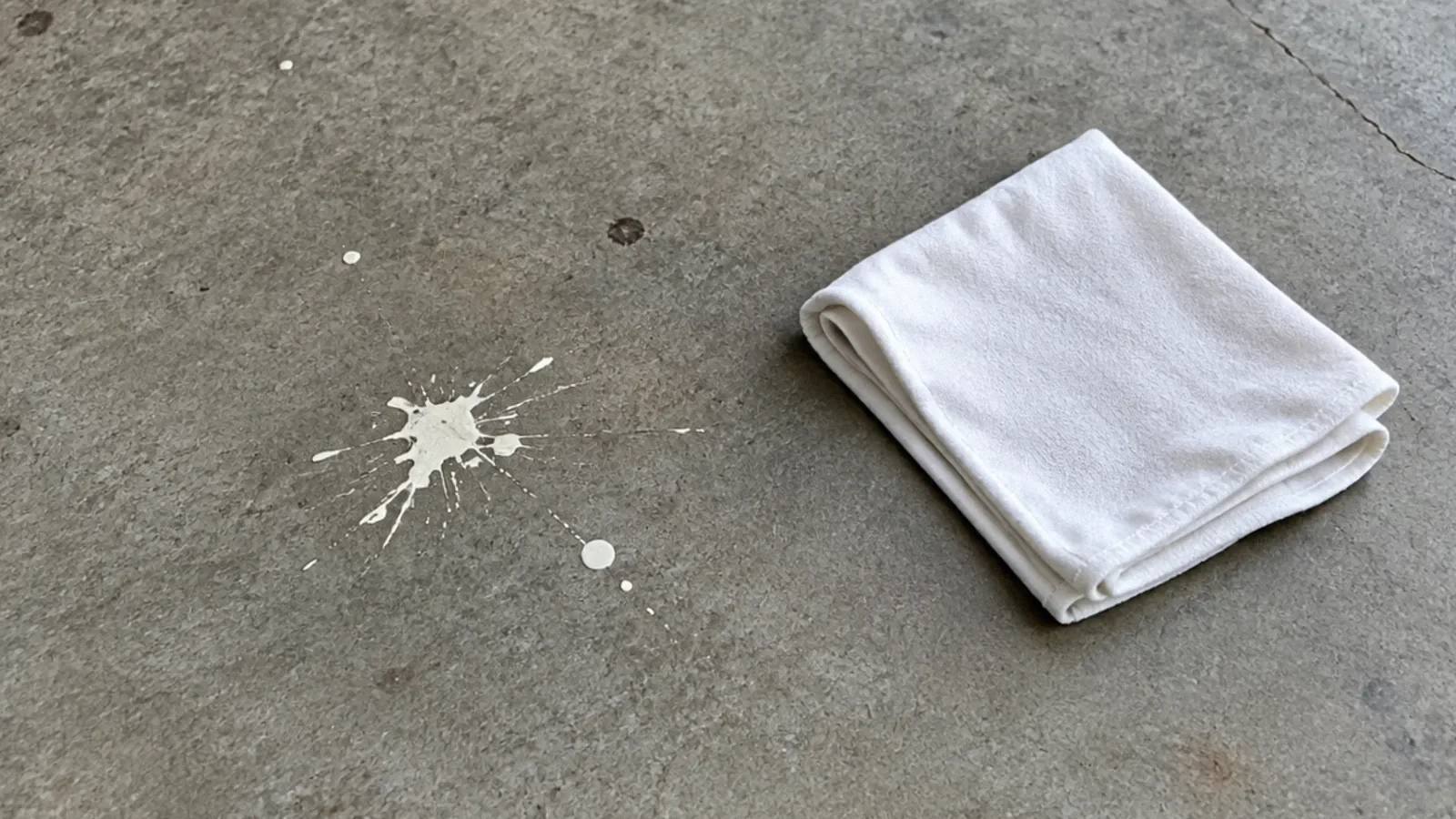
A small fresh paint spill and an old coating require different approaches. Identify the paint and concrete finish, follow product instructions and avoid grinding or scraping an unknown older coating until lead or other hazards have been assessed. A qualified contractor can recommend a compatible removal method.
Identify the paint and surface
Note whether the material is a fresh water-based paint, oil-based coating, an unknown old layer or another product. Read the paint label and safety information if available. Bare concrete, decorative concrete and a sealed floor may react differently to a cleaner or scraper.
Do not assume a surface is unsealed because it looks matte. Ask the concrete or coating manufacturer about compatible cleaning methods. For an unknown older coating, stop before creating dust and arrange an appropriate assessment.
Consider lead and other hazards
EPA warns that disturbing paint in pre-1978 homes can create hazardous lead dust. Older floor coatings or adhesives may also present other hazards. Age and color alone cannot establish whether a particular coating is safe to remove.
Do not sand, grind, dry scrape or use a heat gun on suspect material without the appropriate assessment and safety plan. A qualified lead or environmental professional can explain testing, containment and applicable requirements. Keep children and pets away from the work area.
A small fresh spill
If the product is known and the situation is safe, prevent a fresh spill from spreading and blot or lift excess with suitable absorbent material. Follow the paint label for cleanup and protect surrounding finishes. Do not wash paint into a household or storm drain.
A water-based product may have different cleanup instructions from oil-based paint. Do not add a solvent merely because a recipe recommends it. If fumes are strong, the material is unknown or the spill is large, leave the area and seek appropriate guidance.
Dried paint on concrete
Dried paint can adhere to a porous or coated floor. A removal method may alter the concrete color or damage a sealer even if it removes the visible paint. Test a manufacturer-approved method in a hidden area and compare the result after it dries.
Do not use aggressive mechanical removal on an unknown coating or valuable decorative floor. A concrete or painting professional can assess whether a gentle compatible method, localized repair or refinishing is appropriate. A perfect color match may not be possible.
Oil-based paint and solvents
Oil-based paint products and removers can contain solvents with ventilation, fire and exposure hazards. Read the specific product label and safety information; keep ignition sources away and do not mix chemicals. Some strippers contain hazardous substances and require specialized handling.
Do not use gasoline as a cleaner or pour solvent into a drain. If the area is enclosed or the product instructions cannot be followed safely, contact a qualified professional. Ask the local waste agency how to handle leftover product and contaminated material.
Protect the concrete finish
A decorative stain, polished surface or protective sealer can be changed by acids, solvents, abrasive pads or pressure washing. Choose a method approved for the actual floor and avoid forcing water into joints or nearby building materials.
If the spill is on a garage floor with a coating, record the product name and age where possible. A small light patch after treatment may be a damaged finish rather than paint residue. Stop if color or gloss changes and discuss repair options.
Cleanup and disposal
Collect paint residue and used absorbents as directed by the product and local waste authority. Keep containers closed and labeled and store them away from children and pets. Do not assume wet paint, solvent and ordinary dry debris have the same disposal route.
If a spill reaches soil, a drain or a waterway, contact the relevant local authority for guidance. Large or unknown chemical spills should be handled by trained responders. Avoid creating airborne dust while cleaning.
When to hire help
A professional is appropriate when the coating may contain lead, the paint type is unknown, the area is large or the floor finish is valuable. Ask for a written plan that identifies the material, removal method, containment, waste handling and any expected change in appearance.
A cleanup quote should distinguish removal of the spill from refinishing the floor. Keep the product information and photographs, and ask how the result will be checked. Do not approve work that disturbs suspect material before the hazard assessment is complete.
Your next-step checklist
- Identify the paint and floor finish.
- Assess possible lead or other hazards before disturbing an old coating.
- Keep paint and solvents out of drains.
- Test only a compatible method and follow local disposal rules.
Related questions
How do I remove a fresh paint spill from concrete?
If the product is known and safe to handle, contain and absorb it and follow the paint and floor manufacturers’ instructions.
Can I grind old paint off a concrete floor?
Do not grind an unknown older coating before assessing possible lead or other hazards. Grinding can spread hazardous dust.
Is oil-based paint cleanup different?
Yes. The product may require different handling and its solvents can pose fire and exposure hazards. Follow the label and local disposal guidance.
Will paint removal damage the concrete finish?
It can. Test a compatible method in an inconspicuous area and stop if the color or gloss changes.
Sources & context
Public guidance supports the principles in this article. The practical questions and examples are editorial interpretation, not a site assessment or a coverage decision. State-specific rules apply only where identified.
- EPA: Lead-safe renovations for DIYersfederal lead safety guidance
- EPA: Reduce the risk of lead exposure at homefederal lead safety guidance
- EPA: Protect local waterwaysfederal environmental guidance