Professional air sampling can support a defined investigation, but a short sample cannot certify that a building is mold-free or safe for every occupant. Inspect the moisture source and affected materials, and agree on the question sampling will answer.
Start with a sampling hypothesis
A useful investigation starts with a question, such as whether observations suggest a source within a particular area or whether a defined cleanup objective needs additional evaluation. 'Tell me if the house is safe' is too broad for a brief air sample. Ask the investigator to explain what result would change the next action and what other evidence will be collected.
EPA says sampling should be designed and interpreted by people with relevant expertise. It also notes that federal mold limits have not been established. NIOSH does not recommend routine air sampling as a way to evaluate health risk in damp buildings. These positions allow purposeful sampling while rejecting the idea that one universal number separates every acceptable home from every unacceptable one.
Understand the moment captured
Airborne particles change with weather, ventilation, occupant activity, cleaning, and disturbance. A sample represents the method, location, and collection period. It is not a continuous record of the previous month. Growth behind a closed wall may release little into the sampled room at that moment, while an open window may introduce outdoor spores without an indoor reservoir.
The report should describe relevant conditions, not just list laboratory numbers. Ask whether HVAC operation, recent cleaning, open windows, construction activity, or weather affected interpretation. Do not manipulate the building to achieve a favorable test. Follow the investigator's documented instructions and disclose departures, so later readers understand what the results actually represent.
Indoor versus outdoor is context, not a verdict
Outdoor comparison samples can help interpret indoor findings, but the comparison is not a simple pass/fail equation. Different fungal types, sampling locations, weather, and short-term variation complicate the relationship. A lower total indoor count does not automatically exclude hidden growth. A higher count calls for interpretation, not an unsupported claim about a particular person's illness.
Ask for the actual analytical report together with the investigator's narrative. The narrative should connect observations, moisture evidence, sample results, and limitations. If the only conclusion is a colored 'safe' or 'danger' label, request the criteria behind it. A contract may adopt project-specific criteria, but those should be identified as such rather than represented as a federal health standard.
Independence and competence both matter
An investigator who does not sell remediation may reduce one financial conflict, but independence is not a substitute for appropriate experience. Ask about relevant building investigations, the methods used, and how unusual results are checked. Confirm who decides sample locations and who signs the interpretation. A laboratory generally analyzes submitted material; it does not inspect the wall from which the concern arose.
When a remediation contractor also arranges testing, ask how the completion decision will remain objective. The answer may involve an independent reviewer, an agreed protocol, or separate approval responsibilities. What matters is that the owner understands the arrangement before work begins and that no one quietly changes the acceptance criteria after results arrive.
A report review example
Consider a buyer who receives a report with low total indoor counts but a persistent odor in one closed closet. The useful follow-up is not to average all rooms into a reassuring whole-house number. Ask whether the closet was inspected, whether the suspected cavity communicates with room air, and whether the collection conditions were representative. The report may be analytically valid while leaving that specific concern unresolved.
Now consider a high indoor result after workers removed a dusty ceiling shortly before sampling. That result still needs attention, but the investigator should explain the effect of the recent activity and whether it reflects an ongoing source, temporary disturbance, or both. The next step might be inspection and cleaning review rather than an immediate claim that every wall contains growth.
Before accepting either conclusion, request a concise decision statement: the evidence supports this action in these locations, while these other questions remain unanswered. That statement makes the investigation usable for an owner, contractor, or transaction professional. It also prevents the laboratory's precise numbers from being mistaken for precision about a building condition that was never directly assessed.
Use results alongside the physical repair record
Suppose a post-cleanup air sample is unremarkable but a wall remains damp and musty. The physical concern still needs resolution. Suppose the area is clean and dry but a sample is unexpected. The response should be a documented review of method, conditions, and possible remaining sources, not automatic demolition of unrelated rooms.
Keep the moisture map, source repair documentation, photographs, inspection findings, laboratory report, and interpretation together. Ask what follow-up is recommended after normal occupancy or the next relevant weather event. For ongoing symptoms, a clinician needs a medical and exposure history; a spore count alone cannot provide a diagnosis. Sampling is most useful when it narrows uncertainty rather than replacing the investigation.
Methods and when inspection is more useful
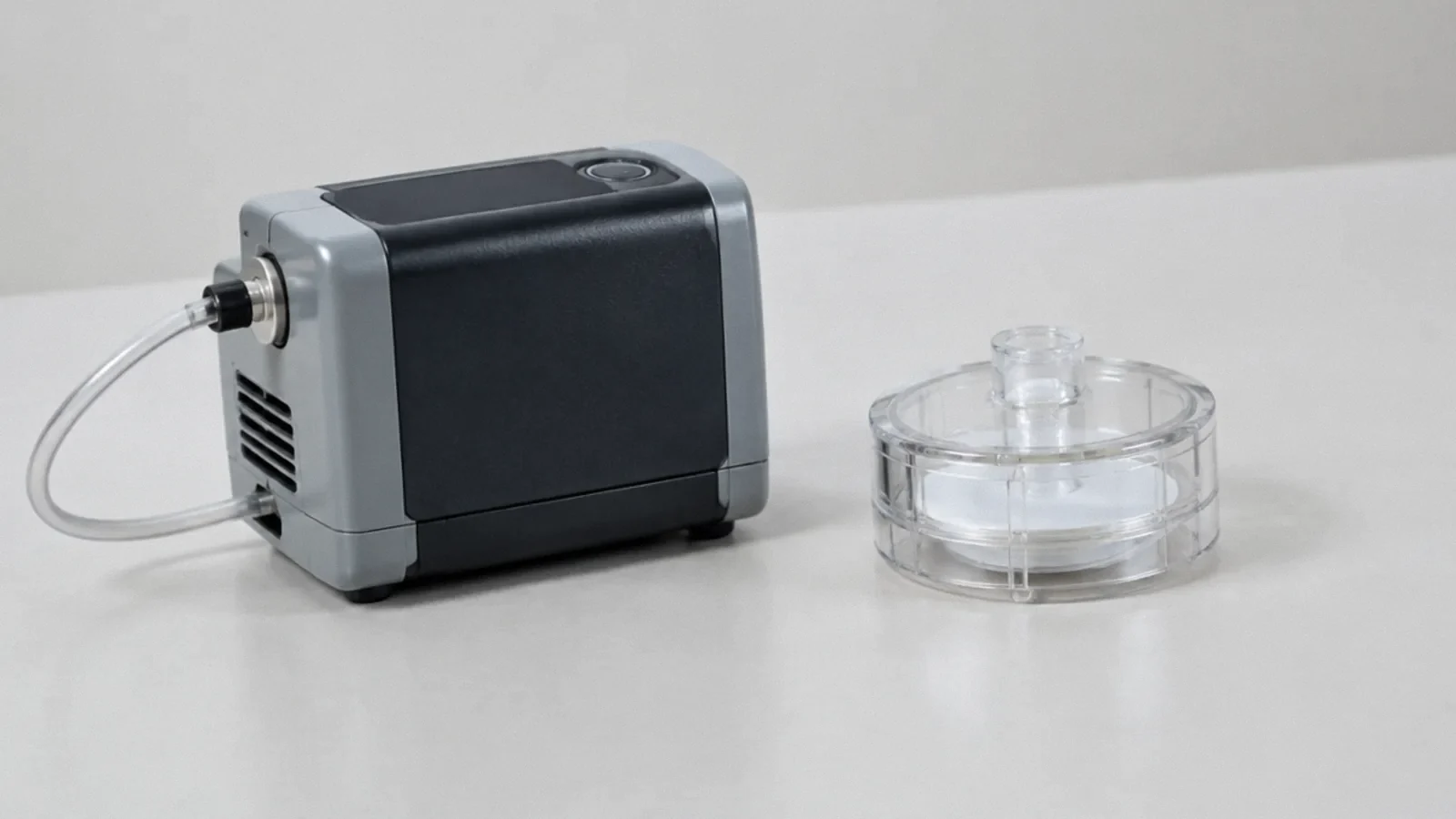
A professional can draw a measured volume of air through a spore trap or filter for microscopy, or collect air onto a medium for culture. These methods measure different things and require skilled interpretation; culture does not grow every organism and microscopy has identification limits. Ask which method is proposed, where and how long samples will be collected, and how the result will alter a decision.
If visible growth or a known leak already shows a moisture problem, a direct inspection and correction of the source can be more useful than buying an air test. A home kit left open for a short period can collect common outdoor or indoor spores without showing where moisture is or whether exposure caused illness. A mold sample also does not measure carbon monoxide, radon or other pollutants; each concern needs an appropriate method.
Your next-step checklist
- Define the question and intended consequence of each proposed sample.
- Record collection conditions and preserve both laboratory and interpretation reports.
- Ask whether criteria are contractual, professional, regulatory, or simply a provider’s preference.
- Review sampling results with visual findings, moisture evidence, and access limitations.
- Identify the person responsible for resolving unexpected results before reconstruction.
Related questions
Is a lower indoor count automatically a pass?
No. Totals alone can hide important context, and a brief sample may not capture a concealed source. Interpretation requires the broader investigation.
Can air sampling diagnose mold illness?
No. Clinical evaluation requires an individual medical and exposure history. Building measurements can provide context but do not establish causation by themselves.
Should every remediation job have air testing?
Not necessarily. The need depends on the project, applicable requirements, agreed protocol, and remaining uncertainty. Define the verification plan before the work starts.
What can a mold air sample tell me?
It describes particles collected by a particular method at a particular place and time. It cannot by itself diagnose illness or prove that concealed areas are clear.
Sources & context
Public guidance supports the principles in this article. The practical questions and examples are editorial interpretation, not a site assessment or a coverage decision. State-specific rules apply only where identified.
- EPA: Is sampling or testing for mold necessary?official
- CDC/NIOSH: Mold, testing and remediationofficial
- CDC/NIOSH: Mold in the Workplaceofficial
- CDC: Environmental sampling methodsofficial guidance
- EPA: Indoor pollutants and sourcesofficial guidance
Community questions behind this topic
These discussions helped identify reader concerns. They are anecdotal, not technical or legal authority.