Identify the paint and check the carpet care instructions before treating a spill. Gently lift loose wet paint and blot with a white absorbent cloth without rubbing. Do not pour water or solvent onto the carpet or mix chemicals. Dried paint, oil-based products, unknown paint and valuable rugs often need a professional assessment.
Identify the paint and carpet
Latex and some acrylic paints are water-based; oil-based paint and other coatings can require different handling. Read the paint label and keep the container information for a professional. Also identify the carpet fiber, backing and manufacturer’s care instructions.
A method suitable for washable clothing is not automatically safe for installed carpet, padding or a delicate rug. If the product is unknown, the spill is large or fumes create a hazard, keep people and pets away and seek qualified help.
Act carefully while paint is wet
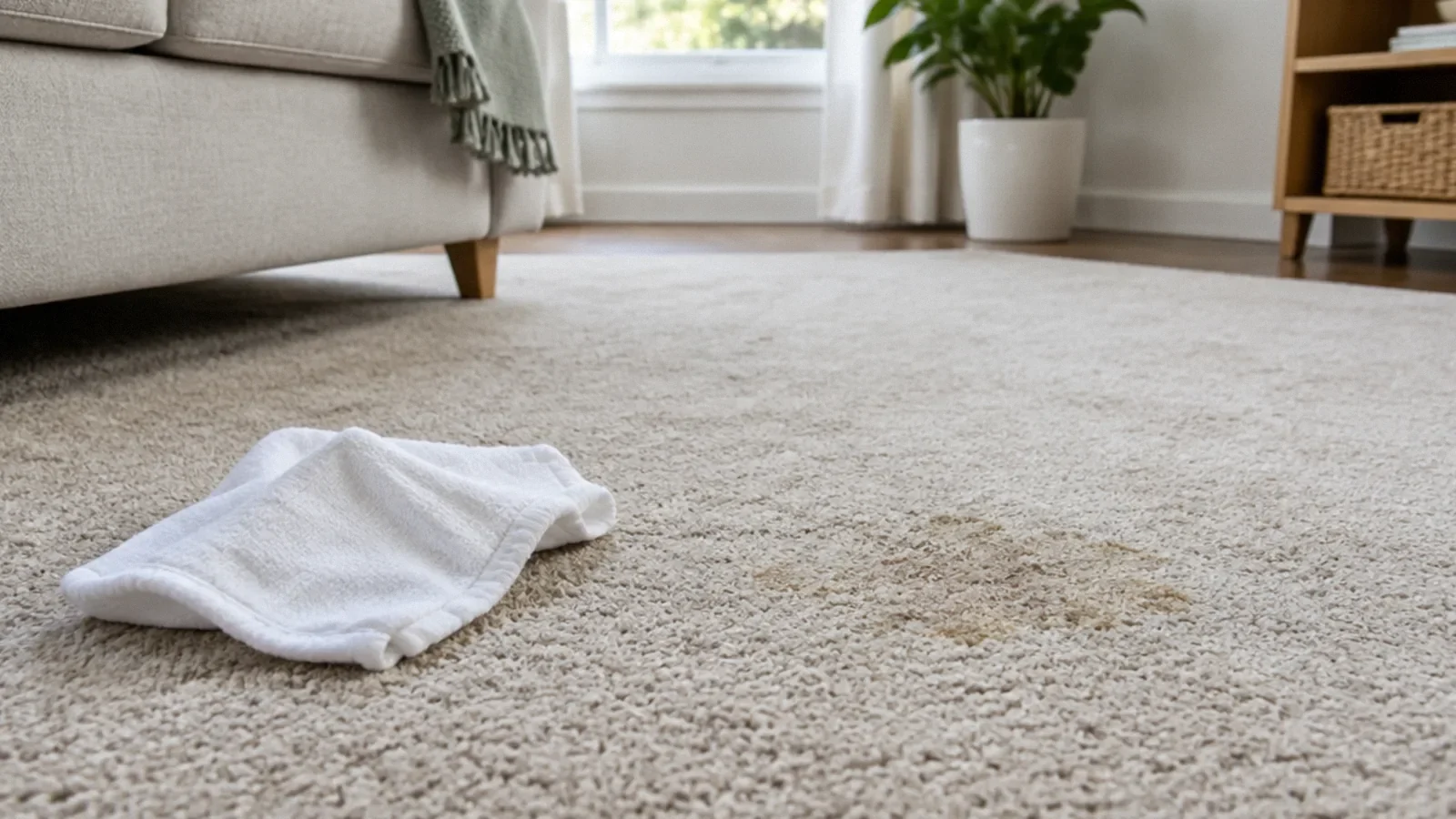
For a small spill you can safely approach, gently lift excess paint with a rounded spoon or suitable disposable tool and blot with a clean white absorbent cloth. Work from the edge toward the center to limit spreading. Do not rub, brush aggressively or press paint into the backing.
Wear protection specified by the product label and provide ventilation as directed. Keep paint and cleaning products away from children, pets, flames and sparks. Do not use a household dry vacuum to collect liquid paint.
Water-based latex and acrylic
A fresh water-based spill may respond differently from dried paint, but the correct treatment still depends on the carpet. Use water or a spot product only if the carpet maker permits it, test in a hidden area and follow the product label. Blot rather than soak the pile.
Avoid adding large amounts of water, which can carry pigment into backing or padding. Rinse or remove cleaner residue only as directed and dry the assembly. If color transfers from the carpet or the mark spreads, stop and call a professional.
Oil-based paint and solvents
Oil-based paint can involve solvents that are flammable and can damage dyes, adhesives or carpet backing. Do not pour paint thinner, gasoline or an unapproved solvent onto the floor. Never mix chemicals, and keep any approved product away from ignition sources.
University of Georgia Extension notes that paint type affects stain treatment. For an oil-based spill on carpet, consult the paint and flooring instructions and consider a qualified cleaner, particularly if the spill is more than a small surface mark. Dispose of contaminated supplies according to local guidance.
Dried or old paint
Dried latex or acrylic paint can become difficult or impossible to remove fully. Do not cut carpet fibers, scrape forcefully or apply heat without manufacturer guidance. Aggressive treatment may permanently change pile texture or spread particles.
Ask a carpet specialist to inspect the stain and explain whether gentle removal, a spot treatment, a carpet repair or replacement is appropriate. Share the paint type, age of the spill and any products already applied. A lighter appearance does not guarantee that backing is unaffected.
Spray paint and paint markers
Aerosol paint and paint markers can contain pigments and solvents that behave differently from household wall paint. Avoid inhaling overspray or spraying another product to cover the mark. Follow the product’s safety instructions and use a cleaner only when compatible with the carpet.
For a large aerosol spill, uncertain chemicals or ongoing fumes, ventilate only when it is safe and contact an appropriate professional. Do not use an open flame or electrical device that could ignite flammable vapors.
Protect the pad and floor
The visible surface may be smaller than the affected area if liquid moved into carpet backing, pad or subfloor. Repeated wetting can carry paint or cleaning residue deeper. A professional can determine whether limited access to the layers is needed and how the area will dry.
Do not reinstall furniture over a damp area. A routine carpet-cleaning appointment may not include paint removal or pad replacement, so describe the spill in advance and ask for a written scope and price.
Prevent future spills
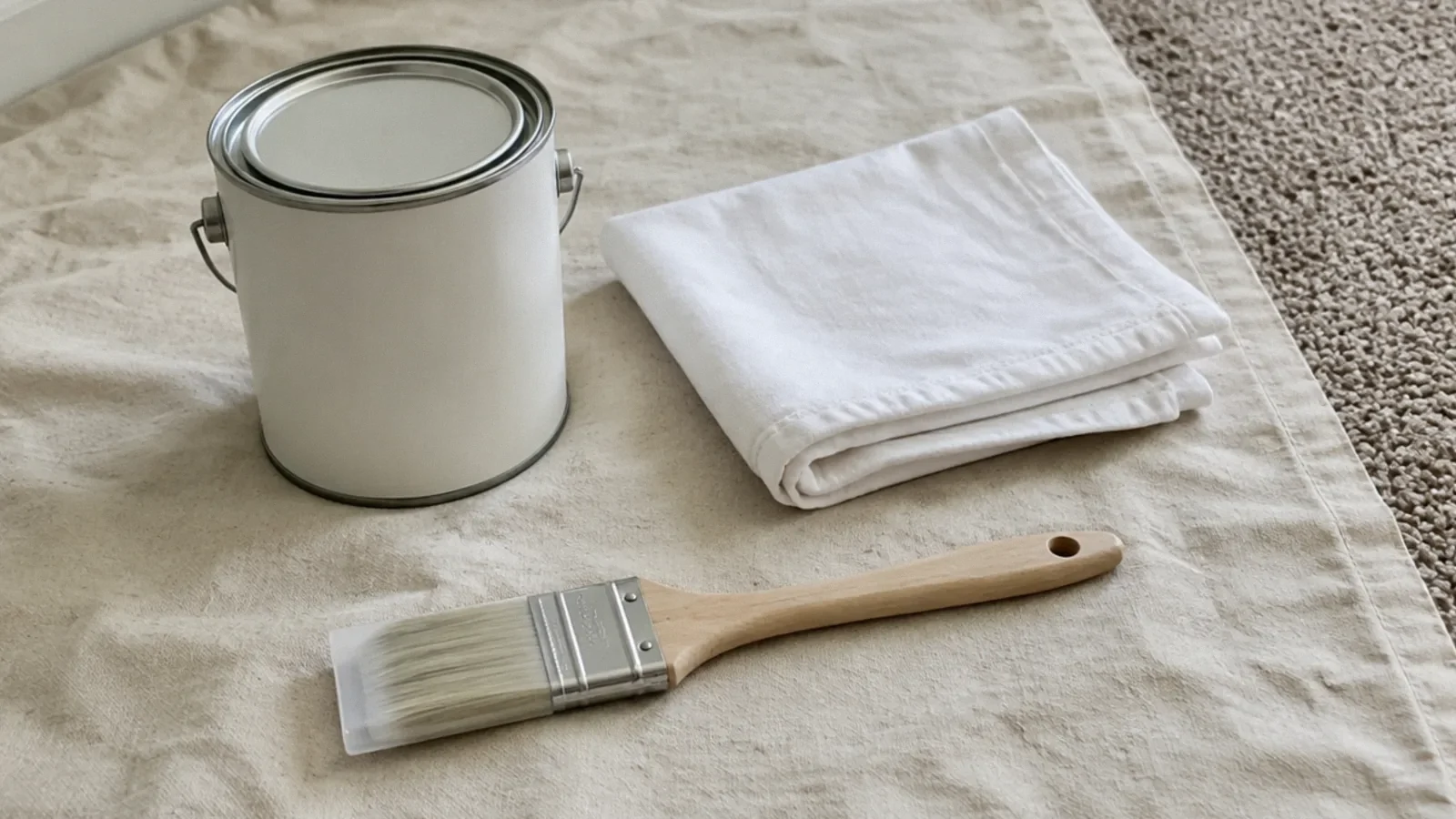
Before painting, use appropriate drop cloths that cover carpet edges and protect paths between the work area and paint containers. Keep lids secure when carrying products and place containers on a stable protected surface. Follow the paint maker’s storage and ventilation instructions.
If the work disturbs older painted surfaces, lead-safe requirements may apply; do not dry sand or disturb suspect coatings without appropriate assessment. Keep records of the paint and cleaning products so a professional can choose a compatible method.
Your next-step checklist
- Identify the paint and carpet materials.
- Lift loose wet paint and blot without rubbing.
- Test only a compatible treatment and avoid soaking.
- Keep solvents away from flames and never mix products.
- Ask a specialist about dried paint or valuable rugs.
Related questions
Can latex paint be removed from carpet?
A fresh spill may be easier to address than a dried one, but the method must suit the carpet and paint. Blot first and follow the makers’ instructions.
Should I pour paint thinner on carpet?
No. Solvents can be flammable and can damage carpet backing or dyes. Seek a compatible professional method.
How do I remove dried acrylic paint?
Do not scrape aggressively or apply unapproved heat. A carpet specialist can assess whether removal or repair is possible.
Will every paint stain come out?
No. Paint can permanently stain or damage carpet, particularly after drying or reaching the backing.
Sources & context
Public guidance supports the principles in this article. The practical questions and examples are editorial interpretation, not a site assessment or a coverage decision. State-specific rules apply only where identified.
- University of Georgia Extension: Paint stain removaluniversity guidance
- Carpet and Rug Institute: Spot removalindustry guidance
- U.S. EPA: Household hazardous wastefederal guidance