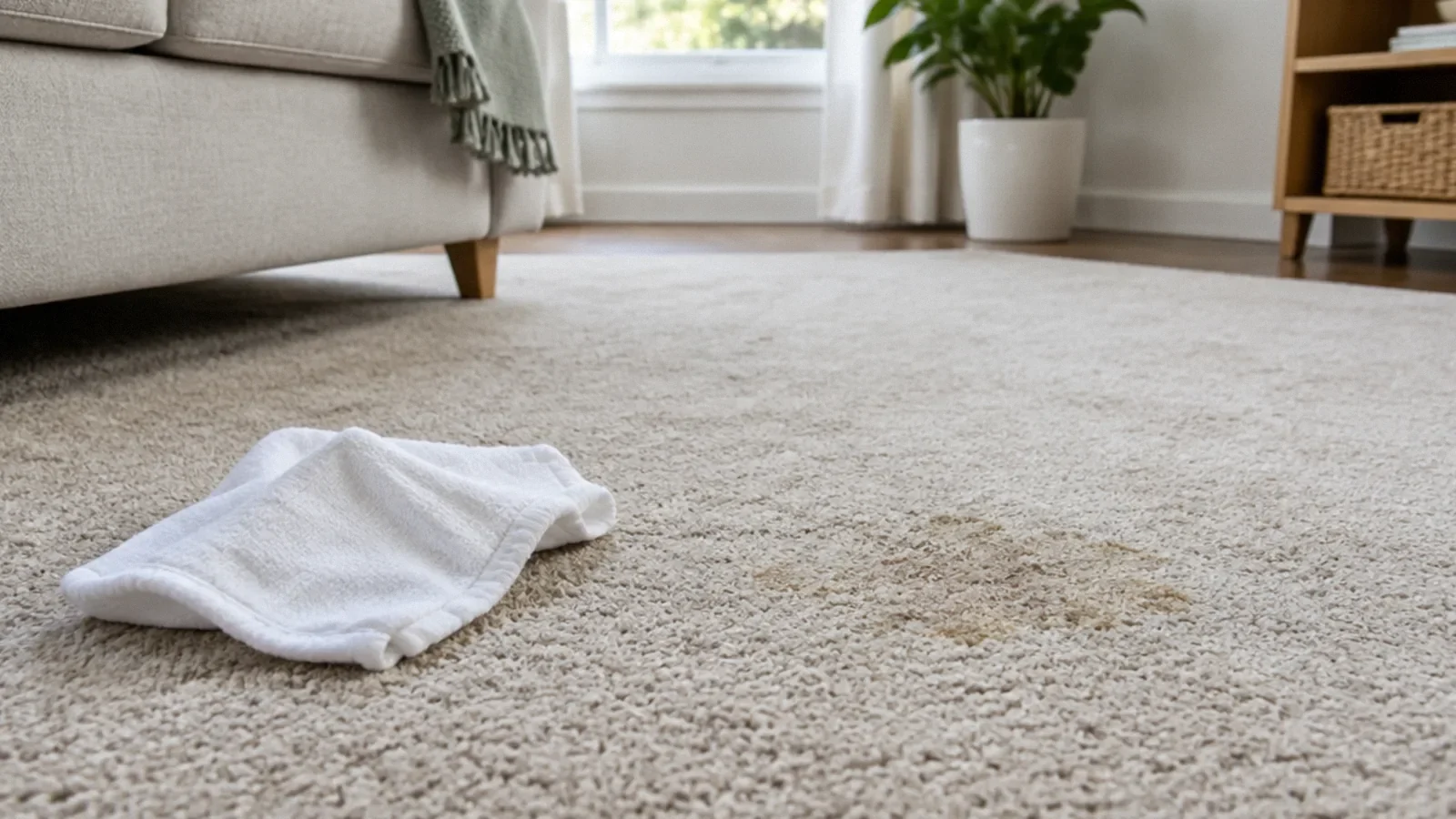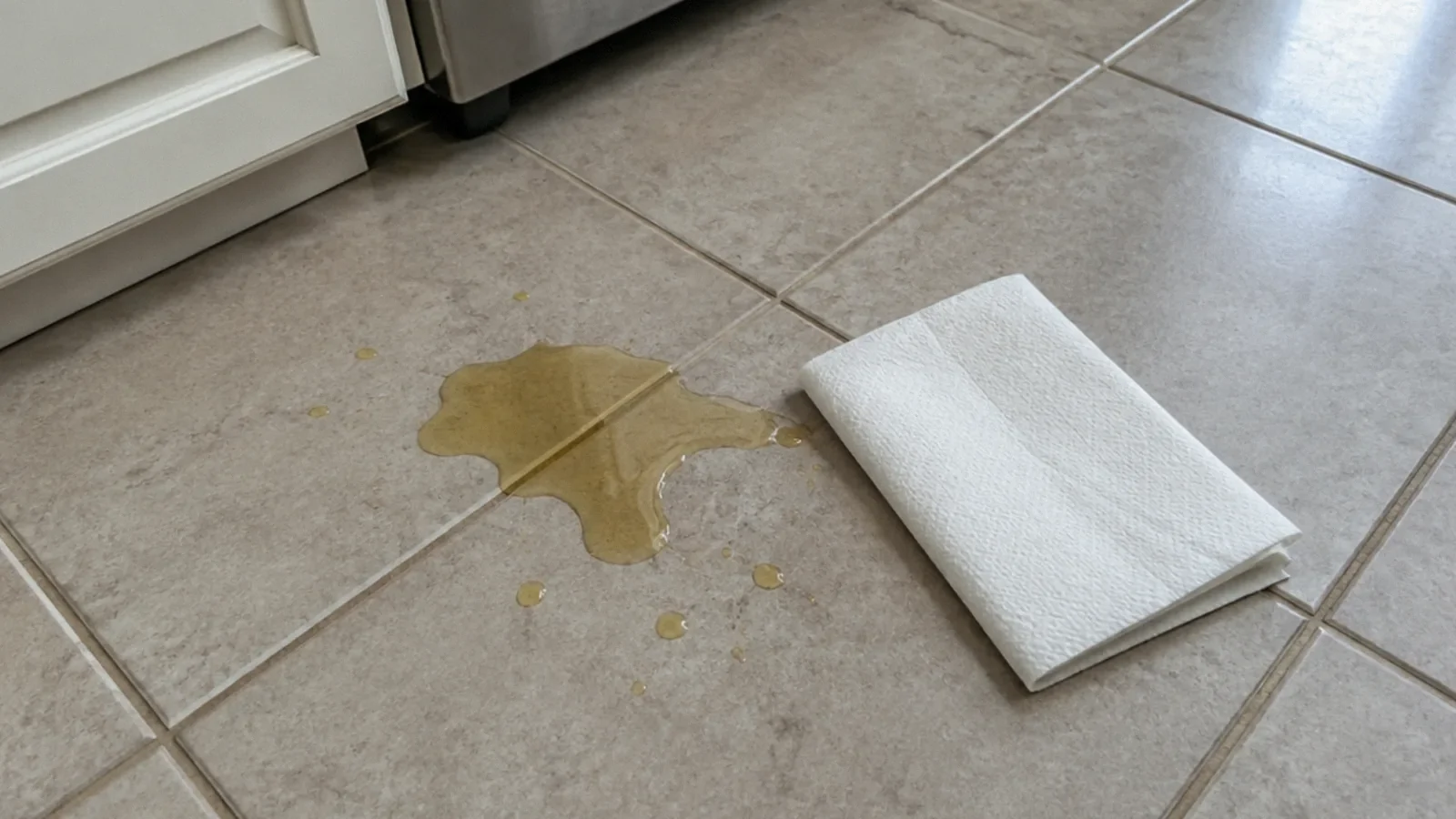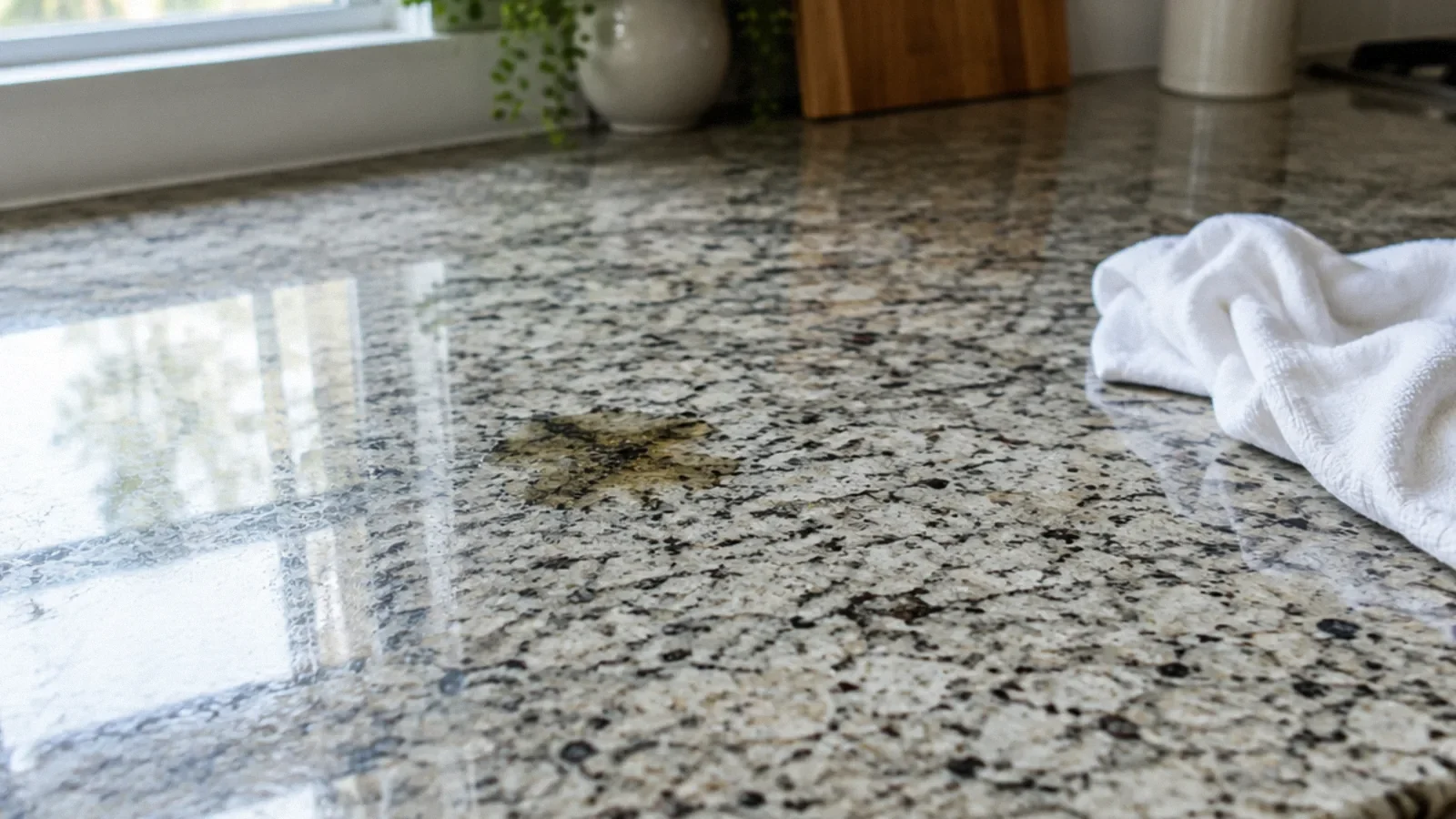
Blot a fresh spill, identify the stone and finish, and follow the fabricator’s care instructions. Test any permitted cleaner in a hidden area. A dark absorbed stain, a dull etched mark and physical damage require different treatments; strong acids, abrasives or untested chemicals can make the surface worse.
Blot and identify the surface
Blot a fresh spill with a clean absorbent cloth rather than spreading it. Remove loose residue gently and check whether the surface is natural granite, another stone or an engineered material. Products sold under a stone-like name may have different compositions and care requirements.
Find the fabricator’s instructions and identify the finish and sealer if known. A polished surface, honed surface and adjacent grout or metal can react differently. Do not assume that a product recommended for one countertop is safe for every stone.
Stain, etch or surface damage?
A stain can occur when material is absorbed into stone, while a dull or rough mark may be etching or physical damage. Granite and other natural stones vary in composition; an apparent stain cannot be reliably diagnosed by color alone. The treatment depends on what spilled and how the surface changed.
The Natural Stone Institute provides different guidance for oil, organic material, metal and other stains. If you do not know the substance, test only a manufacturer-approved method in an inconspicuous area or consult a stone-care professional. Some stains may be permanent.
Routine cleaning
For ordinary soil, use a cleaner recommended by the stone fabricator or a stone-safe product according to its label. A soft cloth and a small amount of suitable cleaner can avoid scratching or leaving excess liquid at seams. Rinse and dry as directed.
Avoid abrasive pads, scouring powders and unapproved acidic cleaners. Some stone surfaces and finishes can be etched or dulled by acids. Do not mix bleach, ammonia, vinegar or other products, and keep cleaning products away from children and pets.
Oil and food stains
Oil, grease, coffee and food can leave different residues. Identify the spill before selecting a treatment and remove excess without rubbing it into the surface. A product intended for stone may be suitable for a specific stain, but test and follow the label.
The Natural Stone Institute describes absorbent poultices for some stone stains. The material and cleaning agent must suit the stone and stain; an untested paste or solvent can discolor a surface. For a large, old or valuable installation, ask a qualified stone-restoration professional before experimenting.
Rust, ink and difficult marks
Metal, ink and dye stains may require specialized products and may not come out completely. A rust mark near a metal object, for example, can have a different cause from an oil spot. Do not use a general bathroom acid or an abrasive tool just because the stain is persistent.
A professional can assess the stone and select a compatible treatment. Explain what caused the mark and what products have already been used. If a finish has dulled or etched, cleaning alone may not restore it and refinishing may require specialist equipment.
Poultice and chemical precautions
A stone poultice is an absorbent material combined with a suitable cleaning agent and applied for a period of time. The Natural Stone Institute notes that the method can require repetition and may not remove every stain. It also lists different agents for different stain types.
Do not substitute chemicals or mix products. Solvents, bleach and concentrated peroxide can damage finishes or create health and fire hazards. Follow a stone-specific product label and the fabricator’s instructions; use a professional for uncertain or delicate surfaces.
Sealers and prevention
A sealer may slow absorption on some stone but does not make every countertop stain-proof or protect every finish from chemical damage. Ask the fabricator whether the specific material needs sealing and how it should be maintained. Do not apply a sealer over an unidentified stain without guidance.
Use coasters and trays, wipe spills promptly and avoid leaving oils or colored liquids on the surface. Keep acidic products off stone unless the manufacturer explicitly approves them. A simple routine helps reduce exposure without promising that every mark is preventable.
When to call a professional
Seek specialist help for a large or deep stain, visible etching, cracked stone, a valuable surface or an unknown previous treatment. A qualified stone-restoration provider can inspect the material and explain the expected result and risks.
Request a written scope that distinguishes cleaning, poultice treatment, polishing and sealing. Ask what will happen if the stain does not respond. Photograph the mark and keep care instructions and invoices for future maintenance.
Your next-step checklist
- Blot spills and identify the stone.
- Follow the fabricator’s care instructions.
- Test a permitted product in a hidden area.
- Avoid unapproved acids, abrasives and chemical mixtures.
- Use a stone professional for deep stains or etching.
Related questions
How do I remove a stain from granite?
Identify the stain and finish, follow stone-specific instructions and test a compatible treatment. A professional can assess deep or uncertain marks.
Can vinegar damage a stone countertop?
Acids can damage some stones and finishes. Use only products approved for the actual surface.
Does a sealer make granite stain-proof?
No. A sealer can reduce absorption for some surfaces but does not guarantee stain or etch resistance.
Will a poultice remove every stain?
No. The treatment must match the stain and stone, and some marks may remain permanent.
Sources & context
Public guidance supports the principles in this article. The practical questions and examples are editorial interpretation, not a site assessment or a coverage decision. State-specific rules apply only where identified.
- Natural Stone Institute: Stain removalstone industry care guidance
- Natural Stone Institute: Homeowner countertop guidestone industry guidance
- Poison Control: Safe cleaningpoison center guidance