Identify the furniture material and follow its care label before choosing a cleaner. Remove loose dust gently, test any permitted product in a hidden area and avoid soaking cushions, wood or joints. Valuable, delicate, water-damaged or contaminated pieces may need professional assessment.
Identify the material and instructions
A sofa may combine fabric, foam, wood and metal; a table may have veneer or a delicate coating over a different core. Check the manufacturer’s label or manual and determine which part needs cleaning. The same product can be safe on one surface and damaging on another.
Test any permitted cleaner in an inconspicuous place and allow the test area to dry. If color transfers or the finish changes, stop. For antique or sentimental furniture, a conservator or qualified specialist can assess the material before an irreversible treatment.
Remove loose dust and debris
Use a clean soft cloth or a vacuum attachment appropriate to the surface and manufacturer’s instructions. Avoid stiff brushes, excessive suction on loose fabric and abrasive pads. Clear debris gently from accessible seams without pulling threads or forcing an attachment into a mechanism.
Dusting removes surface particles; it does not remove contamination inside padding or repair a water-damaged frame. If a piece is fragile, has loose veneer or shows suspected mold, do not disturb it unnecessarily. Ask a specialist how it can be handled safely.
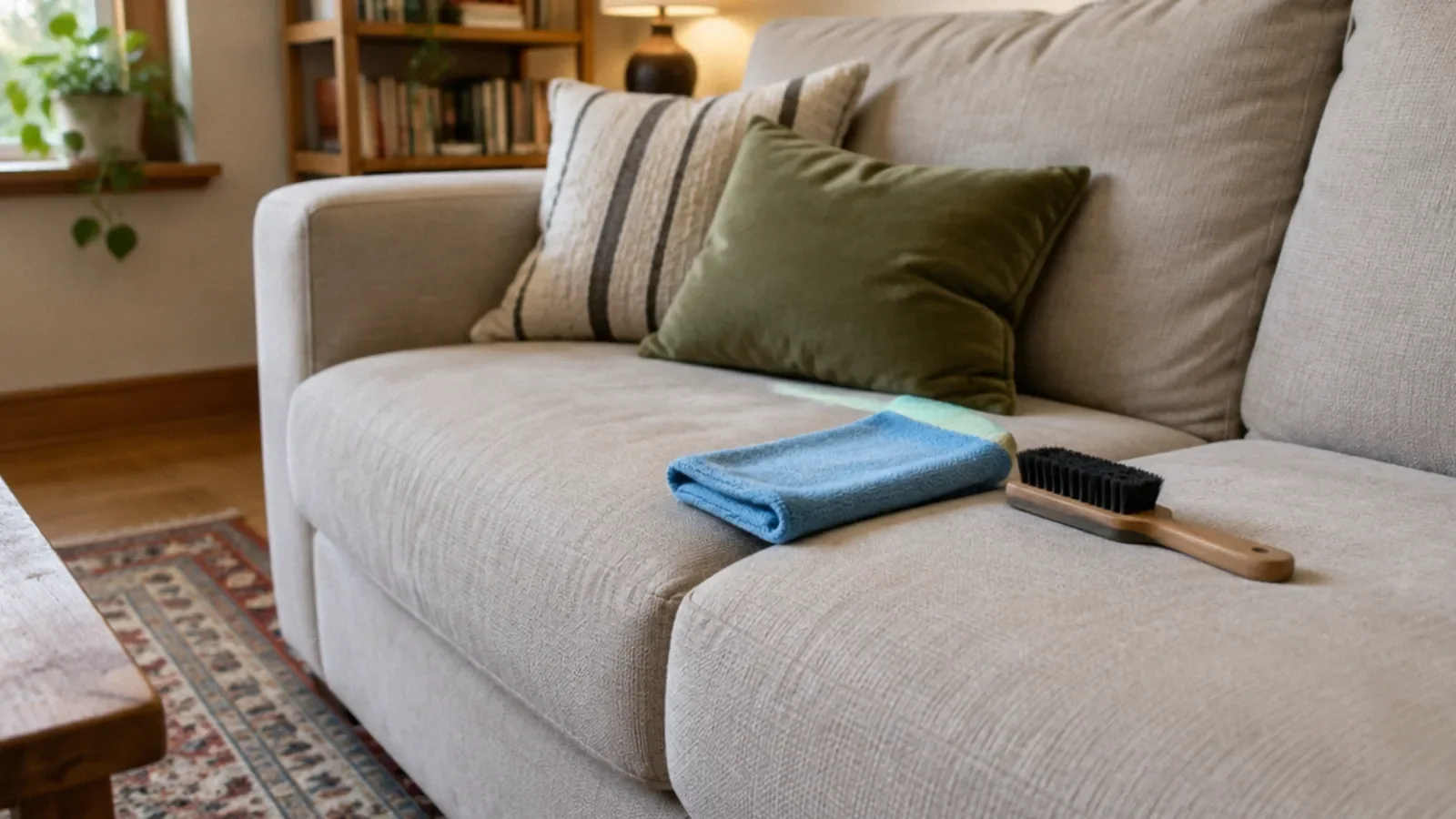
Upholstered furniture
Follow the upholstery cleaning code and manufacturer’s directions. A compatible product should be tested first and applied without saturating the cushion. Excess water can reach backing and foam, leave rings or make drying difficult. Blot a fresh spill rather than rubbing it across a wider area.
A large spill, persistent odor or unknown contamination may involve padding or a frame. A professional upholstery cleaner can assess whether cleaning is appropriate and how the item will be dried. Do not assume that a steam machine is safe for every fabric or adhesive.
Wood and veneer
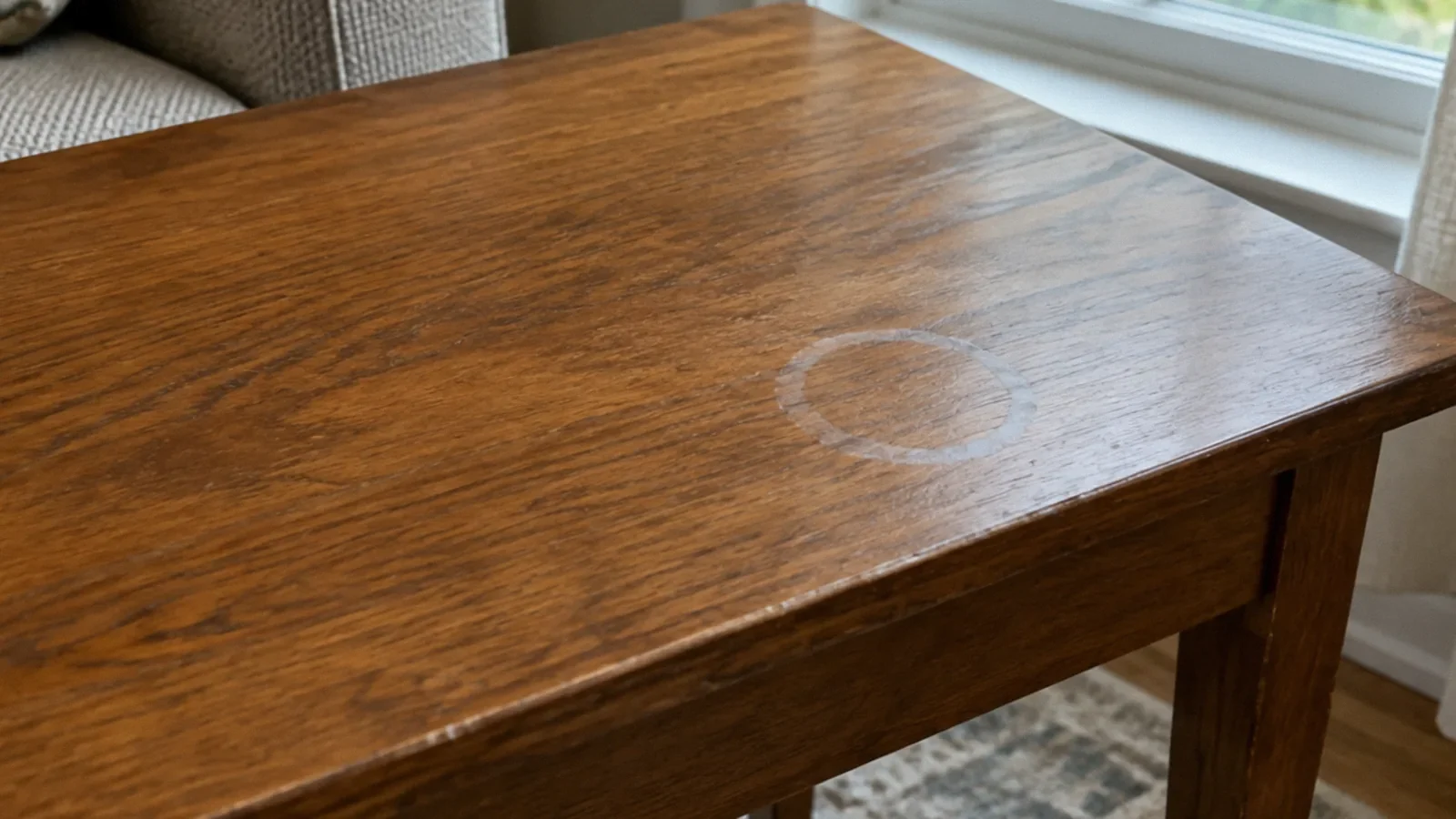
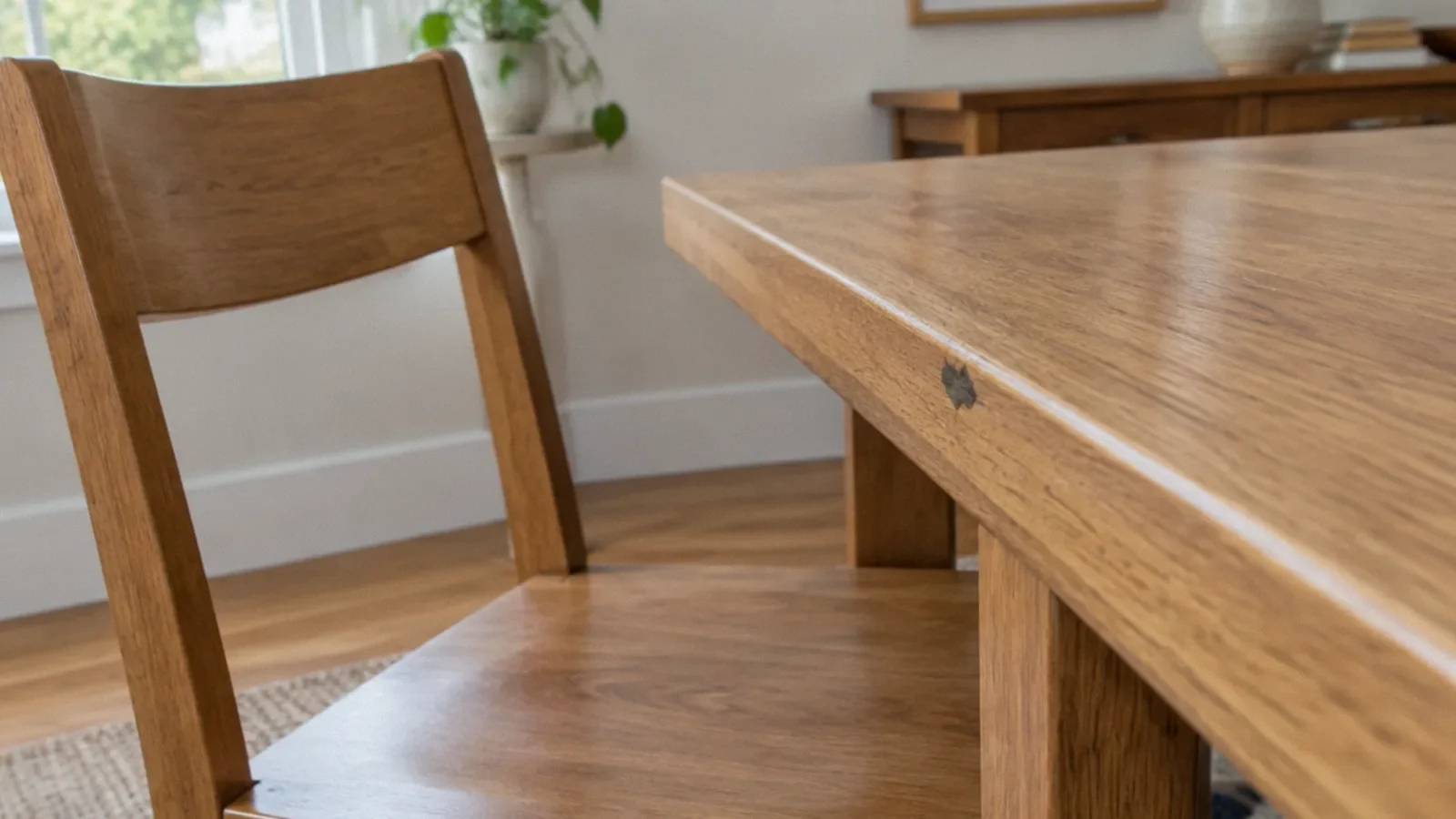
Use a soft cloth and care products recommended for the finish. Do not leave standing water on wood or assume that a universal polish is suitable for veneer, an antique finish or a painted surface. Avoid aggressive scrubbing and test a compatible product where it will not show.
The Canadian Conservation Institute notes that cleaning unfinished wood can alter the surface, so careful testing and gentle methods matter. A raised veneer edge, loose joint or cloudy water mark may need furniture repair rather than more liquid cleaner. Keep the item away from a continuing leak.
Leather and delicate surfaces
Leather, suede and coated materials have different care requirements. Follow the item’s label and use a product approved for that material; water, solvents or conditioners can stain or change some finishes. Do not soak seams or apply a homemade chemical mixture to an unknown surface.
For valuable, damaged or mold-affected leather, consult a specialist. A small spot and contamination that penetrates the filling are different problems. If a product changes the color or texture in a test area, stop and seek advice before treating the visible area.
Metal, glass and mixed materials
Use a cleaner compatible with the finish and the surrounding materials. Spray onto a cloth rather than allowing liquid to run into joints or onto nearby fabric, and follow the product label. Dry the surface as directed. Abrasives or strong chemicals can damage coatings and transfer onto upholstery.
Do not mix cleaning products. Poison Control advises following labels, keeping products away from children and pets, and using appropriate ventilation. A cloth reserved for one material can also reduce accidental transfer of a cleaner to another.
Water damage and suspected mold
If furniture was soaked by floodwater, sewage or another contaminated source, routine dusting is not enough. Keep people away from the affected material and seek qualified guidance on whether it can be cleaned, dried or should be discarded. Porous upholstery and composite components can be difficult to dry thoroughly.
For a clean-water spill, follow the manufacturer’s instructions and address moisture promptly. EPA notes that upholstered furniture may be difficult to dry completely and may need professional restoration when valuable. Do not cover a wet cushion or store it before it is dry.
A practical maintenance routine
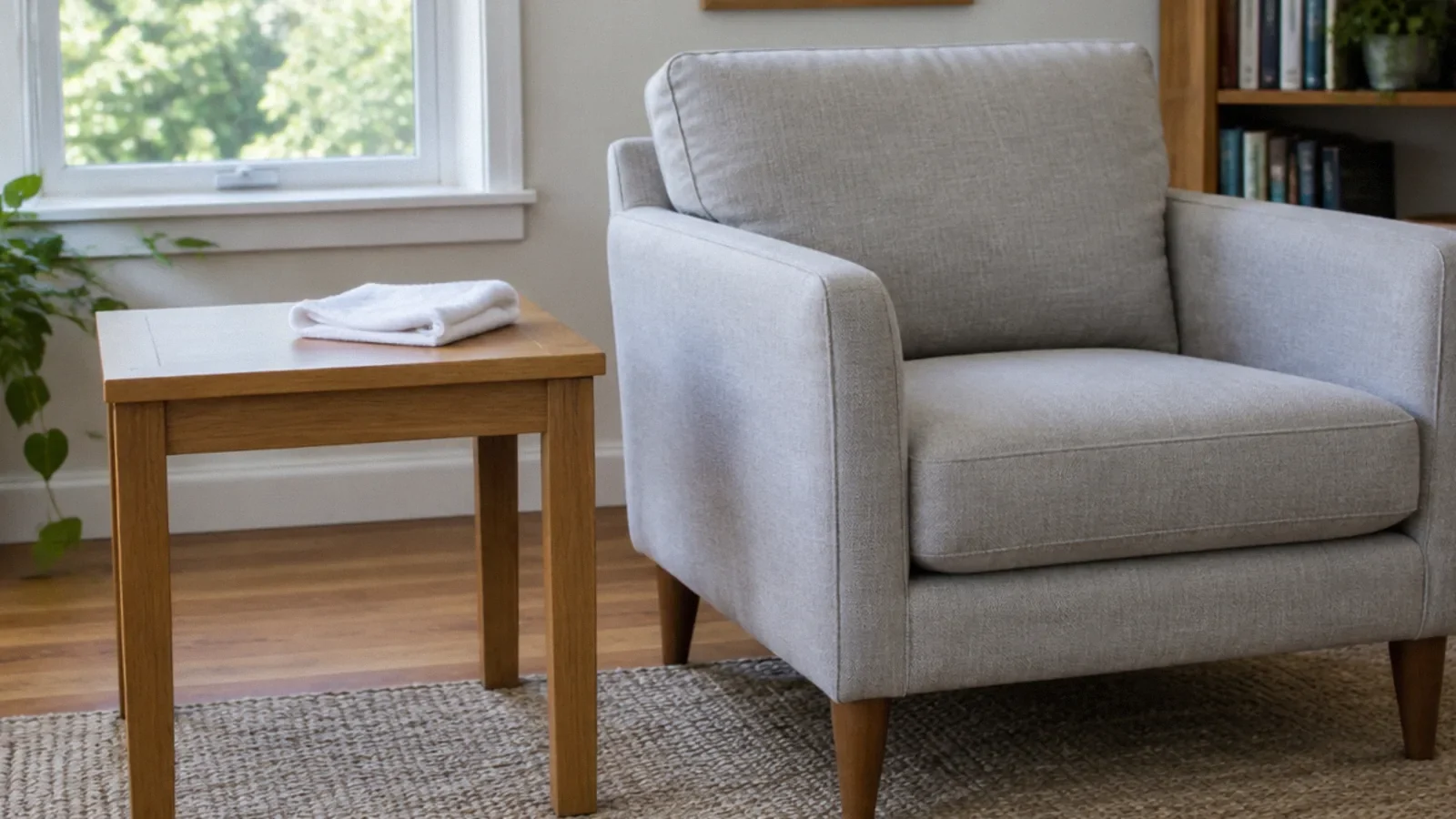
Dust and inspect furniture regularly using methods suited to the item. Address spills promptly, keep pieces away from persistent moisture and retain care labels. Protect wood from standing water and avoid placing upholstery against a damp wall.
When booking a cleaner, identify the fabric or finish, the stain or water source and any product already applied. Ask what is included, how the piece will be dried and whether there is a risk of color or finish change. No method guarantees removal of every stain.
How to deodorize furniture by material
Find and remove the odor source first, and correct any continuing leak. For upholstery, check the care code and manufacturer’s directions, gently vacuum loose dry debris if permitted, and treat a small hidden area with a compatible product. Blot a permitted treatment without saturating the fabric and allow it to dry with suitable airflow. Do not assume fragrance removes the source.
For finished wood, remove loose dust with a soft cloth and use only a finish-compatible product as directed; wipe away permitted moisture and dry promptly. Do not soak veneer, joints or unfinished wood. If odor persists inside upholstery padding, or the piece was soaked or contaminated, surface deodorizing may not reach the source. Ask a qualified cleaner or restorer whether the filling can be dried and treated; disposal may be necessary after contaminated water.
Your next-step checklist
- Identify the material and check care instructions.
- Test any permitted cleaner in a hidden area.
- Avoid soaking cushions, veneer and wood joints.
- Never mix cleaning products.
- Seek specialist help for contaminated or valuable pieces.
Related questions
What is the best way to clean furniture?
The right method depends on the material and finish. Follow the care label, remove loose dust gently and test a compatible cleaner.
Can I use the same cleaner on wood and upholstery?
Not automatically. Each material and finish has different requirements; use a product approved for the surface.
Should I soak a sofa to remove an odor?
No. Excess moisture can reach the padding and be difficult to dry. Find the source and use a suitable cleaning method.
Can flood-damaged furniture be cleaned?
It depends on the material, contamination and extent. Porous furniture exposed to floodwater may need professional assessment or disposal.
Sources & context
Public guidance supports the principles in this article. The practical questions and examples are editorial interpretation, not a site assessment or a coverage decision. State-specific rules apply only where identified.
- Canadian Conservation Institute: Care of unfinished woodconservation guidance
- EPA: Water-damaged materials and furniturefederal guidance
- Poison Control: Cleaning safelypoison center guidance
- EPA water damage cleanupprimary guidance