Stop the water source and assess the type of wood, the amount and cleanliness of the water, and the finish or structure affected. Swelling, raised grain, discoloration and loose joints can indicate moisture damage, but a stain alone does not show the full extent. Dry and assess the material before choosing cleaning, refinishing or replacement.
Identify the source and make the area safe
A fresh drink ring on a table is different from a leak that soaked wall framing or floodwater that contaminated furniture. Stop the source if it can be done safely. Keep away from water near electrical equipment, and do not enter an unstable or contaminated area to inspect the wood.
Record when the material became wet, the apparent water source and the visible changes. A plumber, property manager or restoration professional may need to address a continuing leak before any cosmetic repair can succeed. Photograph damage only after the area is safe.
What water-damaged wood can look like
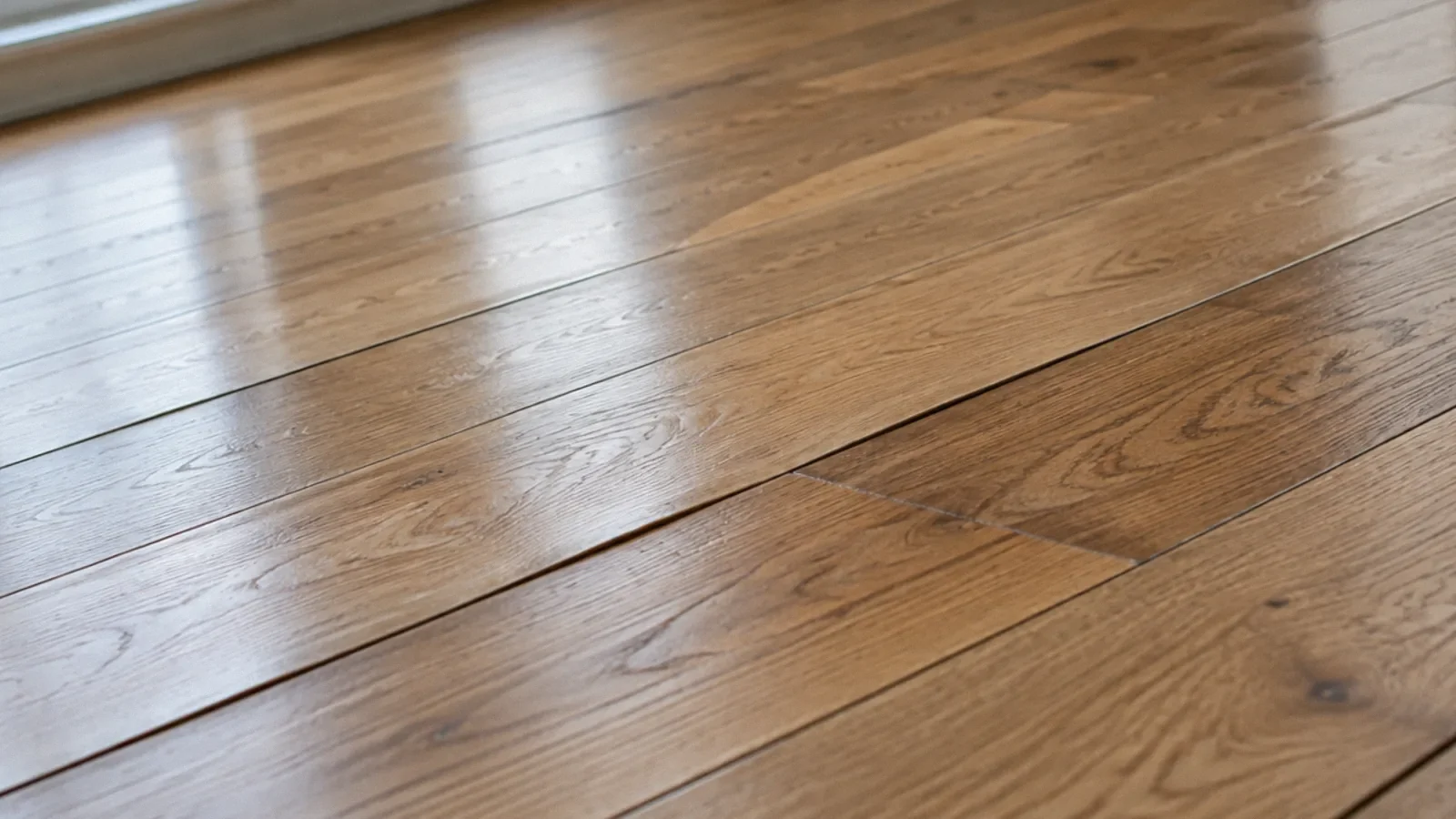
Wood may darken, develop a cloudy finish, feel rough, swell, warp, split or loosen at joints after wetting. Veneer may lift and composite panels may swell differently from solid wood. The appearance depends on the material, coating, duration and amount of water.
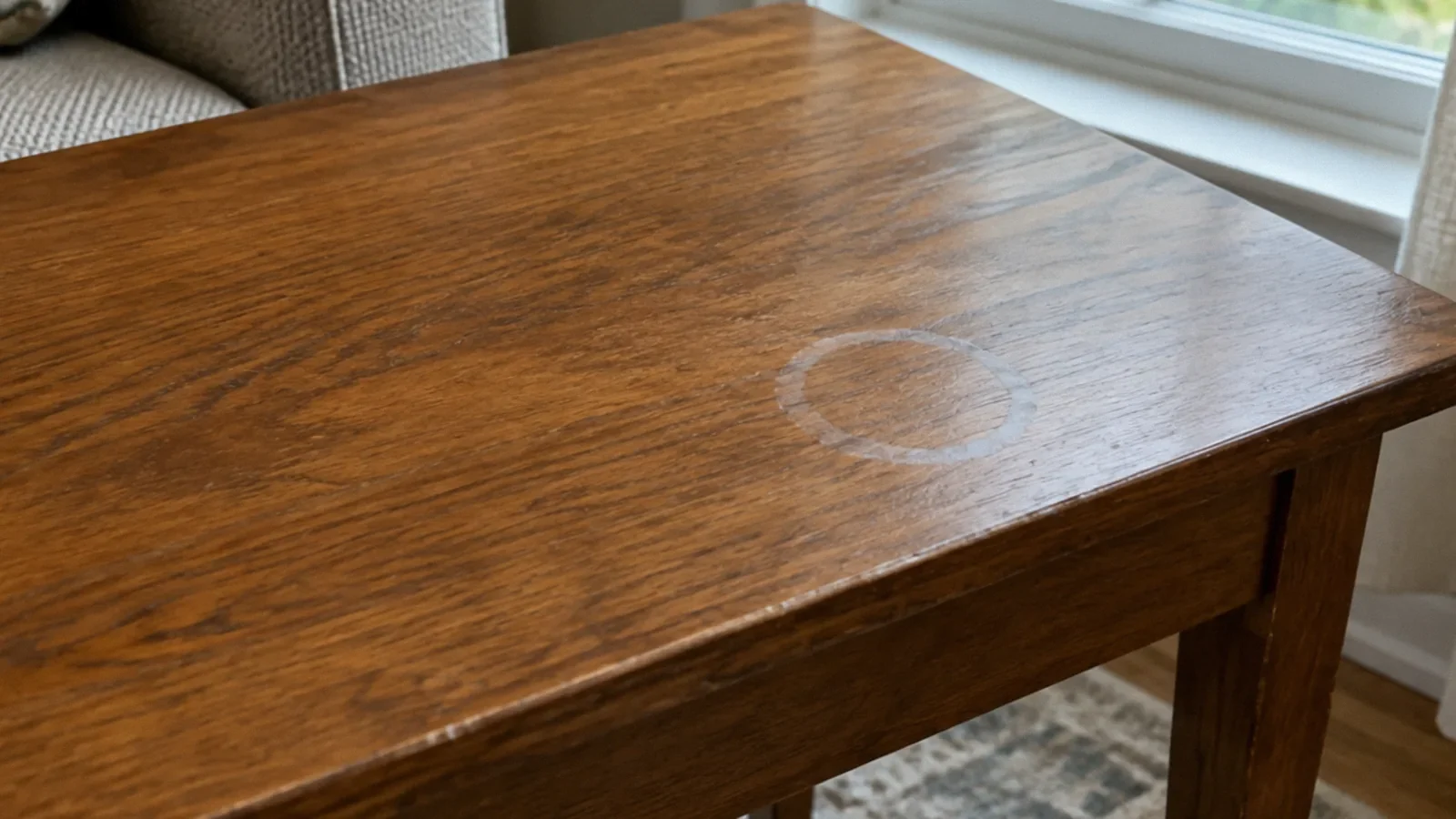
A white ring on a finished table may involve the coating, while dark staining or soft material can suggest a different or longer-standing problem. Appearance is not a moisture measurement or a diagnosis of mold. Check neighboring materials and the underside when safely accessible.
Drying depends on the material and water source
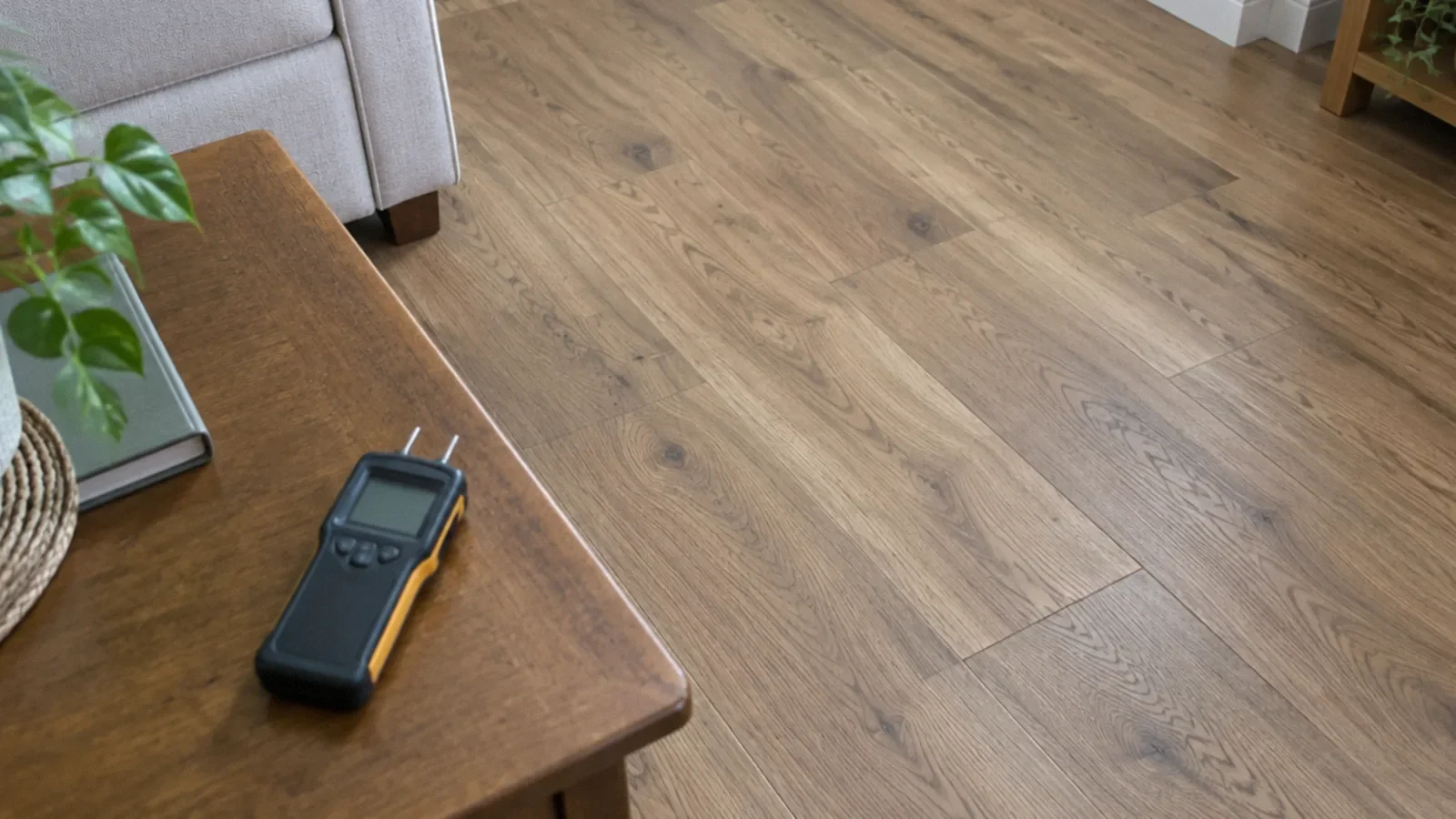
For a small clean-water spill, remove accessible moisture promptly with a clean absorbent cloth. EPA guidance discusses dehumidification, air movement and gentle heat for clean-water damage, but the appropriate method depends on the material and extent. Do not apply intense heat or assume a dry surface means a dry interior.
Larger wet areas, hidden cavities, long-duration leaks, sewage and floodwater require a different assessment. A professional can establish a drying plan and compare readings appropriately for the material and instrument. Avoid sealing or refinishing wood while trapped moisture remains.
Furniture, veneer and finishes
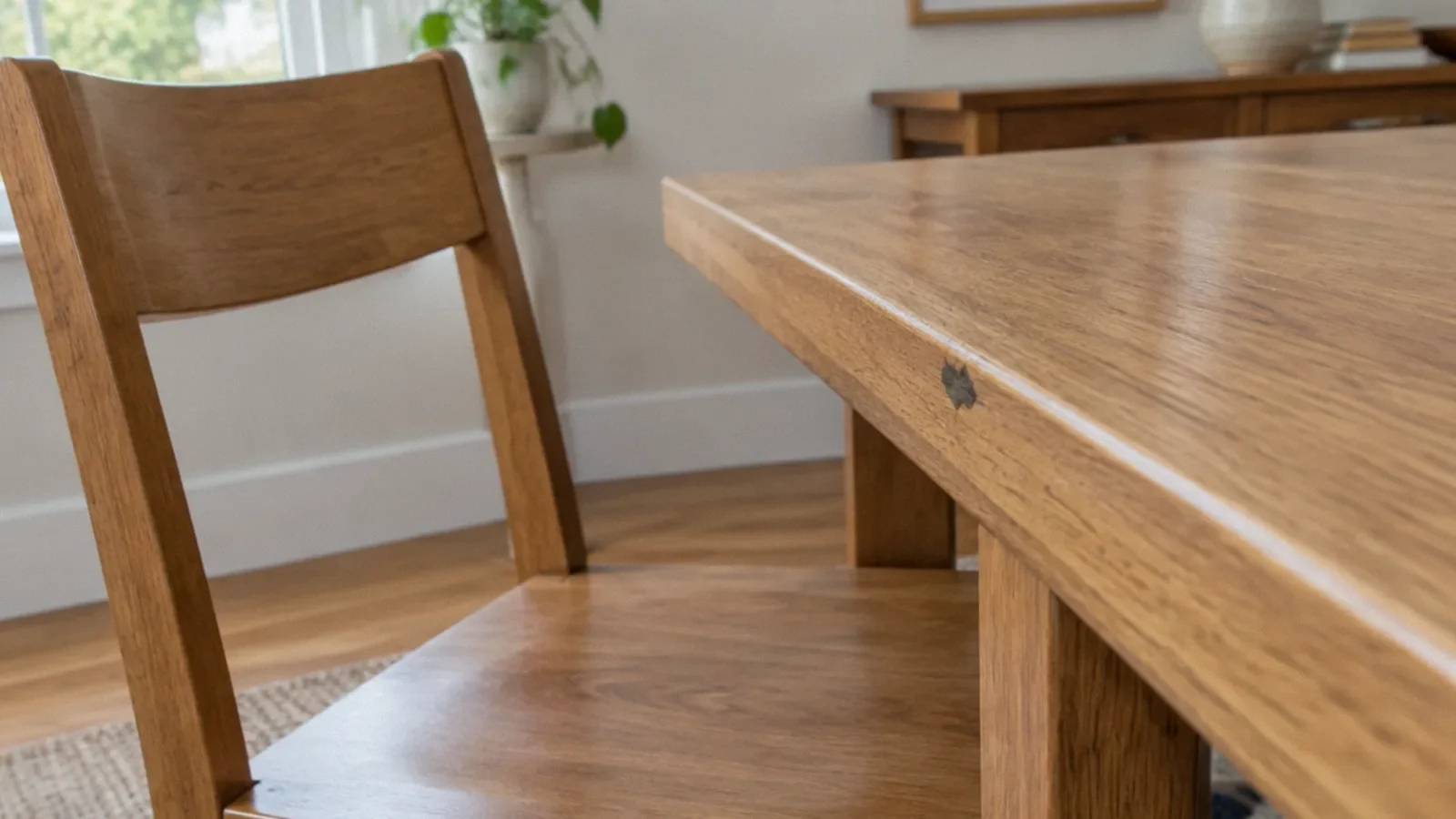
Move a small item only if it is safe and its structure can support the move. Swollen joints and lifting veneer can be fragile; do not pull them apart. Remove loose moisture without soaking the surface, and follow the manufacturer’s care instructions. Valuable, antique or sentimental pieces may benefit from a furniture conservator.
A finish may be repairable even when the wood beneath is sound, but a severely swollen composite panel or failed veneer may require replacement. Ask a specialist to inspect before sanding, using solvents or attempting a home remedy. Improvised heat or abrasives can permanently damage the finish.
Trim, framing and structural concerns
Baseboards, wall framing and subflooring can remain wet behind a finish long after the visible surface dries. Water may also affect insulation, drywall or fasteners. If access is needed, check for concealed wiring, plumbing and hazardous materials before opening a wall or floor.
Soft, crumbling or visibly distorted structural wood should be assessed by a qualified professional. Do not judge load-bearing capacity from an online checklist or cover deterioration with paint. A repair plan should identify the cause, affected layers and any structural work before the assembly is closed.
Cleaning wood after water exposure
The right cleaning method depends on whether the water was clean, what finish is present and whether contamination is suspected. EPA describes cleaning suitable finished wood surfaces with mild detergent and clean water followed by drying. Test any product in a hidden area and follow the item’s care instructions.
Floodwater and sewage can contain contaminants and require a more cautious plan. Avoid soaking the wood, mixing chemicals or using a disinfectant on a surface not permitted by its label. If mold is suspected, avoid sanding or disturbing it and arrange an assessment suited to the extent and material.
Repair, refinishing or replacement
After the source is repaired and the material is appropriately dry, compare its condition and function. Minor finish damage may respond to professional cleaning or refinishing; warped, delaminated or contaminated components may need replacement. Structural repair is a separate decision from improving appearance.
For hardwood floors, allow the floor and subfloor to be assessed before sanding. Early sanding can create problems if moisture-related movement continues. Ask for a written scope that separates drying, cleaning, carpentry and finish work, and explains how concealed layers will be checked.
Prevent a recurring problem
Repair leaks promptly, protect furniture from standing water and use coasters or trays suited to the surface. Maintain accessible appliance connections and investigate repeated condensation or dampness. Keeping a finish in good condition can help protect wood, but it cannot correct a leak behind a wall.
After repairs, watch for renewed staining, swelling or odor and retain photographs, moisture records and invoices. A return of moisture is a reason to revisit the source and the assembly rather than repeatedly covering a stain.
Water damage and wood rot
Long-term moisture can contribute to fungal decay of susceptible wood. Soft, crumbling or weakened material needs assessment of both the source and the extent of deterioration; a dark water stain by itself does not establish rot.
Decay fungi grow through susceptible wood as fine fungal threads. Some species produce cord-like structures that can carry water from a wet area to other wood; this does not mean every fungus described as dry rot spreads in the same way. The US Forest Service describes this mechanism for certain decay fungi. Moisture conditions and the species matter, and growth or deterioration may extend beyond the visible surface. An apparently dry or newly painted face does not prove concealed wood is sound or that the moisture pathway has been corrected.
Drying alone does not restore lost strength. A qualified carpenter, engineer or other appropriate professional can determine whether the affected material is structural and what repair or replacement is needed. Correct the moisture pathway to reduce recurrence.
Your next-step checklist
- Stop the water source and avoid electrical hazards.
- Identify the wood, finish and water source.
- Remove accessible clean water promptly.
- Assess hidden layers before sealing or refinishing.
- Use a qualified professional for structural or contaminated damage.
Related questions
Can water-damaged wood be repaired?
Often, but the answer depends on the type of wood, contamination, drying and extent of physical damage. Some finishes can be restored while swollen or deteriorated parts may need replacement.
What does water damage on wood look like?
It can appear as a cloudy finish, discoloration, raised grain, swelling, warping or loose joints. Appearance alone cannot establish the moisture level or identify mold.
Should I sand wet wood to remove a stain?
Wait until the source and moisture condition are assessed. Sanding wet or contaminated wood can damage the finish or spread material.
Does a dark water stain mean mold?
Not necessarily. Color alone cannot identify mold. Investigate moisture and seek appropriate assessment if growth or contamination is suspected.
How does dry rot spread?
Decay fungi grow through susceptible wood. Certain species can carry water from a wet area through cord-like structures, but the mechanism varies by fungus. A stain does not show the extent; correct the moisture source and have damaged or structural wood assessed.
Sources & context
Public guidance supports the principles in this article. The practical questions and examples are editorial interpretation, not a site assessment or a coverage decision. State-specific rules apply only where identified.
- EPA: Water damage cleanup and mold preventionfederal guidance
- EPA: Mold course, water-damaged materialsfederal guidance
- University of Minnesota Extension: Cleaning after a flooduniversity extension guidance
- US Forest Service: Principles for protecting wood buildings from decayfederal research