Isolate a slippery area, remove food and excess grease, then clean the floor with a product and method compatible with the surface and facility procedures. Keep people away until it is safe to walk on. Follow local wastewater rules and never send excess grease to a storm drain.
Start with a facility-specific plan
Restaurant floors differ in material, finish, slope, traffic and exposure to food or grease. A method suitable for quarry tile may damage another surface. Review the floor and cleaning-product instructions, the facility’s food safety plan and any requirements from the local health and wastewater authorities.
Schedule routine cleaning around food preparation and service. Identify who responds to spills, where supplies are stored and how an area will be closed while wet. Trained staff need a clear procedure for spills that occur while customers or coworkers are present.
Control slips before cleaning
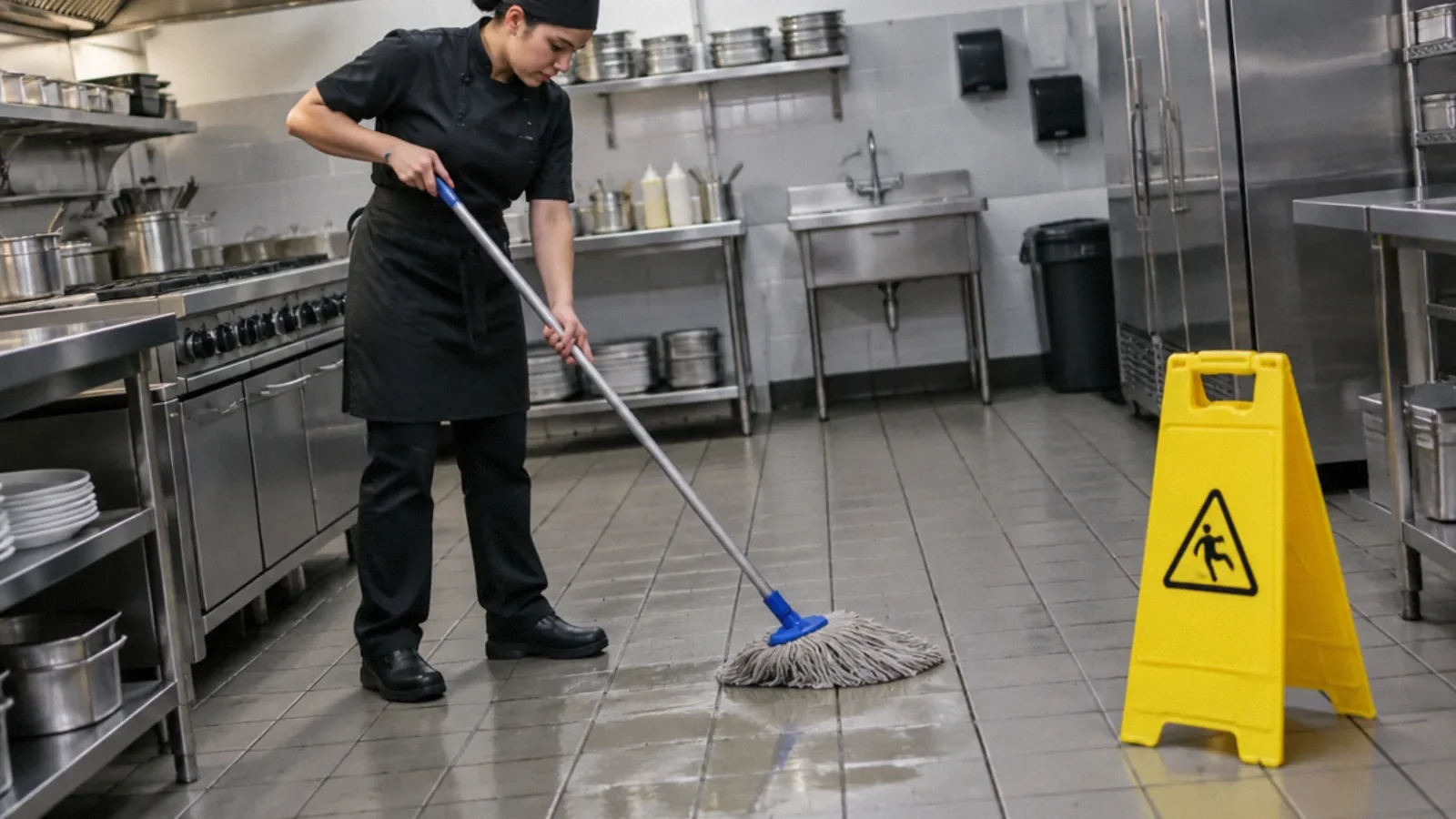
Water, food and grease can make a floor slippery. CDC’s workplace safety guidance identifies prompt cleanup and warning or isolation of the affected area as important steps. Use appropriate barriers or warning signs and maintain a safe alternate route that does not block exits.
Employees should use footwear and equipment suitable for the task and follow the employer’s procedures. Do not leave a wet floor unattended where people can walk through it. Damaged or curling mats can create a separate trip hazard and should be addressed.
Remove solids and excess grease
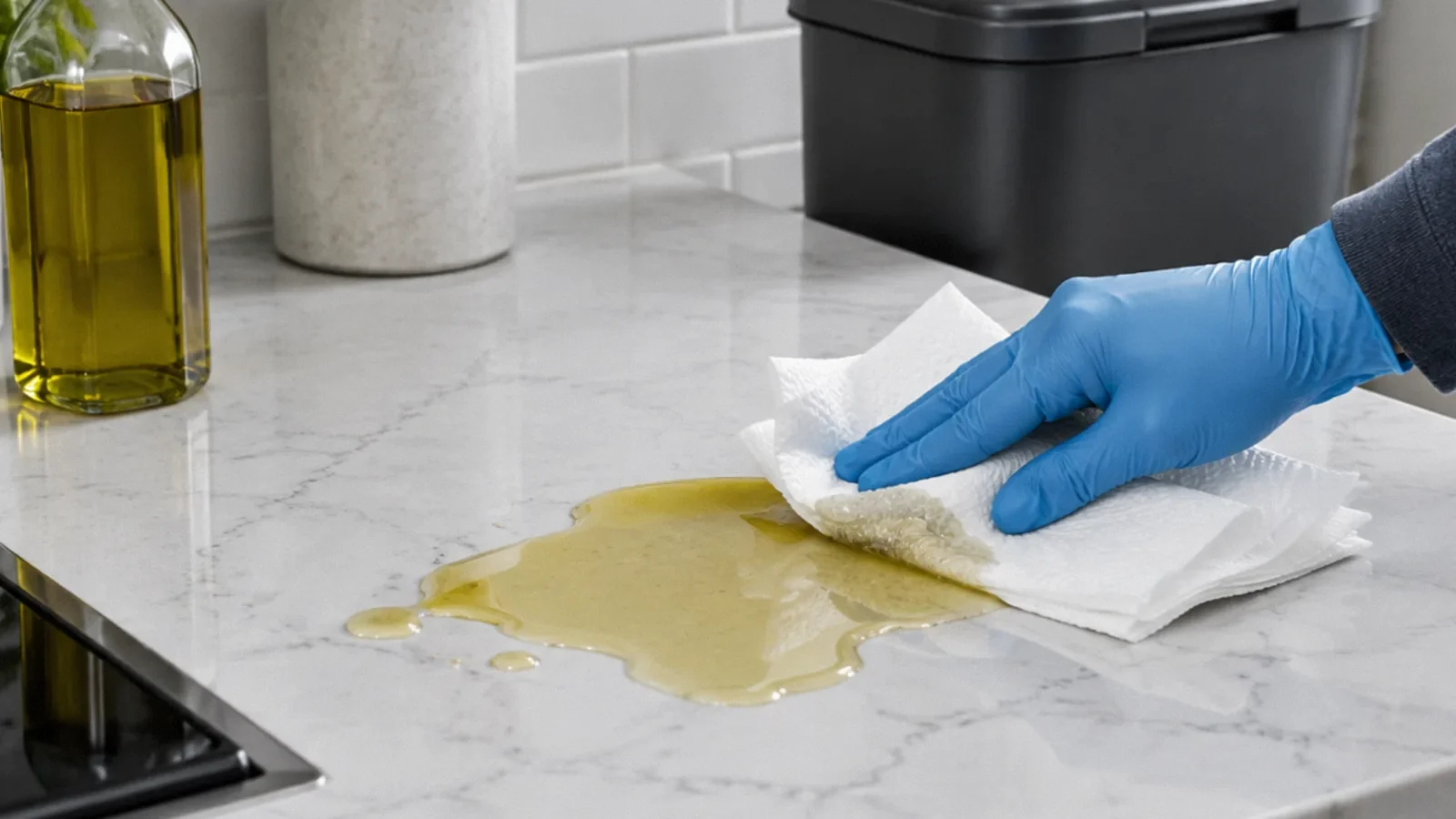
Collect loose food, debris and excess grease before wet cleaning. Use tools dedicated to the floor and avoid moving contamination onto food-contact surfaces. Follow the site’s process for handling broken glass or sharp objects rather than picking them up with bare hands.
EPA describes collecting fats, oils and grease separately instead of sending them into the sewer. A grease interceptor requires proper maintenance but does not make unrestricted grease disposal acceptable. Use the facility’s approved receptacles and authorized collection service when required.
Select and use a suitable cleaner
Choose a cleaner compatible with the floor, soil and facility requirements. Follow the label for dilution, protective equipment, contact and rinsing instructions. Do not mix chemicals; combinations can produce hazardous fumes. Keep products away from food and food-contact equipment.
Cleaning and disinfecting are different processes. Food-service areas may have specific local requirements that a general household cleaning guide does not cover. Consult the health authority and facility plan about when a sanitizer or disinfectant is appropriate and how the area must be prepared.
Use the right amount of water
Use the method approved for the floor and equipment. Avoid flooding areas around electrical connections or equipment, and do not touch switches or plugs with wet hands. Follow equipment shutdown and lockout procedures where they apply.
Remove dirty solution using the facility’s approved method and dry the floor before reopening the area. Replace dirty mop water and clean tools as needed so grease is not spread from one zone to another. Different zones may require separate equipment to prevent cross-contamination.
Dispose of wastewater correctly
Do not pour grease or contaminated wash water into a storm drain or onto outdoor pavement. Sanitary and storm drains serve different purposes, and the allowable discharge depends on local rules and the type of waste. Ask the local wastewater authority when the approved route is unclear.
Restaurant grease interceptors must be installed and serviced according to applicable local requirements. Keep records of scheduled service and disposal where required. A blocked floor drain or sewer backup needs prompt assessment rather than repeated flushing with additional water.
Cleaning under equipment and mats
Move equipment only when the facility’s instructions and staff training permit safe movement. A gas line, electrical connection or heavy appliance can create hazards. If safe movement requires a technician, arrange one rather than pulling on a connected unit.
Clean mats according to their manufacturer and the facility’s wastewater plan. Inspect for damaged edges and ensure mats are dry and properly positioned before reopening. Pay attention to corners and the area near fryers, sinks and dishwashing stations where residue can accumulate.
Inspection and documentation
A practical schedule identifies the task, frequency, responsible person and products for each area. Record recurring slippery spots, damaged flooring, leaks and blocked drains, then correct the source rather than relying on repeated cleaning alone.
When hiring a cleaning company, agree on access, products, wastewater handling, equipment protection and the condition expected at handover. Verify that the scope fits the restaurant’s own food safety and workplace procedures; a general article does not replace them.
Your next-step checklist
- Isolate spills and provide a safe route.
- Remove food and grease before wet cleaning.
- Follow product labels and never mix cleaners.
- Keep wastewater out of storm drains.
- Dry the floor before reopening the area.
Related questions
How do restaurants clean greasy floors?
They first control slips and remove excess grease, then use a floor-compatible cleaning method and approved wastewater disposal.
Can restaurant grease go into a storm drain?
No. Grease and contaminated wash water must not be sent to storm drains; follow local wastewater requirements.
Is a wet-floor sign enough by itself?
A warning is one part of a safe process. Isolate the area as needed, clean promptly and maintain a safe route.
Can one cleaner be used on every restaurant floor?
No. Flooring, soil and local food-service requirements vary; follow the surface and product instructions.
Sources & context
Public guidance supports the principles in this article. The practical questions and examples are editorial interpretation, not a site assessment or a coverage decision. State-specific rules apply only where identified.
- CDC: Restaurant walking and working surfacesfederal workplace safety guidance
- EPA: Controlling fats, oils and greasefederal wastewater guidance
- CDC: Food preparation and cross-contaminationfederal food safety guidance