Plan access, relocation and communication around the actual occupants. Health and accessibility needs should inform the work plan without turning a contractor opinion or a test result into a medical guarantee.
Ask about needs before setting the schedule
A household may include someone with asthma, immune compromise, mobility limitations, sensory sensitivity or dependence on powered medical equipment. Ask what practical needs affect access and occupancy, and collect only information necessary to plan the work. The contractor does not need an unrestricted medical history to understand that an accessible exit or reliable power is essential.
EPA occupant-communication guidance recommends considering health-related concerns when planning relocation during mold work. A clinician can advise the individual about personal health needs. The restoration team should describe the work activities and conditions accurately so the household and clinician can make informed decisions.
Translate concerns into a concrete access plan
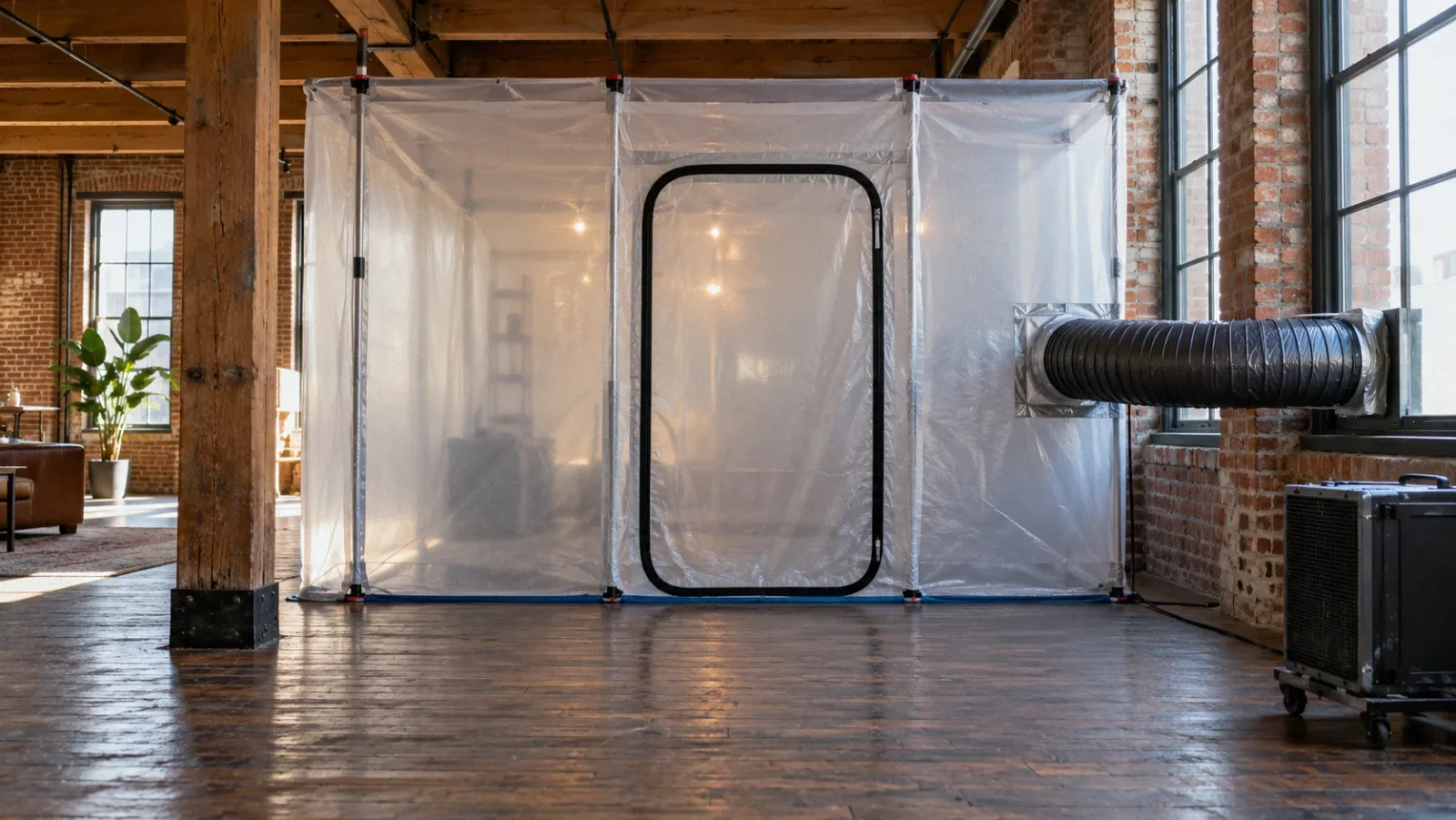
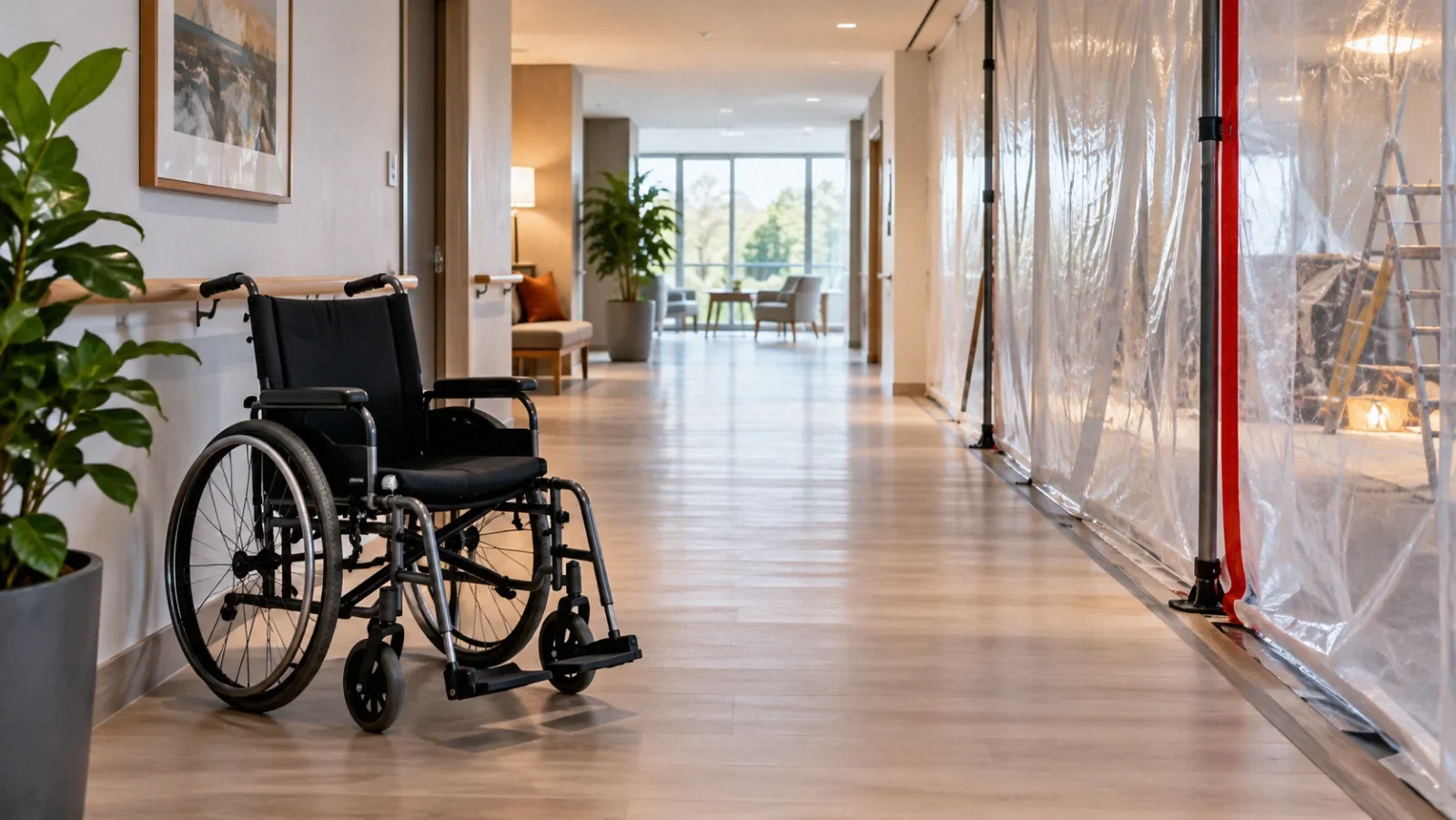
Walk through how residents will enter, leave, use a bathroom, obtain food and avoid restricted areas. Equipment cords, hoses, removed flooring and containment can change ordinary routes. A plan that works for a mobile adult may not work for a wheelchair user or a young child. Identify the actual route and responsible person rather than relying on a general instruction to be careful.
Ask about service animals, pets, medication storage and other routine needs affected by the work. Keep emergency access and required egress clear. Do not alter containment or move equipment without coordination simply to restore convenience; request a planned adjustment that accounts for both occupant needs and technical requirements.
Discuss disruptive activities in advance
Demolition, cleaning, equipment noise and contractor access can affect household routines. Request a schedule identifying the most disruptive phases and likely changes. EPA suggests considering work during less occupied periods where appropriate, but timing alone does not make an unsafe area suitable for occupancy.
If relocation is recommended, clarify the reason, expected duration and criteria for reassessment. Insurance authorization for temporary housing is a separate question. Inform the adjuster of the actual needs and ask what documentation and approvals apply. Do not promise a resident that housing will be covered before the policy determination is made.
Communicate in a usable format
A long technical report may not help an occupant understand what will happen tomorrow. Provide concise updates in a format the household can access, using an interpreter or written format when needed. Identify one contact for questions and a separate urgent route for a new leak, equipment problem or blocked access.
For rental or shared buildings, clarify which party communicates with residents and who can authorize changes. State and local accommodation and housing requirements may apply. The New York tenant guide offers jurisdiction-specific examples, but legal obligations should be checked locally rather than inferred from a general restoration article.
Review return and handover without overpromising
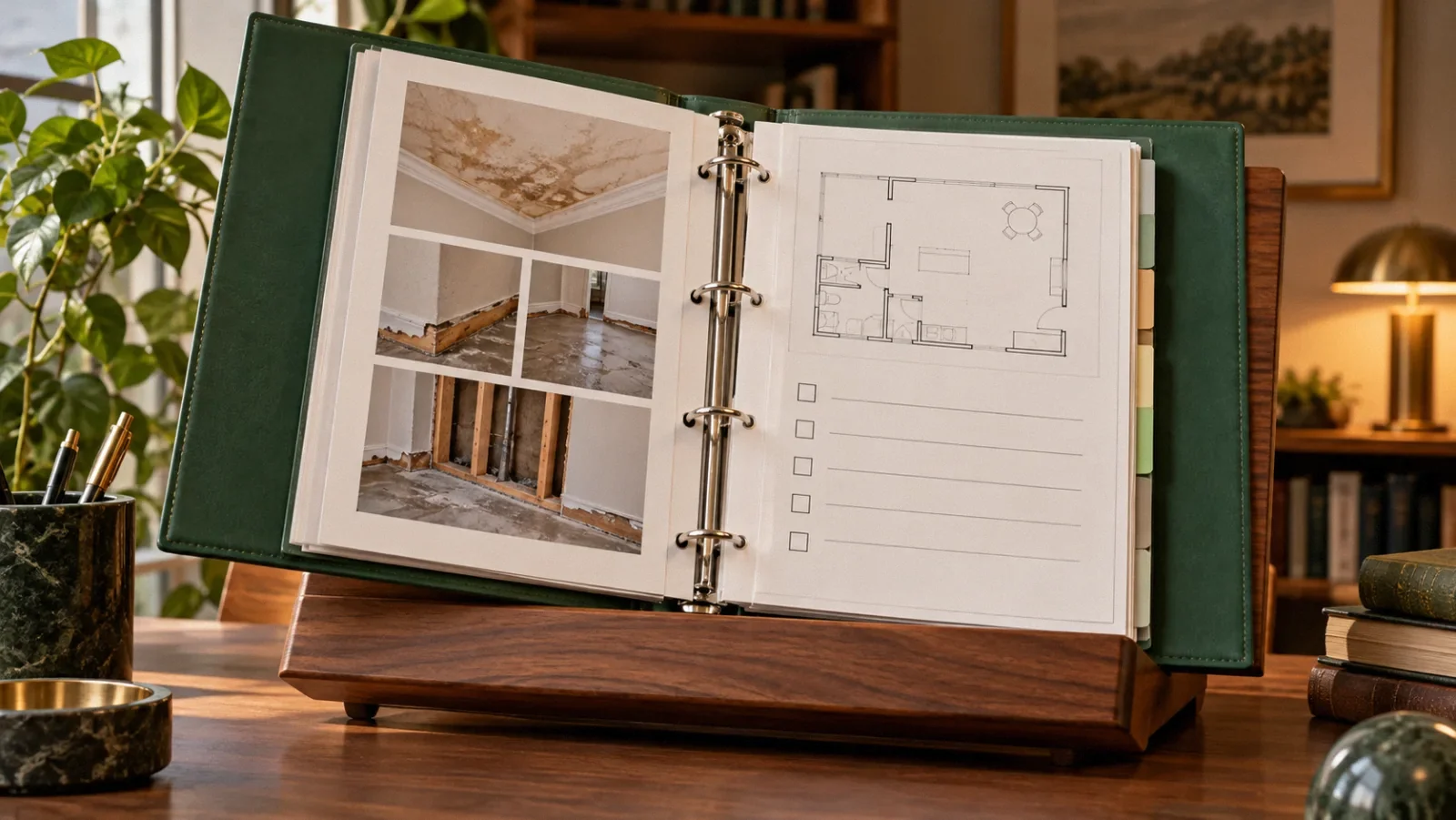
Before resuming normal use, explain what work is complete, what remains and what areas were not assessed. Provide relevant source-repair and completion records. A statement that the contractor finished its scope should not be represented as medical clearance for every occupant or a guarantee that future moisture cannot occur.
The Reddit sample includes a family concerned about recurring mold and an adult with health conditions. The story cannot establish that the building caused those conditions. It does highlight why recurring symptoms or concerns deserve respectful communication, qualified building investigation and appropriate clinical care rather than dismissal or a sales-driven promise.
- Access plan: usable entrances, exits, bathroom, kitchen, medication access and any mobility requirements.
- Work plan: restricted areas, disruptive activities, equipment needs and expected changes to daily routines.
- Relocation plan: reason, suitable accommodation needs, funding questions and reassessment checkpoints.
- Communication plan: accessible format, named coordinator, urgent contact and documented responses to concerns.
An accommodation-focused planning example
Consider a resident who uses a walker and needs regular access to a bathroom while a hallway floor is opened. A schedule that says remain outside the work zone is insufficient if that zone blocks the only practical route. Before work starts, ask the coordinator to identify a usable alternative or discuss relocation. The solution must account for the actual building layout and work requirements rather than relying on a general assurance.
Record the agreed route, hours of access, equipment placement and contact for an unexpected obstruction. If the plan changes during demolition, inform the resident before assuming the new arrangement is workable. For a household dependent on powered medical equipment, coordinate any anticipated service interruption with the relevant professionals and occupant plan; restoration personnel should not improvise medical advice.
A useful request to the insurer, where housing coverage is being considered, explains the specific functional need and the repair condition that prevents it from being met at home. Avoid sending a broad medical file to every contractor. Share only the information needed through appropriate channels. When work is complete, reassess the route and facilities in addition to reviewing technical reports. A finished drying phase does not mean flooring, fixtures and ordinary access have already been restored, and those remaining conditions may still affect whether the household can return.
Your next-step checklist
- Ask about practical occupant needs before scheduling disruptive work.
- Coordinate personal health questions with an appropriate clinician.
- Maintain usable safe access and clarify restricted areas.
- Get housing coverage answers separately from the technical relocation recommendation.
- Provide an understandable completion update with remaining limitations.
Related questions
Can the contractor decide it is medically safe for me to remain?
A contractor can explain building conditions and its work plan, but individual medical advice belongs with a clinician. Use both kinds of information without treating one as a substitute for the other.
Does a small affected area mean relocation is unnecessary?
Area alone does not answer the question. Materials, activities, containment, available facilities and individual needs matter. Request a situation-specific plan rather than relying on a universal square-footage rule.
Sources & context
Public guidance supports the principles in this article. The practical questions and examples are editorial interpretation, not a site assessment or a coverage decision. State-specific rules apply only where identified.
- EPA: Communicating with Building Occupantsofficial
- EPA: Investigating, Evaluating and Remediating Moisture and Mold Problemsofficial
- New York Attorney General: Residential Tenants’ Rights Guideofficial
Community questions behind this topic
These discussions helped identify reader concerns. They are anecdotal, not technical or legal authority.