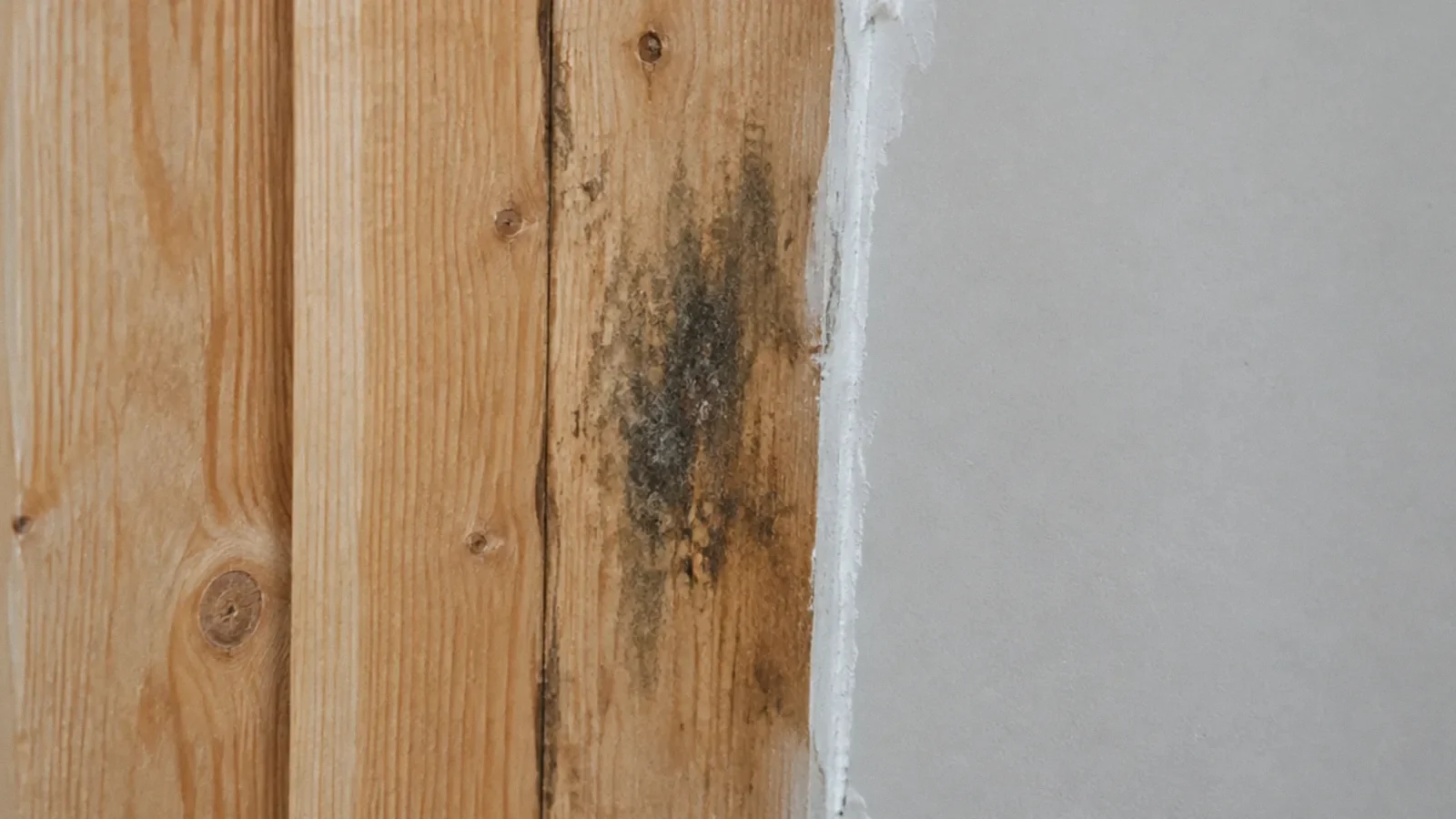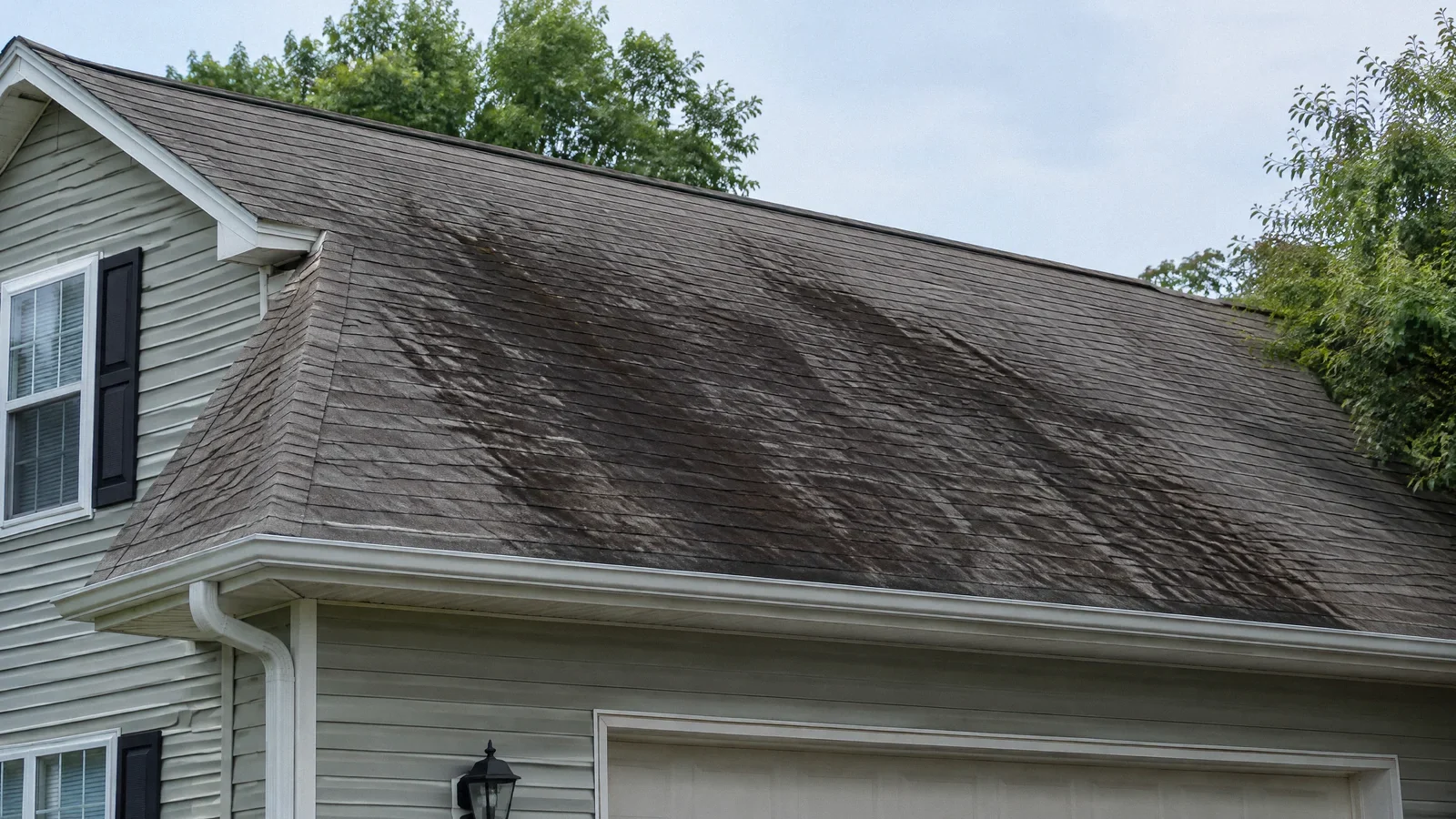
Do not identify mold from color alone. Inspect from the ground, address leaks and moisture, and hire a qualified roofer for steep, fragile or wet roofs and for cleaning methods appropriate to the roof material.
Distinguish exterior staining from an interior moisture problem
Dark roof streaks are not enough to identify mold. Algae, dirt, soot, moss and weathering can also change the appearance of shingles. Interior attic or roof-deck growth is a different problem from staining on the outside surface: a roof may have both, but one does not prove the other. Look from the ground or use photographs taken safely from an accessible location. Note whether staining is confined to a shaded slope, near a gutter, or accompanied by missing shingles or interior leaks. Do not climb onto a wet or steep roof to get a closer look. A roofer can assess roof condition and drainage; a mold remediation professional may be needed if an attic or interior assembly has visible growth or damp insulation.
Choose a safe cleaning and repair plan
Ask the roofer to identify the roof covering and consult its manufacturer’s cleaning and warranty instructions. An aggressive pressure washer, abrasive scraping or an incompatible chemical can damage shingles, remove protective granules, force water beneath the covering or harm nearby plants and drainage. A professional should explain access, fall protection, runoff control and the product instructions before starting. Removing a surface stain does not repair a leak, and coating over growth does not establish that the roof deck is sound. If the roof is deteriorated, repairs or replacement may be more appropriate than cosmetic cleaning. For a wet attic, investigate roof penetrations and flashing as well as indoor humidity and ventilation; do not assume that a new vent alone will solve a leak.
Check the building after treatment
If the roof has leaked, inspect the ceiling, insulation and accessible framing for moisture. A professional can determine whether wet materials can be dried or need removal. Dry the assembly before replacing finishes, and correct the entry point so the same stain does not return after the next storm. In attic spaces, avoid disturbing suspect material or stepping between framing members; access, electrical wiring and poor footing can make inspection hazardous. Document the roof’s condition before cleaning and keep the contractor’s scope and warranty information. After rain, check from a safe location for water at the same interior area. Persistent odor, recurring staining or visible interior growth warrants a further moisture investigation. Exterior color alone does not demonstrate a health diagnosis or prove that a treatment removed all biological material.
Questions to ask before a roof visit: Ask whether the proposed scope concerns the exterior roof covering, the attic side of the roof deck, or both. Request photographs that show the actual observed condition and an explanation of how the contractor distinguishes staining from deterioration. Ask which roof manufacturer instructions apply and how runoff will be kept away from landscaping and storm drains. A contractor should explain access and fall protection, and whether work should be postponed for wet or windy conditions. Confirm who will repair any identified entry point and whether the quoted cleaning includes repairs.
Questions to ask before a roof visit: Trim vegetation only when it can be done safely and in accordance with local requirements; tree work over a roof is a job for a qualified contractor. Keep gutters and drainage paths maintained so water does not collect against the building. Shade and moisture can contribute to recurring surface growth, but the pattern alone does not establish the cause. If the roof is old or shedding granules, ask whether cleaning could shorten its remaining service life. Preserve the inspection notes and check for leaks after the next significant storm from inside the building or from the ground.
Your next-step checklist
- Keep people away from immediate hazards and avoid disturbing damaged or contaminated materials.
- Record when the problem began, where it appeared, and any change after rain or water use.
- Arrange an assessment by a qualified professional when the cause or extent is uncertain.
- Keep photographs, inspection findings, repair details and receipts together.
- Confirm the cause has been corrected and follow up if the same signs return.
Related questions
Can the visible signs identify the exact cause?
No. The location and timing are useful clues, but similar symptoms can arise from different causes. An inspection and, when appropriate, testing are needed before selecting a repair.
When should I call a professional?
Call promptly when there is sewage, an electrical hazard, significant water intrusion, recurring symptoms, a damaged structure, or work that requires access to a roof, septic tank, excavation or electrical equipment.
What information should I keep after the repair?
Retain the written scope, observations, photographs, test or moisture findings where applicable, dates, invoices and any inspection or permit records. These details help identify a recurrence and support a claim if you decide to make one.
Sources & context
Public guidance supports the principles in this article. The practical questions and examples are editorial interpretation, not a site assessment or a coverage decision. State-specific rules apply only where identified.