Scale can form when dissolved minerals deposit on plumbing and equipment surfaces. Hard water and heating can contribute, but reduced flow has many possible causes. A qualified plumber should identify the pipe material and condition before recommending descaling, treatment or replacement.
What is scale?
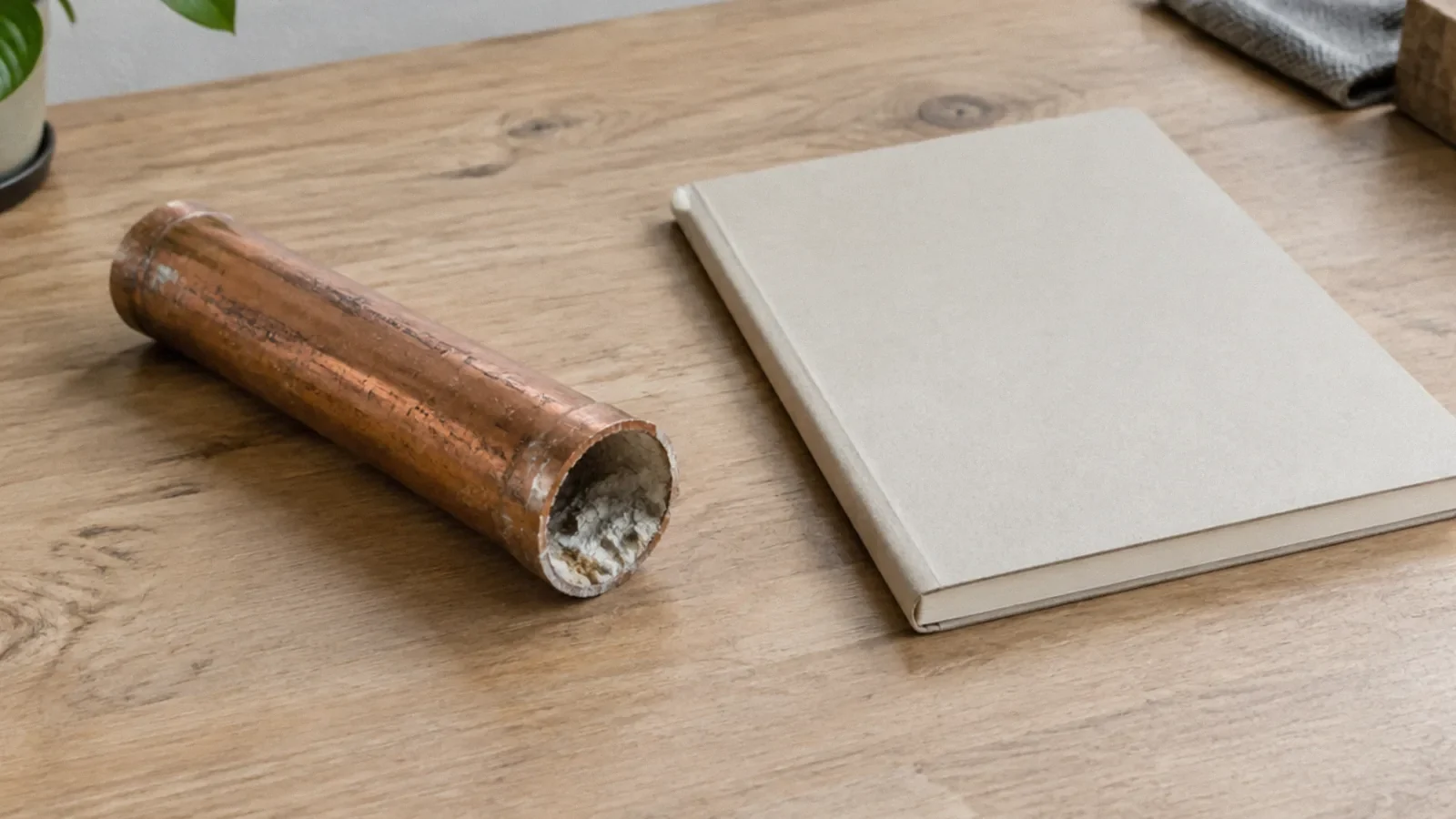
USGS explains that water hardness is mainly associated with dissolved calcium and magnesium. Under some conditions, especially heating, mineral deposits can form on pipes and equipment. Over time, buildup may restrict flow or affect heat transfer.
A deposit is not automatically the same as rust, biological film or sediment. A visual appearance or an online photo cannot establish its composition. The water source, pipe material and system history matter.
Signs that need investigation
Reduced flow at one fixture may involve an aerator, valve or local obstruction. A broader change across fixtures can have other plumbing or utility causes. White residue on a fixture may suggest mineral deposits but does not prove that every pipe is scaled.
Ask the water utility whether there is a known supply issue and have a qualified plumber assess the system. If water color or odor changes suddenly, follow the utility’s guidance before using it for drinking or cooking.
Hard water varies by location
Water hardness differs by source and can vary within a region. Do not assume that every Bay Area property receives the same water or needs a softener. Obtain current information from the utility or use an appropriate test when a specific decision requires it.
Hardness itself is not generally considered a health concern, according to EPA’s water-softener guide, although deposits can affect fixtures and equipment. Water treatment should address an identified need and account for maintenance, local rules and operating costs.
How professionals evaluate pipes
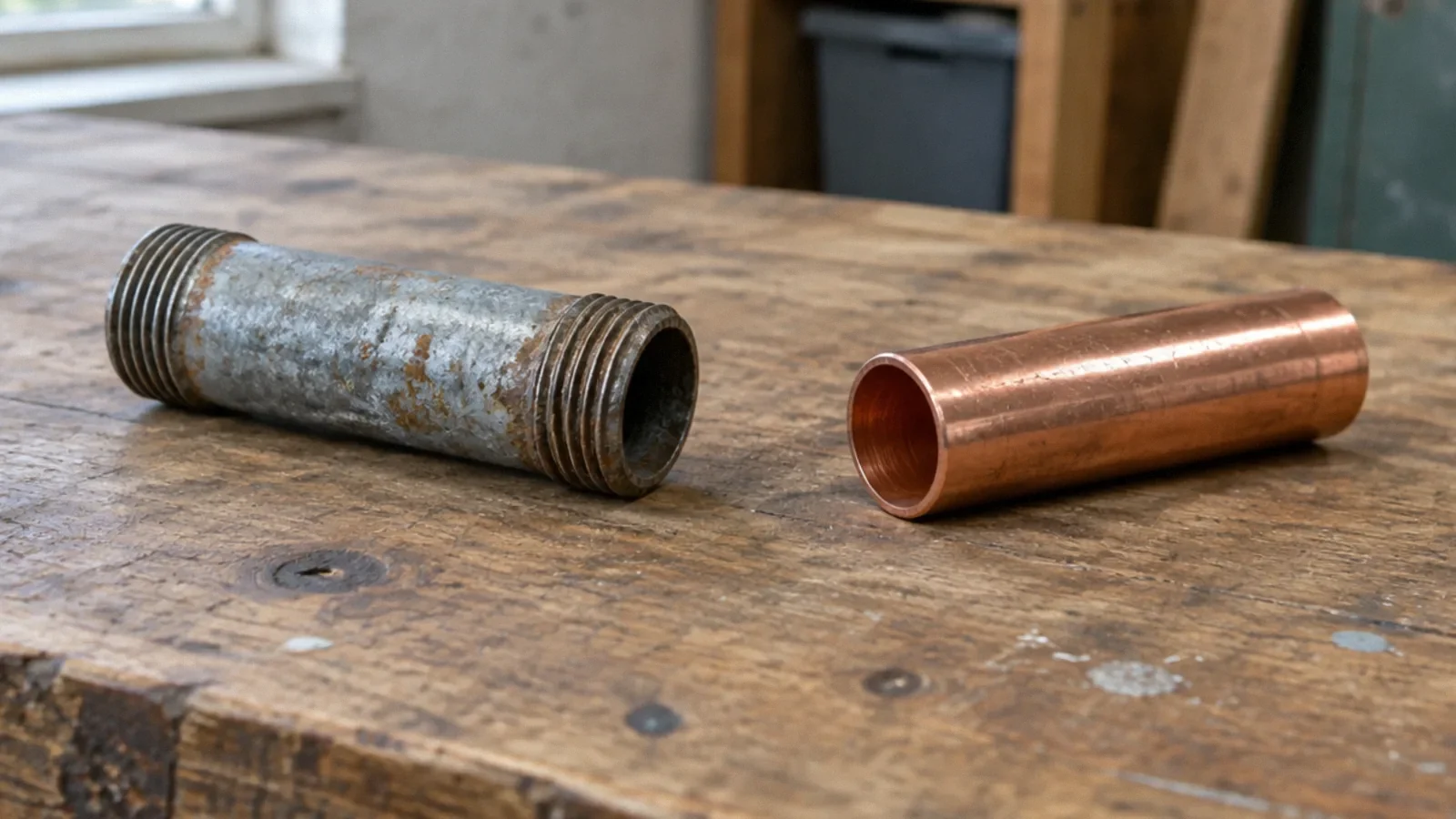
A plumber can consider the pipe material, age, flow symptoms, accessible components and possible corrosion. A deposit can sometimes form a protective layer, and disturbing an old pipe may reveal or worsen underlying damage. USGS notes that corrosive conditions and plumbing materials affect metal release into water.
Ask what evidence supports the proposed treatment and which sections cannot be inspected. A recommendation to clean or replace all pipes should include a clear scope and an explanation of alternatives and limitations.
What descaling can involve
Descaling methods vary by equipment and system. A technician may remove and clean an accessible fixture or service an appliance under manufacturer instructions. Whole-system treatment requires an appropriate method for the pipe, materials, potable-water safety and disposal.
Do not pour drain opener, acid or an unspecified chemical into drinking-water plumbing. Never mix cleaners. A procedure suitable for a tankless water heater or coffee maker is not automatically suitable for a home’s supply lines.
Compare descaling and replacement
For a localized issue, cleaning or replacing an accessible component may be practical. Severely restricted, corroded or damaged piping may need a different repair. The choice depends on the condition, cost, access and expected result; no generic treatment guarantees that old plumbing will be restored.
Request a written estimate identifying affected sections, labor, chemicals or equipment, water shutoff, testing, disposal and any restoration. Ask what happens if a leak or additional damage is discovered and whether permits are required.
Prevent recurring deposits
Follow manufacturer maintenance instructions for water heaters and fixtures. If a water softener or other treatment is proposed, compare the measured water characteristics, system capacity, maintenance, salt or discharge requirements and total ownership cost.
EPA recommends choosing and maintaining water-efficient softeners where treatment is appropriate. Do not change drinking-water equipment or plumbing without considering local requirements and professional advice. Monitor for recurrent low flow or leaks after service.
If you notice a change after a utility repair or replacement of a water heater, tell the plumber when it began and which fixtures are affected. Save any water-quality notices and prior service records. These details can help distinguish a localized restriction from a broader change without assuming that scale is the only explanation.
Drinking water pipes and drain pipes are different
Supply pipes carry drinking water under pressure; mineral deposits may reduce flow. Ask a qualified professional to identify pipe material, condition and water chemistry before recommending a treatment. Products and procedures must be suitable for potable-water contact, and the system must be returned to service according to applicable instructions.
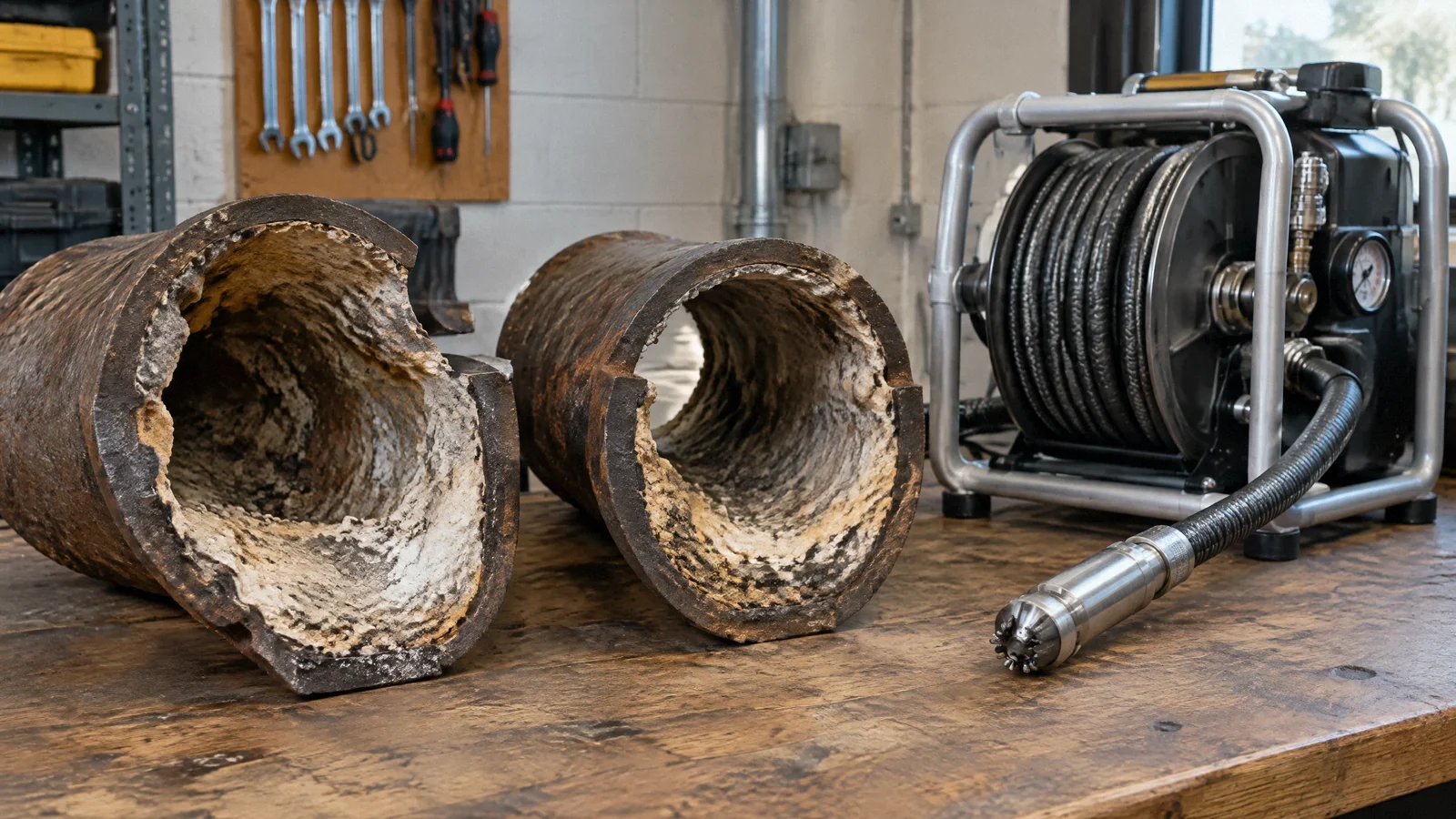
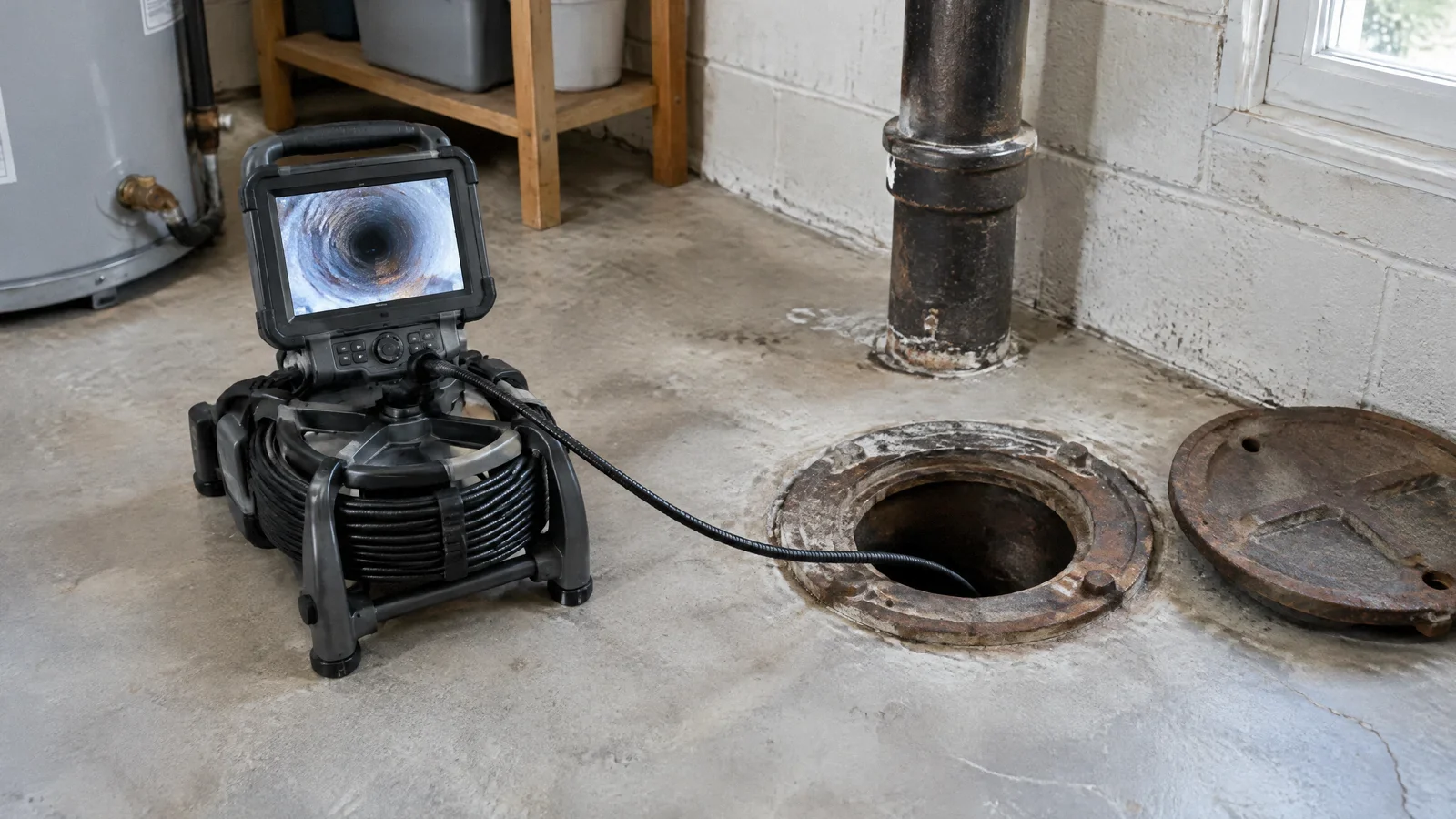
Drain and sewer lines carry waste, not drinking water. Deposits may include corrosion, grease or other debris as well as minerals; professionals choose mechanical cleaning or another method based on the line and condition. An aggressive treatment can damage weakened pipe. Never mix drain chemicals or use a drinking-water treatment in a sewer line by assumption. See the separate sewer-pipe descaling guide for that system.
Your next-step checklist
- Confirm whether the issue is localized or affects multiple fixtures.
- Check utility information and pipe material.
- Request evidence before authorizing whole-system treatment.
- Never put drain chemicals into drinking-water lines.
- Compare cleaning, repair and replacement in writing.
Related questions
What causes scale in water pipes?
Minerals such as calcium can deposit under certain conditions, particularly when hard water is heated.
Does low water pressure always mean scale?
No. Valves, fixtures, leaks, utility conditions and other restrictions can cause low flow.
Can I use drain cleaner to descale drinking-water pipes?
Do not pour drain cleaner or an unspecified chemical into a drinking-water system. Ask a qualified plumber about suitable methods.
Does every home need a water softener?
No. Water quality, equipment needs, costs and local requirements vary by property.
Sources & context
Public guidance supports the principles in this article. The practical questions and examples are editorial interpretation, not a site assessment or a coverage decision. State-specific rules apply only where identified.
- U.S. Geological Survey: Water hardnessfederal technical guidance
- U.S. Geological Survey: Corrosivityfederal technical guidance
- U.S. EPA: Selecting and maintaining a water-efficient softenerfederal consumer guidance