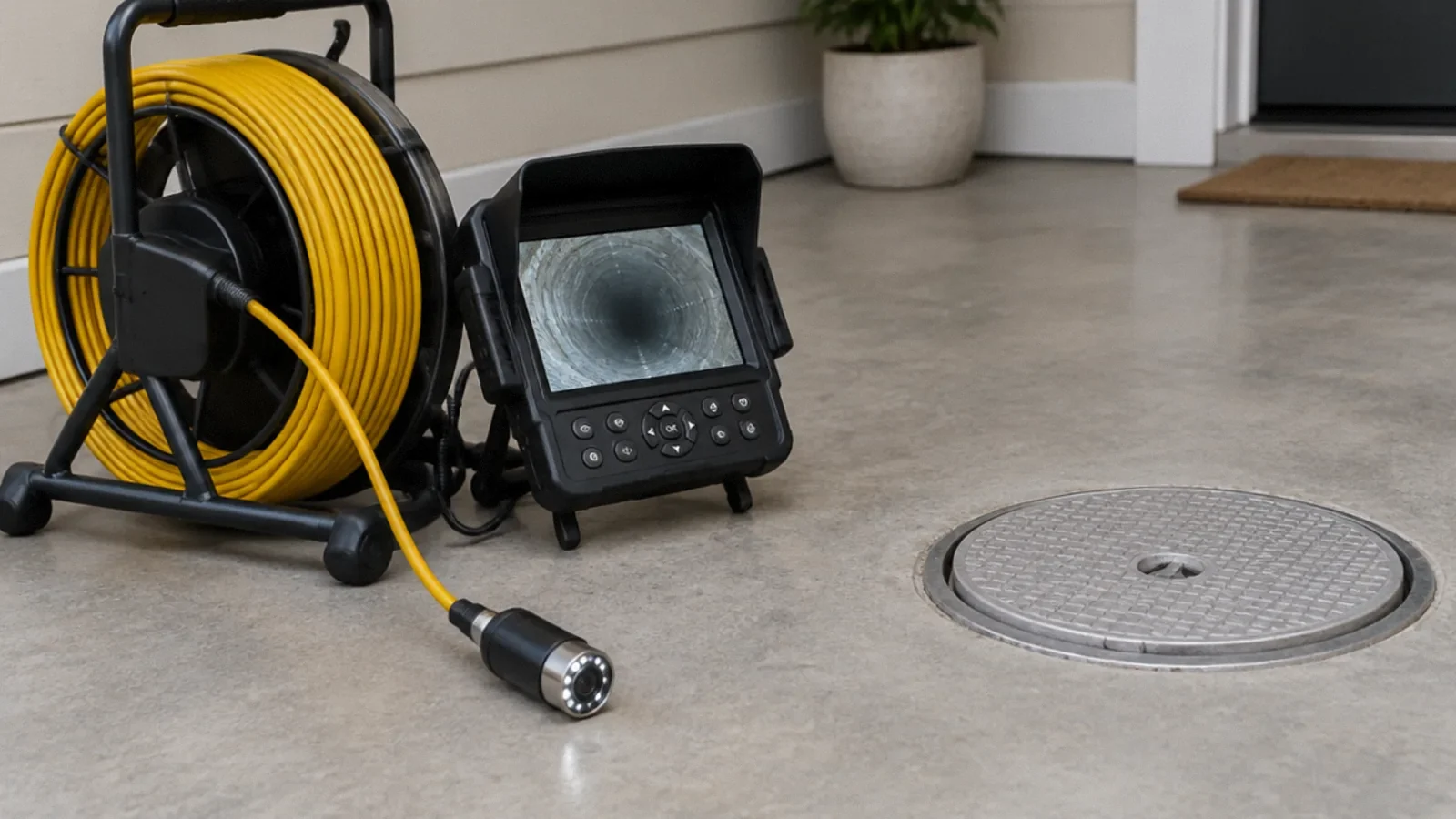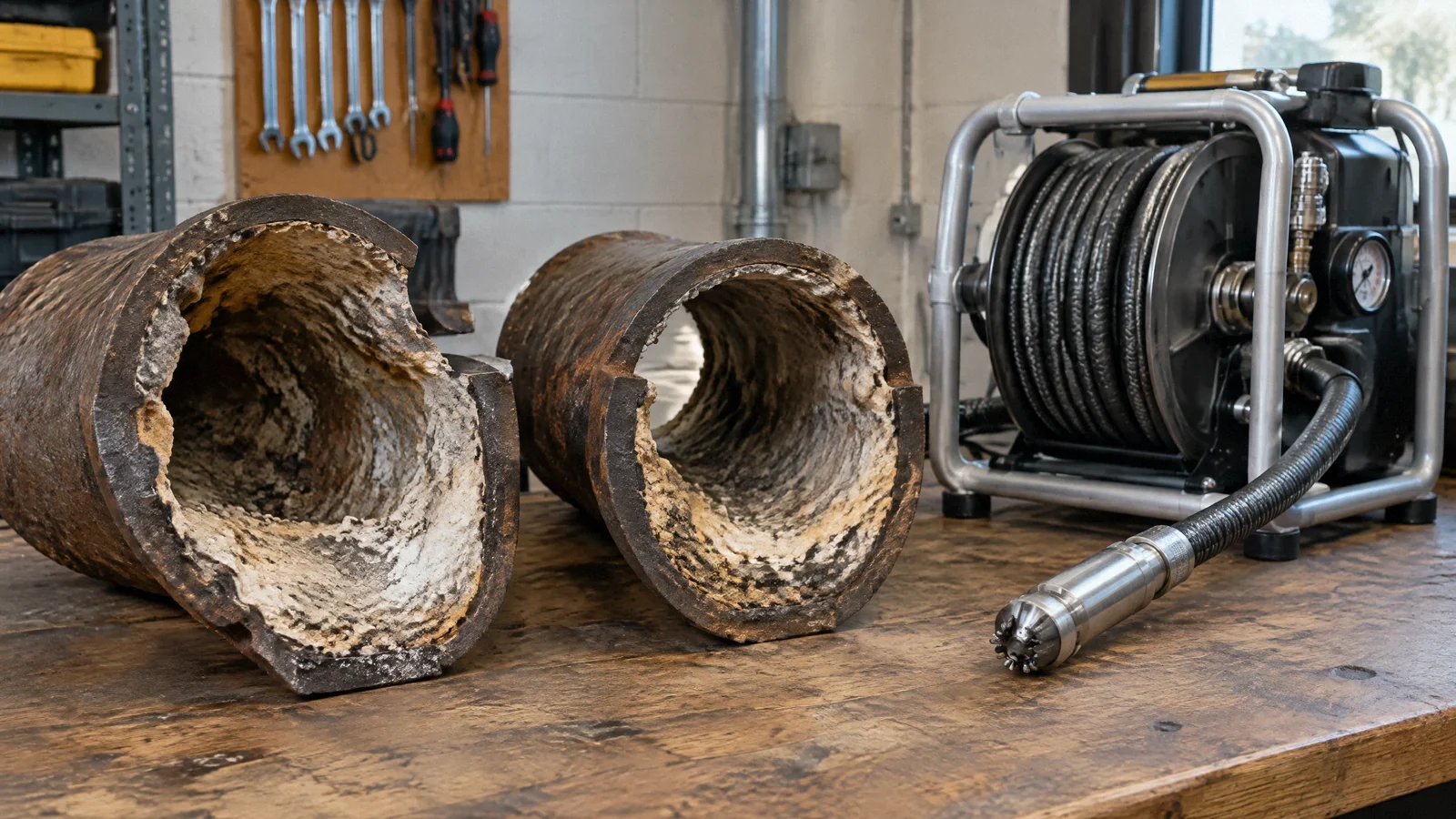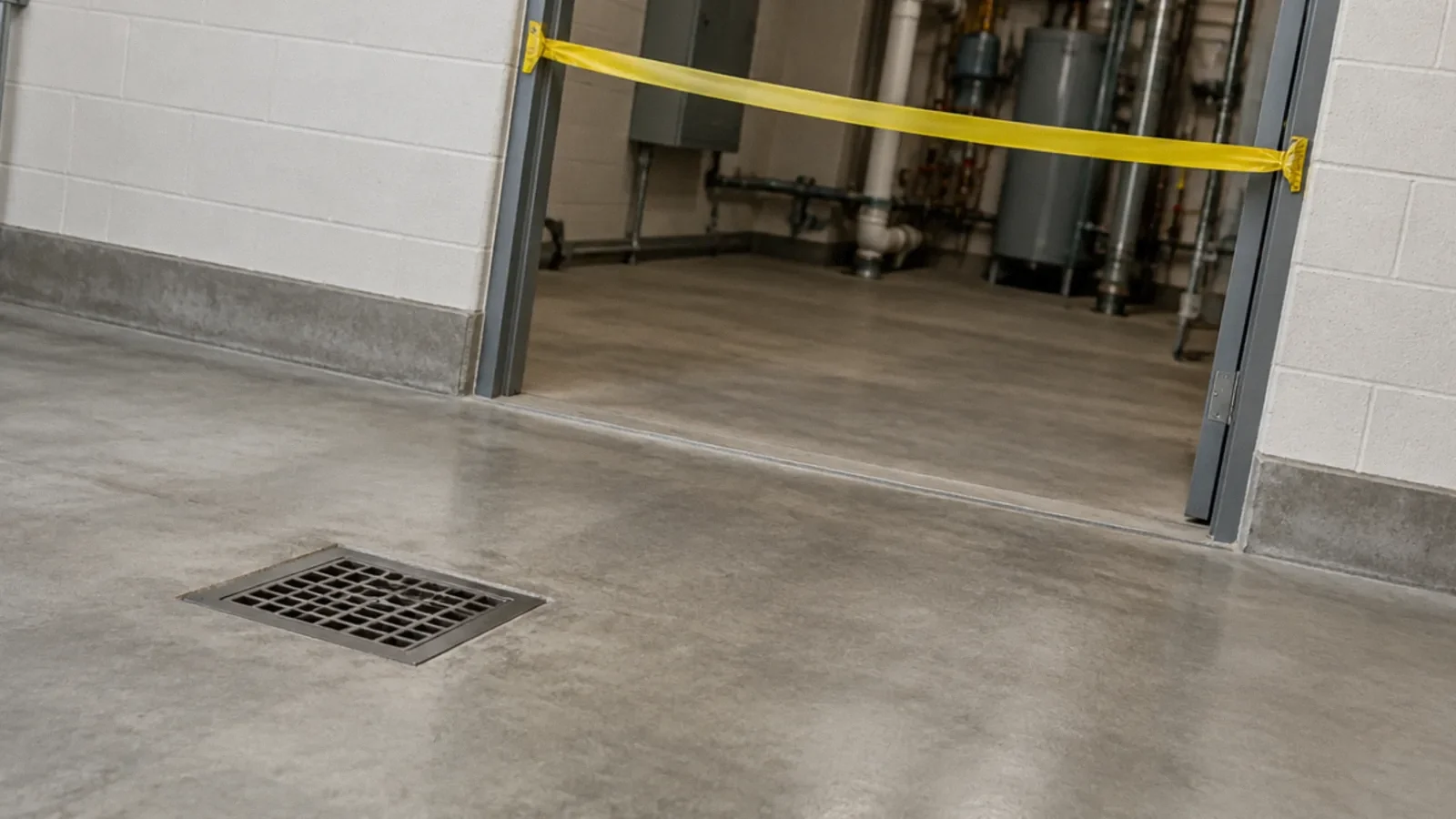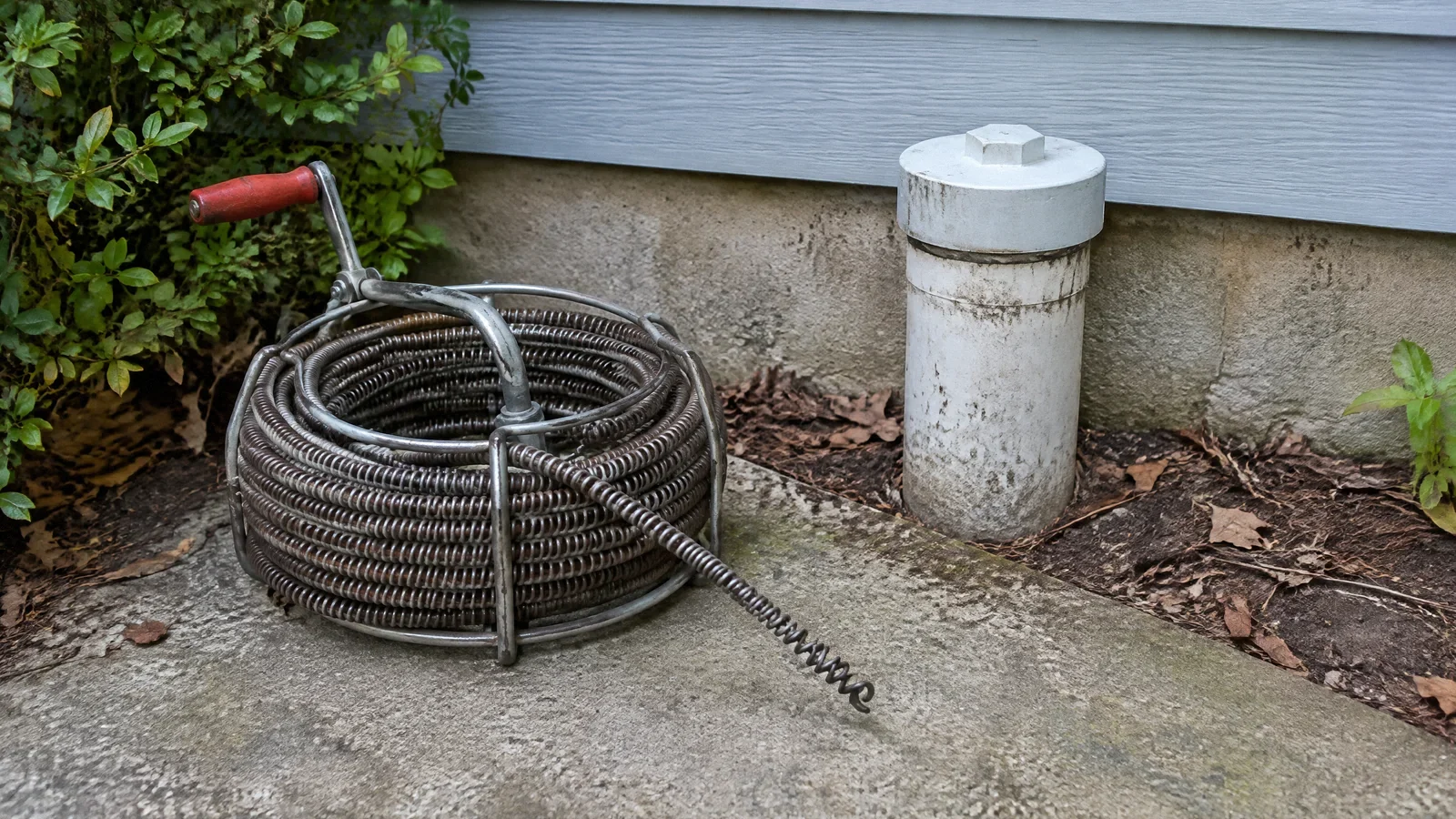
A sewer snake uses a flexible cable and a suitable head to work through an obstruction. Main-line work can expose the operator to sewage, cable and electrical hazards; a trained professional can select equipment and assess the cause.
What snaking does
A sewer snake, or drain auger, uses a flexible cable and a head selected for the pipe and obstruction. A trained operator feeds it through an access point to break up or retrieve material that is blocking flow. The cable may open a passage, but opening a passage does not prove the whole pipe is clear or structurally sound.
A main sewer line carries wastewater from multiple fixtures toward the public system or another approved disposal system. A small hand tool intended for a sink is not automatically suitable for that line. Cable diameter, length, machine, head and access must match the actual job and equipment instructions.
Recognize a possible main-line problem
A single slow sink can have a local blockage. Several fixtures backing up, water appearing in a lower drain when another fixture is used, or recurring overflow may point to a shared line. These are clues, not proof of where the obstruction lies. A public main problem, septic issue or another defect can produce similar symptoms.
Stop using fixtures connected to the affected line and keep people away from any sewage. Contact a plumber and, when appropriate, the local utility. Avoid opening a cleanout that may contain backed-up sewage under pressure. Do not add drain chemicals or repeatedly flush to test a suspected backup.
How a professional approaches a main line
The operator asks about the symptoms, previous work, chemical products used and the condition of the access point. They select suitable equipment and evaluate hazards, including wet electrical conditions and the possibility of sewage release. A cleanout may provide access, but not every property has one that is usable or safely opened.
A cable is advanced through the pipe to encounter the obstruction and is worked according to the specific machine and head instructions. If the cable binds, twists, kinks or does not progress, forcing it can damage equipment or injure the operator. The method and tools depend on whether the issue is soft debris, roots, scale or a damaged pipe.
Why powered machines require care
Powered cables can twist, whip or catch clothing and gloves; drain contents may contain chemicals and infectious material. The manufacturer’s manual for the particular machine specifies setup, protective equipment and safe handling. Its instructions differ by model and are not interchangeable with a generic internet procedure.
For a main-line backup, a professional is the safer choice, especially where sewage, chemicals, difficult access, fragile piping or electrical hazards are involved. Tell the contractor about any drain cleaner already used. Never enter a contaminated crawl space or work around wet electrical equipment to reach the line.
Clearing versus diagnosing the cause
Snaking may restore flow while leaving deposits or roots in the pipe. A collapsed, displaced or severely deteriorated section requires assessment beyond clearing. Seattle Public Utilities recommends asking the service provider to document the probable cause and approximate distance to the obstruction.
A camera may be useful after flow has been restored. Seattle notes that standing water limits what a camera can show in a blocked pipe. Ask for the full recording, the inspected route and a description of sections that could not be seen. A clear-looking portion does not prove the condition of every branch.
Ask whether the recording reaches the intended connection and whether distance markings are approximate. Keep a copy with the work order so another contractor can review the same evidence if a repair is proposed or the problem returns. A short clip of one location does not replace a continuous view of the inspected route.
Compare the next options
If a blockage returns, ask why the contractor expects it to recur and whether a camera inspection, different cleaning method or repair would address the cause. Hydro jetting and mechanical cleaning are different methods with different suitability; pipe condition, access and the obstruction matter. Do not assume a stronger method is appropriate for a damaged line.
Before approving major work, ask for the observed evidence, alternatives, exclusions and an itemized price. A second qualified opinion can help when a replacement is proposed and the situation permits. Confirm with the local utility which part of the lateral is the property owner’s responsibility.
After sewage has entered the home
Keep people and pets away from contaminated areas and avoid contact. Wet electrical equipment and unstable building materials are additional hazards. EPA recommends an experienced professional for cleanup when sewage contaminated the building. Clearing the drain does not clean affected flooring, walls or belongings.
Save safe photographs, service notes, the invoice and any inspection recording. Ask the plumber when it is safe to use fixtures again and what follow-up is recommended. If the insurer may be involved, ask about the actual policy and documentation requirements; payment for a plumbing visit and coverage of damage are separate questions.
Your next-step checklist
- Stop using affected fixtures during a backup.
- Keep people away from sewage and wet electrical equipment.
- Tell the contractor about chemical products used.
- Ask for the probable cause and approximate location.
- Request footage and an explanation of unseen sections.
Related questions
Will snaking repair a broken sewer pipe?
No. It can open a blockage but cannot repair structural damage; the pipe may require inspection and a separate repair.
Should I open the cleanout during a backup?
Do not open a backed-up cleanout yourself. It can release sewage; arrange qualified assistance.
Why might the blockage return?
Roots, deposits, damage or another unresolved cause can remain. Ask for an assessment and appropriate follow-up.
Sources & context
Public guidance supports the principles in this article. The practical questions and examples are editorial interpretation, not a site assessment or a coverage decision. State-specific rules apply only where identified.
- RIDGID: drain cleaner operator manualmanufacturer safety manual
- Seattle Public Utilities: side sewer repair methodsmunicipal guidance
- EPA: mold cleanup in your homefederal guidance