A sewer camera inspection uses a small camera to view accessible sections of a sewer line. It may reveal roots, deposits or visible defects, but water, debris and inaccessible sections can obscure the view. Ask for the recording, the inspected route and a written explanation of findings and limitations.
What a sewer camera inspection does
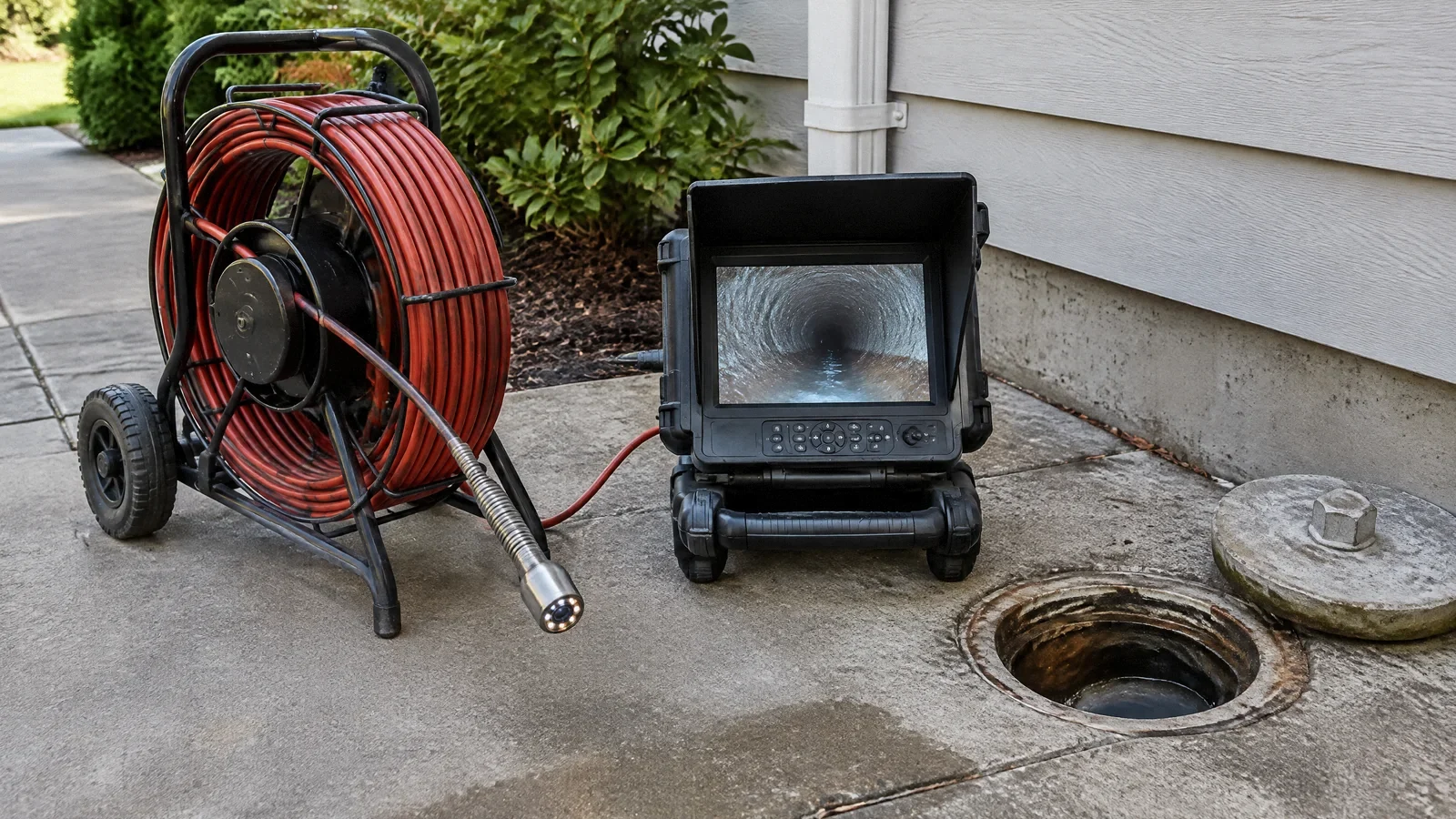
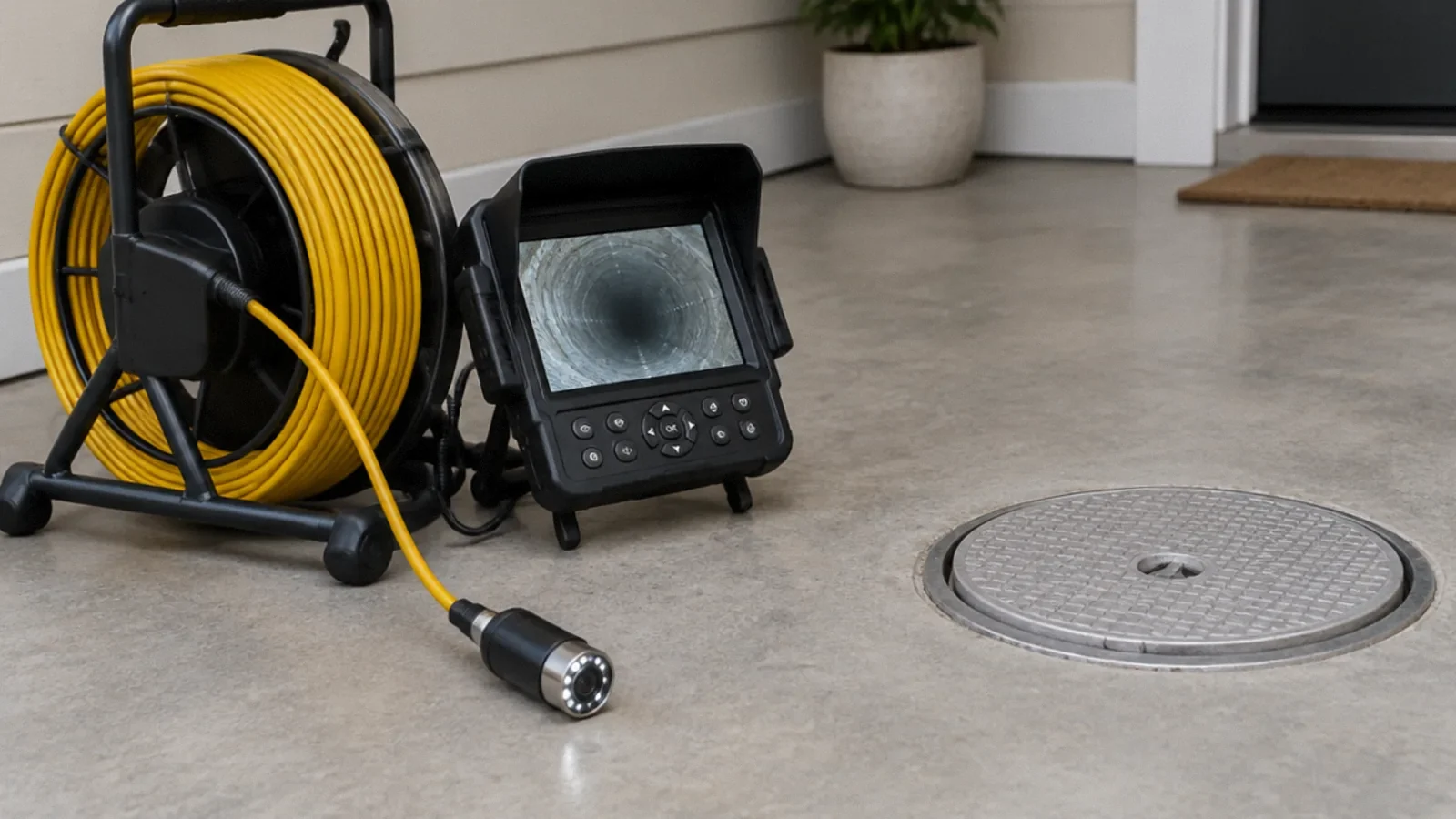
A contractor feeds a small camera into an accessible sewer lateral or drain and records the interior as it moves along the pipe. The lateral is the pipe connecting a property’s plumbing to a public sewer or other approved system. Its route and the division of maintenance responsibility depend on the property and local utility.
The purpose is to collect visual information about the portion reached by the camera. A recording can show some deposits, roots, open joints or other visible conditions. It should not be treated as proof that every part of the plumbing system has been inspected or that a hidden defect cannot exist.
When homeowners may consider one
A camera inspection can help investigate repeated backups, a suspected root intrusion or a pipe whose condition is uncertain before a major repair. It may also provide a record during a property transaction if the buyer, seller or their adviser decides the information is useful. The value depends on the question and on what the camera can actually reach.
Before ordering the service, explain the symptoms: which fixtures are affected, whether the problem recurs, and whether there has been previous cleaning or repair. Ask what section is included, where the contractor expects to enter and whether additional access would require separate approval.
Access and the path through the pipe
A cleanout can provide access without removing a fixture, but not every property has an accessible one. The contractor should identify the entry point and explain any need to remove a toilet or use another route. Work on a roof or opening an active sewage line creates additional risks and should be handled by qualified personnel.
Ask where the camera stopped and why. A bend, heavy deposit or blocked section may prevent it from reaching the intended connection. Pinellas County’s inspection program describes using additional access where a long lateral cannot be viewed from one point; its program requirements are local, not a universal rule.
What can limit the picture
A camera sees the surface within its field of view, not the soil and structure outside the pipe. Water, grease, debris, a dirty lens or poor lighting can obscure the image. Seattle Public Utilities notes that a camera cannot see through a fully backed-up line and may be more useful after the obstruction is cleared.
If the screen shows roots or a displaced joint, ask the operator to explain what is visible and whether the camera reached the entire relevant section. Footage that ends at a blockage does not establish the condition beyond it. A clear recording can still require professional interpretation and further investigation.
What to ask for in a report
Request the original recording, date, access location, direction of travel and distance markers or other location references. Ask for a written description of observed conditions, the sections inspected and any parts not visible. If the contractor marks a suspected defect on the ground, record how the location was determined and whether it is approximate.
A screenshot alone may omit context. Retain the continuous video when available and save it with the invoice and any earlier inspection. This allows another professional to review the same evidence and provides a baseline if the problem returns.
Camera findings and repair proposals
Not every deposit proves a pipe must be replaced. Ask the contractor to distinguish cleaning from structural repair, identify the visible finding supporting each recommendation and explain alternative approaches. Obtain a separate assessment for an expensive proposed repair when circumstances allow. A contractor should not promise a diagnosis for an unseen section.
A camera can identify a visible root intrusion, but it may not establish where responsibility changes between the private lateral and public system. Consult the local utility, property records and applicable rules before assuming who must arrange or pay for a repair.
After a sewage backup
Keep people away from sewage-contaminated areas, avoid unnecessary contact and arrange safe cleanup. Do not open a cleanout or keep running fixtures to see whether a backup has stopped. If electricity or building stability is involved, stay clear and contact the relevant qualified professional.
Document the event, affected rooms, communications and repair work. Ask the plumber whether the line is safe to use before resuming normal water use. A camera inspection helps evaluate a pipe; it does not replace cleanup of contaminated water or a separate assessment of damaged building materials.
Your next-step checklist
- Define the pipe section and reason for inspection.
- Ask how access and any initial cleaning are priced.
- Request continuous video and a written summary.
- Identify obscured or inaccessible sections.
- Save footage and get an independent opinion on major repairs when practical.
Related questions
Can a sewer camera see through a complete blockage?
Usually a submerged or blocked section limits visibility. Initial clearing may be necessary before the camera can show the pipe beyond it.
Can a camera prove a pipe will not leak?
No. The video records visible interior conditions in the sections reached; it does not prove the condition of every concealed area.
Should I receive a copy of the recording?
Ask for one before the visit. A recording and written findings can help with later comparisons and independent review.
Does a root in the video always mean the whole pipe must be replaced?
No. Ask a qualified professional to explain the extent of the condition and the available cleaning or repair options.
What is a pipe camera inspection?
A small camera records accessible pipe interiors. Water, debris and blocked sections can limit what it shows.
What can the inside of a sewer pipe show?
A camera may show accessible pipe material, deposits, joints or visible damage, but water, debris and access can limit the view. Ask for the recording, location information and a written explanation of what could not be inspected.
Sources & context
Public guidance supports the principles in this article. The practical questions and examples are editorial interpretation, not a site assessment or a coverage decision. State-specific rules apply only where identified.
- Seattle Public Utilities: Side sewer repair and camera questionsmunicipal guidance
- Pinellas County: Private sewer lateral video inspectioncounty guidance
- City of Madison: CCTV inspectionsmunicipal guidance