Cupped boards, staining and a musty odor can signal moisture under hardwood, but they do not prove mold. Locate and repair the water source and arrange an assessment before disturbing concealed material.
Clues that justify an investigation
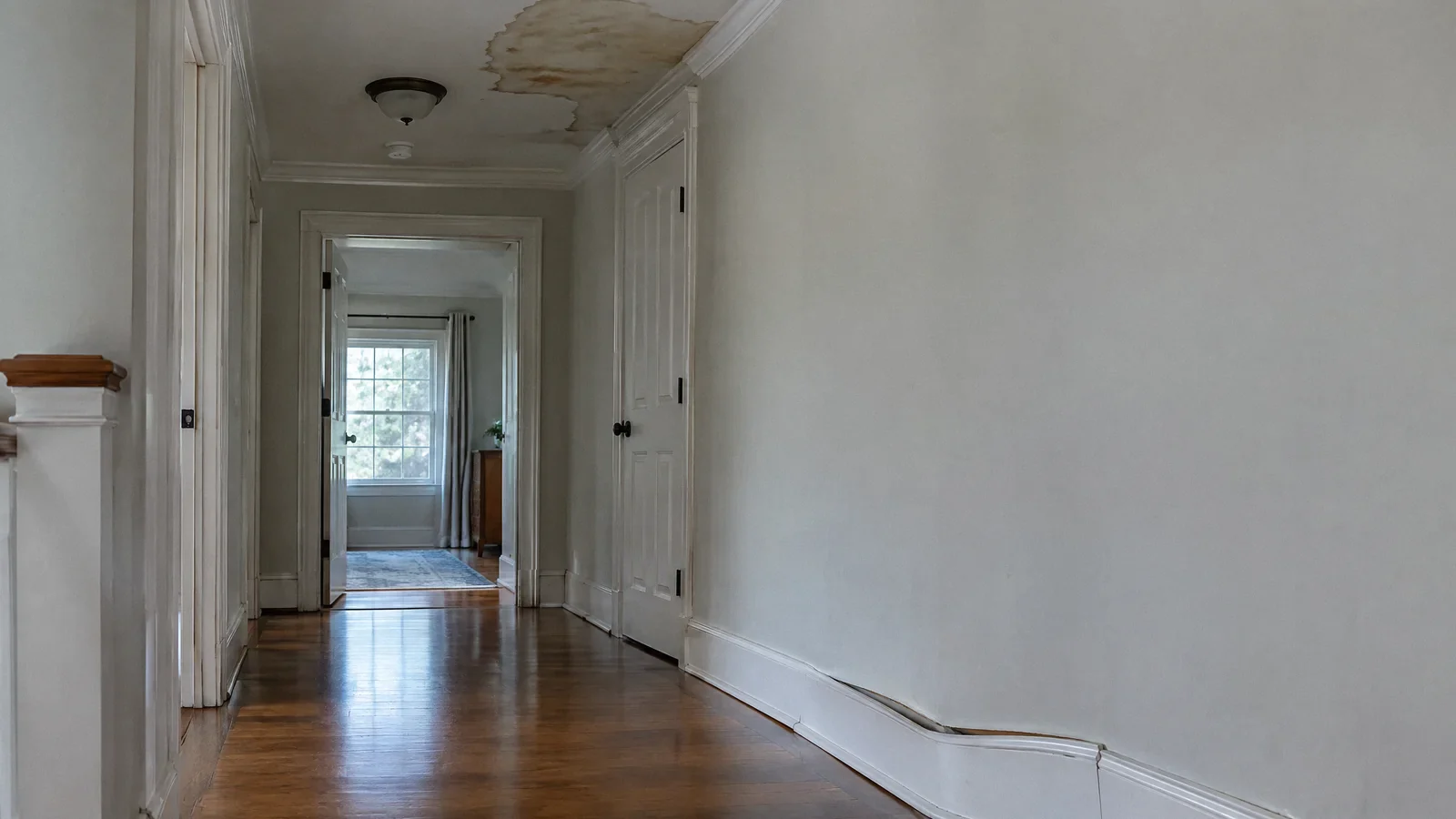
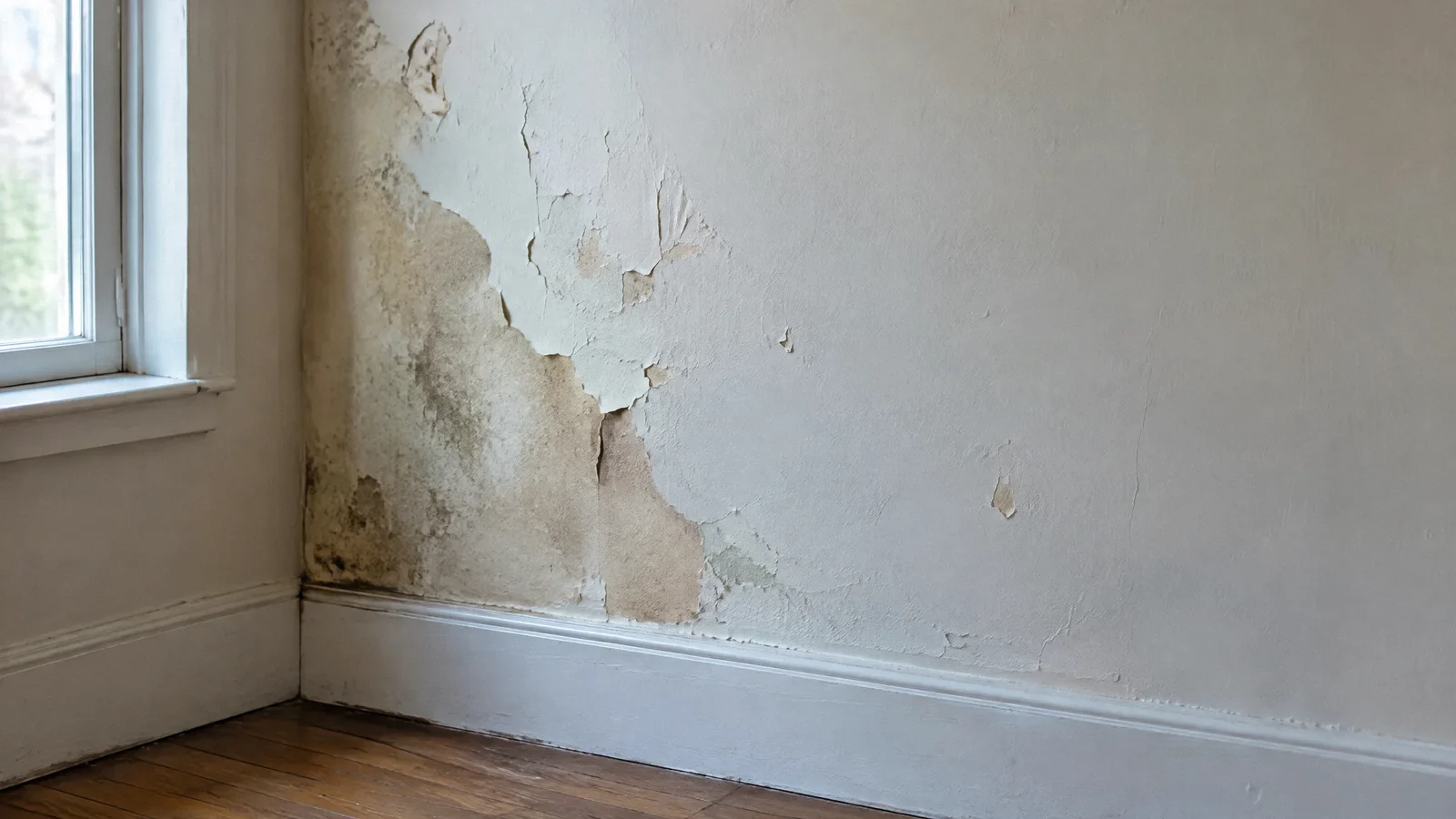
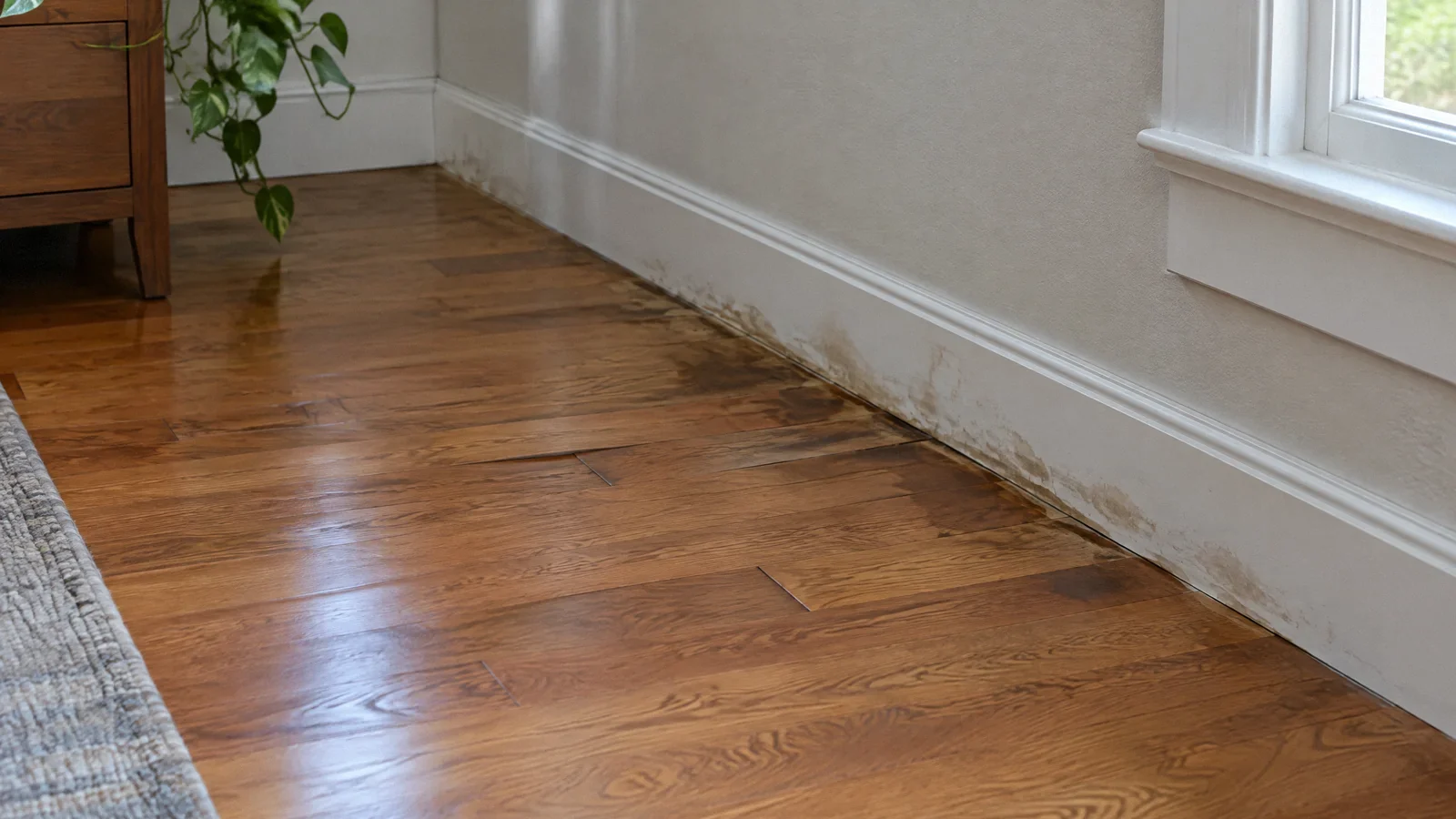
Cupped or warped boards, persistent dampness, dark staining at seams and a musty smell can indicate a moisture problem under hardwood. None proves mold is present beneath the floor. Water stains, old finishes, dirt and changes in wood can look similar. A floor may also conceal moisture without visible marks.
Note when the change appeared, where it is located and whether it follows a leak, rain or plumbing work. Photograph the area safely and compare changes over time. Avoid deliberately adding water or lifting boards to test a suspicion; disturbing a hidden area can spread material and damage the floor.
Where moisture can come from
A supply or drain leak, appliance overflow, water entering at a door or window, or moisture rising from below can affect a floor. A crawl space or slab can contribute moisture, but the appearance of boards alone does not identify the pathway. Condensation and high indoor humidity can also affect wood.
The location is a clue rather than a map of the source. Water can travel under flooring and show up away from its entry point. Tell the inspector about past incidents, recent work, nearby fixtures and the type of flooring if known. Check the room below or adjacent areas only from a safe, accessible position.
What mold color and odor cannot tell you
A musty odor may justify investigation even without visible growth. EPA notes that mold can be hidden beneath surfaces, including flooring and other coverings. A dark mark is not a reliable way to identify a mold species or determine health risk. An odor can have another cause, and an absence of odor does not establish that concealed material is dry.
If visible growth or a substantial concealed problem is suspected, ask an experienced professional to evaluate the source and scope. People with breathing concerns should consult a healthcare professional for individual advice. Do not rely on a photograph or a color chart for diagnosis.
Inspecting without spreading a problem
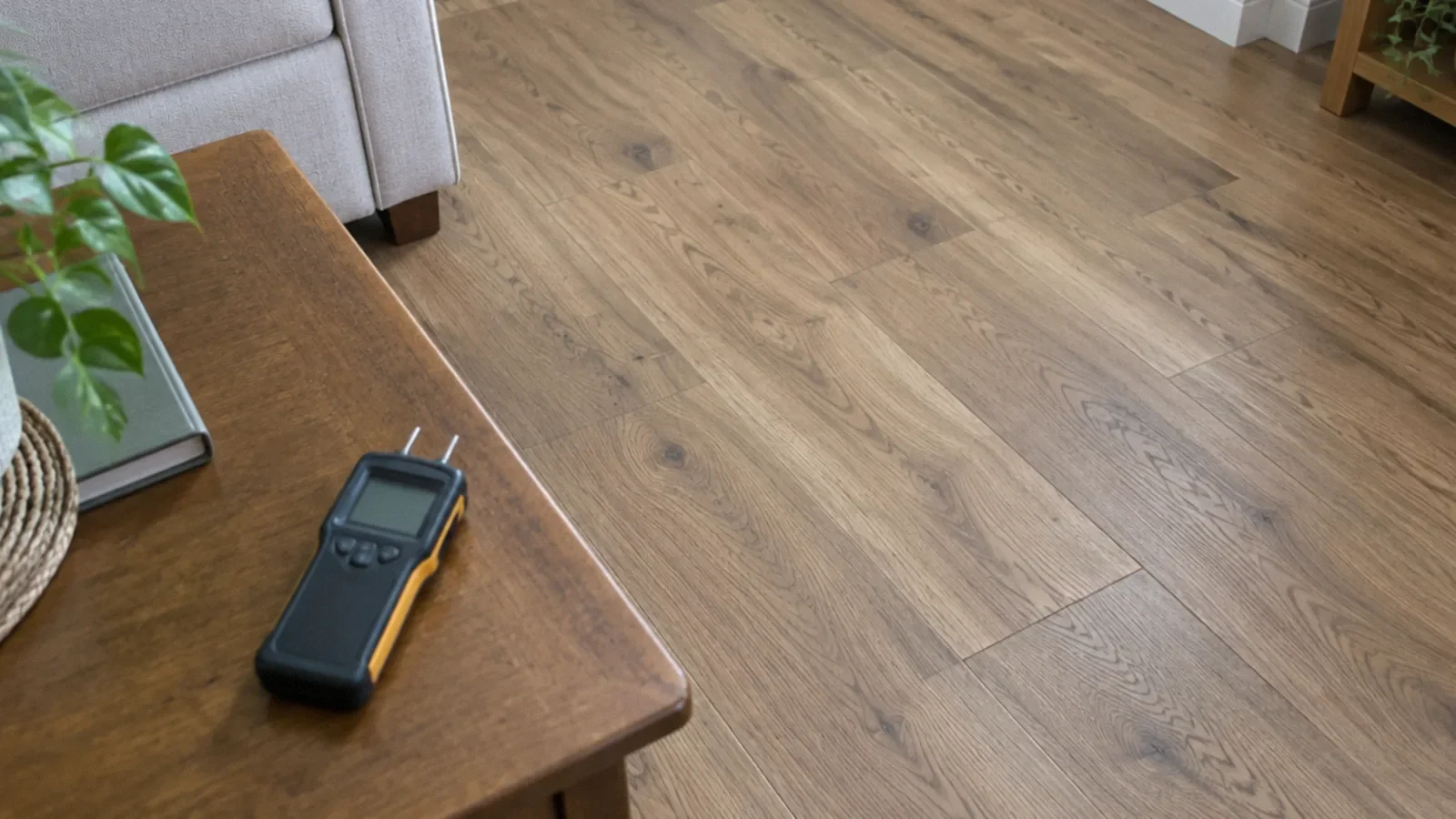
An inspector may review moisture patterns, use a meter appropriate for the material and recommend a carefully controlled opening when justified. Readings require interpretation: flooring species, coatings, subfloor construction and other conditions can affect them. A high reading is not itself proof of mold, and a low surface reading does not establish that all concealed layers are dry.
Ask where readings were taken, what reference was used and which areas remain inaccessible. If boards must be lifted, agree on containment, the location and extent of removal, disposal and repair of the opening. Investigating hidden growth can disturb it, so the plan should address exposure and protect adjacent rooms.
Fix the water source first
Drying or refinishing without stopping ongoing water entry can leave the underlying problem unresolved. A plumber, roofer or building professional may be needed depending on the source. Ask for the evidence supporting the diagnosis and for a plan addressing the affected flooring, subfloor and nearby assembly.
EPA recommends fixing water problems and drying affected materials promptly. The appropriate response depends on how long materials were wet, what contaminated the water and whether they can be cleaned and dried. Sewage or floodwater requires a different response from a small clean-water spill; EPA recommends an experienced professional for sewage contamination.
Can hardwood be saved?
Some boards can be retained after appropriate drying, while others may be too damaged, contaminated or distorted. Solid wood, engineered flooring, adhesives, underlayment and subfloor differ. Ask the contractor to identify the materials and explain the basis for retaining or removing each layer instead of promising that all floors can be saved.
A surface that feels dry is not proof that the material underneath has dried. Request documented drying checks and a plan for the subfloor before replacement flooring is installed. Refinishing can change appearance, but a coating does not correct a leak, clean concealed contamination or restore structural strength.
Ask whether the quoted work includes removing and replacing baseboards, moving contents and restoring transitions to adjacent rooms. If the subfloor is hidden, request a written process for documenting discoveries and agreeing on additional work before it starts.
If a contractor finds damage beyond the original opening, ask for photographs and a revised scope. That documentation helps explain which layers need further work and preserves the distinction between an observed condition and an inaccessible area.
Documentation and prevention
Keep photographs, measurements, the source repair invoice and any remediation report. If insurance might apply, ask the insurer about the specific policy, deductible and documentation before assuming coverage. A restoration estimate and an insurer’s coverage decision are separate matters.
Maintain plumbing and appliances, correct water entry promptly and keep indoor humidity under control. After a repair, watch for recurring cupping, odor or staining. A return of symptoms calls for another source assessment rather than repeated surface treatment. Avoid entering a flooded or contaminated crawl space to inspect from below.
Your next-step checklist
- Record visible changes safely.
- Identify and stop the moisture source.
- Avoid disturbing suspected hidden growth.
- Ask for moisture readings and inspection limitations.
- Verify drying before replacing flooring.
Related questions
Does black staining prove mold under the floor?
No. Color alone cannot identify mold or establish its species or risk.
Can hardwood be saved after a leak?
Sometimes. The material, contamination, duration and ability to dry all affect that decision.
Will refinishing solve hidden moisture?
No. The source and affected layers must be assessed and dried before refinishing.
Sources & context
Public guidance supports the principles in this article. The practical questions and examples are editorial interpretation, not a site assessment or a coverage decision. State-specific rules apply only where identified.
- EPA: brief guide to mold and moisturefederal guidance
- EPA: mold cleanup in your homefederal guidance
- DOE: crawlspace moisture barrierfederal building guidance