Keep out of a flooded basement until electrical and structural hazards have been assessed. Contact an electrician or utility and a qualified pump or restoration professional; document the loss and ask the insurer about the applicable coverage.
Stay out of water near electrical equipment
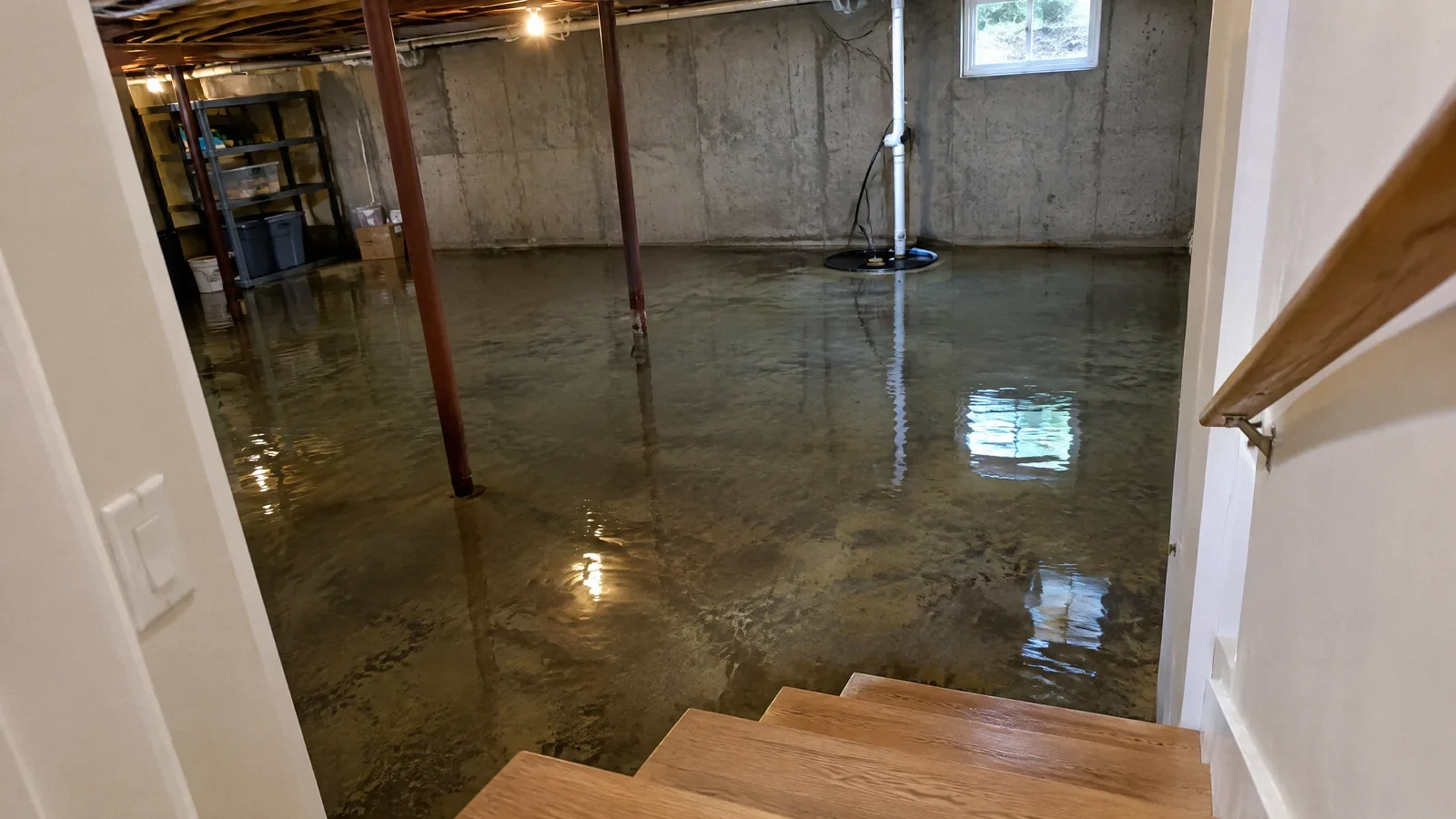
A failed sump pump can allow groundwater to rise quickly around outlets, appliances, wiring, and the electrical panel. Do not enter standing water to unplug a pump or operate a switch. If power cannot be disconnected from a dry, safe location, contact the utility or a qualified electrician. If you suspect a gas leak or other immediate danger, leave and call the appropriate emergency service from outside.
Protect people and pets from the basement and arrange a safe alternative route through the home. Floodwater may contain sewage or chemicals even when its source appears to be groundwater. An unstable wall, floating fuel tank, or damaged stair is another reason to keep out. A professional can assess the conditions before extraction and determine which work can safely start.
Understand what failed
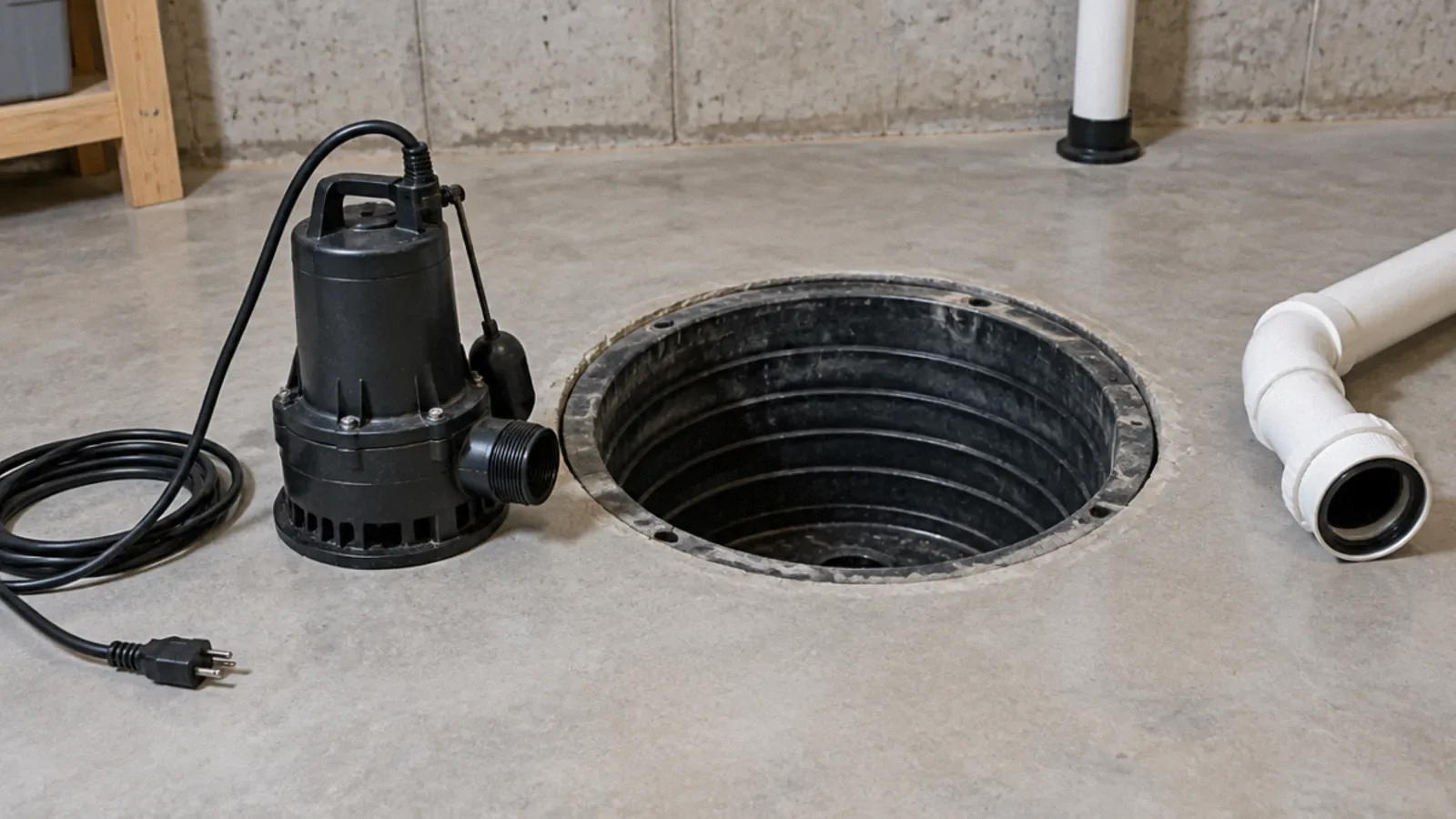
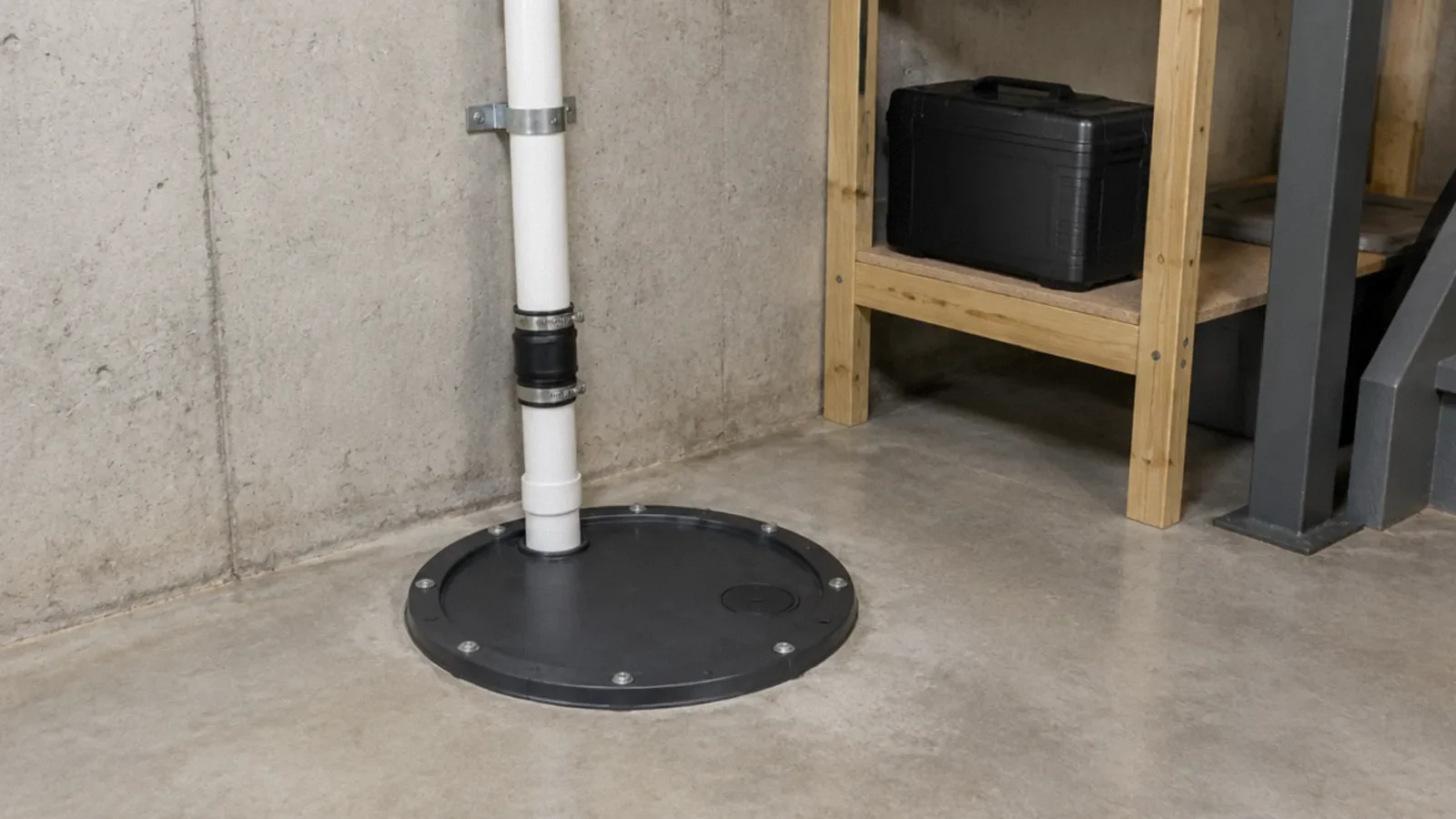
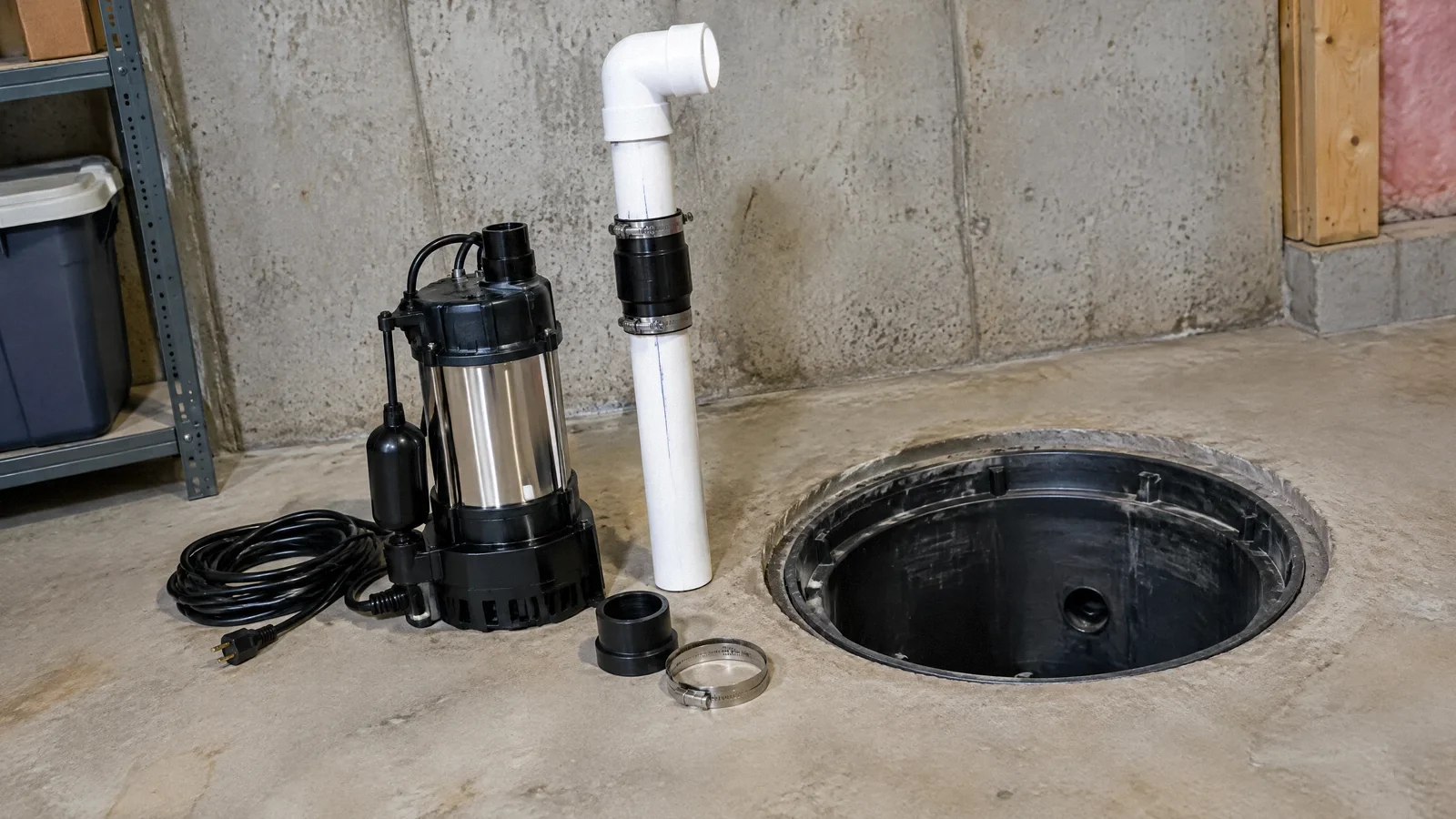
A sump system collects water in a pit and moves it through a discharge line away from the building. Failure can result from a power outage, a stuck float, a blocked or frozen discharge, a failed check valve, a pump that is worn or too small for the incoming flow, or another problem. A high water level does not by itself prove that the pump motor is defective. Avoid repeatedly restarting equipment until the cause is understood.
Tell the contractor when water appeared, whether the pump was running or silent, and whether the neighborhood lost power. If it is safe to observe from outside the flooded area, note the discharge location and weather conditions. A professional can check the complete system, including the pit, controls, power supply and discharge route, and explain whether a repair or replacement is appropriate.
Remove water and dry the building
After electrical safety and structural conditions are addressed, extraction should begin promptly. The method depends on the amount and source of water, electrical availability, access, and whether contaminated water is involved. CDC advises that electrically powered pumps be used only after an electrician has determined that power is safe. Never run a gasoline engine in a home, basement, garage, or other enclosed or partially enclosed space.
Water can travel under flooring, behind baseboards, and into wall cavities. A restoration professional can map moisture, remove unsalvageable wet materials when appropriate, and monitor drying rather than relying only on a dry-looking surface. Contaminated water and susceptible materials require a different scope from a small clean-water event. Ask how affected belongings, insulation, and the HVAC system will be assessed.
Document the loss and ask about coverage
Once it is safe, photograph damage before removing items where possible, and keep a list of affected property, receipts, and communications. Notify your insurer promptly and ask whether the policy includes water backup or sump-pump failure coverage, what limits and deductibles apply, and what documentation is required. Coverage is determined by the policy and the insurer; ordinary homeowners coverage and flood insurance are not interchangeable.
Ask before discarding damaged belongings when practical, but follow official and contractor safety directions and take reasonable steps to prevent further damage. Discuss emergency mitigation authorization, billing, and any inspection requirement with the insurer and contractor. If you rent, notify the property manager and clarify responsibility for the building and personal contents.
Reduce the chance of another overflow
Have the repaired system tested by the installer under operating conditions, including the float switch, check valve, discharge path, and alarm if one is installed. Ask where water will discharge and whether the line could freeze or direct water back toward the foundation. The correct capacity depends on site conditions and lift, not simply the horsepower printed on the pump.
A battery or water-powered backup and a high-water alarm can provide useful warning or temporary operation in some situations, but each has capacity and maintenance limits. Discuss options with a qualified installer and follow local requirements. Test the alarm and backup on the manufacturer’s schedule. Maintain gutters and drainage as appropriate, and do not assume a backup will protect against every outage or extreme inflow.
Your next-step checklist
- Keep out of water near electrical equipment.
- Arrange safe extraction and moisture assessment.
- Document damage and contact your insurer.
Related questions
Can I unplug the pump in floodwater?
Do not enter water to reach a plug or switch. Ask an electrician or utility to make the power safe.
Will homeowners insurance pay?
Coverage depends on your policy, endorsements, limits, cause and insurer’s determination.
Sources & context
Public guidance supports the principles in this article. The practical questions and examples are editorial interpretation, not a site assessment or a coverage decision. State-specific rules apply only where identified.