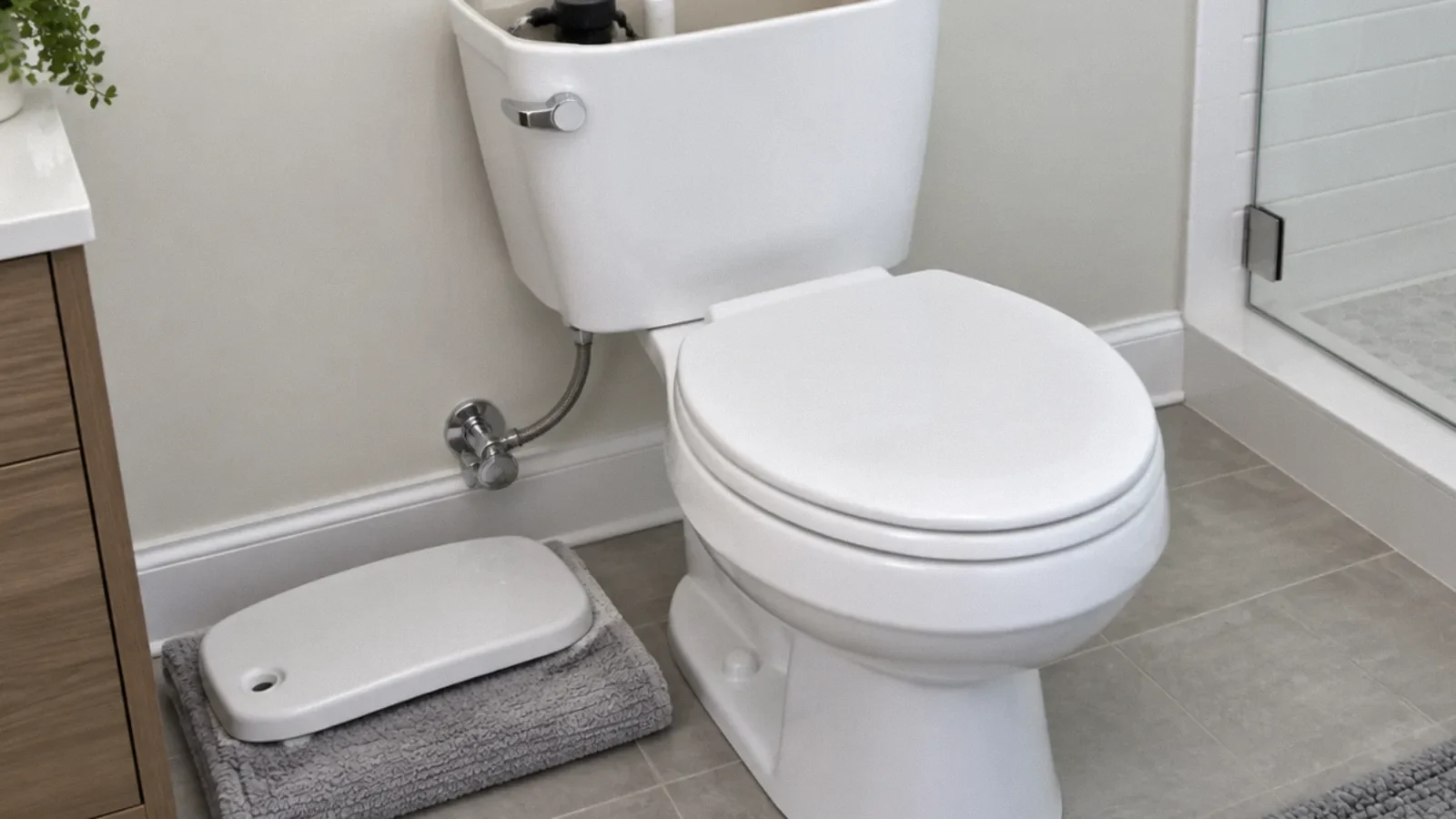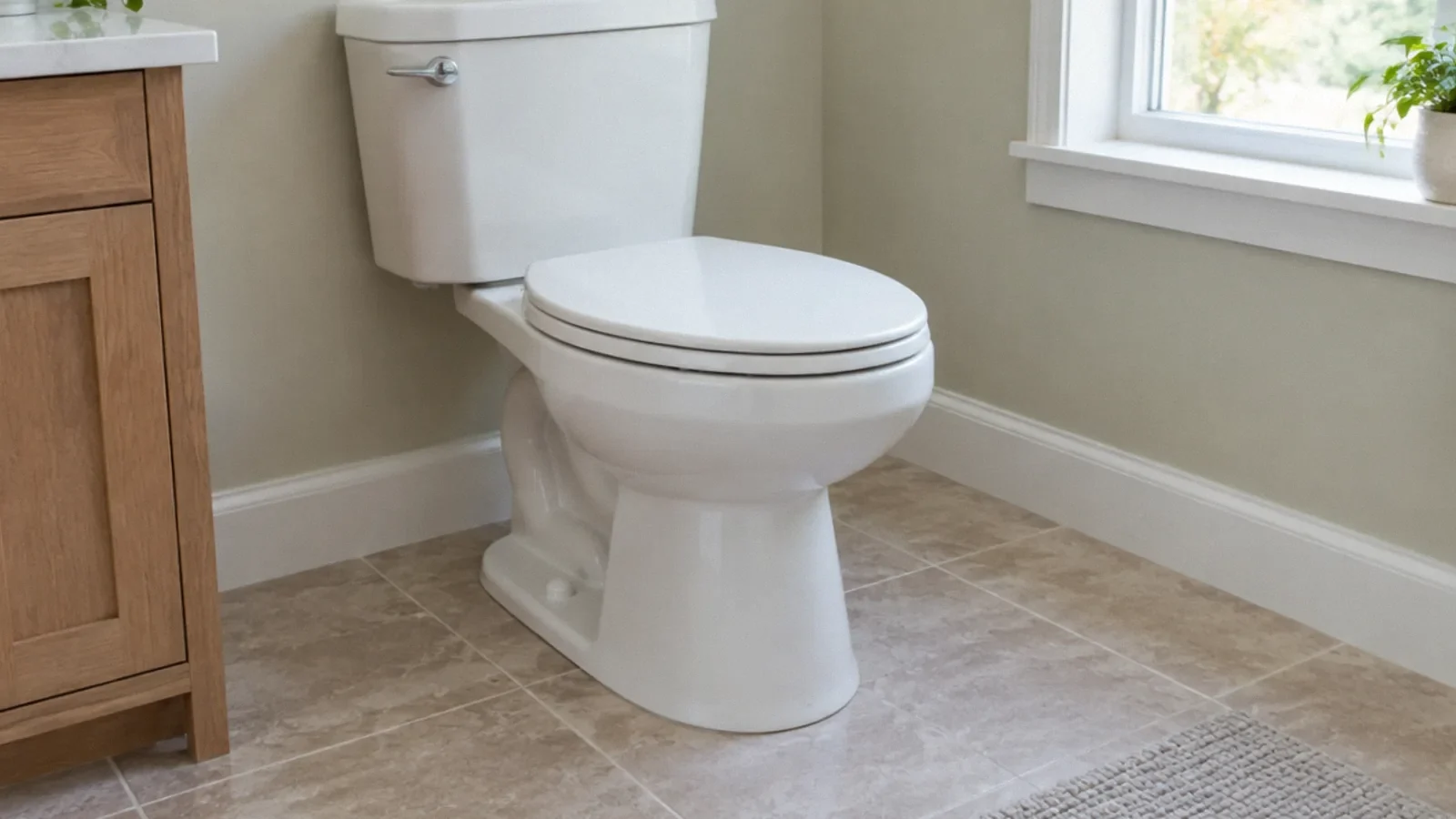
Water around a toilet base can come from a failed seal, a damaged flange, a supply connection or another source. Stop using the toilet if wastewater may be leaking, keep away from electrical hazards and arrange a plumber’s assessment. The flange connects and secures the toilet to the drain assembly; its condition cannot be confirmed from a puddle alone.
First, limit use and exposure
A leak that appears around the base during or after a flush may involve wastewater. Stop using the fixture until the source is assessed and keep children and pets away from the water. Do not assume the water is clean based on appearance or smell.
If water is near an outlet, appliance or damaged wiring, keep clear and request qualified help. A wet or unstable floor can also make access unsafe. In an apartment, notify the property manager promptly because water can affect another unit.
Water may come from above
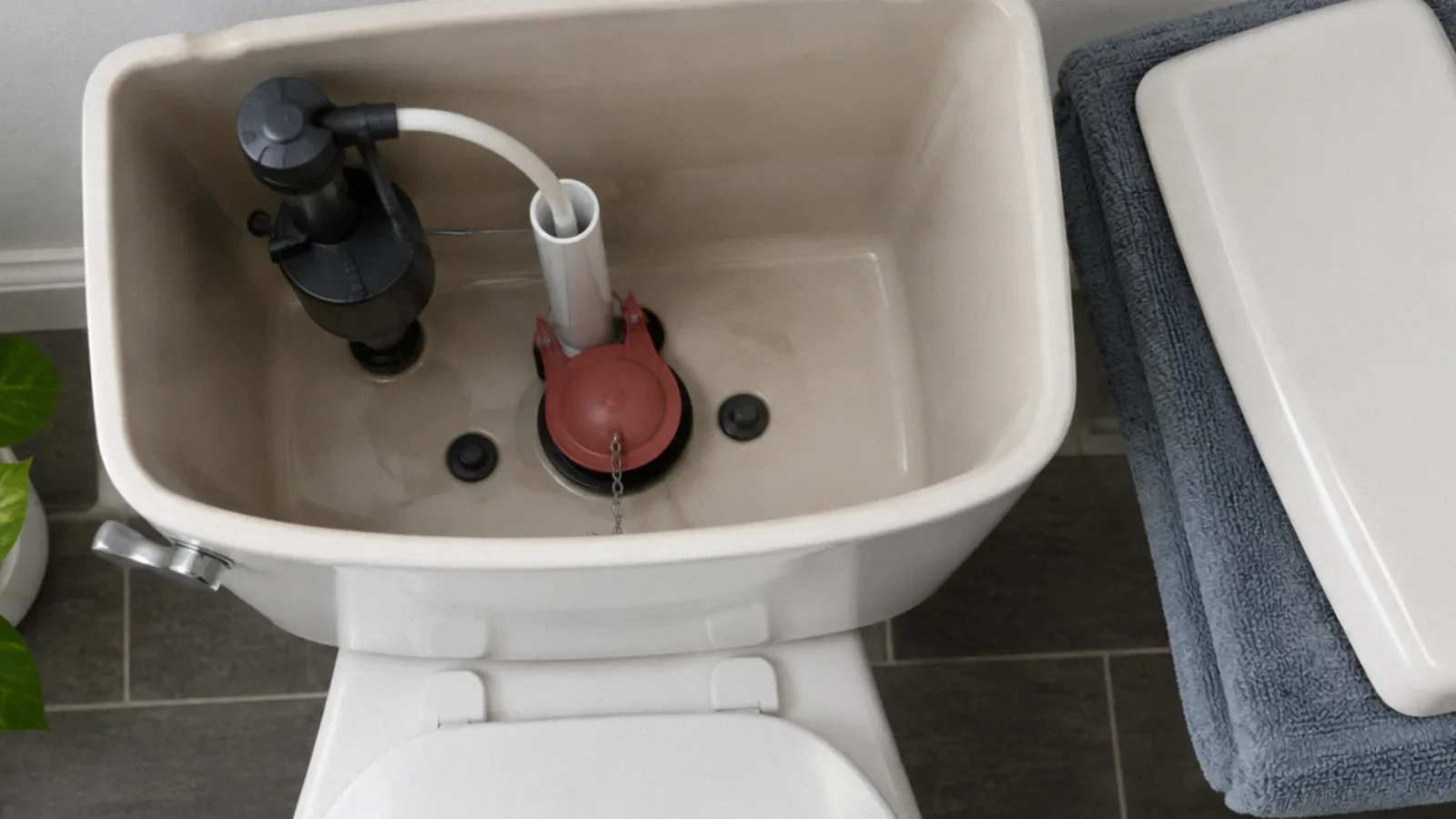
A leaking supply hose, shutoff valve, tank connection or condensation can run down the fixture and collect on the floor. A base seal is one possibility, not an automatic diagnosis. Note when water appears and whether it follows a flush or is present continuously.
Observe from a safe, dry location without repeatedly flushing a leaking toilet. Do not force an old shutoff valve or tighten a fitting that is damaged or difficult to reach. A plumber can isolate the supply and identify the source.
What is a toilet flange?
A toilet flange is a fitting at the floor that connects the toilet outlet to the drain and provides a mounting point for the fixture. A seal between the toilet and drain assembly helps prevent leakage. Depending on the installation, the seal may use a wax ring or another product specified for the fixture.
A cracked, loose, incorrectly positioned or corroded flange can affect the seal and stability. The flange is normally concealed beneath the toilet; its condition cannot be verified by looking at the outside of the bowl. Ask the plumber to explain what was found after safe access.
Why the seal can fail
Movement of the toilet, a damaged seal, an unsuitable installation or a problem with the floor or flange can contribute to leakage. A blockage or crack may create different symptoms. The repair depends on the actual cause, not simply on replacing a part suggested by a photograph.
Kohler’s installation guidance warns that rocking or lifting a toilet after placement can break a wax-ring seal. Do not rock a loose fixture to test it, and do not overtighten mounting nuts: porcelain can crack. Arrange qualified service if the toilet moves or leaks.
What a repair can involve
A plumber may isolate the water, remove the fixture, inspect the flange and surrounding floor, replace an appropriate seal and reinstall or repair components as needed. The sequence and parts depend on the fixture and applicable requirements. Ask for a written scope and a plan for any unexpected floor damage.
A sealant applied around the outside is not a substitute for correcting a failed drain seal or damaged flange. The contractor should explain whether supply components, a flange repair, a new seal and disposal are included. Do not approve major reconstruction without understanding the findings.
Assess the floor and nearby materials
Water can travel beneath tile, vinyl, subfloor panels or wall finishes. A dry-looking surface does not prove that concealed layers are dry or free of contamination. If wastewater leaked, the cleanup and material decisions differ from those for a small supply drip.
Ask an experienced professional how the affected area will be cleaned, assessed and dried before a new finish is installed. Keep people away from damaged flooring and wet electrical equipment. Document visible damage from a safe position for a property manager or insurer if appropriate.
Questions for a plumber
Describe when the leak occurs, whether the toilet moves, any recent work and whether water appears elsewhere. Ask what inspection is needed, how access will be obtained and how the price changes if the flange or floor is damaged. Obtain the diagnosis and proposed repair in writing.
After the work, ask how the installer checked the supply and base and whether the floor needs separate restoration. Keep the invoice and any photographs. If water reappears, stop use and request a follow-up rather than repeatedly tightening the bolts.
Preventing repeat damage
Report rocking, recurring dampness or a supply drip early. Keep accessible supply connections in view and follow the fixture manufacturer’s maintenance instructions. A toilet may need professional adjustment or repair when movement or damaged materials are present.
Save the installation and repair records and monitor the area safely after work is complete. A properly placed seal cannot compensate for an unresolved floor, flange or drainage defect. The goal is to address the source and the affected assembly together.
Your next-step checklist
- Stop using a toilet that may be leaking wastewater.
- Keep away from wet electrical equipment and unstable flooring.
- Do not rock the fixture or overtighten bolts.
- Ask a plumber to identify the source and inspect the flange.
- Assess and dry affected materials before refinishing.
Related questions
Why is my toilet leaking from the bottom?
A failed seal or flange is possible, but water can also travel from the tank or supply. A plumber should locate the source.
What is a toilet flange?
It is a fitting at the floor that connects the toilet to the drain and provides a mounting point for the fixture.
Should I tighten the toilet bolts until it stops leaking?
Do not overtighten or rock the toilet. Kohler warns that overtightening can damage the fixture and movement can break the seal.
Is water around a toilet base always clean?
No. It may include wastewater. Stop using the toilet and arrange an assessment.
Sources & context
Public guidance supports the principles in this article. The practical questions and examples are editorial interpretation, not a site assessment or a coverage decision. State-specific rules apply only where identified.
- Kohler: How to install a toiletmanufacturer guidance
- U.S. EPA: Mold cleanup in your homefederal guidance
- CDC: Septic and wastewater safetyfederal health guidance