Household supply lines can be copper, galvanized steel, PEX, CPVC or other approved materials. Each has different properties and fitting requirements. Identify the actual line, its intended use and local requirements before choosing a repair; drinking-water safety and older lead components deserve separate attention.
Supply lines and drains have different jobs
A water supply line carries pressurized potable water from the utility or well to fixtures. Cold lines serve fixtures and the water heater; hot lines distribute heated water. Drain, waste and vent piping carry wastewater or air and are selected for a different purpose. A white plastic pipe is not automatically approved for both jobs. Trace accessible pipes and read their markings before drawing conclusions about the system.
Copper and steel
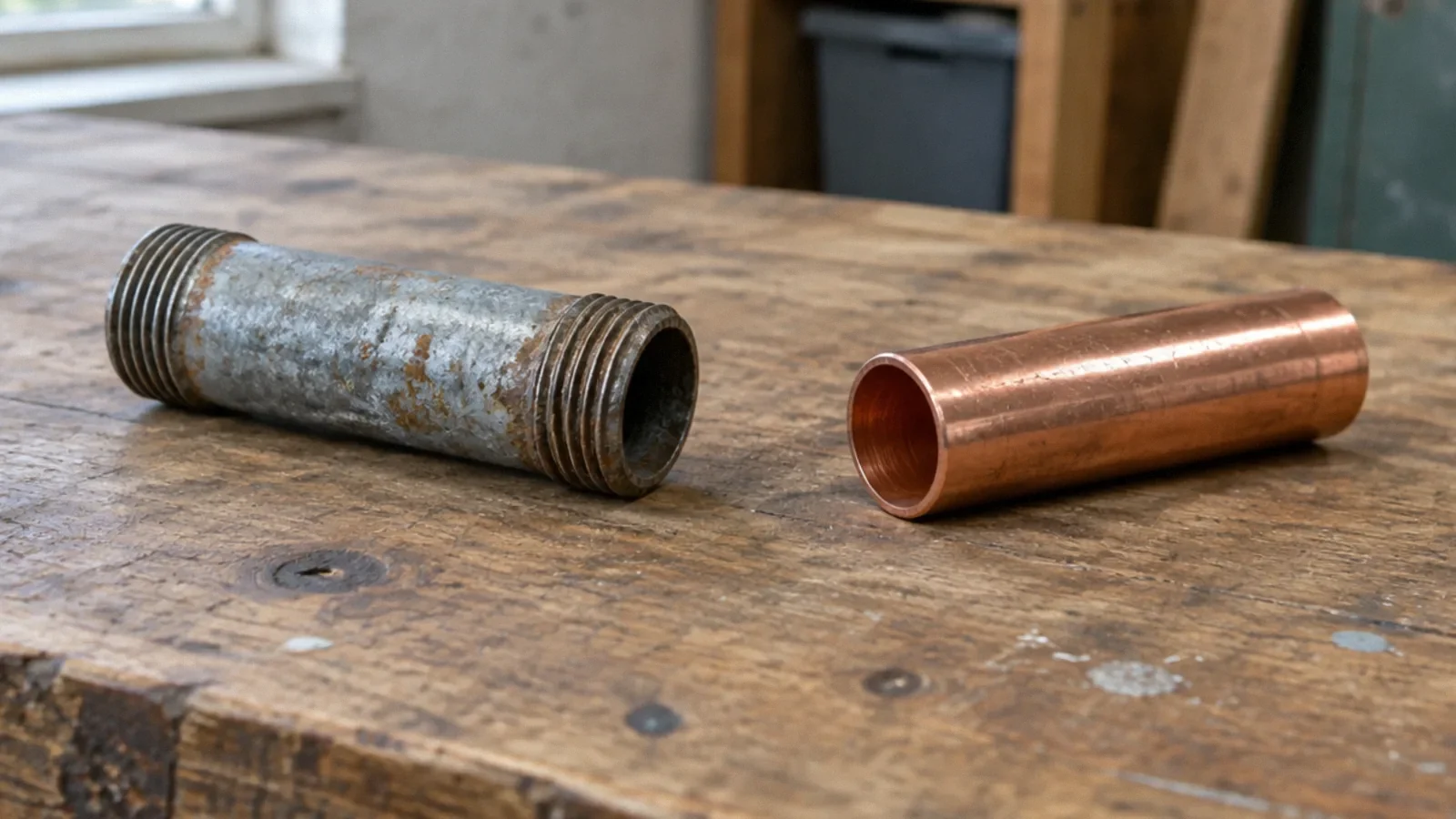
Copper tubing is common in water distribution and comes in different types and wall thicknesses. Its suitability depends on water chemistry, local code and installation; fittings and older solder may differ in composition from the tube itself. Galvanized steel is often found in older homes. Interior corrosion and deposits can restrict flow, but a low-flow complaint alone cannot establish that every pipe needs replacement. A plumber can inspect accessible sections and evaluate competing causes.
PEX, CPVC and PVC
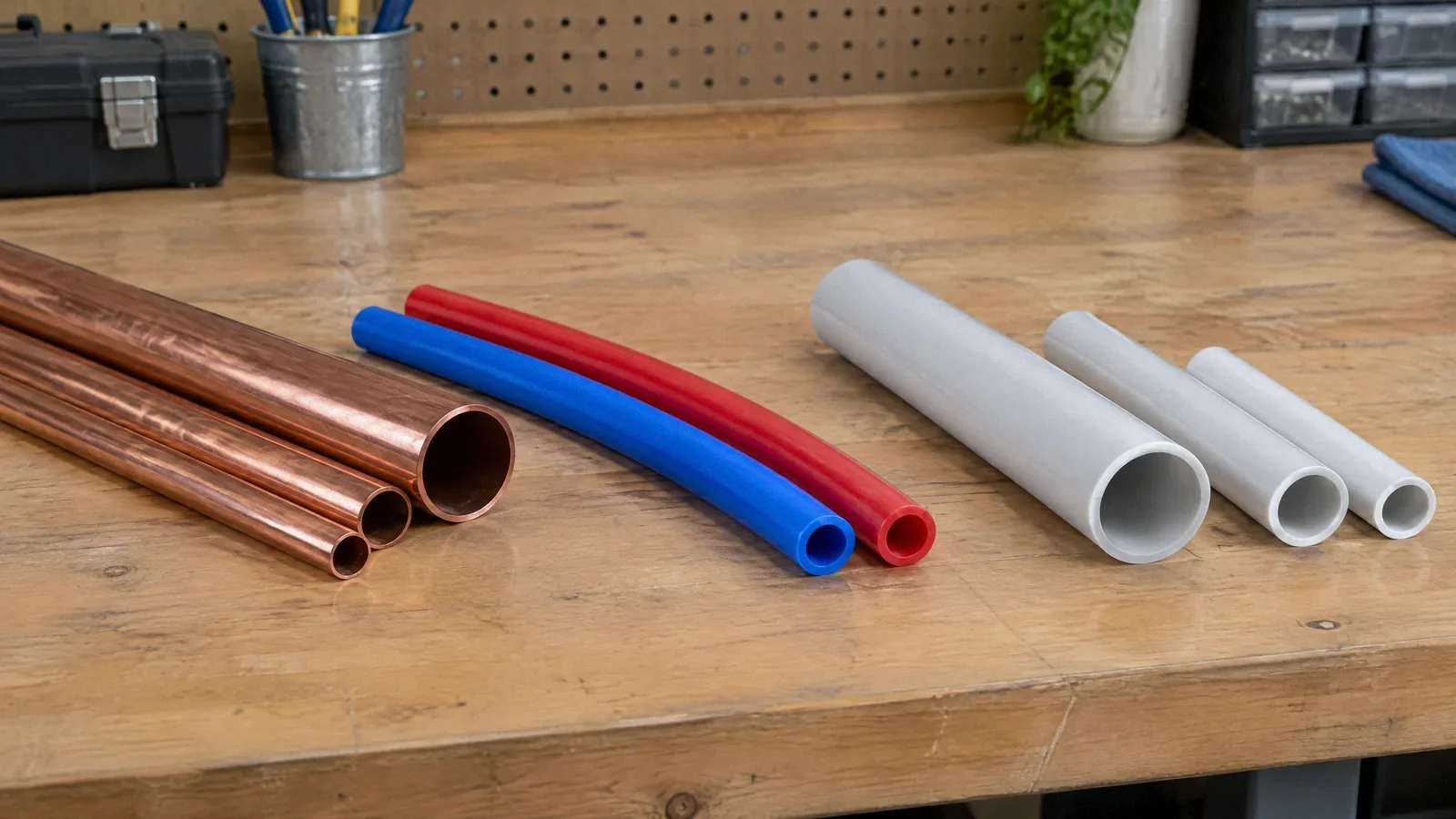
Cross-linked polyethylene (PEX) is flexible tubing joined with compatible fittings. CPVC is a rigid plastic used for hot and cold water where permitted. PVC has different temperature and application limits and should not be assumed suitable for a hot-water distribution line. Product markings, listed fittings, temperature and pressure ratings and local code govern a specific installation. Color alone is not proof of material, quality or intended use.
Lead and mixed systems
A building may contain more than one material and service line material may differ from interior plumbing. Lead can enter drinking water when lead-containing pipes, solder or fixtures corrode. EPA provides material identification guidance; the water utility may have an inventory of the service line. If lead is suspected, ask the utility about testing and steps to reduce exposure rather than disturbing a pipe or assuming clear water is safe.
Choosing material for a repair
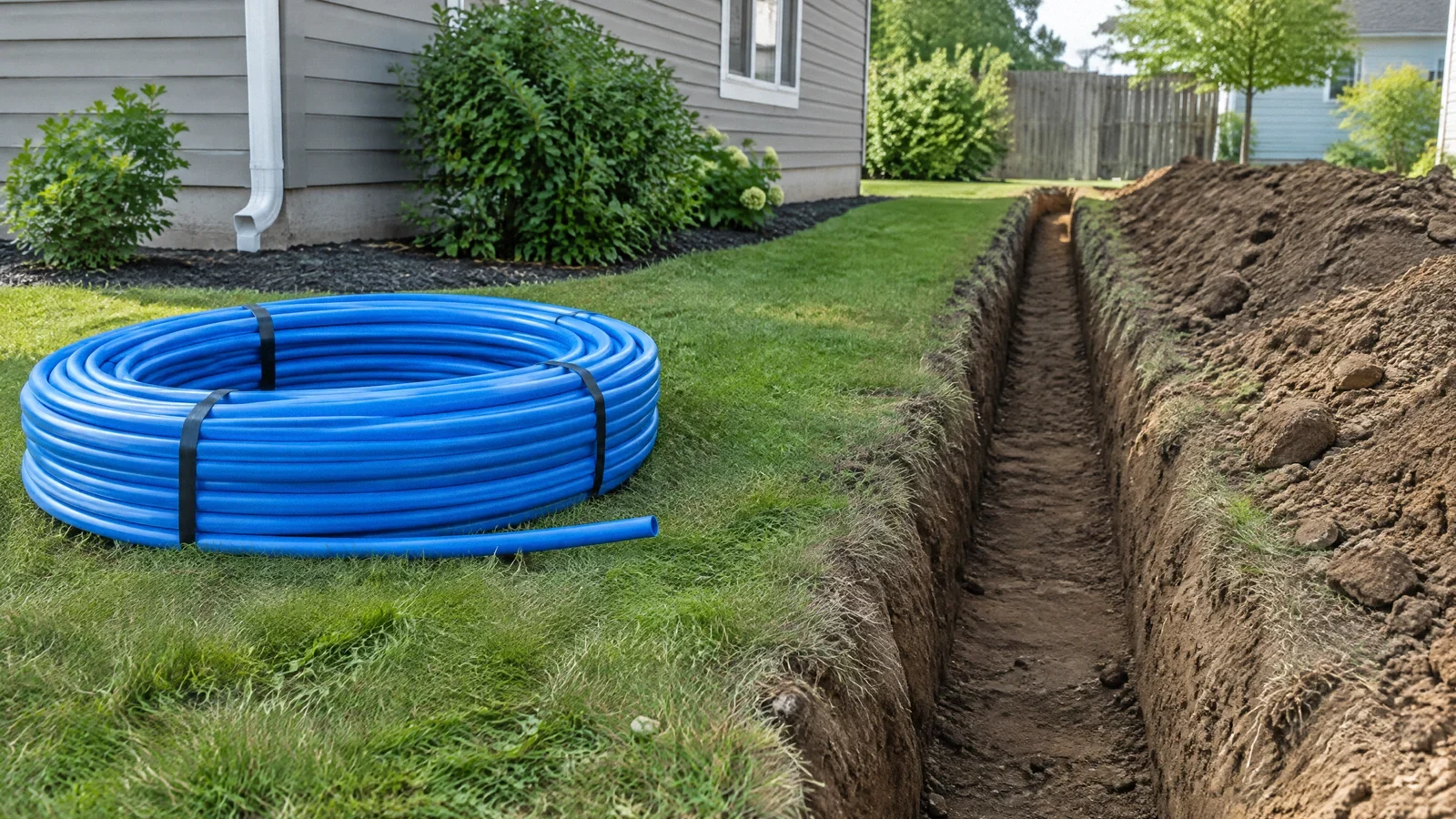
A plumber should assess local approval, potable-water listing, pressure and temperature ratings, water chemistry, exposure to freezing, sunlight and physical damage, compatibility with existing connections and access. A product suitable inside a wall is not automatically approved for burial. Ask how transitions will be made and how the work will be tested and inspected. For a buried service, compare the site-specific requirements separately.
What a homeowner can record
Photograph visible markings and connections from an accessible location, note leaks or corrosion, and keep the building plans if available. Do not scrape, cut or disconnect an unknown pipe to identify it. Shut off water only when the valve is safely accessible and contact a plumber for active leakage. If water is near electrical equipment, stay clear and arrange qualified assistance.
How to identify a line without assuming
Look for printed markings on accessible plastic tubing and use records from installation or repairs. Metallic finishes can be misleading: copper, galvanized steel and lead have different characteristics, but paint, corrosion and fittings complicate identification. EPA’s inventory guidance describes identification methods; contact a plumber or utility if the material is uncertain. A visible segment may not represent the entire run. Document the location of each identified material and note where it disappears behind a wall or under the floor.
Hot and cold distribution layouts
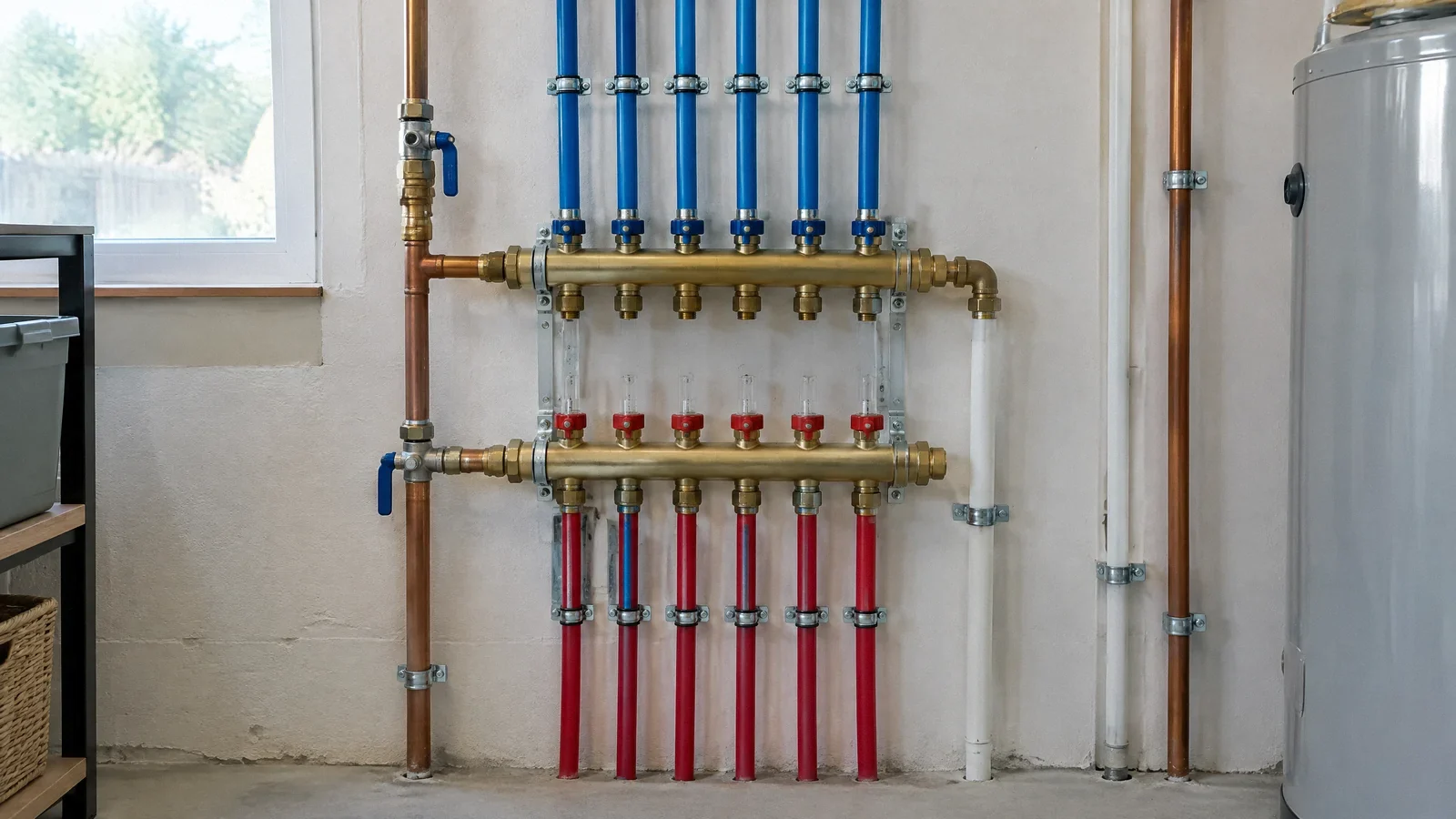
A trunk-and-branch system uses larger lines with branches to fixtures; a manifold can distribute individual runs. Either can use different approved materials. The arrangement affects how much water is isolated during repair and how easily a leak can be located. Ask which valves control each branch and whether the water heater or outdoor service remains supplied. A diagram of the actual system is more useful in an emergency than assuming every red pipe is hot and every blue pipe is cold.
Assessing an older system
Repeated leaks, discolored water, reduced flow and visible corrosion deserve investigation, but can have more than one cause. The utility can advise whether work on the public system may explain a change; a plumber can assess private piping and fittings. A localized repair may be appropriate for an isolated failure. Widespread deterioration or a renovation may justify discussing broader replacement. Compare the scope, access, testing, permits and restoration rather than choosing solely by a pipe’s advertised lifespan.
Your next-step checklist
- Record the location, condition and relevant history.
- Identify the source or application before choosing a repair or product.
- Ask a qualified professional about local requirements and limitations.
- Keep the written scope, inspection findings and records.
Related questions
Is one pipe material best for every home?
No. Water chemistry, local approval, installation conditions, fittings and exposure all matter. Compare products listed for the intended use and ask a plumber about the specific system.
Can a pipe be identified by color alone?
No. Color can help locate a marked line, but markings, records and a professional inspection are more reliable. The visible section may differ from concealed plumbing.
Sources & context
Public guidance supports the principles in this article. The practical questions and examples are editorial interpretation, not a site assessment or a coverage decision. State-specific rules apply only where identified.
- EPA: Know your plumbingofficial guidance
- EPA: Lead in drinking waterofficial guidance