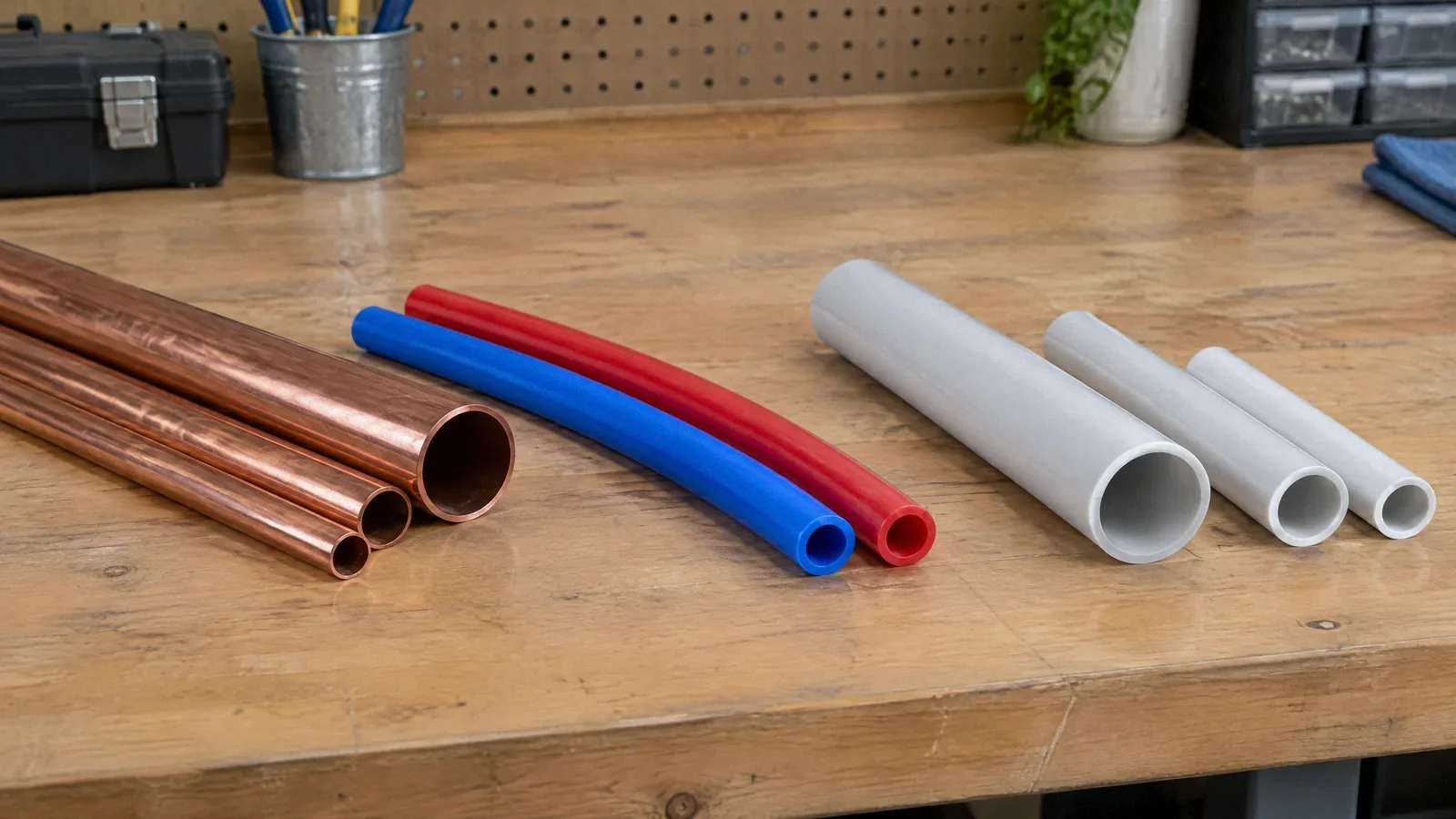
Copper, approved polyethylene or PEX, and certain PVC products can be used for underground water service where allowed. The right choice depends on the product listing, local utility rules, soil, pressure, frost protection and connections. A qualified installer should design and test the specific line.
The buried service line
An underground water service carries pressurized drinking water between a utility connection or well system and the building. It is distinct from a sewer lateral and from irrigation piping. The utility and owner may control different portions. Ask the local water supplier where responsibility changes and what materials, connection details and inspections it requires before selecting a product.
Polyethylene and PEX
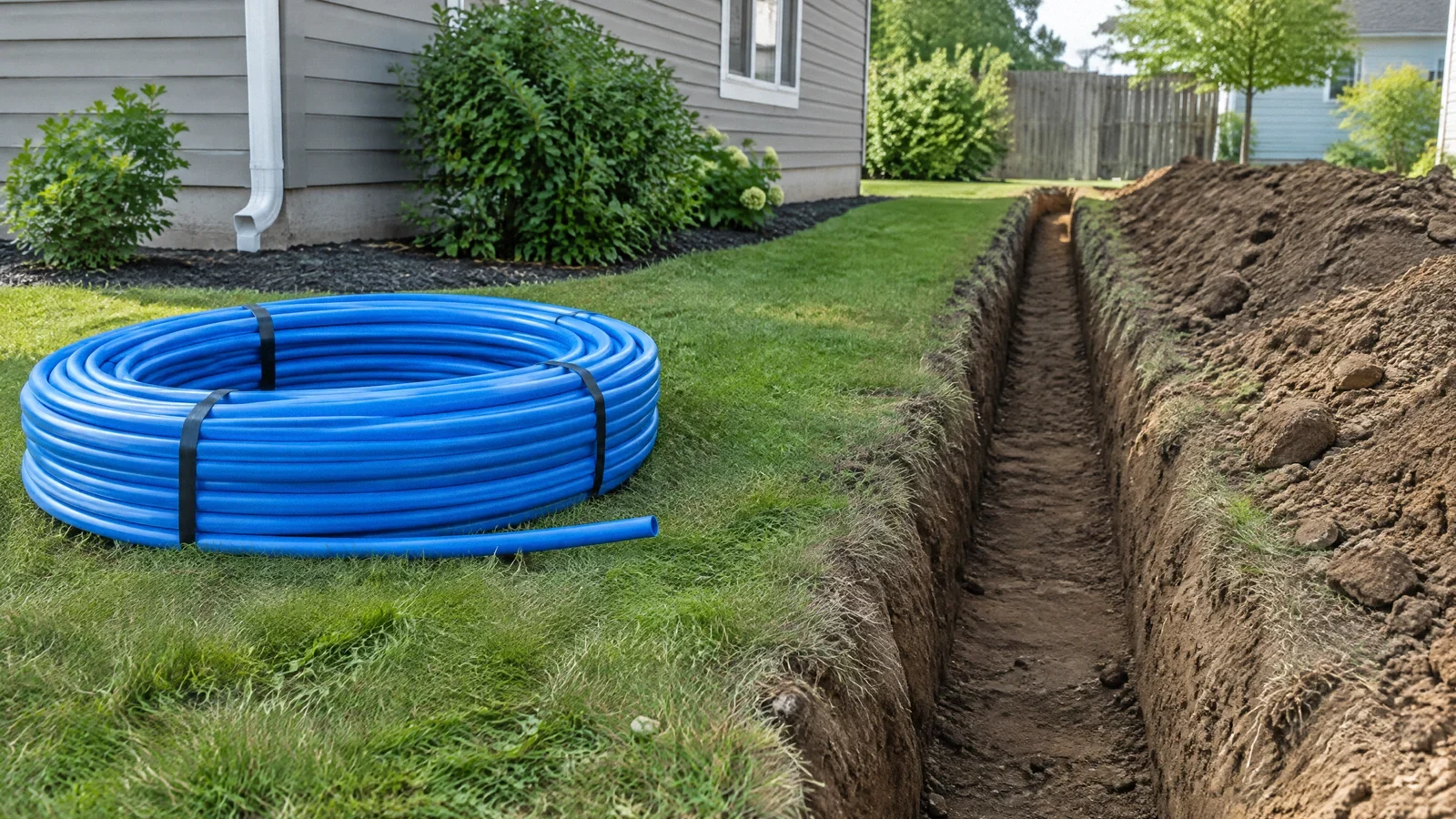
Polyethylene service tubing, including certain high-density polyethylene products, can be supplied in long flexible lengths. Some PEX products are also listed for suitable buried potable-water applications. These material names do not establish the rating of an individual product. The contractor must verify its marking, pressure and temperature rating, fitting system and approval for the specific use and local jurisdiction.
Copper and rigid plastic
Copper service tube is used in many systems. Water chemistry and soil conditions influence its suitability and protection requirements; the particular tube type and connections matter. PVC can be approved for certain cold-water services, but its application, pressure class and fittings must match local rules. CPVC has different properties. A pipe intended for drainage must not be substituted for a listed pressurized potable-water service.
Site conditions determine selection
Depth, frost protection, bedding, soil chemistry, rocks, settlement, traffic loads, nearby utilities and building entry affect design. Local requirements vary, so a generic depth or universal best material would be misleading. Ask a qualified installer how the route, support, protection, approved fittings and disinfection or testing will be handled. Some conditions require a sleeve or other protective measures.
Replacement and excavation
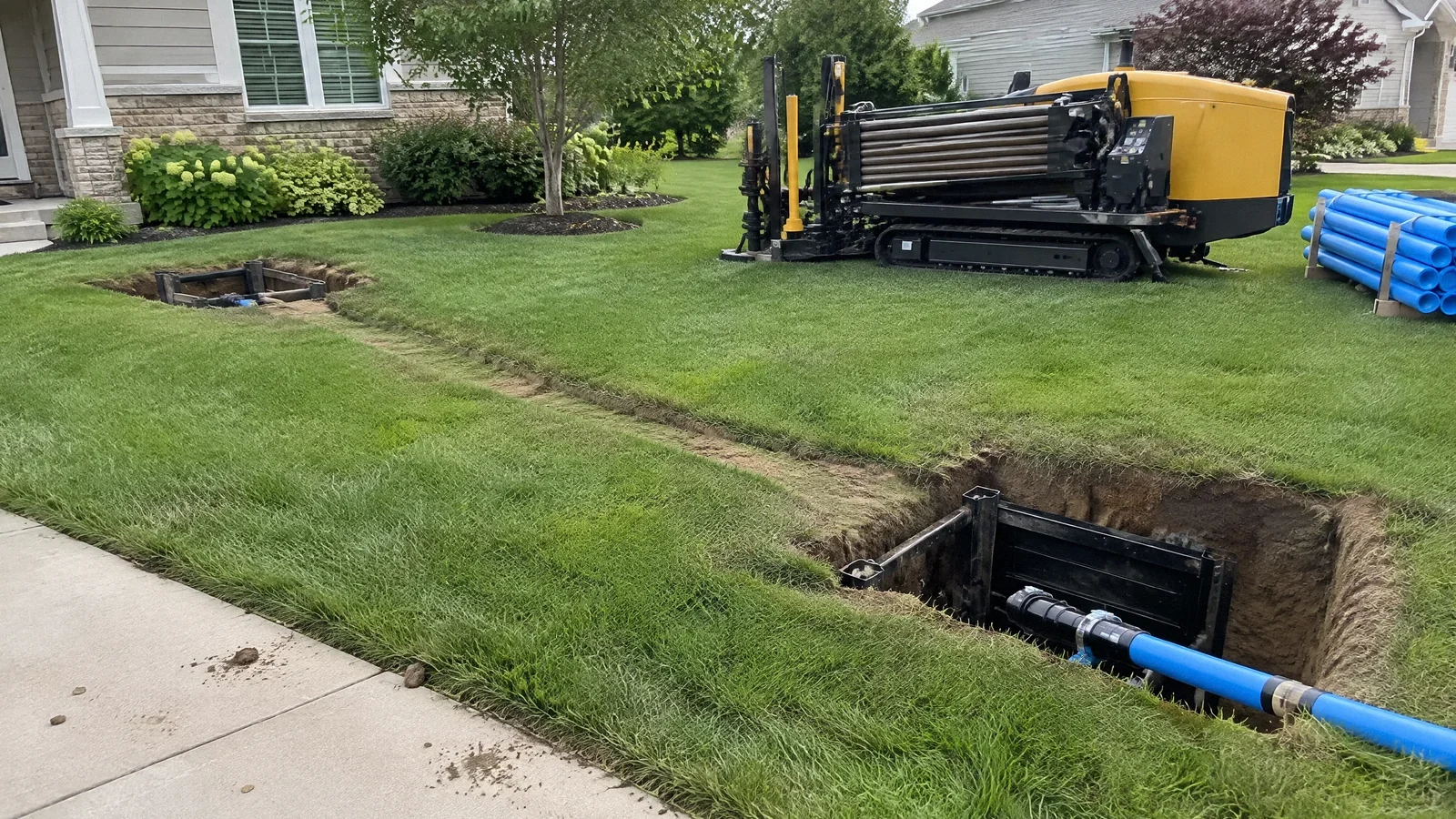
A contractor may use an open trench or a suitable trenchless method depending on the route and utility requirements. Trenchless installation still may require access pits and does not eliminate utility-location or permit requirements. Locate underground utilities before excavation and verify where the proposed line connects. Do not enter an unsupported trench or excavate around other services as a diagnostic shortcut.
Compare written scopes
Request the pipe material and product standard, diameter, approximate route, connection points, permits, testing, inspection, restoration and responsibility for unexpected conditions. Ask about the service interruption and how drinking water is protected. Compare like-for-like proposals and retain the final route and product information for future maintenance. A material alone cannot guarantee a leak-free installation.
Approval and water quality
The pipe and its fittings should be appropriate for potable water and the relevant installation. A seller’s description of a pipe as plastic or pressure rated does not establish that a particular product meets the local utility’s requirements. Ask the installer for manufacturer markings and applicable product listings. EPA explains that lead-containing plumbing can contribute lead to drinking water; legacy service materials and fittings deserve separate investigation even if the new pipe itself is suitable.
How the old service affects the project
Identify where the old line starts and ends, whether it passes under pavement or a foundation, and whether the utility must participate at the meter. A section on private property may connect to a utility-controlled section. The scope should say which portions remain and how connections will be made. If an existing line may contain lead, consult the water utility before disturbing it and follow its advice on testing and drinking water precautions.
Questions after installation
Ask for the inspection record, pipe and fitting information, and a route sketch showing connections and any access points. Confirm when water can be used and whether flushing, disinfection or sampling is required by the local authority. Record the locations of shutoffs and keep documentation with the property. If water is discolored or pressure changes after work, contact the installer and utility for advice rather than assuming the cause. Restore landscaping and paving only after required inspections.
Plan a realistic interruption
Confirm who will notify the water supplier, how long the supply may be interrupted, and whether occupants need an alternative source during work. Ask how the contractor will protect open pipe ends from contamination and what steps are required before service resumes. The utility’s instructions and the product manufacturer’s procedures control the actual work.
Your next-step checklist
- Record the location, condition and relevant history.
- Identify the source or application before choosing a repair or product.
- Ask a qualified professional about local requirements and limitations.
- Keep the written scope, inspection findings and records.
Related questions
Can any blue plastic pipe be buried for drinking water?
No. Color does not establish its listing, pressure rating or approval for the local service. Check product markings and local requirements.
Does trenchless installation eliminate excavation?
No. Access pits and connection work may still be needed. The route, nearby utilities, soil and local requirements determine whether the method is suitable.
Sources & context
Public guidance supports the principles in this article. The practical questions and examples are editorial interpretation, not a site assessment or a coverage decision. State-specific rules apply only where identified.
- EPA: Drinking water system piping materialsofficial guidance
- EPA: Lead in drinking waterofficial guidance