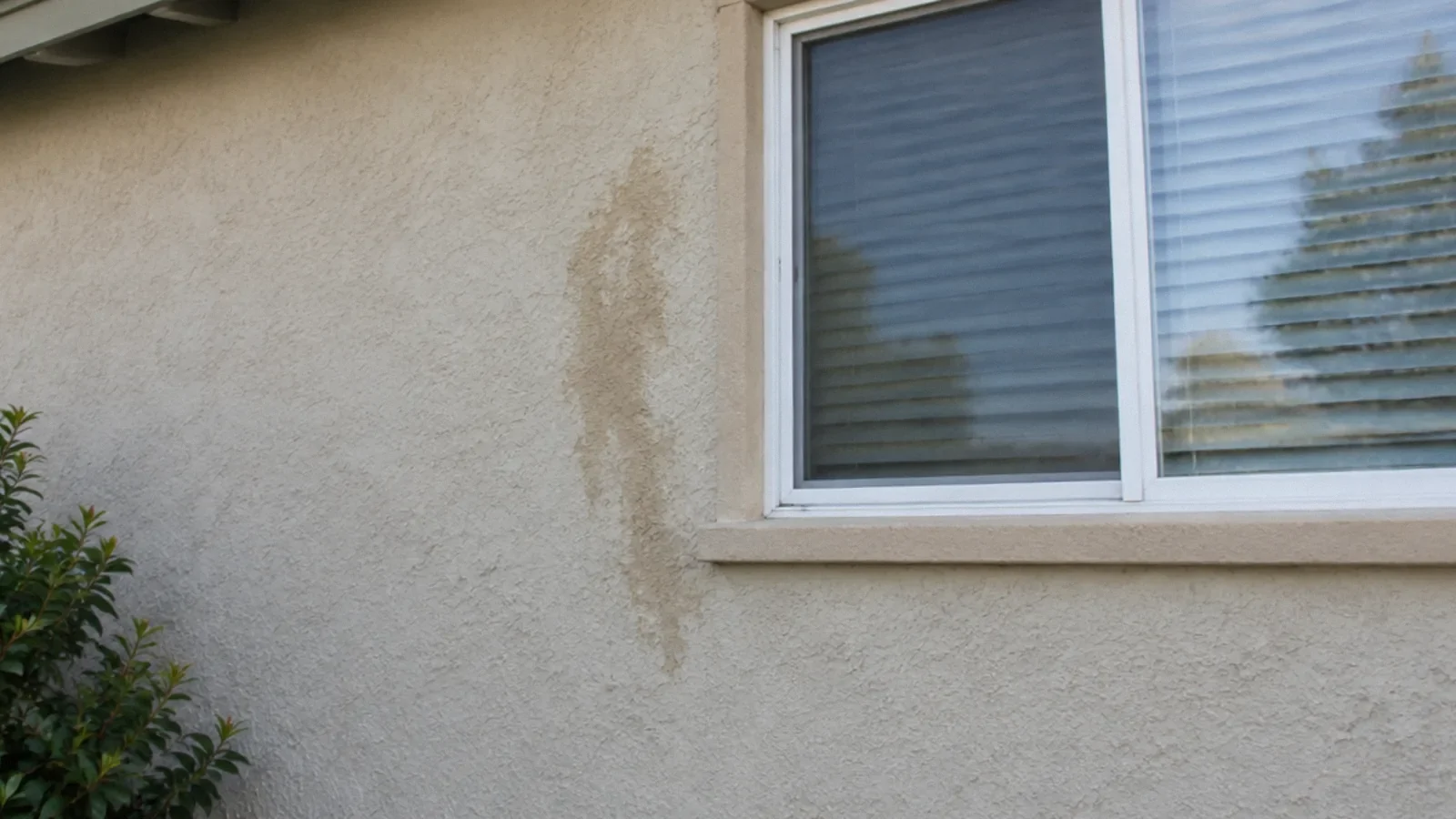
A stain or damaged area on stucco can be a clue to moisture, but it does not show the full condition behind the cladding. Identify the water source and assess flashing, drainage and underlying materials before patching or painting. A qualified building professional can determine the appropriate repair.
Start with the visible condition
Note where staining, cracking, bulging or loose material appears and whether it changes after rain or irrigation. Photograph the area from a safe location. A visible mark can be caused by several conditions and does not prove where water entered or how much material is wet.
Keep away from loose overhead material and unstable walls. Do not climb a roof or ladder to inspect a high area without appropriate equipment. If an interior wall is wet near electricity, avoid the area and seek qualified help.
Stucco is part of a wall assembly
The exterior finish, water-resistive layer, flashing, drainage details, sheathing and framing work together. The U.S. Department of Energy explains that a water-managed wall directs water that passes the cladding down and away from the building. The correct layers depend on the construction.
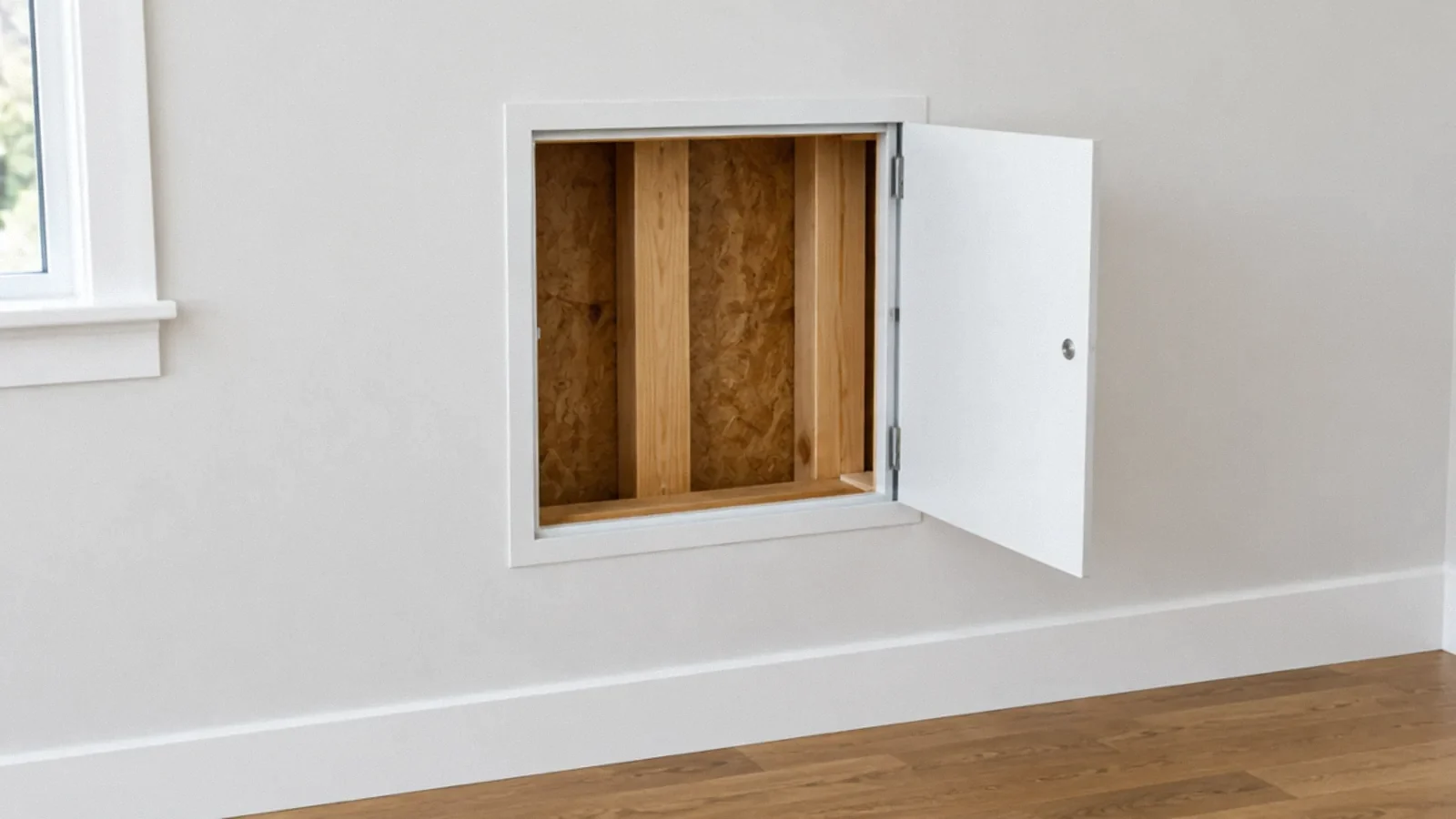
A surface patch alone does not establish the condition of the barrier, window flashing or framing behind it. Ask a building professional to identify the assembly and water pathway before choosing a repair. An opening may be needed, but it should answer a defined question.
Look for likely pathways
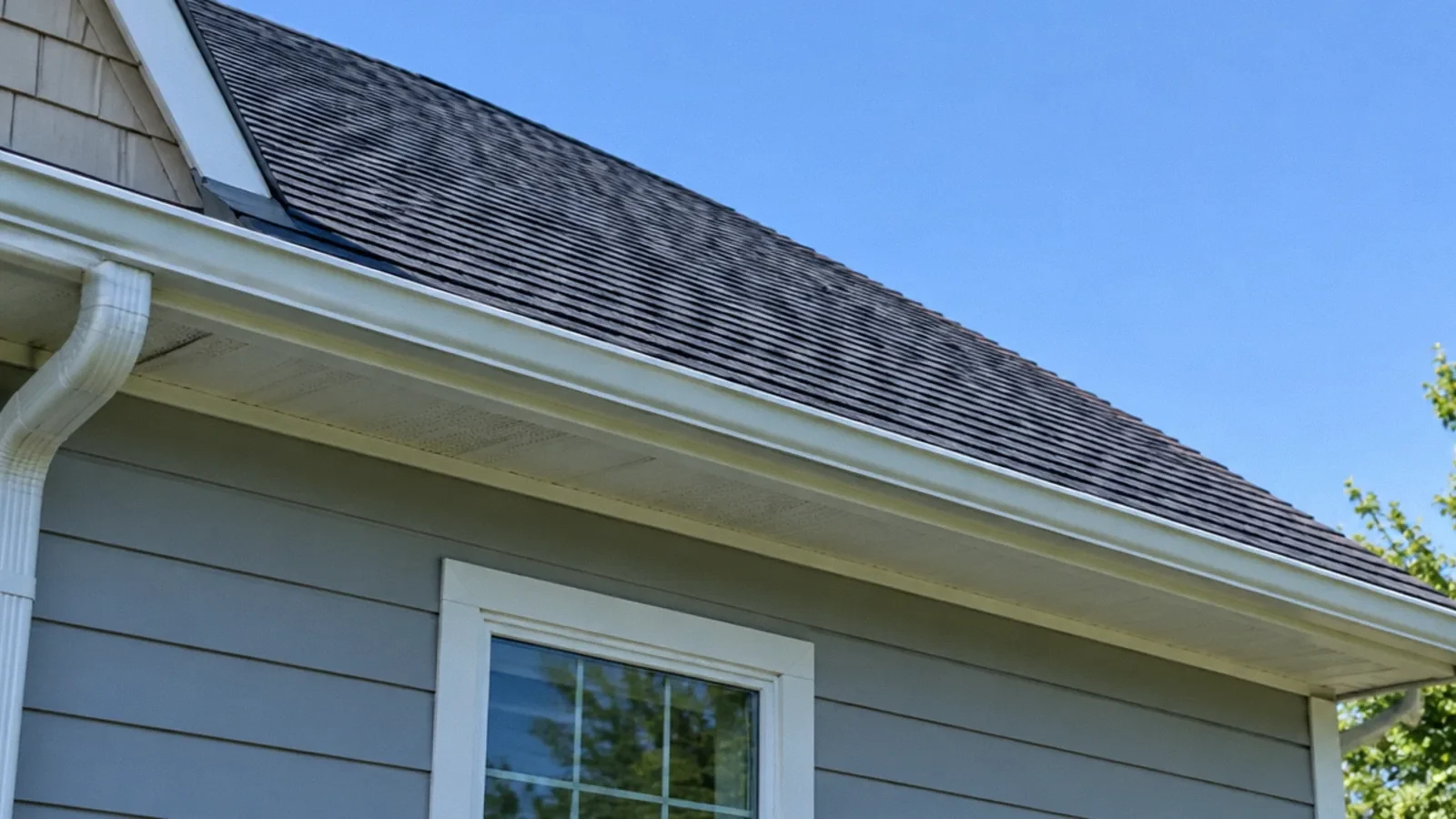
Water can enter around a window, roof-to-wall junction, pipe penetration, crack or other detail. Poor drainage or irrigation directed at the wall can also contribute. Timing and location are clues, not a substitute for inspection.
Do not recreate a leak by spraying a wall or window without a controlled plan; that can cause further damage or produce misleading results. A qualified investigator can choose appropriate noninvasive measurements and targeted access.
Drainage at the base matters
Some stucco assemblies use a weep screed at the base to allow drainage. A Department of Energy guide notes that blocked drainage at the base can contribute to water intrusion. Landscaping or soil placed against the wall may interfere with the intended detail.
Do not cut or remove a component without understanding its function and the building’s design. Ask the professional to evaluate clearances, grading and drainage for the actual wall and local requirements. The detail varies by assembly and age.
Repair the cause before the finish
A proper scope may include correcting a roof, window, flashing, plumbing or drainage problem as well as repairing affected wall layers and restoring the stucco finish. The necessary work depends on the findings; not every crack requires the same treatment.
Do not paint over a wet area as a substitute for source repair and drying. Ask how retained materials will be cleaned and dried, how damaged layers will be replaced and how the repair will connect to the existing water-management system.
Compare written proposals
Request the observed cause, opening and protection plan, material replacement, drainage and flashing work, finish matching, permits if required and cleanup. Clarify how concealed damage changes the price and who approves additional work.
Check applicable contractor credentials and insurance. A low quote for cosmetic patching may cover a different scope from an assembly repair. A contractor should not promise an exact hidden repair boundary without explaining the limits of the inspection.
After the work
Keep the report, photographs and invoices. Monitor the area during later rain from a safe location and report new staining or moisture. A dry surface immediately after painting does not prove that the wall assembly was dry before it was closed.
Maintain gutters and appropriate drainage, and avoid directing irrigation at the wall. If a symptom returns, document when it appears and ask for reassessment. The goal is to correct the pathway and restore the assembly, not only conceal a stain.
Your next-step checklist
- Document visible symptoms from a safe location.
- Identify the moisture source and wall assembly.
- Assess hidden materials before covering the area.
- Compare written repair scopes and monitor afterward.
Related questions
Can water damage stucco?
Yes. Water can affect the finish and materials behind it, but a stain alone does not show the full extent.
Can I paint over water-damaged stucco?
Painting is not a substitute for finding the source and assessing and drying affected materials.
Does every stucco crack mean the wall is leaking?
No. A crack is a clue that should be assessed in context with its location, condition and moisture evidence.
What is a weep screed?
It is a component used at the base of some stucco systems to provide a drainage point. Its details vary by assembly.
Sources & context
Public guidance supports the principles in this article. The practical questions and examples are editorial interpretation, not a site assessment or a coverage decision. State-specific rules apply only where identified.
- U.S. Department of Energy: Water-managed wallsfederal building science guidance
- U.S. Department of Energy: Stucco measure guidefederal building science guidance
- EPA: Mold and moisturefederal guidance