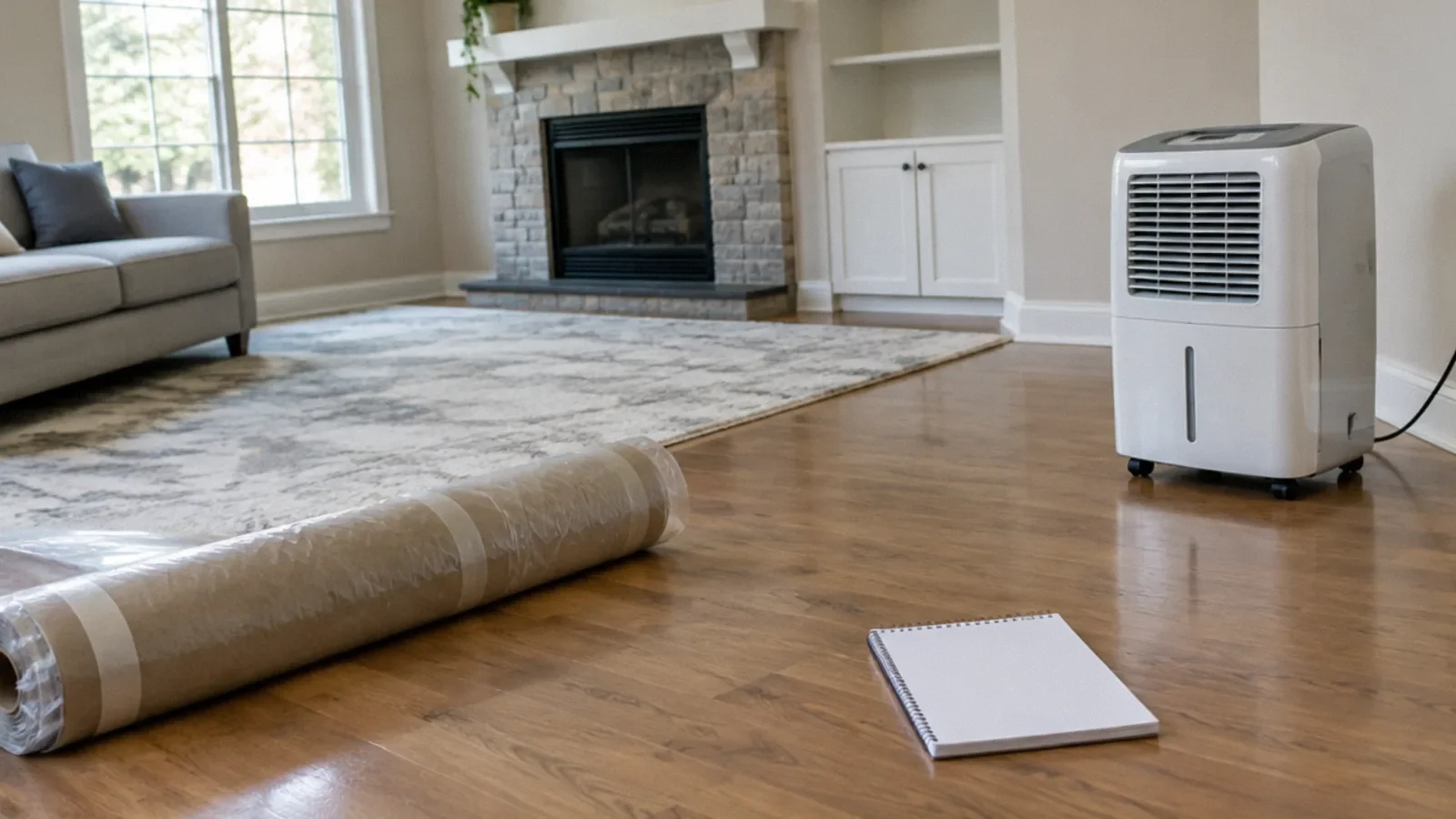
Training should cover water-source assessment, moisture measurement, drying, contamination, worker protection and documentation, with supervised practice appropriate to the job. A course or certification does not automatically grant a California contractor license or authorize work outside a person’s training.
Begin with the work and hazards
Water damage restoration can involve responding to leaks, evaluating wet materials, removing water, drying, documentation and coordinating repairs. The work varies with the water source, building and materials. A training plan should begin with the actual tasks an employee is expected to perform.
Electrical hazards, contaminated water, unstable materials, mold and confined spaces can require different controls and expertise. OSHA notes that some disaster-recovery tasks should be performed only by workers with the proper training, equipment and experience. Do not treat a general course as permission to perform every task.
Moisture and building materials
A foundation course should explain how water moves through materials, the limits of visual inspection and the appropriate use of moisture meters and other instruments. Readings depend on the instrument, material and conditions; a number without context is not a complete drying decision.
Supervised practice can help a trainee document baseline conditions, compare readings over time and recognize when a specialist is needed. Follow instrument instructions and the employer’s procedures. Do not energize wet equipment or open concealed building assemblies without the necessary qualifications.
Water sources and contamination
A supply leak, floodwater and sewage backup can present different hazards. Training should address how to identify an apparent source, restrict access and escalate when conditions are uncertain. Do not assume that clear-looking water is safe or that a deodorizer addresses contamination.
Cleanup methods, protective equipment and disposal depend on the situation and applicable rules. Staff should understand their employer’s hazard assessment and the limitations of their assigned role. Specialized sewage, chemical or hazardous-material work may require additional training and procedures.
Drying and equipment
Learn the purpose and limitations of air movement, dehumidification, containment and moisture monitoring. Equipment selection depends on the materials and environment; simply adding more fans is not a universal solution. Follow the equipment manufacturer’s instructions and electrical safety requirements.
A trainee should learn how to record equipment placement, readings and changes, and how to communicate concerns. Dry-looking paint does not prove that a wall cavity is dry. An experienced supervisor should review the plan when conditions change or the source is not controlled.
Mold and indoor air
EPA offers a mold course based on its guidance for schools and commercial buildings. EPA notes that the course’s clean-water guidance does not cover every situation and is not a substitute for flood-specific information. Training should distinguish moisture correction, material removal and appropriate worker protection.
Do not assume that a short course makes a person qualified to diagnose medical symptoms, identify a mold species by appearance or certify a building as sterile. Follow applicable workplace requirements and seek qualified help for large, hidden or otherwise complex conditions.
Courses, certification and licensing
A course can teach a defined curriculum; a certification may have its own examination, renewal and experience requirements. Verify the current details with the issuing organization and understand exactly what the credential represents. Avoid claiming that a credential guarantees competency in every restoration task.
California contractor licensing depends on the work, project circumstances and applicable rules. Check the Contractors State License Board for the current requirements and classifications. A course completion certificate is not itself a contractor license, and an employer remains responsible for applicable worker training.
Build supervised experience
Ask a potential employer or trainer what supervised field work is available, how skills are assessed and how safety concerns are reported. Experience with one material or source does not automatically prepare a worker for sewage, a confined space or a different building system.
Keep a factual record of training, tasks and supervision. Do not claim work experience that has not occurred. A mentor can help a trainee practice clear documentation, customer communication and the decision to stop work when conditions exceed the plan.
Questions before paying for a course
Review the curriculum, instructor qualifications, course duration, assessment, fees, renewal and refund terms. Check whether the course is introductory or designed for experienced personnel and whether it includes hands-on practice. Verify current schedules and requirements with the provider.
Compare the training with the work you intend to perform and the employer’s requirements. EPA’s public course can provide useful background, but it is not a promise of employment, a contractor license or comprehensive certification. Choose additional training based on the hazards and responsibilities involved.
Your next-step checklist
- Define the intended work and hazards.
- Learn moisture assessment and documentation.
- Use supervised practice and appropriate protection.
- Verify credentials and licensing separately.
- Choose further training for specialized hazards.
Related questions
What should water mitigation training cover?
Core topics include source assessment, moisture, drying, documentation and worker safety, with supervised practice suited to the role.
Does a course completion certificate replace a California contractor license?
No. Check the Contractors State License Board for requirements applicable to the actual work.
Does EPA provide mold training?
EPA publishes an introductory mold course, with stated limits on its scope.
Can a new trainee enter any flooded or confined area?
No. Hazardous work requires appropriate assessment, training, equipment and supervision.
Sources & context
Public guidance supports the principles in this article. The practical questions and examples are editorial interpretation, not a site assessment or a coverage decision. State-specific rules apply only where identified.
- EPA: Mold course introductionfederal training guidance
- OSHA: Flood response and recoveryfederal worker safety guidance
- California CSLB: Contractors State License BoardCalifornia licensing authority