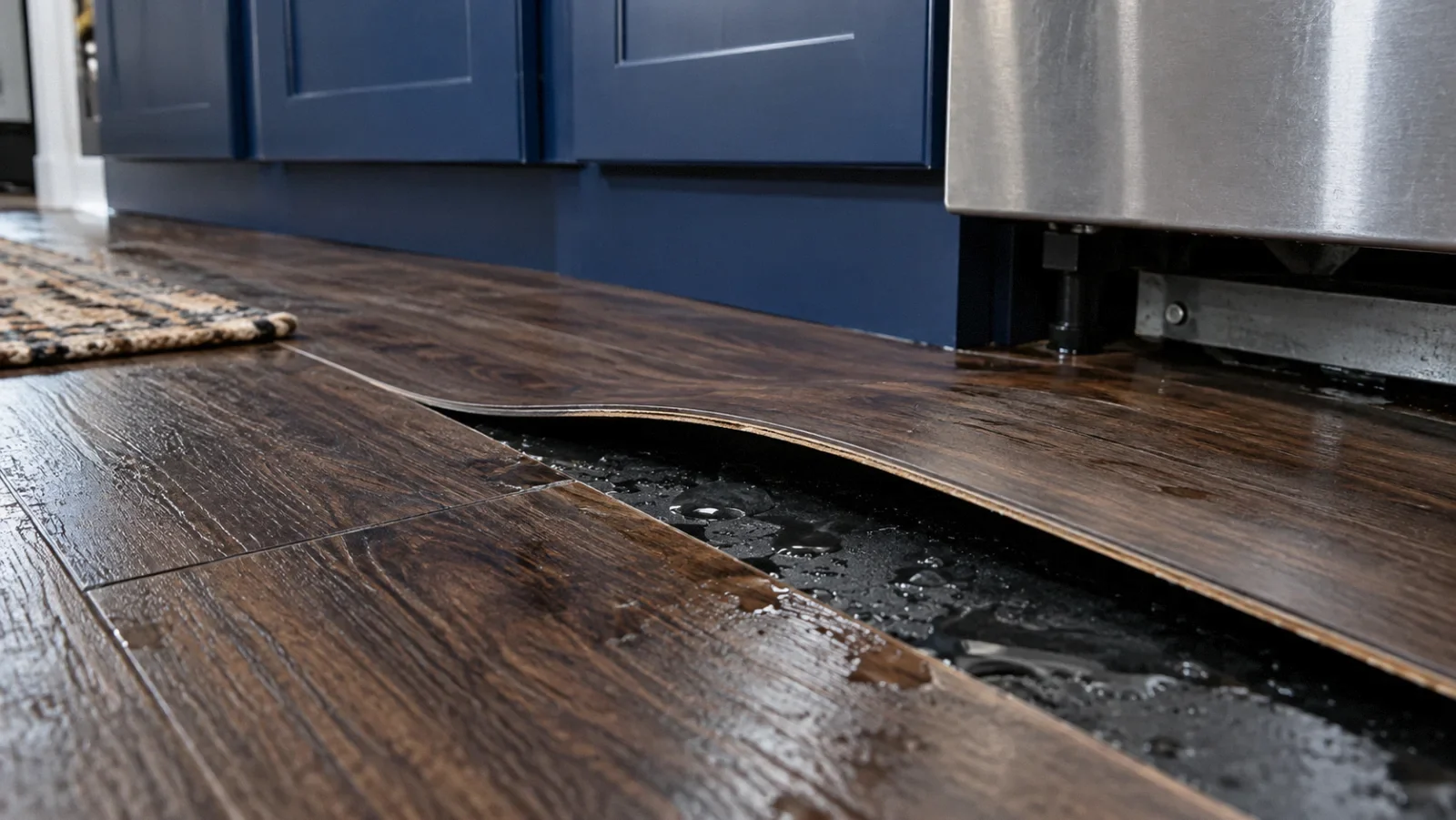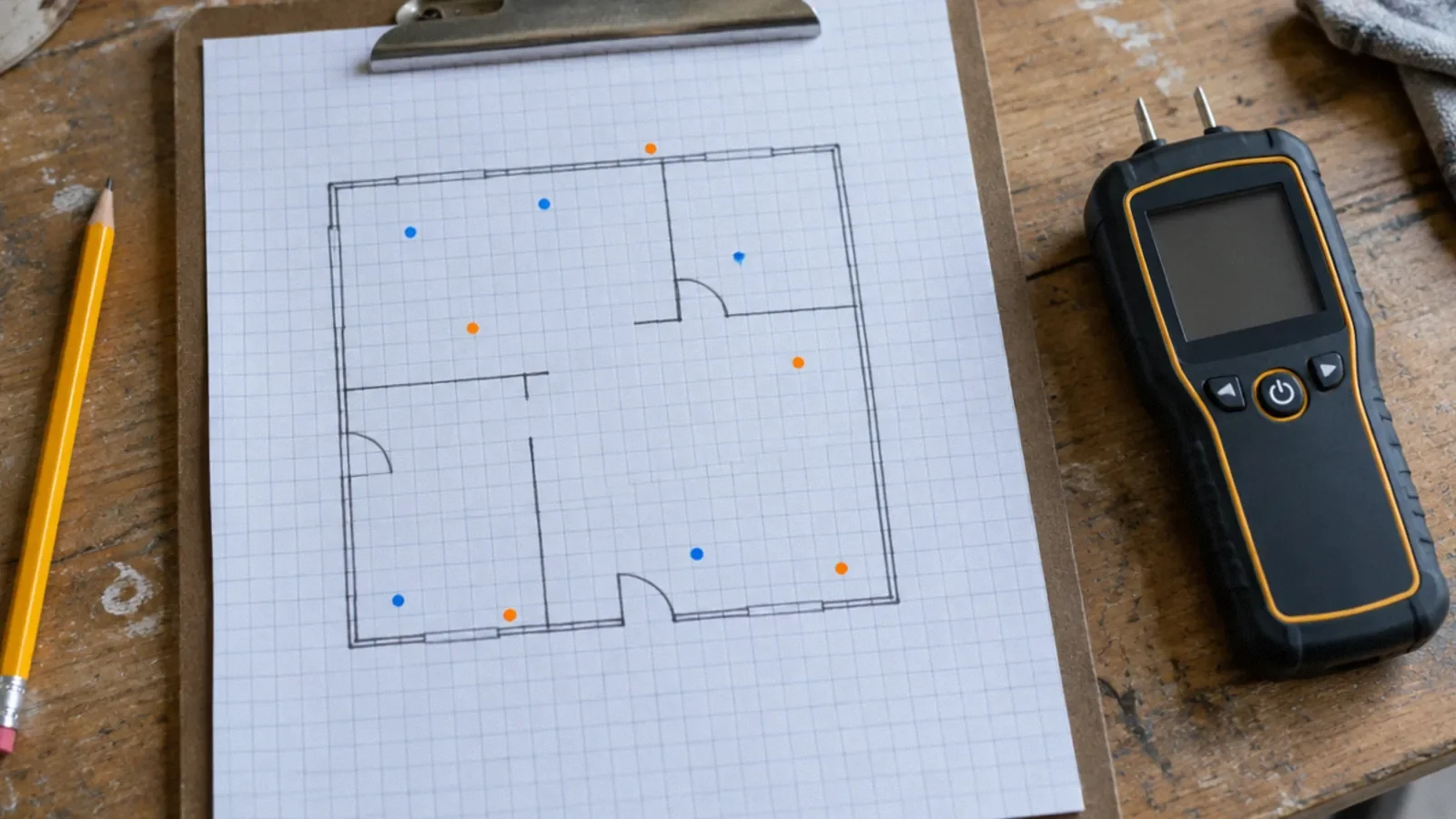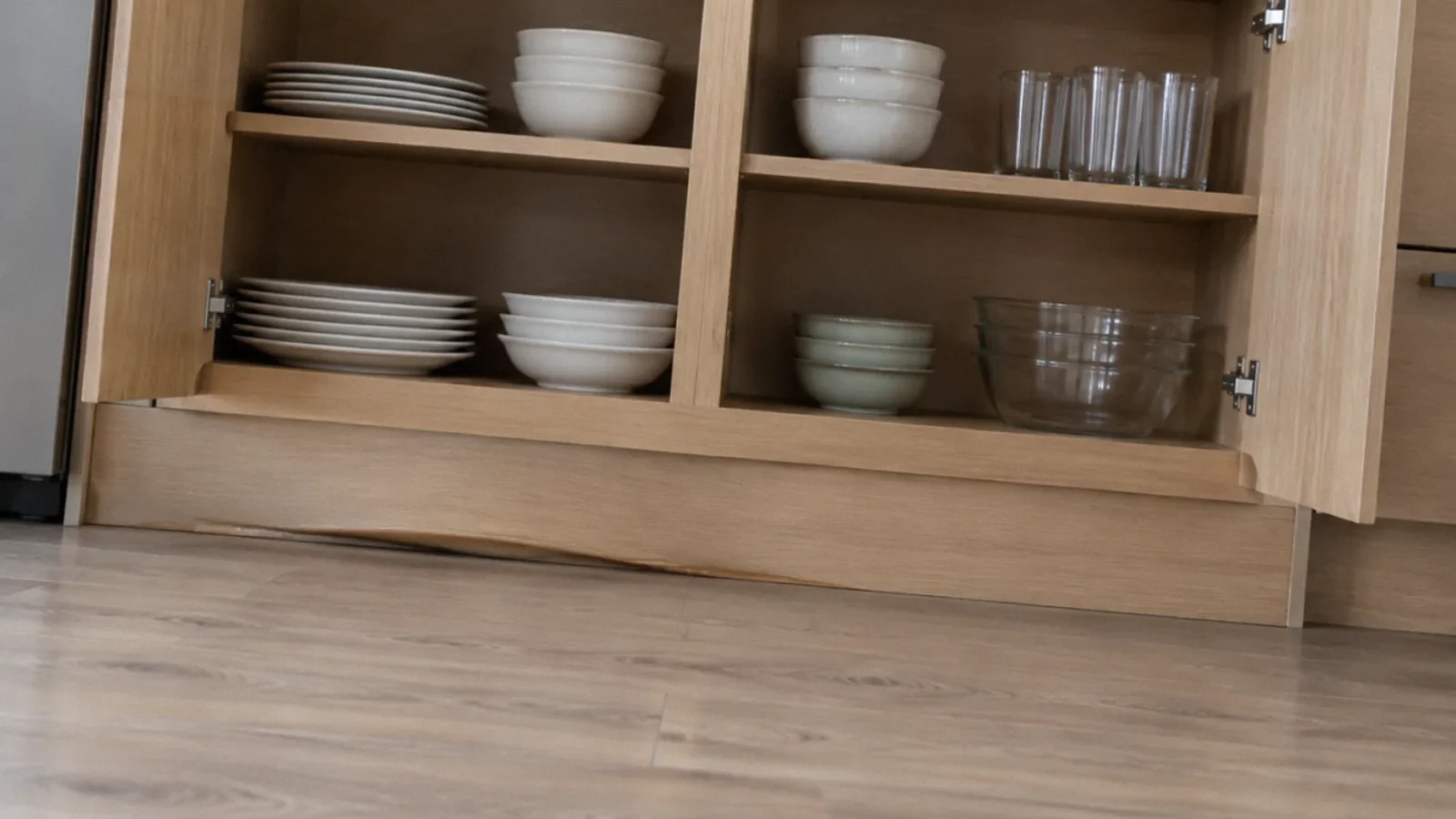
A damaged toe-kick cover may be cosmetic, but the supports, cabinet sides, floor, or wall behind it may also be affected. Identify the cabinet construction and inspect the base before choosing repair or replacement. Do not remove supports beneath a heavy countertop without a competent plan.
Distinguish the cover from what carries the load
The visible toe-kick skin is often a finish piece. Behind it may be structural cabinet sides, a separate platform, adjustable legs, or other supports. Cabinets vary, so the statement “the toe kick is only cosmetic” can be dangerously incomplete when applied to every installation.
A damaged cover alone does not prove the entire cabinet is ruined. Equally, replacing that cover cannot correct crumbling supports or a wet substrate. Photograph the exposed construction and ask the cabinet professional to identify the load path, especially under a stone or other heavy countertop.
The material determines the repair question
Solid wood, plywood, particleboard, and fiberboard react differently to water. Veneer or laminate may hide swelling below the surface. A wood-based panel that has expanded or lost cohesion may remain distorted after drying, while a sound component may be repairable.
Record which part is affected: end panel, cabinet bottom, side, toe platform, back, or decorative skin. Ask for a part-specific explanation of repairability. An estimate saying only “cabinet water damage” does not explain whether cleaning, refinishing, component replacement, or full unit replacement is proposed.
Drying must reach the enclosed base
The void beneath cabinets may connect across several units and can trap water beyond the original leak. Opening doors helps air reach the cabinet interior but does not necessarily expose the underside or back. EPA’s moisture guidance emphasizes hidden layers and drying paths rather than visible surfaces alone.
Ask how the base and adjacent flooring were inspected, whether the back wall was affected, and what remains inaccessible. Selective access may be enough in some assemblies; others may require more extensive removal. The access plan should preserve support and account for attached plumbing, electrical connections, and the countertop.
Do not let a cosmetic repair close an unresolved loss
A new skin can conceal a wet or weakened platform. Before finish work, obtain the retained-material assessment and the plan for any damaged supports. Check the underlying floor as well, particularly where cabinets sit over flooring or where water ran along the wall.
Cleanability also affects salvage. A sewage event can require a different decision from a brief confirmed clean-water leak because inaccessible porous backs and bases may be difficult to treat. A surface that wipes clean is not evidence that the underside and core are suitable to retain.
A cabinet decision that preserves the useful distinctions
Imagine that removing a decorative toe-kick exposes a sound-looking plywood platform on one side and swollen particleboard at an adjoining unit. The two findings should not be merged into “all bases fine” or “whole kitchen ruined.” Record the construction and condition of each affected component, including the floor beneath it.
Ask whether a localized component can be replaced while preserving adequate support and attachment. The answer depends on the cabinet construction and connections, not only the size of the stain. If the unit is integral to a continuous countertop installation, safe access and handling may enlarge the work even when the damaged material is limited. That access cost should be explained separately from the material-loss conclusion.
Moisture readings can support the drying decision but do not establish load capacity. A low reading on a crumbly base does not make it structurally adequate, and an elevated reading on otherwise sound wood does not by itself mandate full replacement. The cabinet or construction professional should address the condition question explicitly.
Questions before the final skin is installed
Request photographs of the completed support repair and the accepted substrate. Confirm that connected plumbing has been restored and checked by the appropriate trade, and that any affected wall layers are complete. The new toe-kick should be the last visible step in resolving that area, not the first way of making it look repaired.
If the source was a small continuing leak, discuss how it can be noticed earlier in the future. An accessible inspection point may be more useful than sealing the entire base against view. Do not create drainage or ventilation openings arbitrarily; the cabinet design and adjacent floor still need to work as a system.
Keep a clear stop point: no finish closure while a support is unresolved, a heavy top lacks an approved support plan, or the retained floor remains unaccepted. These are concrete repair conditions, not reasons to replace unaffected cabinets automatically.
Coordinate cabinetry with the rest of reconstruction
Removal can affect countertops, plumbing, backsplash, flooring, and adjoining cabinets. Have the scope explain those dependencies before work begins. Temporary support and handling should be designed by the responsible trade; this is not a task to improvise with a few blocks while a heavy top is suspended.
For replacement, consider access for future inspection and whether a small leak can be noticed sooner. A removable cover or accessible shutoff may improve maintainability. Material selection can reduce some vulnerabilities, but it cannot replace source repair or create a guarantee against future damage.
Your next-step checklist
- Identify the toe-kick cover, actual support system, and countertop load.
- List damaged components separately instead of treating the entire kitchen as one material.
- Inspect the cabinet base, wall behind it, and floor beneath it.
- Document moisture, cleanability, and physical deterioration before cosmetic closure.
- Coordinate removal or replacement with countertop support and connected utilities.
Related questions
Can I just glue a new cover over the swollen one?
Only after the underlying condition has been assessed and any required repairs completed. Covering damage first can hide wet material or loss of support.
Do crumbling particleboard supports recover when dry?
Drying does not restore material that has lost cohesion. A qualified cabinet or construction professional should determine the necessary support repair or replacement.
Does one damaged cabinet require a whole new kitchen?
Not automatically. Structural condition, installation dependencies, matching, access, and contamination can affect scope. Ask for those reasons to be separated rather than presented as a single assumption.
What can water damage on cabinets look like?
Swelling, lifting veneer, staining or a soft base can be clues. Inspect the cabinet supports, back and adjacent floor before deciding on a repair.
Sources & context
Public guidance supports the principles in this article. The practical questions and examples are editorial interpretation, not a site assessment or a coverage decision. State-specific rules apply only where identified.
- EPA: Table 1, Water Damage Cleanup and Mold Prevention (clean-water material guidance)official
- EPA: Moisture Control Guidance, Chapter 1 (moisture transport and whole-assembly control)official
- USDA Forest Service: Wood Handbookofficial
Community questions behind this topic
These discussions helped identify reader concerns. They are anecdotal, not technical or legal authority.