Keep clear of a sagging ceiling and electrical hazards, report active water, and have the source identified and repaired. Porous water-damaged ceiling tiles often need replacement after the surrounding assembly is assessed and dried.
What a stained ceiling tile tells you
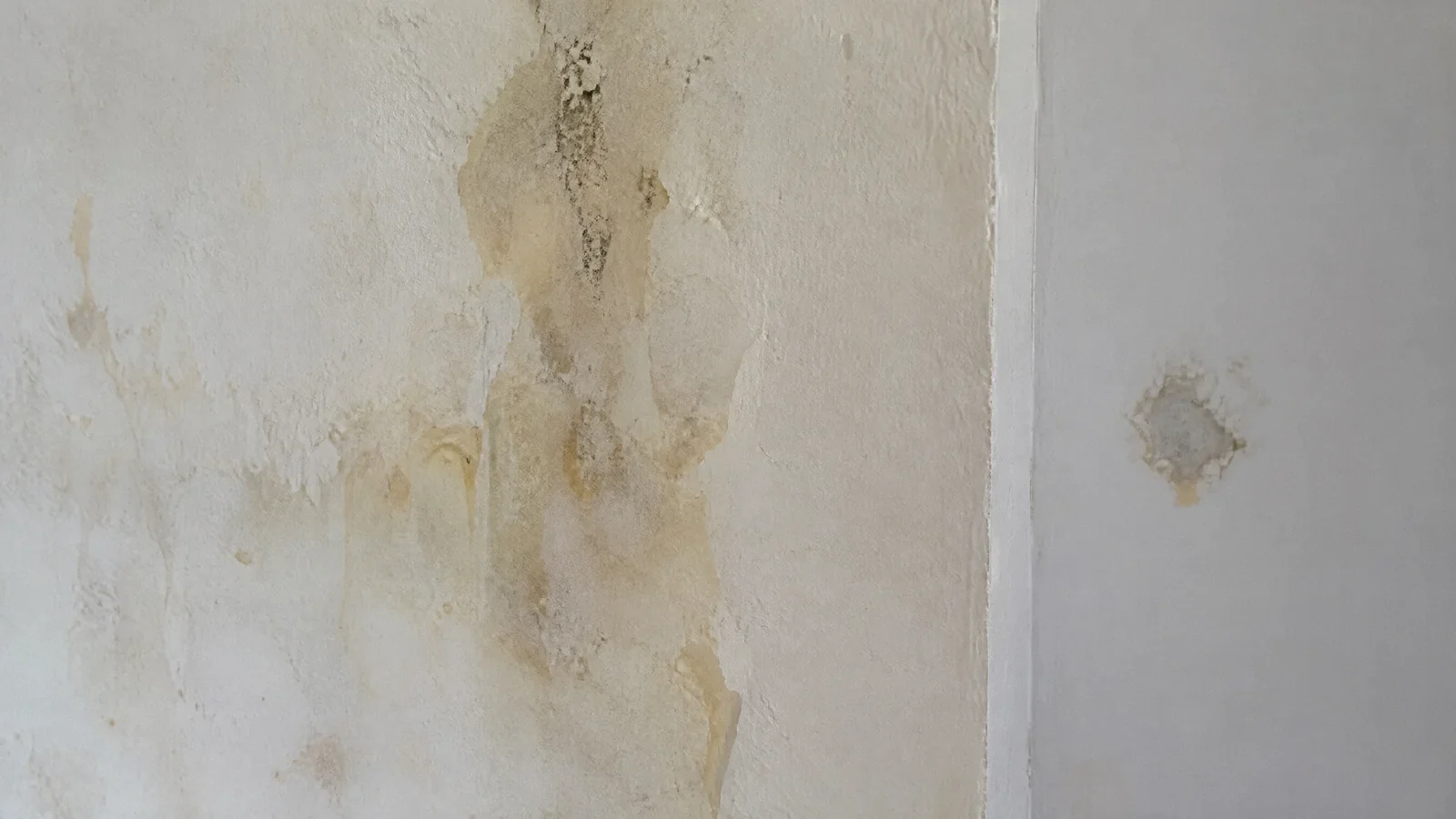
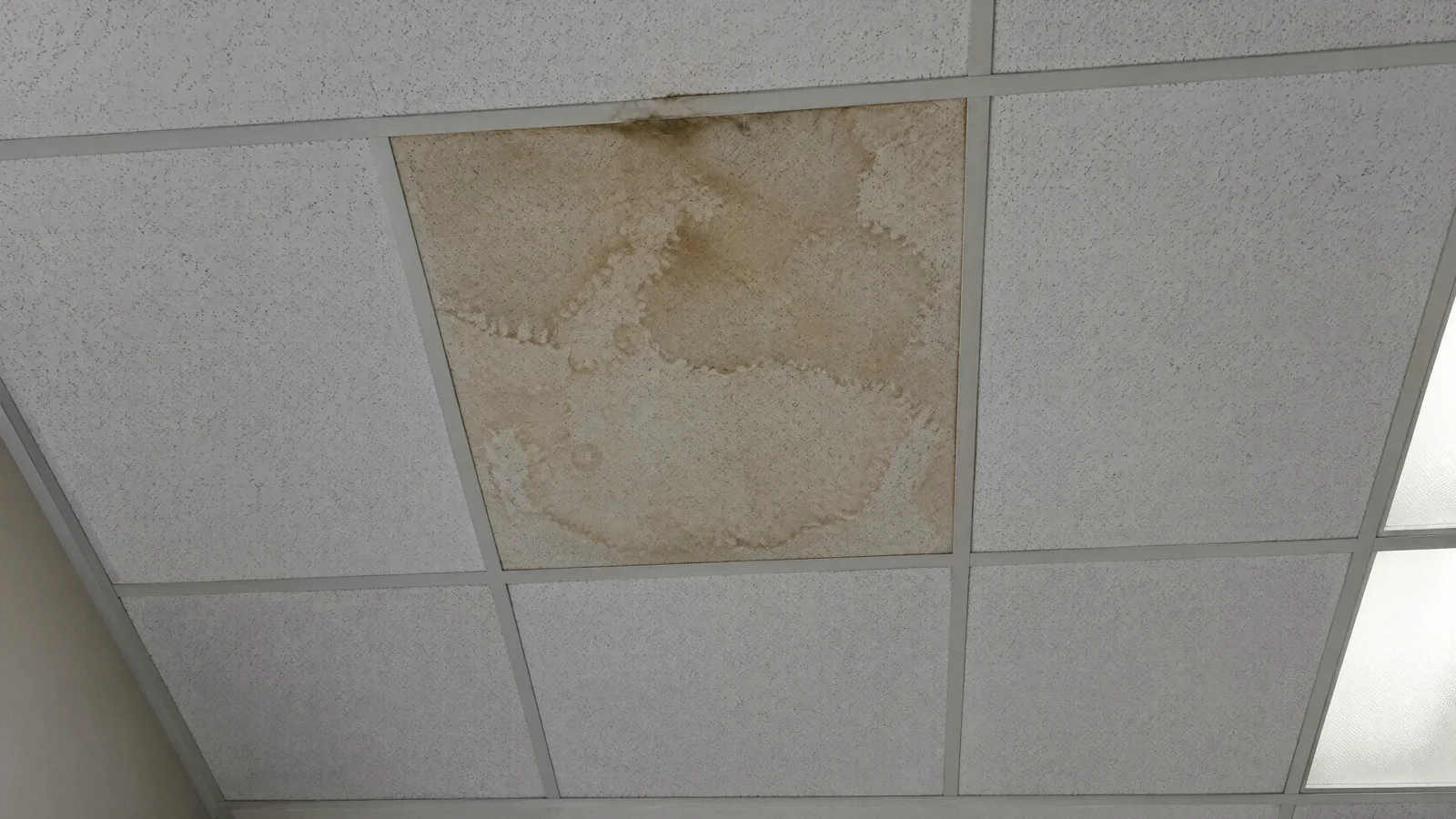
A brown ring or discolored patch on a ceiling tile usually means the tile has been exposed to moisture, but the mark alone does not tell you whether the source is active, where it began, or whether mold is present. Water can move along framing or a pipe before reaching the visible tile. Check the history and conditions above it rather than simply replacing the tile.
Suspended acoustic tiles and fixed ceiling finishes are not interchangeable. Porous acoustic panels can absorb water through their thickness, lose strength, and hide damage on their upper surfaces. A hard, cleanable panel may have a different manufacturer's care and replacement procedure. Identify the material and the building before deciding what can be saved.
Start with safety
Stay out from under a sagging or bulging ceiling and keep others away. Water may collect above a panel, and the ceiling cavity can contain electrical equipment, hot pipes, or contaminated water. Do not push on the tile or stand underneath to release water. If water is near lights or wiring, seek help from a qualified electrician or the utility; never enter standing water to reach a switch.
In a commercial or rented building, report the stain to the building manager promptly. Record the room, location, time, and whether it changes after rain or when plumbing or air conditioning operates. A photo taken from a safe location provides a useful baseline. If water is actively entering, a qualified person should stop the source and protect the area without exposing occupants to a falling ceiling.
Trace the source above the mark
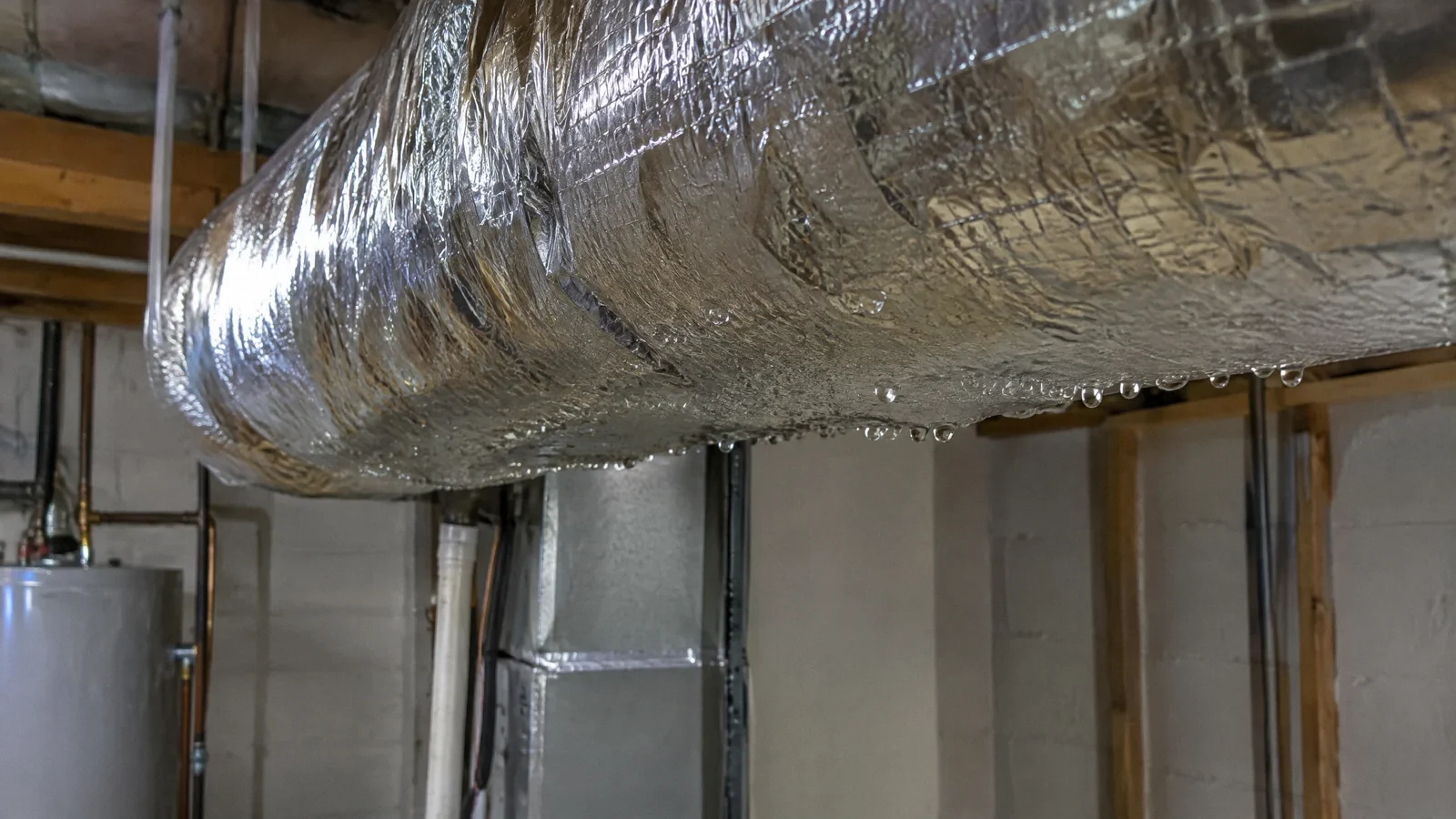
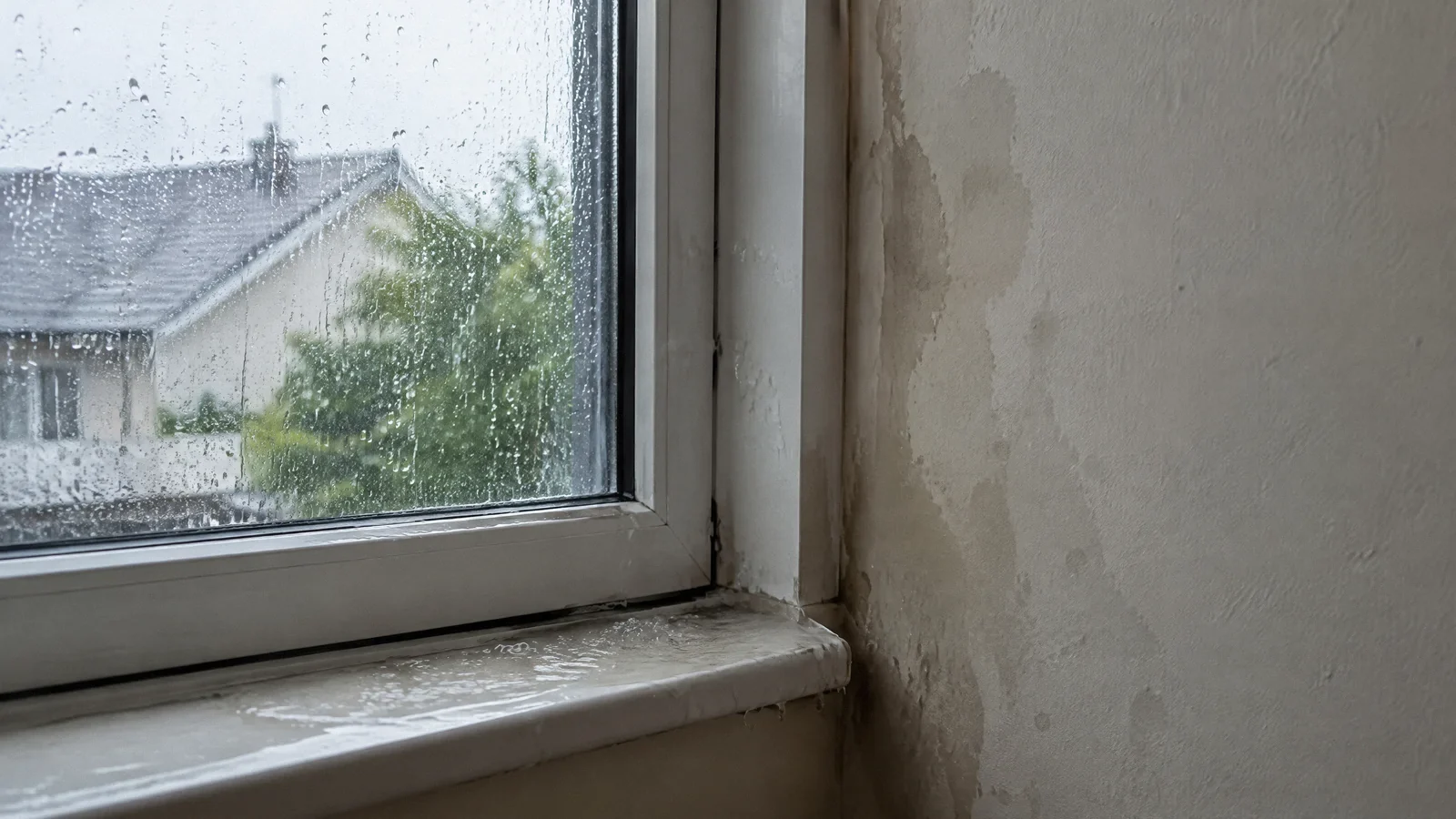
Possible sources include roof or flashing leaks, plumbing above the ceiling, condensation on cold pipes or ducts, and air-conditioning drain problems. A top-floor stain after wind-driven rain suggests a roof or wall investigation; a stain below a bathroom that changes with fixture use suggests plumbing. These are leads, not conclusions. A ceiling can receive water from more than one route.
A roofer, plumber, HVAC technician, or restoration professional can inspect the relevant system and the concealed space. Ask them to identify the source and repair it, evaluate adjacent tiles and insulation, and document any inaccessible areas. Moisture readings can help map and monitor wet material, but a surface reading alone does not reveal the full extent or identify mold.
When to replace a tile
EPA's guidance for clean-water damage in schools and commercial buildings lists ceiling tiles for discard and replacement. Its home mold guidance also says porous materials such as ceiling tiles may need to be thrown away when moldy because growth can penetrate their spaces. Replace a damaged porous tile after the source is repaired and the surrounding assembly is appropriately dry; do not assume that painting over the mark restores the tile.
The age and type of ceiling can complicate removal. Some older building materials may contain asbestos, and disturbing suspect material can release fibers. If the material's identity is unknown, especially in an older building, consult the building owner and an appropriately qualified professional before disturbing it. Follow applicable local requirements and the manufacturer's instructions.
Clean water, contaminated water, and suspected mold
The water source affects the response. A small clean supply leak is not equivalent to sewage, floodwater, or water of uncertain origin. EPA recommends a professional experienced with contaminated-water damage when sewage or other contaminated water is involved. A stained tile cannot be judged safe simply from its color or because it feels dry at the surface.
Mold may grow on the hidden upper surface as well as the visible face. Color alone cannot establish whether a mark is mold or identify a species. Avoid disturbing suspected hidden growth; EPA notes that investigation can release spores and may require an experienced professional. If the HVAC system is known or suspected to be contaminated with mold, do not operate it before consulting qualified help.
Finish the repair and watch for recurrence
The repair should include the source, wet materials above the ceiling, any affected insulation or adjacent components, and the finished tile. Request documentation of the inspection, drying, and repair before the cavity is closed. A new tile installed while the leak continues is likely to stain again and may conceal a larger problem.
After a safe repair, observe the area during the conditions that previously produced moisture, such as a later rain or normal equipment operation. Keep photographs and maintenance records. If staining returns, report it and revisit the source rather than repeatedly replacing the visible panel. For a broader comparison of water damage and possible mold, see the related guide.
Your next-step checklist
- Keep clear of sagging panels and electrical hazards.
- Record when and where the stain changes.
- Repair the moisture source and assess the cavity.
- Replace damaged porous tiles after drying.
Related questions
Can I paint over a stained tile?
Painting hides the mark but does not repair an active leak or dry the cavity. EPA recommends replacing water-damaged ceiling tiles in its clean-water response table.
Does a brown stain prove mold?
No. A stain can indicate water exposure, but its color does not establish whether mold is present.
Sources & context
Public guidance supports the principles in this article. The practical questions and examples are editorial interpretation, not a site assessment or a coverage decision. State-specific rules apply only where identified.
- Water Damage Cleanup and Mold Preventiongovernment
- Mold Cleanup in Your Homegovernment
- Dealing with Debris and Damaged Buildingsgovernment