Water intrusion is unwanted water entering a building or its materials. Identify where and when it appears, avoid electrical or structural hazards, stop an accessible source only if safe, and have the entry route repaired before drying and restoring affected materials.
What water intrusion means
Water intrusion, sometimes called water incursion, is water entering an area of a building where it is not intended to be. The term describes the movement of water, not a specific source, level of damage, or insurance determination. It can happen through the building exterior, from a plumbing leak, or when indoor moisture condenses on a cold surface.
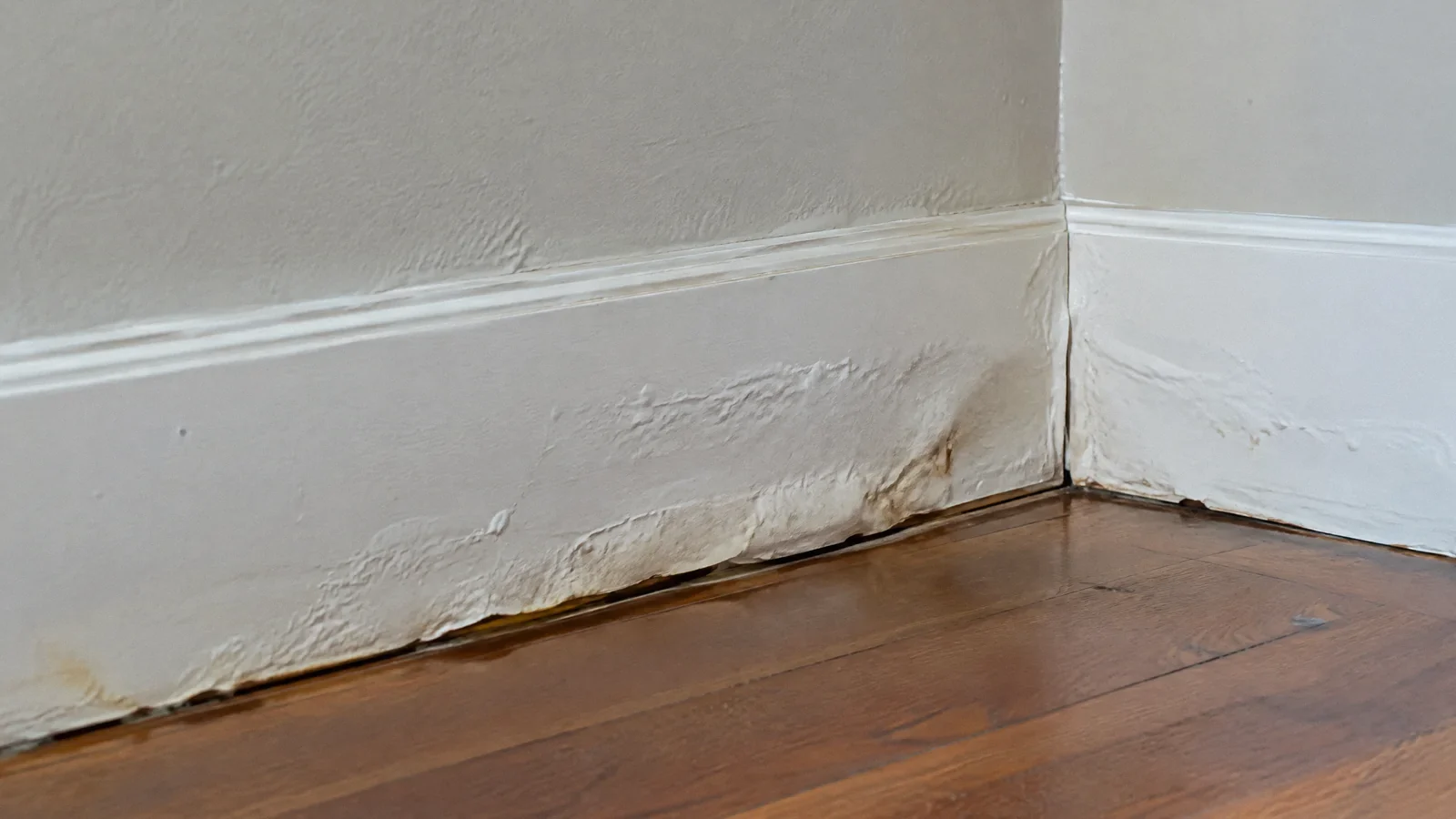
A damp patch is a clue to investigate. Water can travel along framing, pipes, membranes, and floor layers before appearing, so the visible mark is not necessarily the entry point. The distinction matters because replacing a stained finish without stopping the water can leave the underlying material wet and allow the problem to return.
If water is seeping through a surface
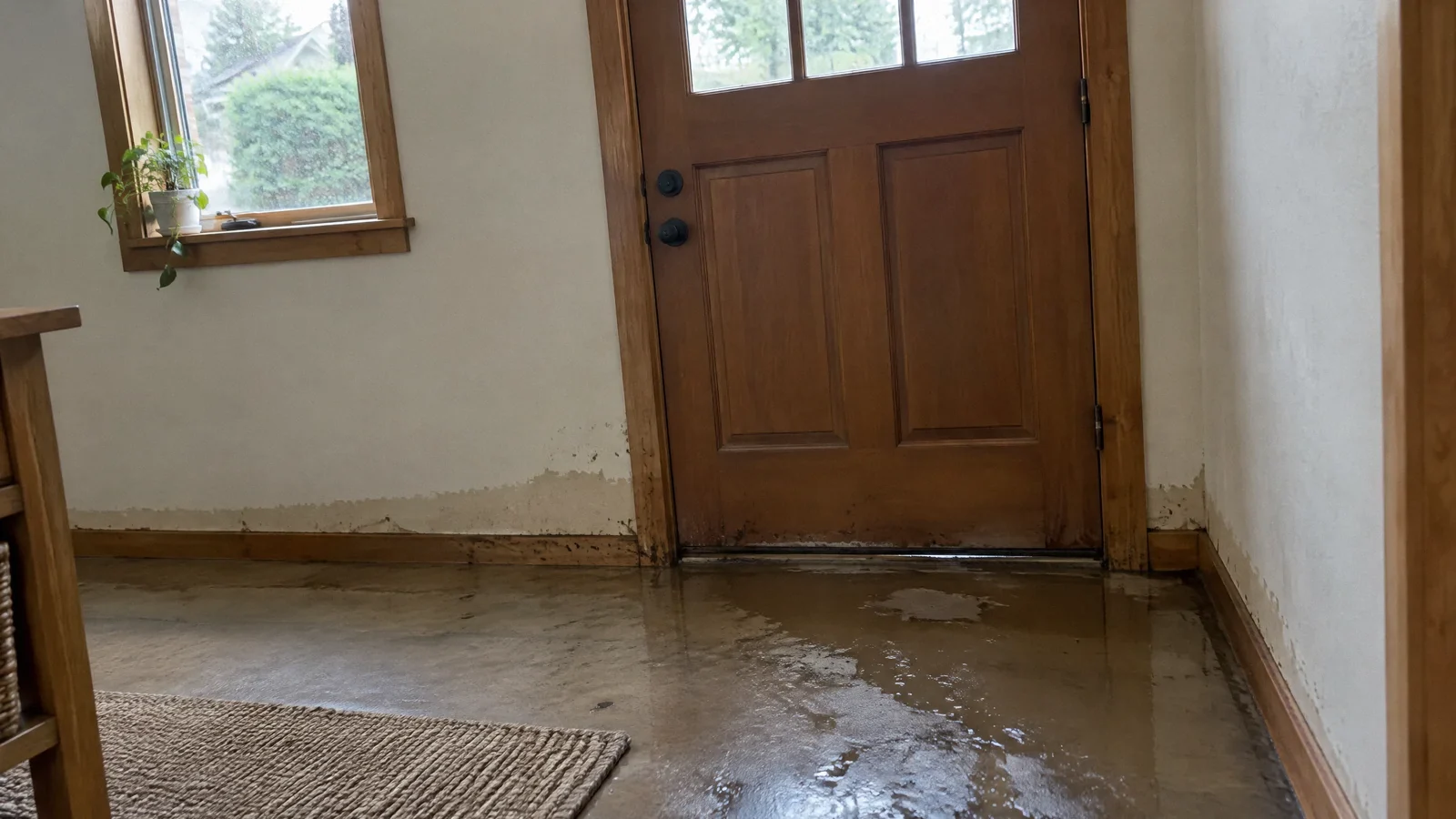
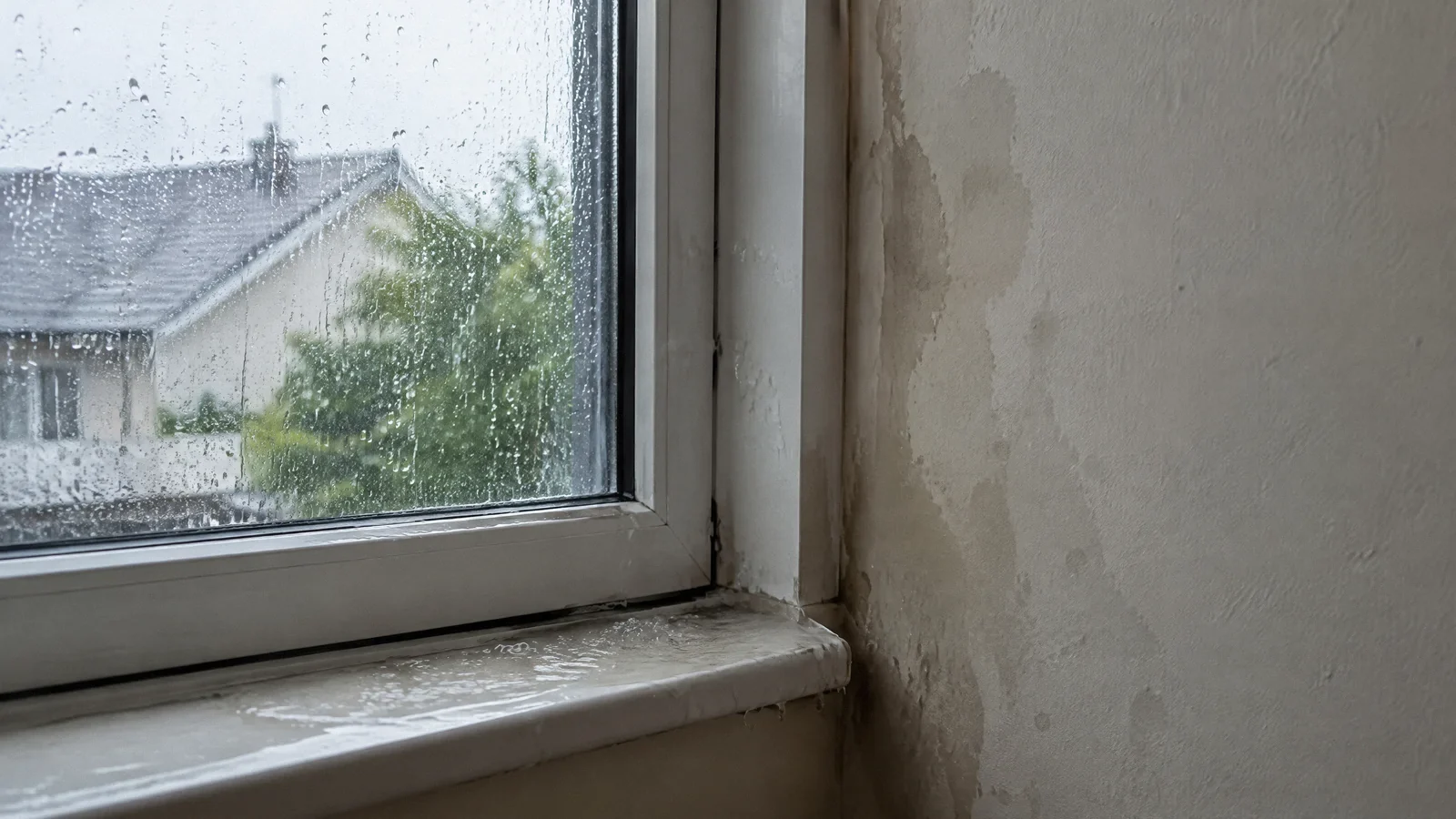
Start with the location and timing. Seepage at a basement wall or floor joint after sustained rain suggests a different investigation from a ceiling stain under a bathroom that changes when a fixture is used. A window mark during wind-driven rain calls for inspection of the window assembly, flashing, and adjacent wall; condensation on glass on a cold morning points to a different moisture mechanism. These are clues, not diagnoses.
Record when the mark appeared, weather conditions, the rooms affected, and whether it grows. Photograph it from the same position over time. Note nearby plumbing and appliances, but do not open a wall or ceiling when it may conceal wiring, contaminated water, or unstable materials. A professional can trace the route and select a safe inspection method.
Common routes into a home
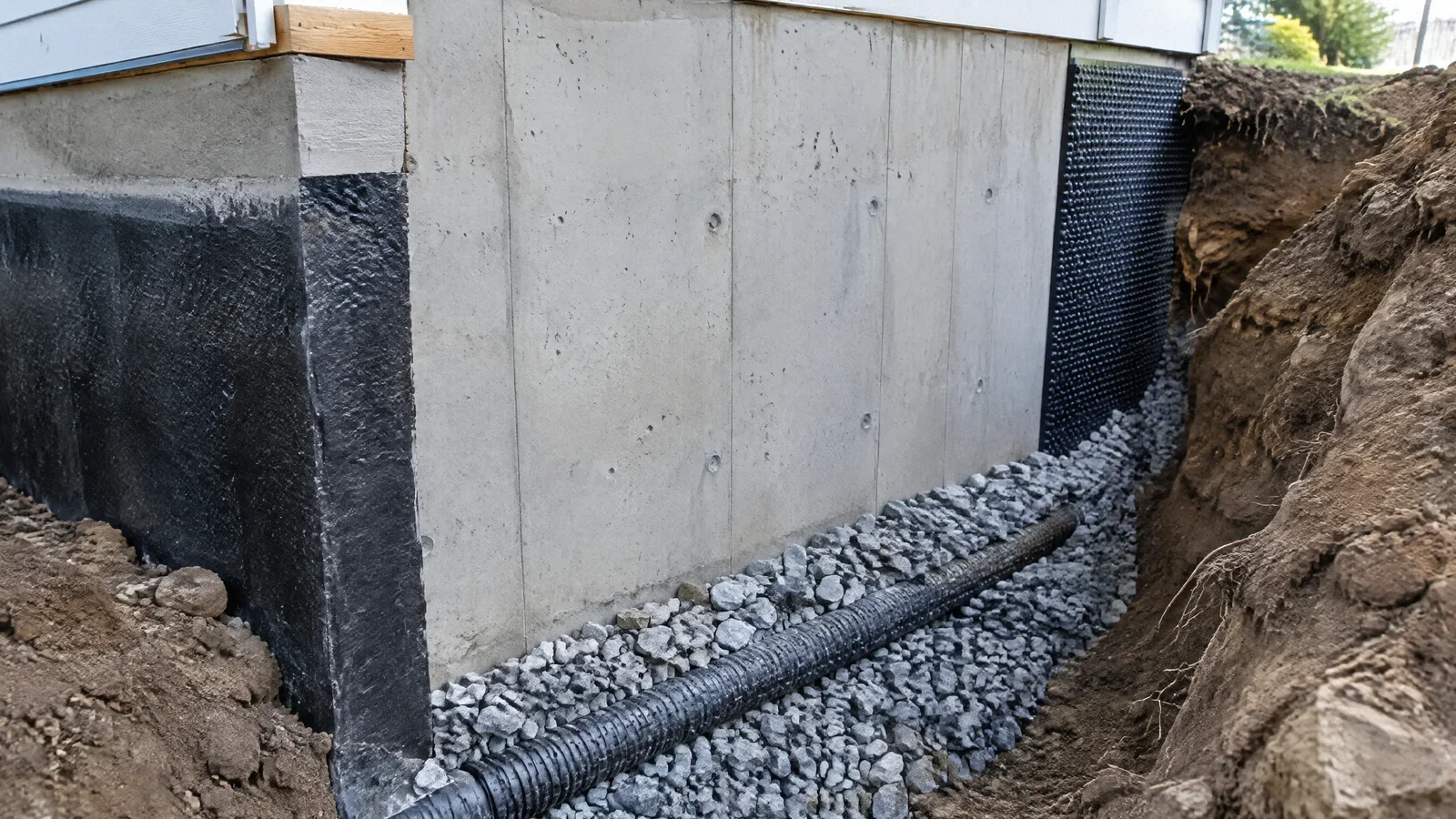
Rain can enter around roofing transitions, wall penetrations, windows, doors, and damaged or poorly connected flashing. Water can also collect against a foundation when gutters, downspouts, grading, or drainage do not carry it away effectively. A below-grade wall can show moisture at cracks or the floor junction, but sealing the visible mark alone does not establish that the exterior water load has been controlled.
Inside, a supply line, drain, appliance connection, or fixture can leak into a concealed cavity. Condensation may occur on a cold pipe, duct, or surface when humid air reaches it. Distinguishing a liquid leak from condensation may require observing operating conditions and measuring moisture and humidity; the same stain can have more than one plausible cause.
Respond safely and preserve evidence
Keep people away from a sagging ceiling, bulging wall, standing water near electrical equipment, or suspected sewage. Do not touch electrical devices or enter standing water to reach a switch. Contact the appropriate utility or a qualified electrician for electrical hazards, and use an experienced cleanup professional for sewage or other potentially contaminated water.
If the source is a readily accessible plumbing fixture and it is safe to do so, stop using it and close its accessible supply valve. If water continues or the source is unclear, call a plumber. Move unaffected belongings only when the route is safe. Notify the property owner or manager promptly if you rent, and contact your insurer to ask what documentation and emergency mitigation steps the policy requires. Take photographs before removing materials when it is safe, but do not delay necessary protection while waiting for an adjuster.
Find the source before covering the damage
A qualified roofer, plumber, building-envelope specialist, or drainage professional may be needed depending on the suspected route. Describe the timing and prior repairs, and ask them to identify both the entry path and the conditions that allow water to reach it. Moisture meters and targeted inspection can help locate wet material, but a single reading or an infrared image alone does not identify the source.
Ask for a repair plan that includes access, the source correction, drying, and verification before finishes are closed. Wet insulation, wallboard, trim, and flooring may need different treatment depending on the material, duration, and cleanliness of the water. EPA recommends prompt drying and correcting the moisture problem to reduce mold risk. Mold cannot be identified reliably by the color of a stain; disturbing a hidden contaminated cavity can spread material through the building.
Check the repair and prevent recurrence
After the source is corrected, drying should extend beyond the visible surface. A restoration professional can document affected areas and compare moisture readings over time. Replace damaged materials only when the assembly is appropriately dry and contamination has been addressed. Repainting a damp area can hide evidence without resolving the problem.
During a later rain or normal use of the fixture, observe safely for a recurrence and keep your photographs and repair records. Maintain gutters and discharge paths, inspect accessible plumbing connections, and investigate new moisture promptly. No single coating, sealant, or dehumidifier is a universal fix: the effective remedy depends on the source and construction.
Your next-step checklist
- Photograph the affected area and record timing and weather.
- Keep clear of electrical hazards, sewage, and unstable materials.
- Arrange source identification and repair.
- Document drying before replacing finishes.
Related questions
Is water intrusion the same as flood damage?
Not necessarily. Intrusion describes unwanted water entering a building; flood insurance uses policy-specific definitions. Ask your insurer about the source and applicable coverage.
Does a dry-looking stain mean the leak is fixed?
No. The surface may dry between events while concealed material remains wet or the source continues intermittently. Investigate the route and verify the repair.
Sources & context
Public guidance supports the principles in this article. The practical questions and examples are editorial interpretation, not a site assessment or a coverage decision. State-specific rules apply only where identified.
- A Brief Guide to Mold, Moisture and Your Homegovernment
- Mold Course: Hidden Moldgovernment
- What Is a Flood?government