Identify the source and manage water at the site and foundation. Depending on conditions, a professional may recommend exterior drainage and waterproofing, interior drainage, or targeted repair. An interior coating alone cannot solve every below-grade water problem.
Start with the source, not a coating
Waterproofing a basement wall means managing water at a below-ground foundation so that it does not enter the occupied space or damage the assembly. The appropriate approach depends on the water source, wall construction, soil, drainage, groundwater conditions, and access. A paint-on interior coating alone is not a universal solution for water pressure, failed drainage, or structural movement.
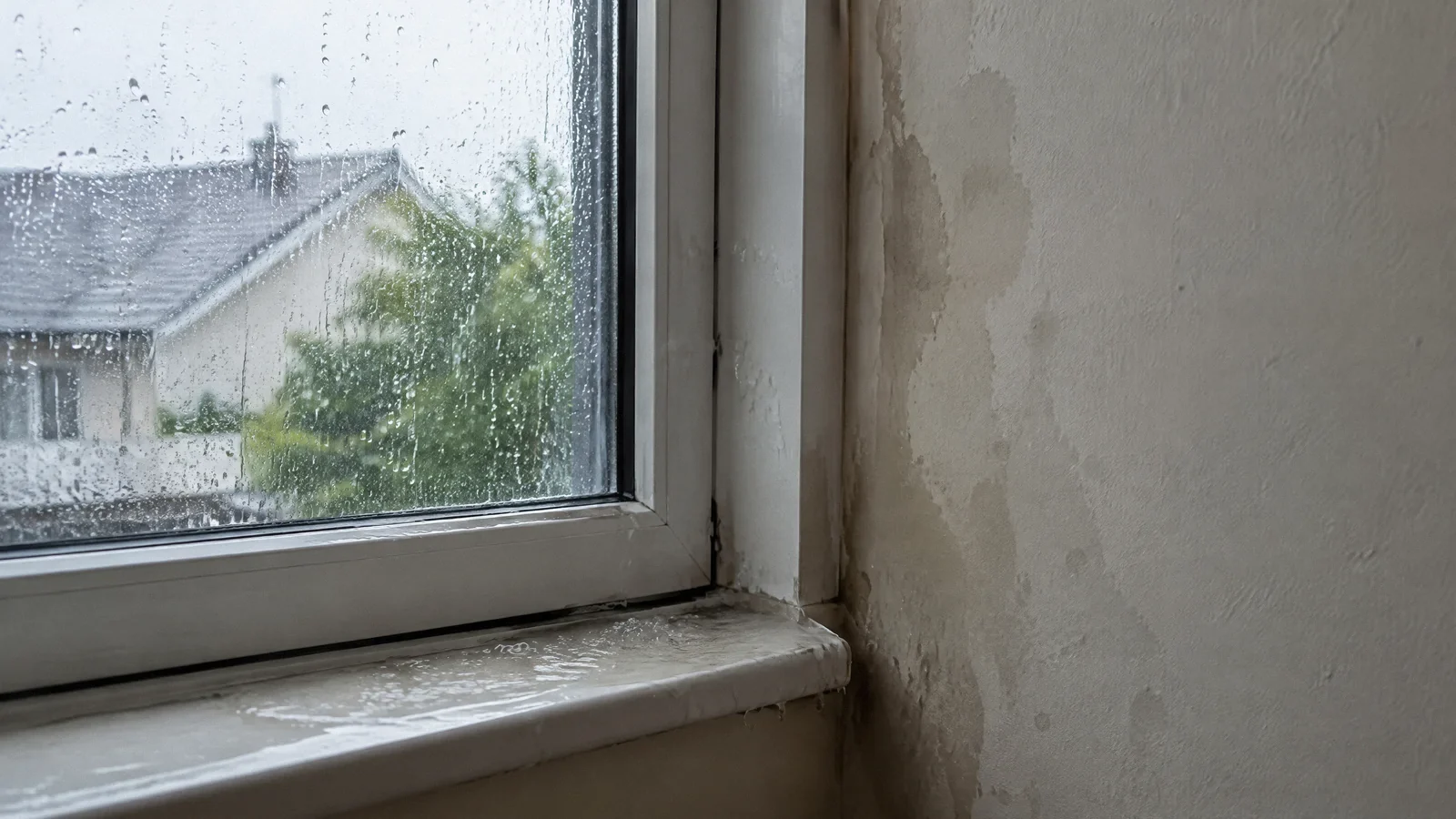
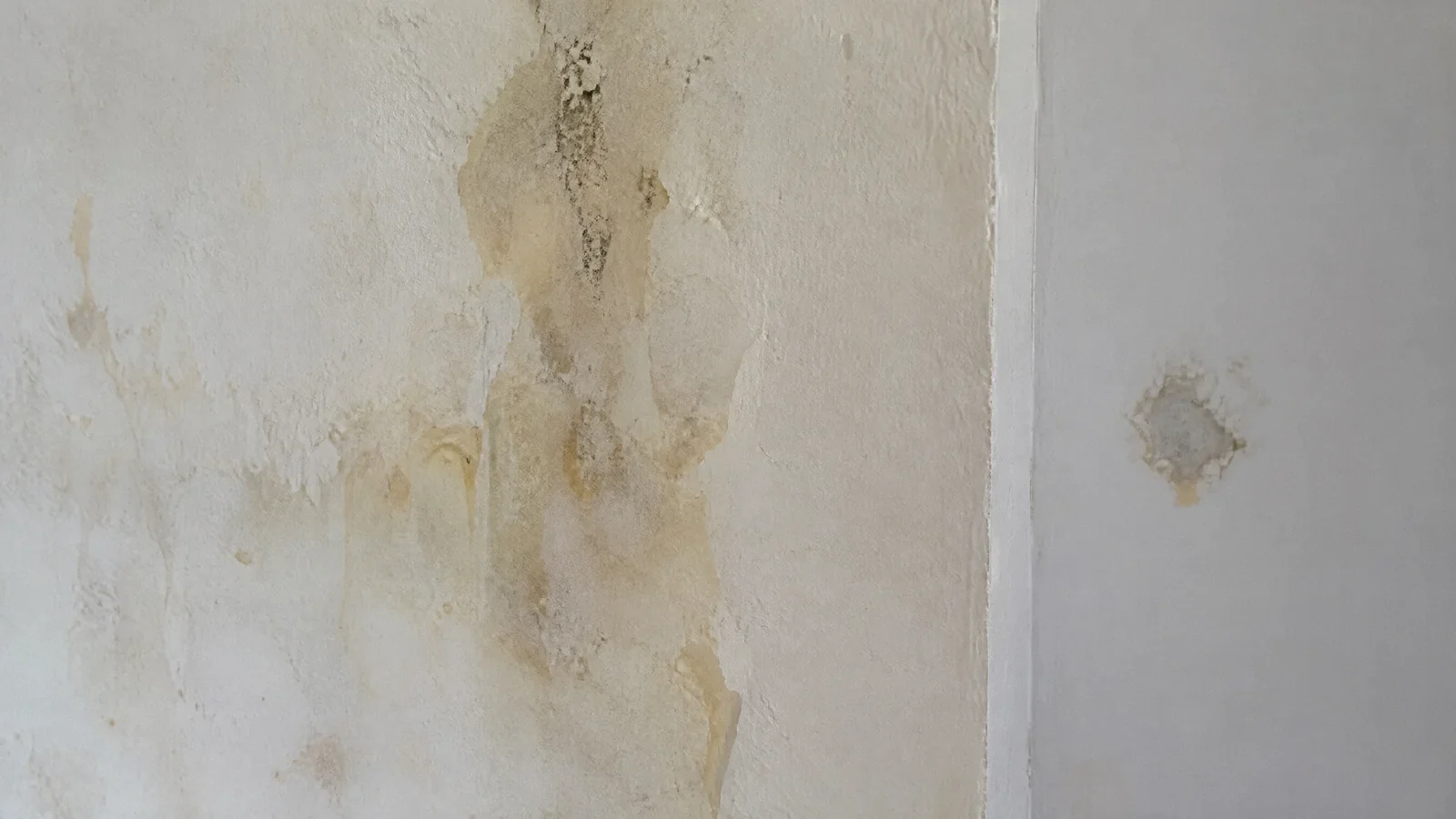
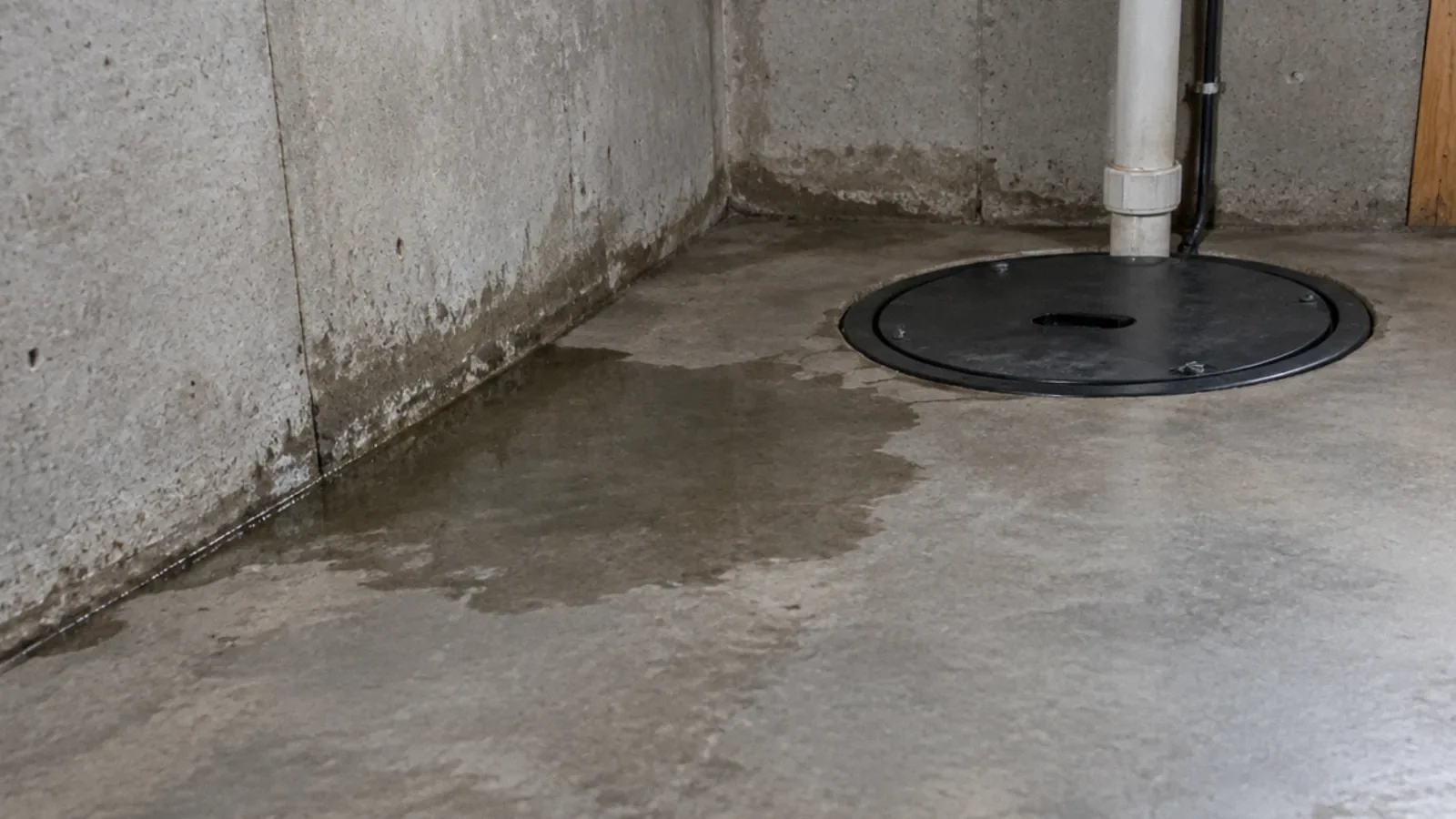
First distinguish a plumbing leak or interior condensation from water entering through the foundation. Note whether moisture follows a storm, appears at the wall-floor joint, comes through a crack, or occurs on a cold surface during humid weather. These observations help direct an inspection but do not establish the cause. A professional can assess the building and recommend an integrated repair.
Protect people and identify urgent conditions
Stay out of standing water near electrical equipment and do not enter it to reach a switch. If a wall is bulging, displaced, or has a concerning new crack, keep clear and consult a structural engineer or qualified building professional. Do not excavate beside a foundation without a designed safety and repair plan. Floodwater or sewage requires a contaminated-water response by experienced professionals.
Photograph the area safely and record the timing and extent of water. If you rent, notify the property owner or manager. Ask your insurer about documentation and emergency mitigation where relevant, but do not wait for a claim decision before addressing an urgent hazard. A coating applied to a wet wall can hide evidence while moisture continues behind it.
Reduce the water load at the exterior
Roof drainage and surface grading are important first observations. EPA recommends maintaining gutters and directing the ground slope away from the foundation so water does not collect against it. Check whether downspout discharge and surface runoff are contributing, while respecting property boundaries and local drainage rules. Correcting a concentrated discharge can reduce the water reaching a wall, but it may not solve a high water table or a failed foundation drain.
An assessment should also consider the site, nearby hardscape, window wells, and where water can discharge safely. A contractor should explain the expected path of water and the limits of any proposed change. Work near utilities, neighboring property, or a retaining wall may require permissions, utility locating, engineering, or permits. Those requirements vary by jurisdiction and project.
Exterior waterproofing and drainage
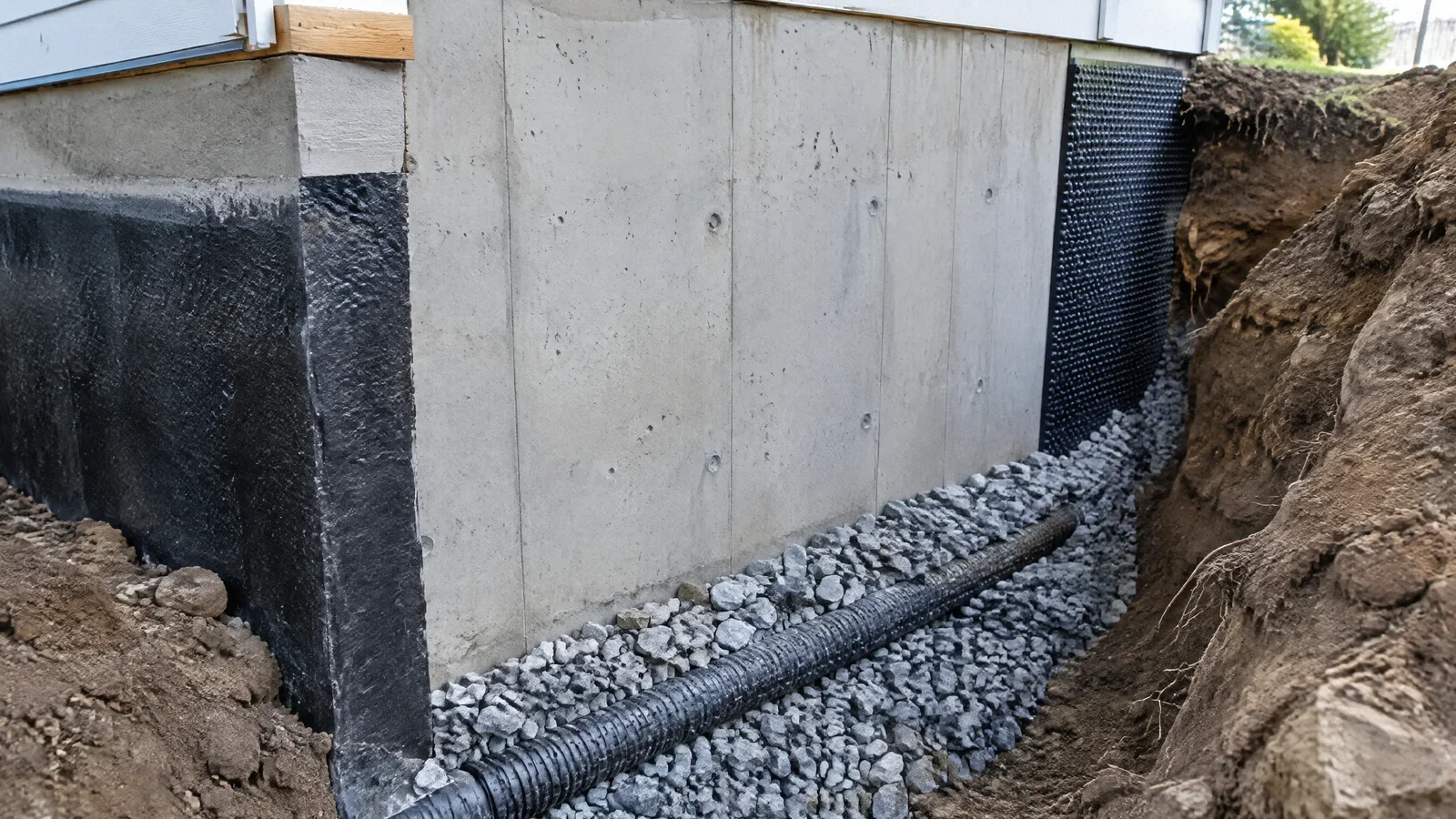
An exterior approach can combine a suitable membrane or coating on the wall with a drainage layer, free-draining material, and a footing drain connected to an appropriate outlet. Building Science Corporation describes these layers as parts of a water-managed foundation system. The correct details depend on site conditions and construction; a membrane needs continuity at transitions and penetrations, and drainage needs a reliable route for water.
Exterior work generally involves excavation and access around the wall. The contractor must evaluate utilities, excavation stability, nearby structures, backfill, and restoration of the site. It may be impractical at some walls because of additions, sidewalks, property lines, or underground services. Ask what portion of the foundation will be exposed, how transitions will be handled, and how the drain and outlet will be inspected or maintained.
Interior drainage and coatings
An interior drainage system may intercept water that reaches the wall or slab edge and route it to a sump or other approved discharge. It can help manage water inside the foundation perimeter, but it does not necessarily keep the exterior wall dry or correct the source outside. A sump depends on a working pump and discharge; ask about power failure, maintenance, alarms, and local discharge rules.
Interior coatings and crack repairs have specific uses and limitations. A product may resist moisture under stated conditions, but it should not be assumed to hold back all water pressure, repair a moving structural crack, or replace drainage. Ask the manufacturer and contractor about substrate preparation, pressure rating, compatibility, and what happens if water appears elsewhere. Structural cracks need a qualified diagnosis before cosmetic repair.
Drying, finishes, and verification
Remove or protect vulnerable belongings when safe, and assess wet insulation, drywall, flooring, and framing. EPA recommends prompt drying and source correction to reduce mold growth. A finished basement wall can conceal moisture, so installing new insulation or a vapor-restrictive finish without a moisture plan can trap water. DOE guidance cautions that insulating without addressing moisture management can mask future problems.
Get a written scope identifying the diagnosed source, proposed layers, discharge, access, warranty exclusions, and restoration of finishes. After repairs, monitor through conditions that previously caused seepage and retain photographs and service records. If water returns, reassess the path rather than applying successive coatings. A separate intrusion guide covers sources elsewhere in the home.
Your next-step checklist
- Document where and when water enters.
- Assess electrical and structural hazards.
- Review surface drainage and foundation conditions.
- Obtain a written plan for water control and discharge.
Related questions
Will waterproof paint stop basement seepage?
It may have a limited role under its specified conditions, but it cannot be assumed to solve drainage failure, structural movement, or all water pressure.
Is interior drainage the same as exterior waterproofing?
No. Interior drainage manages water reaching the interior perimeter; exterior waterproofing and drainage address water at the outside of the foundation.
Sources & context
Public guidance supports the principles in this article. The practical questions and examples are editorial interpretation, not a site assessment or a coverage decision. State-specific rules apply only where identified.
- Water-Managed Foundationgovernment
- A Brief Guide to Mold, Moisture and Your Homegovernment
- Understanding Basementstechnical